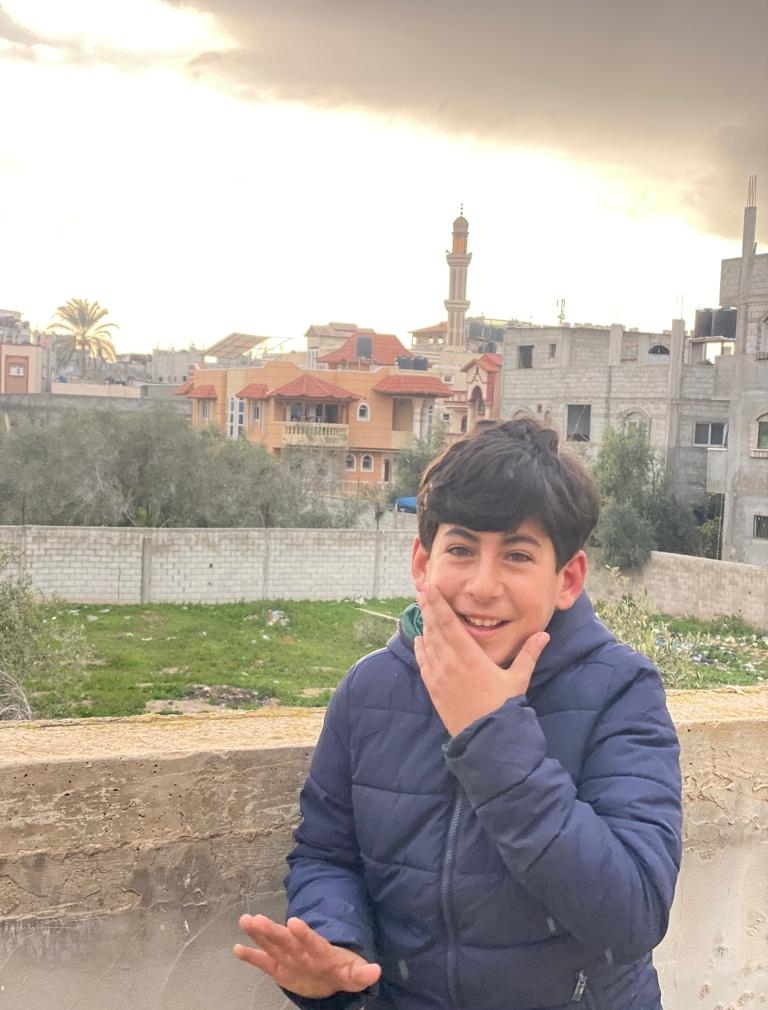
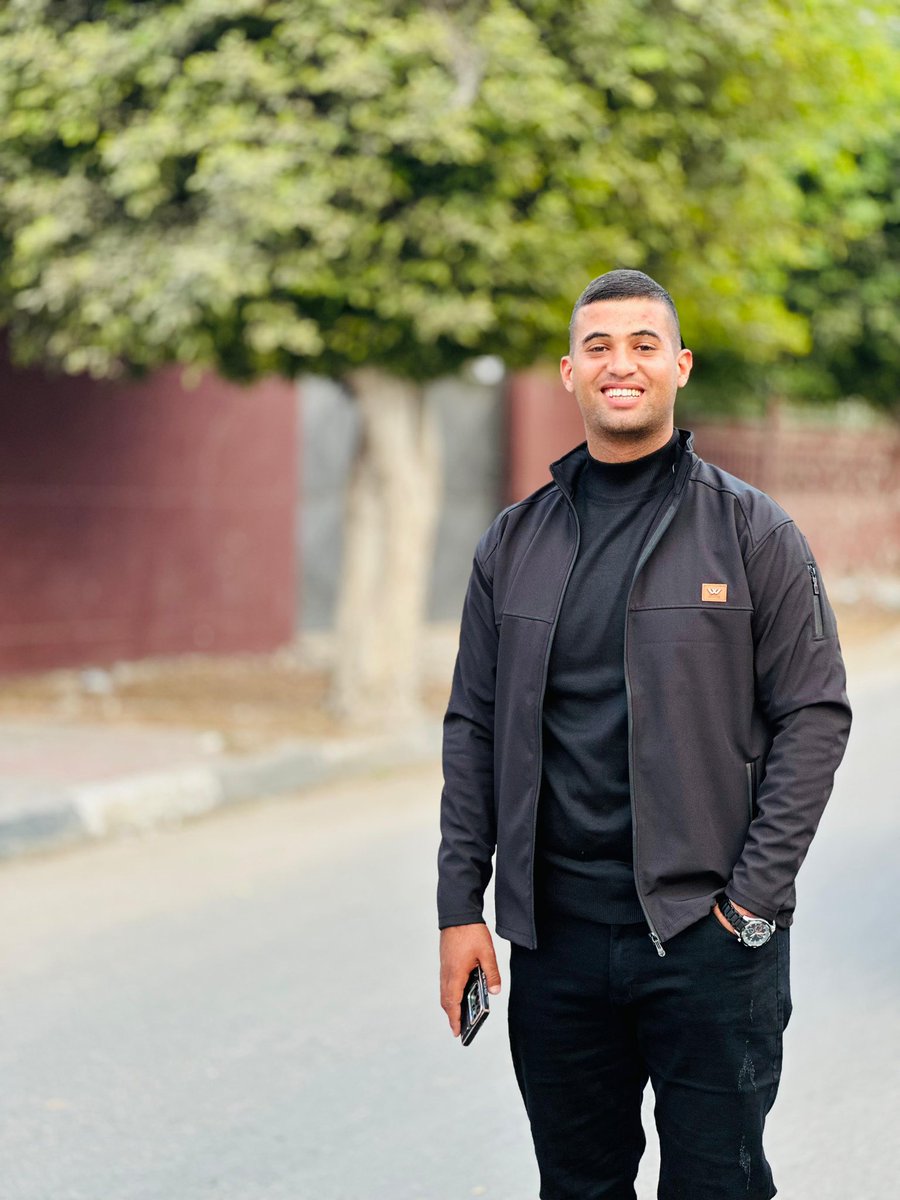
The person you see before you is Muammar Ibrahim, a Sudanese journalist… You could say he is “Sudan’s version of Saleh Al-Ja’frawi.”
√ Just as what happened to Saleh—may he rest in peace—is happening now to Muammar Ibrahim, who is currently in the custody of the Rapid Support Forces (RSF), simply because he chose to be the voice of #Sudan.
√ According to Al-Fateh — one of the RSF commanders — in a statement to Al Jazeera, Muammar Ibrahim is indeed in their custody, and since then, there has been no news about him.
√ The same reason that led to the martyrdom of Saleh Al-Ja’frawi is the same reason that may cause the loss of Muammar Ibrahim.
√ Speak about Muammar Ibrahim. Let people know who he is — your post could be the reason for saving your brother, who chose to be the voice of his people in Sudan.
√ We must raise our voices and demand his freedom.
Save Sudan before it’s too late 🤍
Never before have I seen blood on satellite imagery. This is a slaughter in El Fasher. One that was warned about and one we are only seeing a fraction of the killings of. The RSF is committing a genocide.
https://t.co/Yaw7EwPdjK contains a masterlist of campaigns. From community kitchens to personal fundraisers.
It’s an easy website to remember, and an easy way to donate to something new every once in a while too.
Ngl, adult friendships require grace. People are very busy. People are healing. People are growing. People are taking time for self care just like you. Less communication isn’t less love. Check in not out.
Hossam and Anas should’ve been announcing the end of genocide ,celebrating the end of bloodshed. Instead, they gave their lives so the world could see the truth.
Your courage, sacrifice, and voices will never be forgotten , the world is forever grateful for your truth. 🕊️
Canada's foreign affairs minister got back to me about top scholars' finding that Israel is committing genocide in Gaza.
It...wasn't great.
Meanwhile, Poilievre is out here calling Palestine the "Hamas state."
But where leaders fail, the people step up: the Global Sumud Flotilla is setting sail.
Israel has murdered more than 250 journalists in Gaza.
250 is not just a number!
There are 250 names, stories, dreams, families, and memories they will never be able to kill.
While the world rightly focuses on the genocide in Gaza, there’s no excuse for ignoring the man-made crisis in Sudan.
In the past 2 months alone, 100,000 children have died of starvation, yet not a whisper from our mainstream media.
This isn’t silence. It’s racism. The death of African children is seen as normal. One genocide is denied, while the other is erased.
#Sudan #Gaza #Genocide #MediaBias
My God
Green Beret Anthony Agular recounts how a 5-year-old Palestinian kissed his hands to thank him for the food Agular gave him
Seconds later, Israeli soldiers shot and killed the starving child
ISIS prisoners were treated with more dignity than these children, Agular says
A woman as old as my mother crawled through gunfire in Nitzarim for a bag of flour, for children who aren’t even hers, because hers were already killed. And what haunts me isn’t just the image of it; it’s how easily we’ve accepted that this is what motherhood looks like in Gaza: not nurturing, not sheltering, but negotiating with death for calories. We’ve turned these women into symbols of resilience so often that we’ve stopped being horrified by their suffering, because when survival becomes their legacy, who’s left to ask what kind of world did this to them?
Israel this morning, killed 30 Palestinians and injured 120 in the aid distribution center in Rafah, and killed 1 and injured 18, 3 children among them, in Netzarim aid distribution centre.
Do you still trust IsraHell and the US to distribute aid in Gaza! Almost a week now, since they opened the first center in Rafah and no single success, only chaos and more starvation a long with killing the Palestinians waiting for the aid!
IsraHell needs to stop the genocide and as an occupying power, it is obligated to end the occupation as well.
Yesterday, at Al-Awda Hospital in northern Gaza, a girl-child came into this world, and the world rejected her. She had no brain. Not in the poetic sense of innocence or purity, but anatomically, literally: anencephaly. No cerebrum. No future thought, no dreams, no memory to be made. A skull empty of purpose. She was full-term. Her mother carried her for nine long months, through burning nights and weeping mornings, through dust, grief, and sirens. And then, birth. But no life to save. Only silence. The doctors stood helpless, mocked by the limits of their hands.
I saw them, people of medicine, their skilled, sterile fingers trembling. Not from confusion, but from recognition. Teratogenic damage. Developmental failure. Genetic disfigurement, not by chance, but by war. Bombs struck not only buildings, but chromosomes. The weapons, steel, shiny, American, fell not just to destroy the present, but to corrupt the womb. To poison the idea of tomorrow.
What do we call this horror? Radiation? Dioxins? Depleted uranium? Invisible toxins that do not kill quickly, they wait. They embed, cross placental walls, and twist the neural tube. They disrupt life before it begins.
There are more cases. Miscarriages. Premature births. Malformed limbs. Cleft palates wider than sorrow. Spinal cords like broken scrolls. The doctors whisper now, this is no cluster. It’s a pattern. A Lancet study warns of up to 200,000 indirect victims, not from blast wounds, but from genetic harm passed down to generations unborn.
But the world is deaf. It counts the dead by explosions, not deformities. It tracks casualties by limbs lost, not genes shattered.
And here, beneath the rubble, the deepest wound is in the womb. I saw her yesterday. The mother. She didn’t cry. She only looked. Her arms were empty. She had carried a daughter with no brain. But the child had eyelashes. Fingers. And that’s the most terrible thing: that life tried. That the body obeyed. That, even in apocalypse, the cells kept building.
Somewhere, another child may be born marked by air their mother once breathed. And they won’t know why.
They say war ends. That ceasefires come. That healing is possible. But how can it end when it lives in cells? When the placenta becomes a battlefield? When biology becomes the archive of war?
This is not just a war of fire and steel. It’s a war against life. Against women. Against the act of birth itself.
I have seen death, bodies torn, lungs gasping under broken ribs. But never have I heard a silence as loud as when a mother delivers a child already condemned by the sky above her.
And so I write. Not to accuse. Not to weep. But to remember.
Because some weapons do not explode.
They incubate.
#GazaGenocide
While many knew Hossam as a fearless journalist, there was so much more to him. He was a young man with dreams, with a sense of humor, and a heart full of life. He loved dressing well, even in the middle of chaos, once joking:
“What if I run into a cute girl while reporting? I want to look good!”
Hossam had crushes. He wanted to fall in love, to build a family, to be a husband and a father. He talked about the future like he believed in it — like it was something real and reachable. He wanted more than headlines and frontlines. He wanted soft mornings, quiet dinners, laughter with loved ones.
He dreamed of leaving Gaza someday, saying,
“When this is all over, I’m taking a long break — I want to visit a beautiful country.”
He longed for peace — not just for his people, but for his own soul. A chance to breathe freely, to explore, to just be.
He grew up by the sea and loved seafood deeply. The ocean was part of him — he’d smile and say,
“I love everything seafood — I grew up with it.”
There was something about the water that calmed him, something that reminded him of home, even as the world around him was in pieces.
At night, you’d find him with his headphones on, listening to music — especially Palestinian songs. He’d spend time during the day downloading them so he could escape into melodies once the city quieted down. It was his small form of peace — rhythm in the middle of ruin.
He was pure. He was innocent.
There was a gentleness in him that never hardened, even in war. A softness that stayed untouched by the noise around him. He believed in beauty, in love, in something better. And that is how he should be remembered — not just as a journalist, but as a young man who wanted to live.