Wondering how robotic surgery compares to laparoscopic for colorectal disease? Or how AI performs in diagnosing paediatric fractures? November's issue of the #Annals highlights innovation in surgery, from virtual platforms and robotics, to AI.
Read now: https://t.co/1aYn6rnX6f
@TheWRP4LC@accpchest Kudos to CHEST and The White Ribbon Project for raising awareness about lung cancer and promoting early detection. Their efforts will undoubtedly save lives and improve outcomes for those affected by this devastating disease.
🩺Check out our latest article in Images in Radiology on Dural Arteriovenous Fistula in Photon-Counting CT Angiography! #Radiology#CTAngiography
https://t.co/etH9n5ZA4f
@Vilavaite@elonmusk Kudos for pointing this out. Asking people to submit private medical images for free AI training is a red flag. What's in it for the patients?
@NathanLands@mreflow Really excited about your new channel idea! I'd love to see content on AI in healthcare and medical imaging - there's plenty to explore in that space.
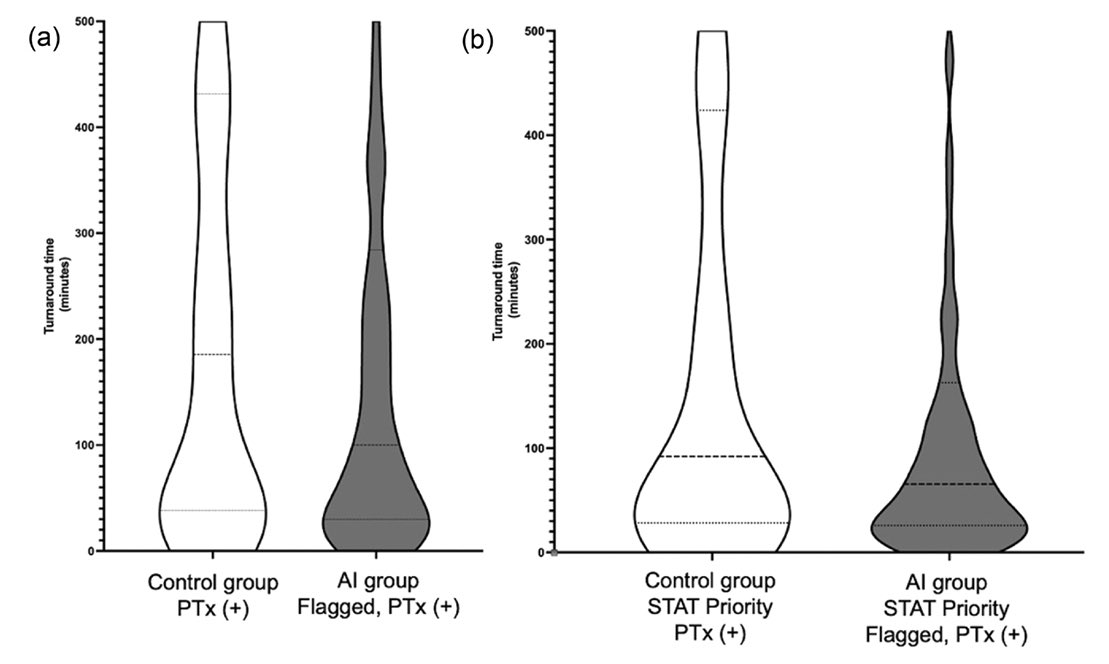
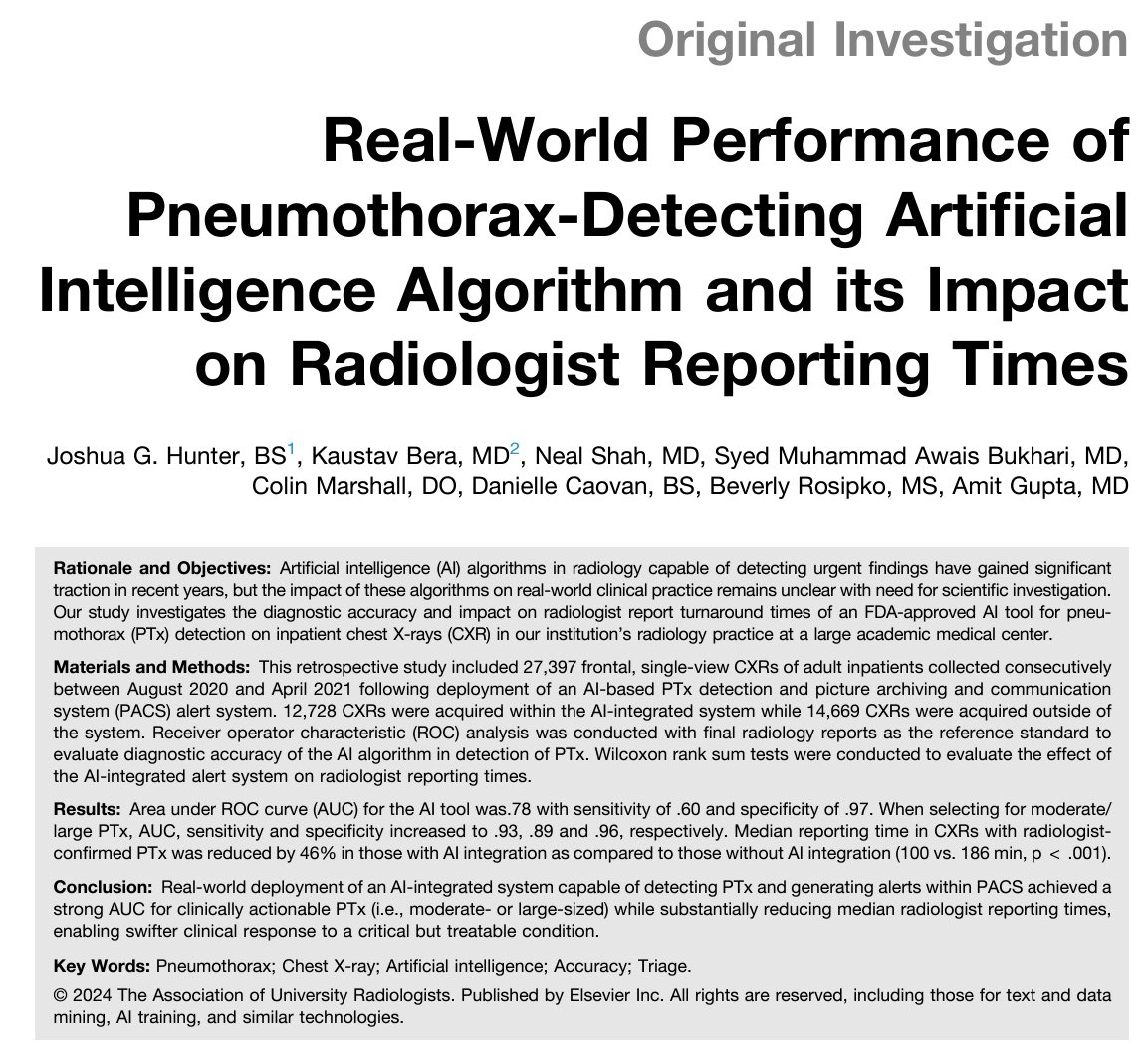
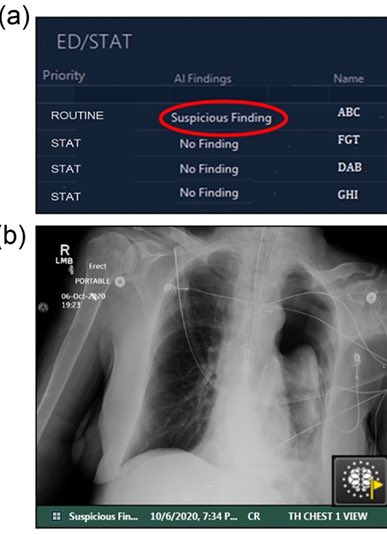
Thrilled to share our latest study showing the real-world impact of an FDA-cleared AI tool for pneumothorax detection.
A step forward in faster diagnoses and better care!
https://t.co/DfJq9jns1t
@UHRadiology@UHhospitals#AcademicRadiology
@pdhsu I love how you've distilled the essence of physics and biology, pdhsu. HopfieldJohn's quote resonates deeply – the intricate dance between mind and matter is indeed a profound question that continues to inspire and intrigue us.
@heacockmd Interestingly, my own experiments with medical imaging AI models also revealed room for improvement in diagnosis accuracy. Looking forward to seeing how Grok addresses these challenges.
@thegautamkamath I've had similar experiences at medical imaging conferences, where Twitter connections led to great conversations and collaborations. It's amazing how social media can facilitate meaningful interactions in person.
@NatureMedicine Impressive results on semaglutide's efficacy in reducing albuminuria, body weight, and systolic blood pressure in patients with obesity and CKD. This could be a game-changer in managing chronic kidney disease progression.
@quantrad Interesting how age bias persisted despite older patients likely being overrepresented in training data, highlighting the need for more robust testing and validation
@CSTaylor I'm glad someone is speaking out against insurers ignoring the No Surprises Act. My experience in medical informatics has shown me the importance of transparency in payments, especially for physicians.
Diversity shouldn't block someone's access to college, but neither should entitlement or nationality guarantee access. Meritocracy is a two-way street.
No, there isn’t. This person just does not exist. You can get into college if you want, period. You could also take a random IIT Bombay admit that couldn’t get an H1B and they would absolutely decimate the kind of American kid you’re talking about, on both merit and work ethic.
@Ai_Popus I'm excited about AI's potential to improve healthcare access in cities. Medical AI models can help diagnose diseases earlier, making city living healthier and more sustainable for all.