The internet runs on PHP.
PHP runs on donations
and one full-time employee.
We have billion-dollar AI startups
building digital gods.
Meanwhile, critical infastructure
is running on pocket change.
UK to decouple #gas and #power prices .
Under the current system, gas sets the wholesale electricity price whenever it is needed alongside #wind, #solar, and many #renewables generators are paid gas-linked prices.
https://t.co/S6cO0IdlqF
If our small minds, for some convenience, divide this universe, into parts — physics, biology, geology, astronomy, psychology, and so on — remember that nature does not know it!
An alternate data point. This has been my best year selling self-paced video courses, which has been 98% of my income since 2022.
A great course reorients the learner in the world. It doesn't just give them new knowledge, it makes new things possible.
Also, course creation is curation. It takes a spread-out graph of information, finds the most impactful nodes, and linearises it. This means courses are fast-tracks - they get you to where you need to go faster.
So, in the AI world, what is worth learning?
For me, that has meant finding techniques which are:
- Harness-agnostic
- Model-agnostic
- Language-agnostic
...that benefit the agent and increase output quality. Because they're everything-agnostic, you can drop into any codebase and succeed.
This is a huge space. I've explored a small part of it: software fundamentals, module design, increasing test quality.
But there is SO much more there. User interfaces, company process, leadership, observability, product design.
But you've got to make the right course. I wouldn't make my "Total TypeScript" course now (sales have dropped off a cliff). That one focuses too much on API's, learning language features, aspects which are easy to ask agents about.
Instead, I'd make "TypeScript for AI", focusing on the actual things you need to know to make a productive TS codebase for agents (and it would rock, too).
It boggles my mind when people say courses are dead. The hunger for information is very much alive. Go feed it.
I finally made my dream Lego app!
◆ Super fast: 2.8x faster, 67x smaller JS heap
◆ Interactive instructions
◆ Sculpture generation
◆ AR previews on iOS
◆ Physics engine running in a worker
◆ Completely free!
Try it now:
https://t.co/KYxfW6GyXi
The world is getting more of its electricity from renewables but less from nuclear power.
If the world is to reduce its carbon emissions and tackle climate change, it needs to move away from fossil fuels to low-carbon power.
There are two key sources of low-carbon electricity: renewables — which include solar, wind, hydropower and others — and nuclear power.
While rapid growth in solar and wind has increased the amount of electricity coming from renewables, a lack of enthusiasm for nuclear means it’s playing a shrinking role in the global mix.
In the chart, you can see the share of global electricity coming from fossil fuels, renewables, and nuclear since 1985. Since 2000, nuclear and renewables have followed very different trajectories. Back then, both accounted for a similar share of global electricity. But in 2025, renewables made up more than three times as much: 34% compared to 9%.
The total amount of electricity produced by nuclear plants is about the same as it was two decades ago. But because the world produces much more electricity overall, its share of the electricity mix has declined.
(written by @_HannahRitchie and @parriagadap)
We believe voice is the most natural way to interact with intelligence, so we created Dessa, the most authentic full-duplex speech model ever built. Talking with it feels like talking with a person…full of emotion, nuance, pauses, and a natural cadence.
https://t.co/r0qFLdvd6c
banned for reverse engineering work? that’s wild
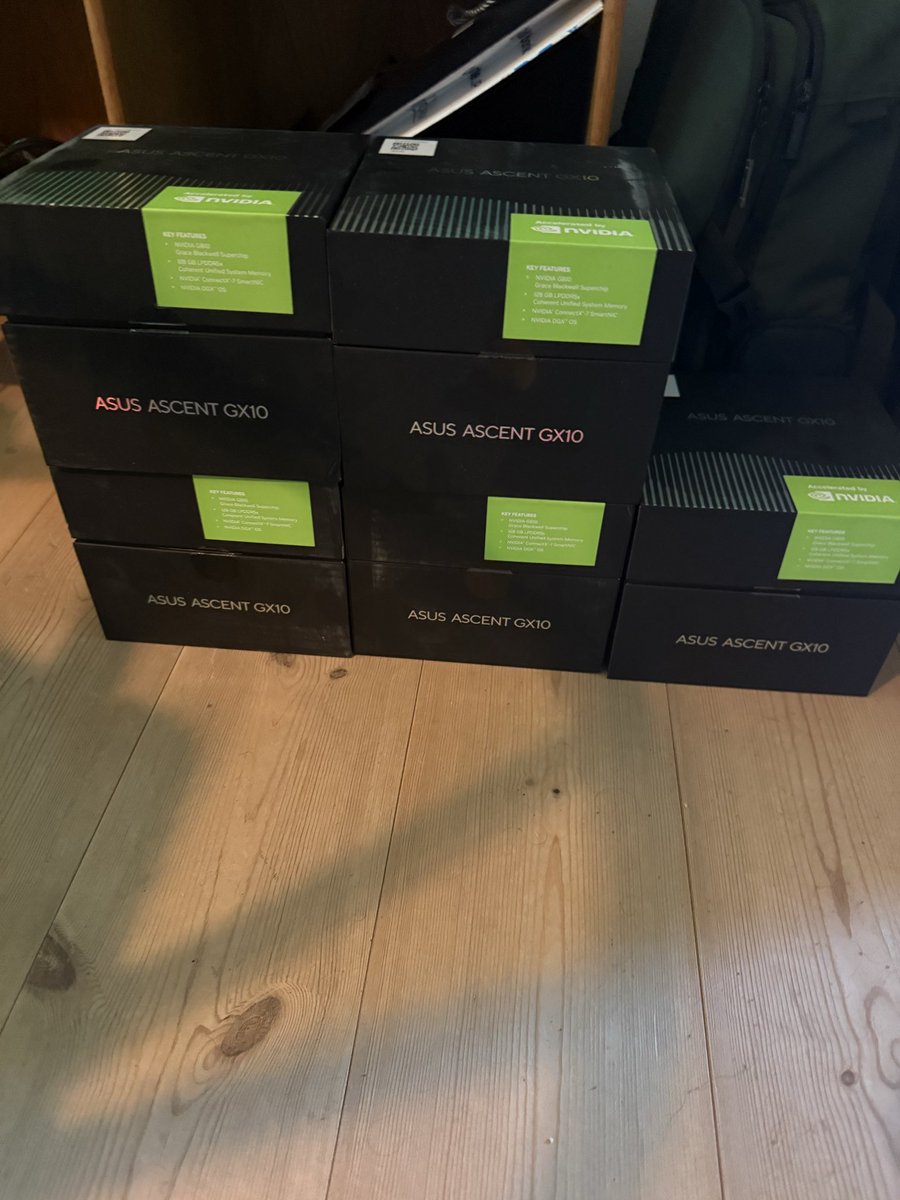
oh well, -$500, and a bunch of banked resets) but gained motivation to get 3 more machines and finish my cluster.
i have never used openai to exploit or find vulnerabilities, only local reverse engineering which tripped daybreak.
a senior QA at a fintech startup posted this on r/QualityAssurance and it's a pretty clean summary of what's happening at a lot of companies rn
> company is growing and more profitable every quarter
> this year everyone gets pushed to use claude and agents for everything
> mid-year the manual tester role is gone
> now junior QA is gone too. only mid and senior hires from here
> devs write the UI/API automation in the same PR as the feature and fix what it catches before QA sees it
his question: is the whole QA department next?
devs writing tests in the same PR is what we push teams toward at Momentic. but a dev who writes the feature and its tests is still checking their own work, and they mostly test the flow they just built
someone has to check what that change breaks elsewhere in the product, and right now that's QA
so i don't get why companies are cutting QA right now. if anything, QA teams should be growing, because devs and agents are shipping way more changes every week than they used to
even with Momentic, devs decide what to test, but you need a QA person checking what those tests actually assert and finding the cases nobody thought to cover
if companies keep cutting junior QA, idk where the next senior QAs come from in 5 years
I think many of us working in tech tend to forget that the reason software engineering vs other engineering fields pays (a lot!) more, is a lot more flexible (WFH/remote), and has better perks:
Because this field changes much faster than other engineering fields. The premium is because fewer people are able/willing to pick up new technologies, methodologies so quickly.
But the field had ~10-20 years of stability, and so lots of folks forgot this is why a premium exists. And that AI is just another tech wave: software engineers who pick it up and master it will generally fare better; those not will struggle a lot more.
I asked GPT-6.1-Sol to look through my prompt history and judge me.
"You have strong engineering judgment, sharp product taste, and the scope control of a golden retriever that found an unlocked data center."
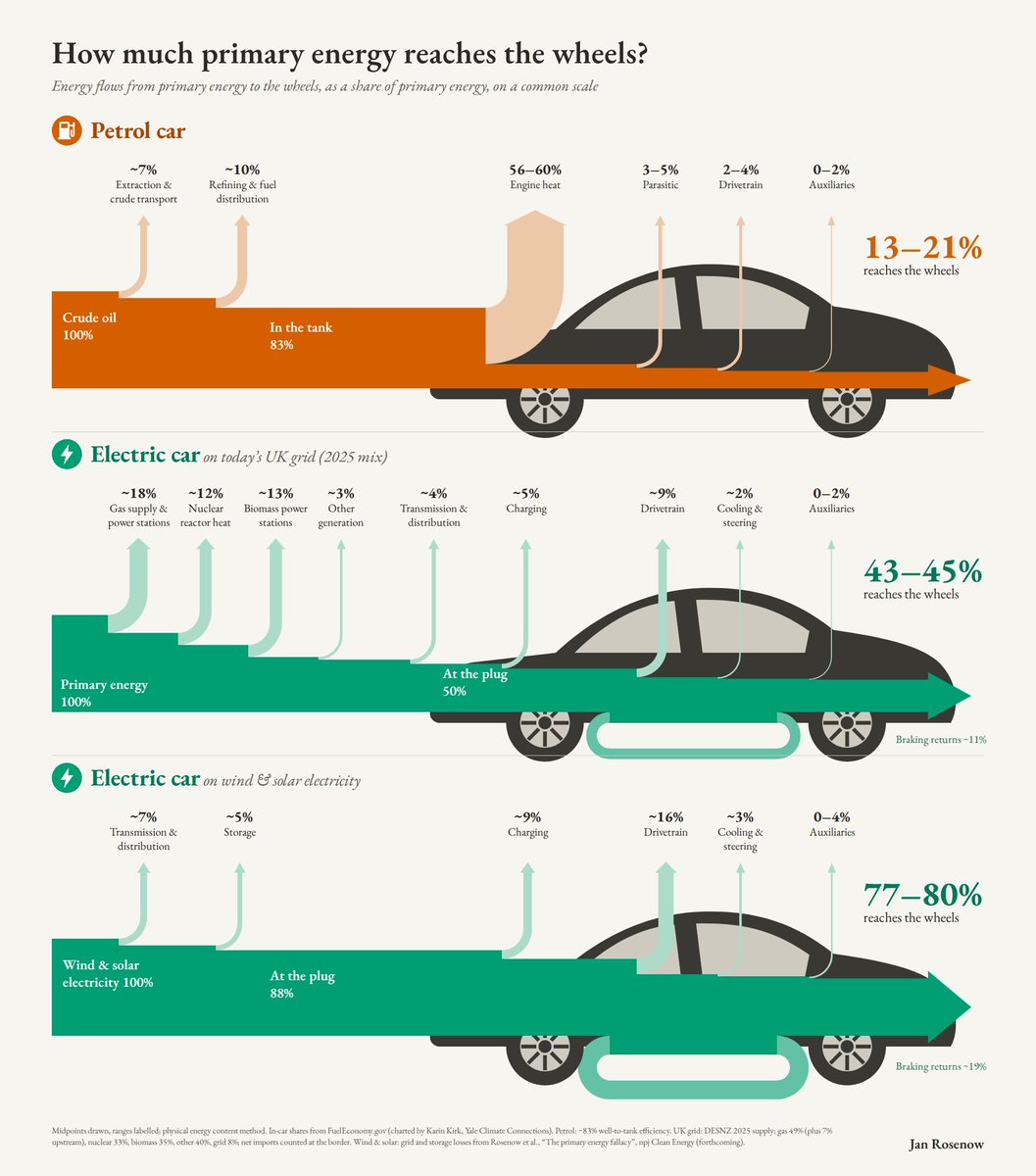
What most people don't know: when you fill up a petrol car most of the energy never moves it.
Petrol car: 13–21% of the crude oil's energy reaches wheels.
Electric car on today's UK grid: 43–45%.
Electric car on wind+solar: 77–80%.
70% of the internet was vulnerable yesterday to very bad security flaws inside a coding language. Turns out, *one volunteer* is mostly responsible for maintaining that code & helping push updates. Yesterday Ondřej Surý saved the internet. So I called him up. He rules. https://t.co/DusKs8P0Em