Whether you're building AI assistants, knowledge bases, or research agents, this guide will help you get started quickly.
Read the full guide and let us know what you're building with Agentic RAG.
Link: https://t.co/WSW6Zzv1DZ
We also cover how to deploy the entire stack locally and introduce Instant RAGFlow for teams looking for a ready-to-use RAG infrastructure on AWS, Azure, or GCP.
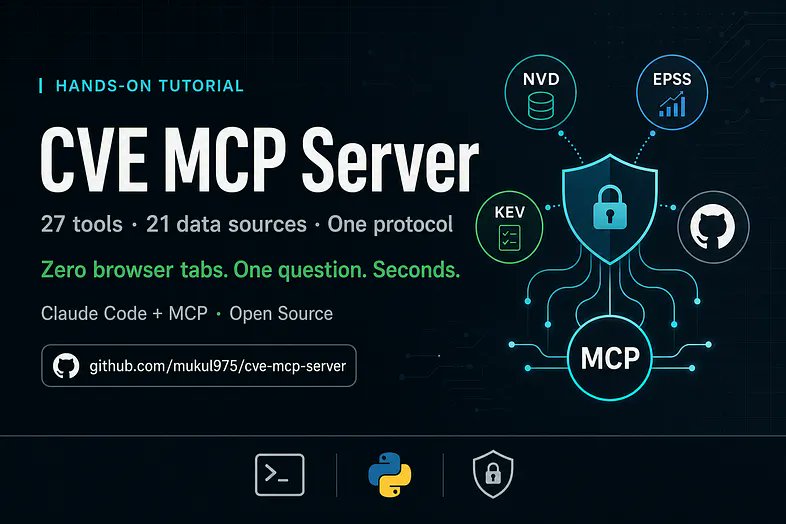
Whether you're a Security Analyst, DevSecOps Engineer, Researcher, or Open Source contributor, this guide shows how MCP can streamline vulnerability analysis and security operations.
Read the full guide here: https://t.co/l8GLS5kG2C
In our latest guide, we cover:
• Installing and configuring CVE MCP Server
• Connecting it to Claude Code
• Setting up API keys
• Running vulnerability intelligence and dependency scanning workflows
• Performing faster CVE triage with correlated security insights
Over the last few hours, we spent time testing the new model across coding, reasoning, agent workflows, long-context tasks, and developer productivity use cases.
After extensive evaluation, we’ve just published our complete guide covering:
✅ What's new in Claude Opus 4.8
✅ Benchmark comparisons vs Opus 4.7, GPT-5.5, and Gemini 3.1 Pro
✅ Dynamic Workflows in Claude Code
✅ Effort Control & Fast Mode
✅ 1M Token Context Window
✅ API Enhancements & Prompt Caching
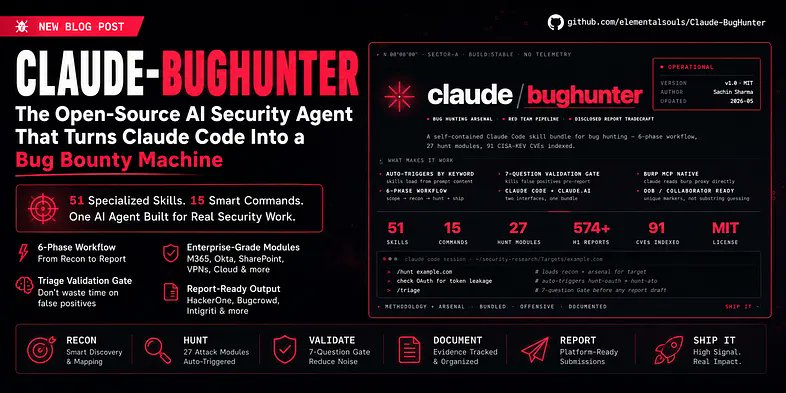
We also tested the workflow locally and shared real examples of how the tool helps streamline reconnaissance, vulnerability validation, and documentation during security assessments.
If you're interested in:
• AI Security
• Offensive Security
• Agentic AI
• Open-Source Security Tooling
• AI Red Teaming
This guide is worth checking out.
The future of cybersecurity is becoming increasingly AI-native.
Link: https://t.co/jKbFAT4lpW
From AI-powered pentesting and binary vulnerability hunting to MCP security and AI-native threat detection, these tools are rethinking how modern security testing works.