One thing you have to admire about MTS and TBPN relative to legacy media is the hustle and speed.
On Friday less than an hour after the Dessa voice model tweet drops, Brent Liang is on X trying to get them booked for that day.
@liangsays@MTSlive@tbpn
Agententischreife — A German word which means the point when AI agents have moved from tech circles into dinner-party conversation.
I went to a dinner this week in Manhattan and everyone impromptu went around the table and talked about how many agents they have and what they do.
It seems like we have reached a point of no return.
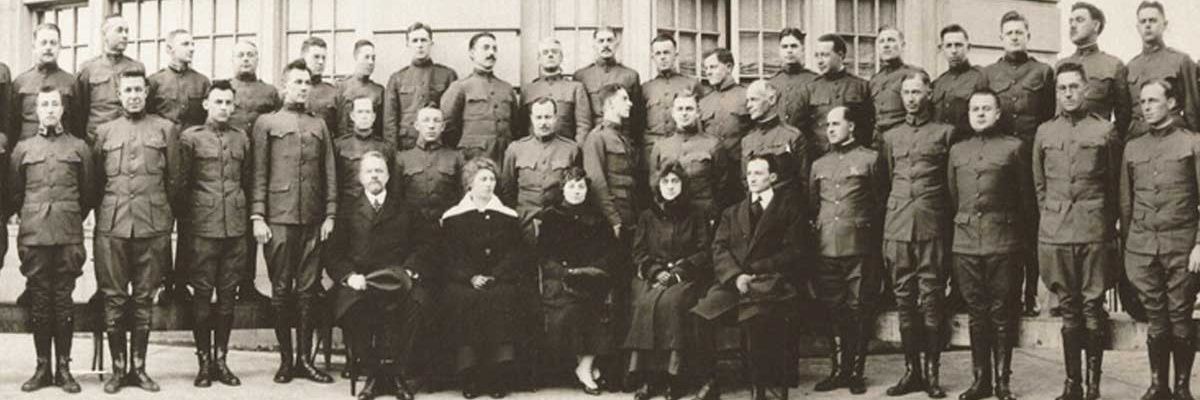
A meetup in midtown NYC of Old Timers from Bloomberg this week reminded me of three big things:
COMPANIES CHANGE. The Bloomberg of today - the established media giant - bears little resemblance to the place we worked in the 1990s when it was defined by the intensity of start-up energy and hustle culture.
PEOPLE CHANGE. Whatever beef you had with anyone you worked with 30 years ago has been (or should be) forgotten. Everyone is happy to just show up and reminisce.
TIMES CHANGE. Fewer and fewer people retire from corporate America these days. Many are let go - often earlier than they would like.
If you are early in your career it's worth anticipating and preparing for all three of those scenarios.
I love comparing notes with people creating content.
Phil Rosen publishes a newsletter and does a podcast. Eric Pan is a financial content creator. Mila Che does PR. I ghostwrite and do comms work for CEOs.
We met for coffee at Felix, the chic coffee shop on Park Avenue, to compare notes on how AI is transforming our businesses and how to keep up.
The conversation focused on AI agents, which we all use to gather information, connect with people and draft content. Eric and Phil argued strongly in favor of Grok Bot.
I have been using Muse and Instinct. They convinced Mila and me we have to try Grok Bot.
The basic difference is that Muse and Instinct are built to be one assistant. Grok Bot lets you spin up as many agents as you want, creating a team. You can give each a separate job, and run them at the same time. It costs about $30 a month.
Phil and Eric use theirs for research, posting and video editing. Phil showed us how he easily clipped a TV clip into vertical video for Instagram. Eric used Grok Bot to create animations and charts from nothing but raw footage.
The other observation was speed. Three months ago agents were hard to set up. Eric said his first one took three days. Now they take minutes.
It's hard to keep up with the change.
@philrosenn@milache5
The View from the Office
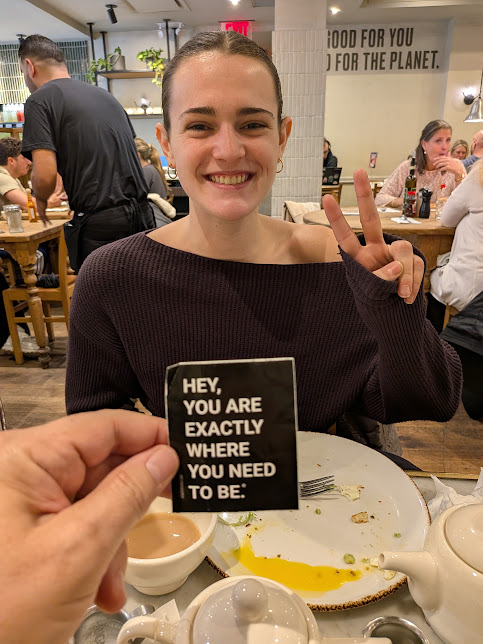
I met up with Maya True Wasik for breakfast at Le Pain Quotidien at Columbus Circle. She had tea and an egg, cheddar and avocado sandwich. I had the yogurt parfait.
Maya is a senior at the University of North Carolina at Chapel Hill and an aspiring documentary filmmaker. We were introduced by a mutual friend, Ryan Cheah.
Maya is finishing her degree remotely from New York so she can work as an intern at NBC. She spent the past summer assisting the network’s documentary team. At the end of the summer, her internship was extended into the academic year.
The incredible part of the job for Maya is getting to work with people who have decades of experience, at NBC and other outlets such as Vox and Vice Media.
On the side, she shoots photos and videos for restaurants, startups and events to generate revenue that keeps her afloat. At events, people often ask how she got the gig. “It’s actually the camera that keeps getting me connected,” she tells them.
She’s worked on documentaries covering the environment, arts and culture. She produced a short film, Buckets and Boots, about local recovery efforts in North Carolina after Hurricane Helene. The film placed fifth in the Hearst Journalism Awards Program’s Multimedia III Enterprise Story competition.
Maya grew up in North Carolina. Her mother is a professor at Elon University who wanted her children to be citizens of the world, so she sent Maya to a school where half the day was taught in Spanish, and later a year of high school in Costa Rica, and then United World College in New Mexico. Maya also lived in Hong Kong for a stretch.
We talked about how much journalism has changed and how different it is to try to land a job as a journalist. When I started at Bloomberg, people typically looked for an entry-level job at a news organization, where someone more experienced would teach them the ropes.
Maya, by contrast, started making content, and job offers have followed.
You can connect with Maya via LinkedIn or DM me for a warm introduction.
The View from the Office.
I met up with Lydia Winkler, a founder, investor and advisor, at Slate Cafe in NoMad. She had black coffee; I had a latte.
Lydia co-founded RentCheck, a New Orleans startup whose software lets property managers have residents document a home’s condition on their phones when they move in and move out. The photos helps residents and property managers avoid disputes by creating a record to see whether repairs are needed.
The idea came from her own experience. A landlord refused to return her deposit, so she sued. She hired two private investigators and prepared for a courtroom presentation by practicing with a retired judge in his 80s who lived across the street. After 18 months, she won, recovered her legal fees and used the money for a trip to Southeast Asia.
RentCheck raised a $1 million pre-seed round, with Jim Coulter, founder of TPG Capital, among its first investors and went through Techstars. When the pandemic hit, property managers needed to inspect units but couldn’t send people inside. RentCheck let tenants do the inspections themselves. The number of properties on the platform grew 1,000%.
This was the first time I'd seen Lydia in perhaps 25 years. I first met her when she was elementary-school age at Bloomberg’s annual company picnics. She is the daughter of my former boss, Matt Winkler, Bloomberg’s founding editor-in-chief.
There’s something extraordinary about seeing someone you knew as a child and later learning about the remarkable things they have accomplished as an adult.
Lydia told me three stories that shaped her life:
➡️In August 2020, she crashed a paraplane into a tree in Chesapeake City, Maryland. She was left hanging 110 feet in the air for eight hours as gasoline from the aircraft soaked her body, causing severe burns. A fire truck couldn’t reach her, so a state trooper called an arborist named Rick, who climbed a nearby tree and saved her. She was airlifted to Johns Hopkins and made a remarkable recovery. She tries to visit the tree each year and calls Rick on the anniversary.
➡️In law school at Tulane, she joined a program that sent students to Louisiana State Penitentiary to represent older prisoners at parole hearings. She later started a program matching law firms’ pro bono work with parole cases.
➡️Landing her first "dream" job took grit and persistence. In 2011, during the NBA lockout, she decided she wanted to work for the Golden State Warriors. She moved to the Bay Area in 2013 and called human resources every two days until they agreed to meet. That led to a job in corporate partnerships.
Last year, Lydia left her full-time role at RentCheck and moved to New York City. These days she mentors startups at Oneday, an MBA program built around starting a revenue-generating business. She also builds apps and works as a performance artist.
If you are building something you should reach out as she can probably help. @lydiarwinkler
Anthony Bourdain said the solution to any problem is to move.
In New York you can change your landscape just by getting out of your apartment and going to one of the dozens of events in your field that happen every night.
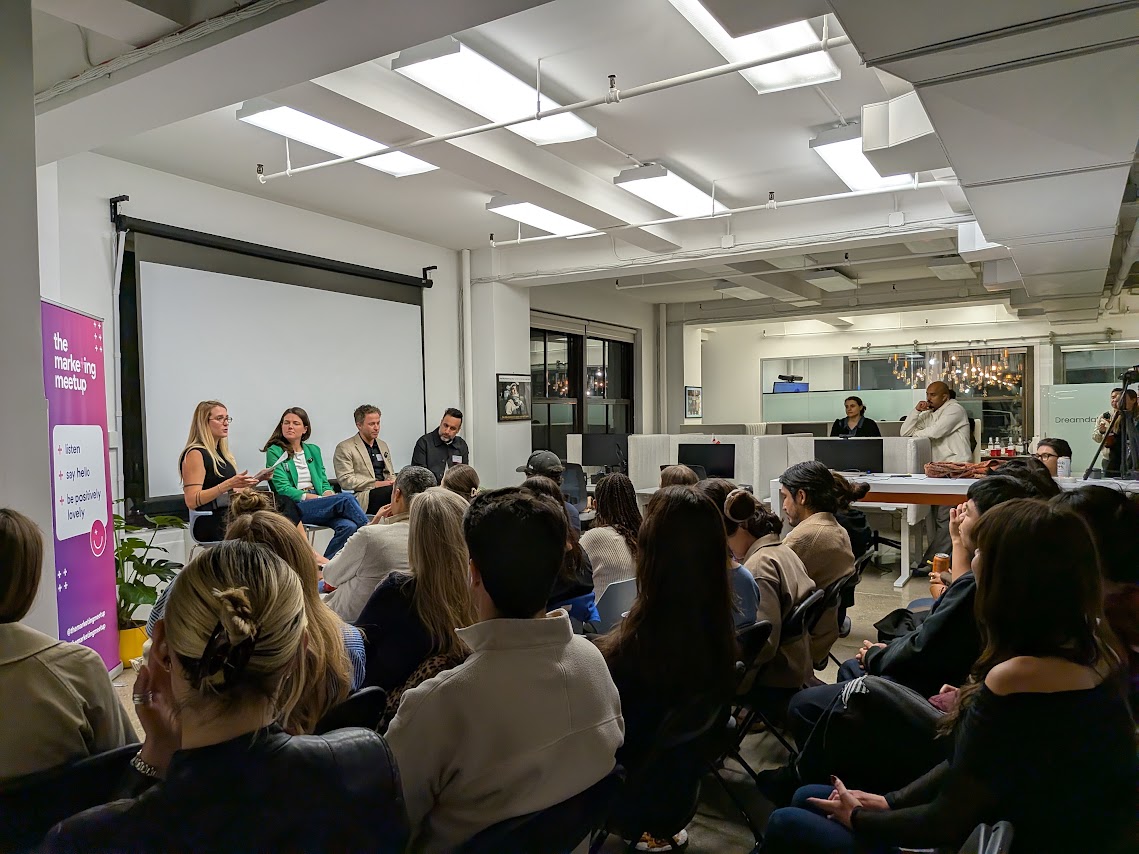
Last night I attended a panel called: "How We Connect Now: AI, Socials, and Brand," which was organized by a group called The Marketing Meetup.
It was timely given the backdrop of how AI is forcing marketing professionals to rethink how they show up on social media. A lot of the discussion focused on how the platforms promised a certain kind of connection but delivered something else.
There were three panelists:
➡️ Ramin Beheshti, CEO of Caliber, whose creator-led brands (The News Movement, The Recount) reach more than 100 million people a month. He used to run product and technology at Dow Jones, including https://t.co/AhWWCuhrmL.
➡️ Ben Moore, who runs the U.S. market for BeReal, the once-a-day photo app. He came from TikTok, where he led global media partnerships.
➡️ Caroline Turnbull Doran, a design researcher at PA Consulting.
➡️ Mila Che hosted and moderated. She co-created this event with El Etherington and The Marketing Meetup.
El has put on a bunch of these meetups in the UK already, and she and Mila have a number coming up. The next ones are Montreal on Nov. 10, Geneva and Dublin on Nov. 12, and Lisbon on Nov. 13, booked to coincide with Portugal Tech Week.
The format is low-key. Pizza in boxes and wine on a conference table before you sit down to listen to the panelists. It’s a good way to allow people to network without an agenda.
I tell everyone I know that they should be attending more IRL events, especially if you are between jobs, were laid off, or want to get better at what you do.
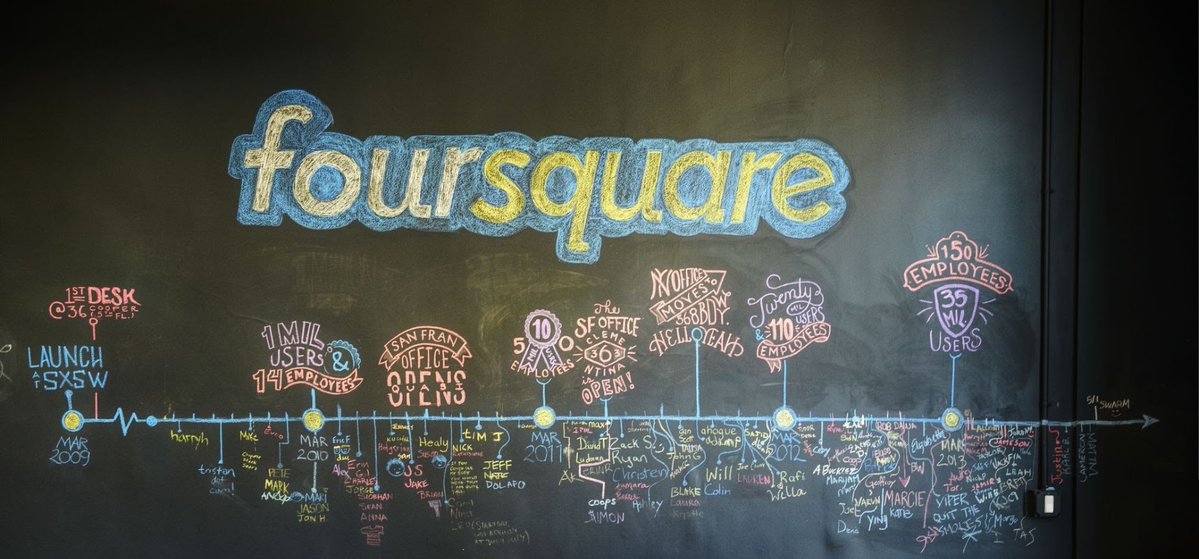
I remember visiting Foursquare over a decade ago while I was a product head at Bloomberg.
they showed us this analysis they had done which used location data to accurately predict the number of iPhones sold at every store - info that previously only apple would have known.
I remember thinking - damn this product is going to change how wall street analysts do their jobs.
it didn't work out that way and maybe I was wrong. but I still think they had a product there that was either never developed or built or marketed.
Foursquare was acquired last month. The outcome was disappointing. It's taken me a while to write this, but I think I'm finally done grieving it. Here are some thoughts on our final years, an effort to honor the team who helped build & maintain FSQ's legacy, and my attempt to finally get some closure. https://t.co/HgcgI9DWvy
@CristinCulver@SoniaBaschez as an aside from the timing and focus on the raise vs product, how would you grade the writing? do you have a view on the punctuation too?