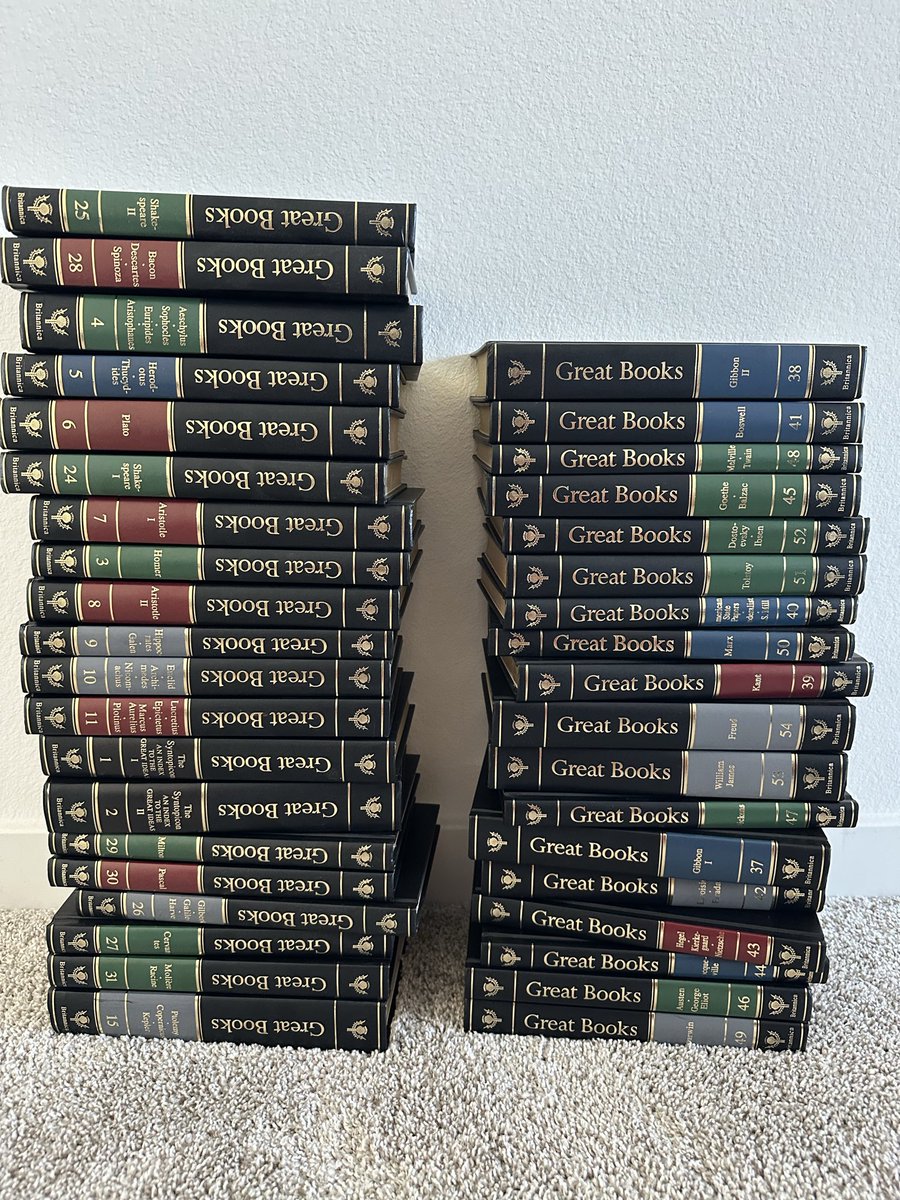
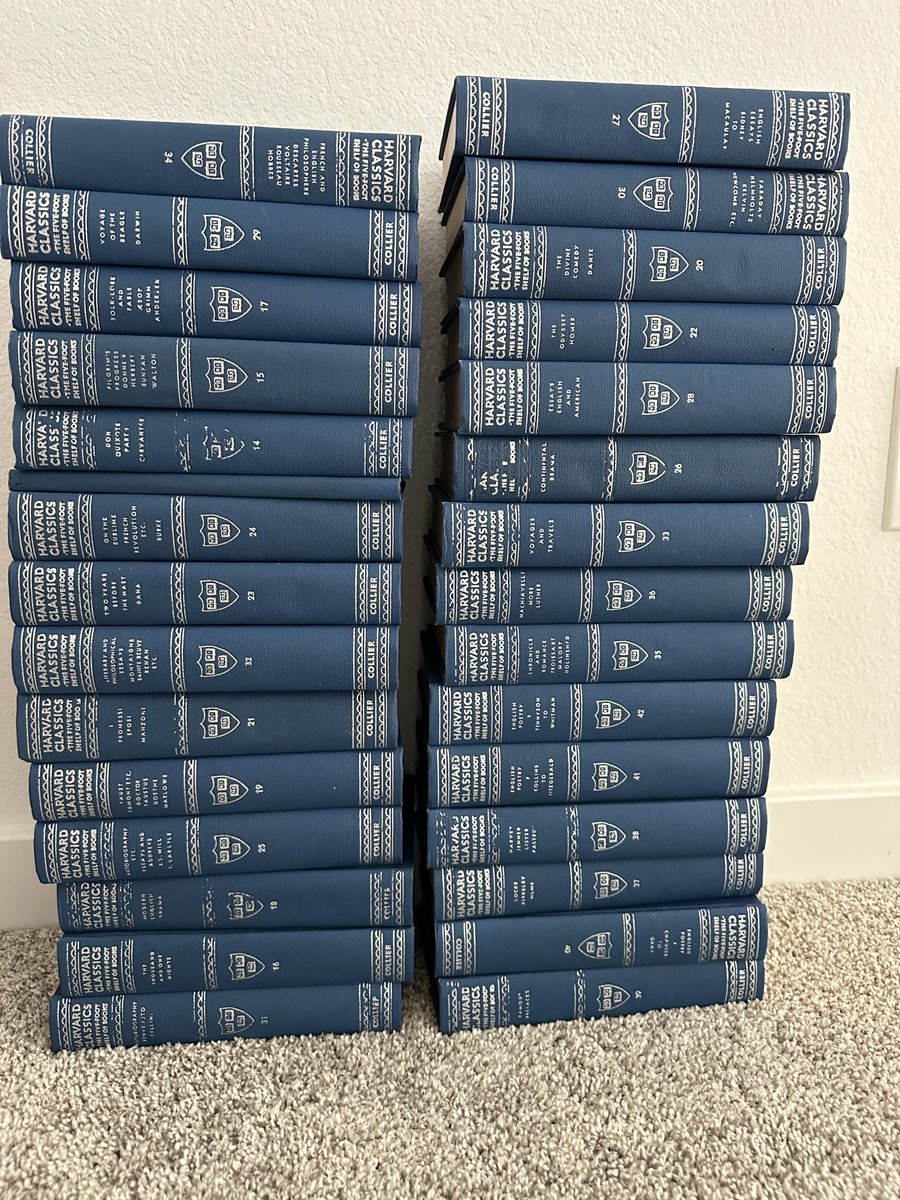
@foucachon@meriwetheracdmy@grok I found both sets in great condition for a reasonable price! Thanks for expanding my interest. I’m excited to read these with my family.
@SamR102794@TheGreatB00ks I tried finding them all together, but they aren’t sold that way. Special editions from Barnes and Noble. Link below is for where to find these and other similar books.
https://t.co/xNatqnFySC
@JulietsLurking@1000HolyPlaces Here’s a reading program that you can earn a free pizza. More directed towards kids, but along the same lines of what you’re asking about: https://t.co/pk6OzCxueX
Just finished the @TheGreatB00ks episode on Book V of the Odyssey and enjoyed their discussion about Odysseus being unhappy on the beach of indelible pleasure.
Why he would be unhappy reminded me of the question about if He didn’t have to, why did God create a world that includes evil?
God could have created a perfectly static world with no evil at all, but He freely chose to create a world “in a state of journeying” toward its ultimate perfection.
It’s like Odysseus realizes that what is even better than what Calypso is offering him is the “ultimate perfection” of completing his journey home.
Both affirm that a world (or life) with only good and no shadow of evil or suffering would actually be less free, less meaningful, less capable of producing the highest goods (heroic virtue, redemptive love, authentic human fulfillment).
Just finished the @TheGreatB00ks episode on Book V of the Odyssey and enjoyed their discussion about Odysseus being unhappy on the beach of indelible pleasure.
Why he would be unhappy reminded me of the question about if He didn’t have to, why did God create a world that includes evil?
God could have created a perfectly static world with no evil at all, but He freely chose to create a world “in a state of journeying” toward its ultimate perfection.
It’s like Odysseus realizes that what is even better than what Calypso is offering him is the “ultimate perfection” of completing his journey home.
The opening chapter of The Hobbit feels like life after the COVID lockdowns, where many got a little too comfortable staying home instead of seeking adventure. And that comfort persisted after the lockdowns ended.
Quantity of books read vs. quality of time spent reading them is a great distinction.
I was an incredibly slow reader growing up and realizing that I’m comfortable listening to audiobooks at increased speeds has been huge for me because it has opened up reading in a massive way.
Perhaps people like me get a tad overzealous about the quantity aspect. But it’s more about catching up on decades of missing out on so many great books than being able to brag about how many I’ve gone through in a short time.
Your perspective does move me closer to the quality over quantity side. Thanks
My full-time job is in tech and I use AI daily now. My company has what I believe to be the correct stance that AI should be used to make employees better at their jobs, not replace them.
It’s great for automating repetitive and monotonous tasks. Literally anything you do on the computer on a regular basis can be automated and permanently taken off your plate.
For some types of roles, that’s 10% of the job, which provides a nice relief. That’s where I am. For other roles, it could be over 50%. Those are the roles in danger of being downsized.
I’m currently working on automating a process for a five-person team that will save them a few hours a day total, which is over 1,000 hours per year for their team.
Same tech can perform early diagnosis of cancer.
Same tech helped someone the other day recover bitcoin from an old wallet with half a million dollars worth of btc that they were convinced for nine years was permanently lost.
Same tech helps people with legal advice that saves large sums of money. Especially those usually most in need of lawyers.
Expensive data centers, rising electricity costs, and fears of job losses are real too. There is good and bad with everything. AI will help save lives and make things better and more efficient. It’s new enough that not everyone sees all the upsides, but they are there too.
If your question is about what the data centers are used for: imagine an excel spreadsheet with way too much going on and it takes forever to open or calculate anything. If you had more “computer” then it would run faster. Now picture trying to train your computer to be able to answer any question, like in a spreadsheet. It would be insanely slow and you’d need more computer behind it. Like a whole data center’s worth.
My full-time job is in tech and I use AI daily now. My company has what I believe to be the correct stance that AI should be used to make employees better at their jobs, not replace them.
It’s great for automating repetitive and monotonous tasks. Literally anything you do on the computer on a regular basis can be automated and permanently taken off your plate.
For some types of roles, that’s 10% of the job, which provides a nice relief. That’s where I am. For other roles, it could be over 50%. Those are the roles in danger of being downsized.
I’m currently working on automating a process for a five-person team that will save them a few hours a day total, which is over 1,000 hours per year for their team.
Same tech can perform early diagnosis of cancer.
Same tech helped someone the other day recover bitcoin from an old wallet with half a million dollars worth of btc that they were convinced for nine years was permanently lost.
Same tech helps people with legal advice that saves large sums of money. Especially those usually most in need of lawyers.
Expensive data centers, rising electricity costs, and fears of job losses are real too. There is good and bad with everything. AI will help save lives and make things better and more efficient. It’s new enough that not everyone sees all the upsides, but they are there too.
If your question is about what the data centers are used for: imagine an excel spreadsheet with way too much going on and it takes forever to open or calculate anything. If you had more “computer” then it would run faster. Now picture trying to train your computer to be able to answer any question, like in a spreadsheet. It would be insanely slow and you’d need more computer behind it. Like a whole data center’s worth.
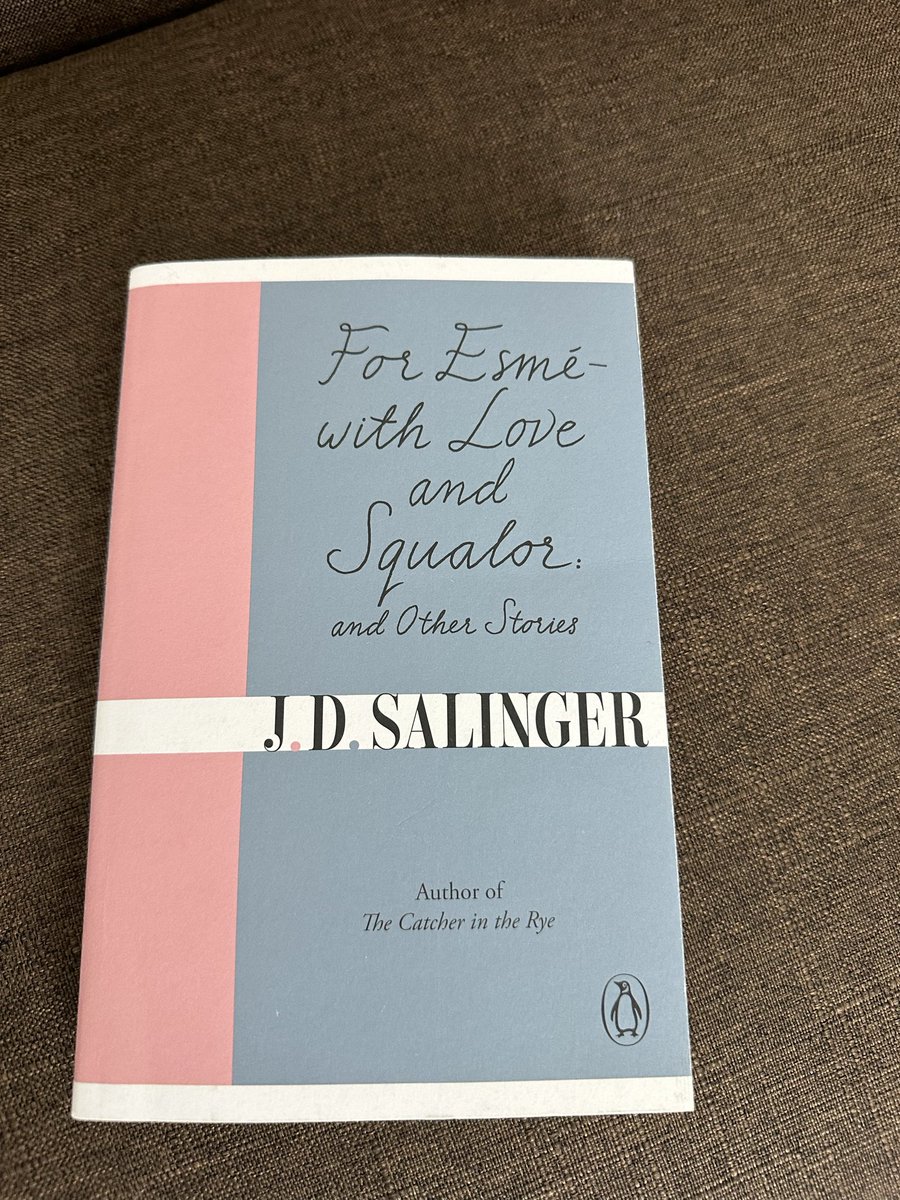
@writriverdale Thank you for the recommendations! For the longest time I avoided short stories. Then I had a great professor who turned that around with For Esme by Salinger. I’ll add these to my reading list.