LLM Knowledge Bases
Something I'm finding very useful recently: using LLMs to build personal knowledge bases for various topics of research interest. In this way, a large fraction of my recent token throughput is going less into manipulating code, and more into manipulating knowledge (stored as markdown and images). The latest LLMs are quite good at it. So:
Data ingest:
I index source documents (articles, papers, repos, datasets, images, etc.) into a raw/ directory, then I use an LLM to incrementally "compile" a wiki, which is just a collection of .md files in a directory structure. The wiki includes summaries of all the data in raw/, backlinks, and then it categorizes data into concepts, writes articles for them, and links them all. To convert web articles into .md files I like to use the Obsidian Web Clipper extension, and then I also use a hotkey to download all the related images to local so that my LLM can easily reference them.
IDE:
I use Obsidian as the IDE "frontend" where I can view the raw data, the the compiled wiki, and the derived visualizations. Important to note that the LLM writes and maintains all of the data of the wiki, I rarely touch it directly. I've played with a few Obsidian plugins to render and view data in other ways (e.g. Marp for slides).
Q&A:
Where things get interesting is that once your wiki is big enough (e.g. mine on some recent research is ~100 articles and ~400K words), you can ask your LLM agent all kinds of complex questions against the wiki, and it will go off, research the answers, etc. I thought I had to reach for fancy RAG, but the LLM has been pretty good about auto-maintaining index files and brief summaries of all the documents and it reads all the important related data fairly easily at this ~small scale.
Output:
Instead of getting answers in text/terminal, I like to have it render markdown files for me, or slide shows (Marp format), or matplotlib images, all of which I then view again in Obsidian. You can imagine many other visual output formats depending on the query. Often, I end up "filing" the outputs back into the wiki to enhance it for further queries. So my own explorations and queries always "add up" in the knowledge base.
Linting:
I've run some LLM "health checks" over the wiki to e.g. find inconsistent data, impute missing data (with web searchers), find interesting connections for new article candidates, etc., to incrementally clean up the wiki and enhance its overall data integrity. The LLMs are quite good at suggesting further questions to ask and look into.
Extra tools:
I find myself developing additional tools to process the data, e.g. I vibe coded a small and naive search engine over the wiki, which I both use directly (in a web ui), but more often I want to hand it off to an LLM via CLI as a tool for larger queries.
Further explorations:
As the repo grows, the natural desire is to also think about synthetic data generation + finetuning to have your LLM "know" the data in its weights instead of just context windows.
TLDR: raw data from a given number of sources is collected, then compiled by an LLM into a .md wiki, then operated on by various CLIs by the LLM to do Q&A and to incrementally enhance the wiki, and all of it viewable in Obsidian. You rarely ever write or edit the wiki manually, it's the domain of the LLM. I think there is room here for an incredible new product instead of a hacky collection of scripts.
Software horror: litellm PyPI supply chain attack.
Simple `pip install litellm` was enough to exfiltrate SSH keys, AWS/GCP/Azure creds, Kubernetes configs, git credentials, env vars (all your API keys), shell history, crypto wallets, SSL private keys, CI/CD secrets, database passwords.
LiteLLM itself has 97 million downloads per month which is already terrible, but much worse, the contagion spreads to any project that depends on litellm. For example, if you did `pip install dspy` (which depended on litellm>=1.64.0), you'd also be pwnd. Same for any other large project that depended on litellm.
Afaict the poisoned version was up for only less than ~1 hour. The attack had a bug which led to its discovery - Callum McMahon was using an MCP plugin inside Cursor that pulled in litellm as a transitive dependency. When litellm 1.82.8 installed, their machine ran out of RAM and crashed. So if the attacker didn't vibe code this attack it could have been undetected for many days or weeks.
Supply chain attacks like this are basically the scariest thing imaginable in modern software. Every time you install any depedency you could be pulling in a poisoned package anywhere deep inside its entire depedency tree. This is especially risky with large projects that might have lots and lots of dependencies. The credentials that do get stolen in each attack can then be used to take over more accounts and compromise more packages.
Classical software engineering would have you believe that dependencies are good (we're building pyramids from bricks), but imo this has to be re-evaluated, and it's why I've been so growingly averse to them, preferring to use LLMs to "yoink" functionality when it's simple enough and possible.
@garrytan Tailscale + ssh + Termius + Claude Code is the move, can confirm. Add tmux and you should be set even if your session disconnects. Just started doing this on my nyc subway commute recently before seeing this on Twitter lol.
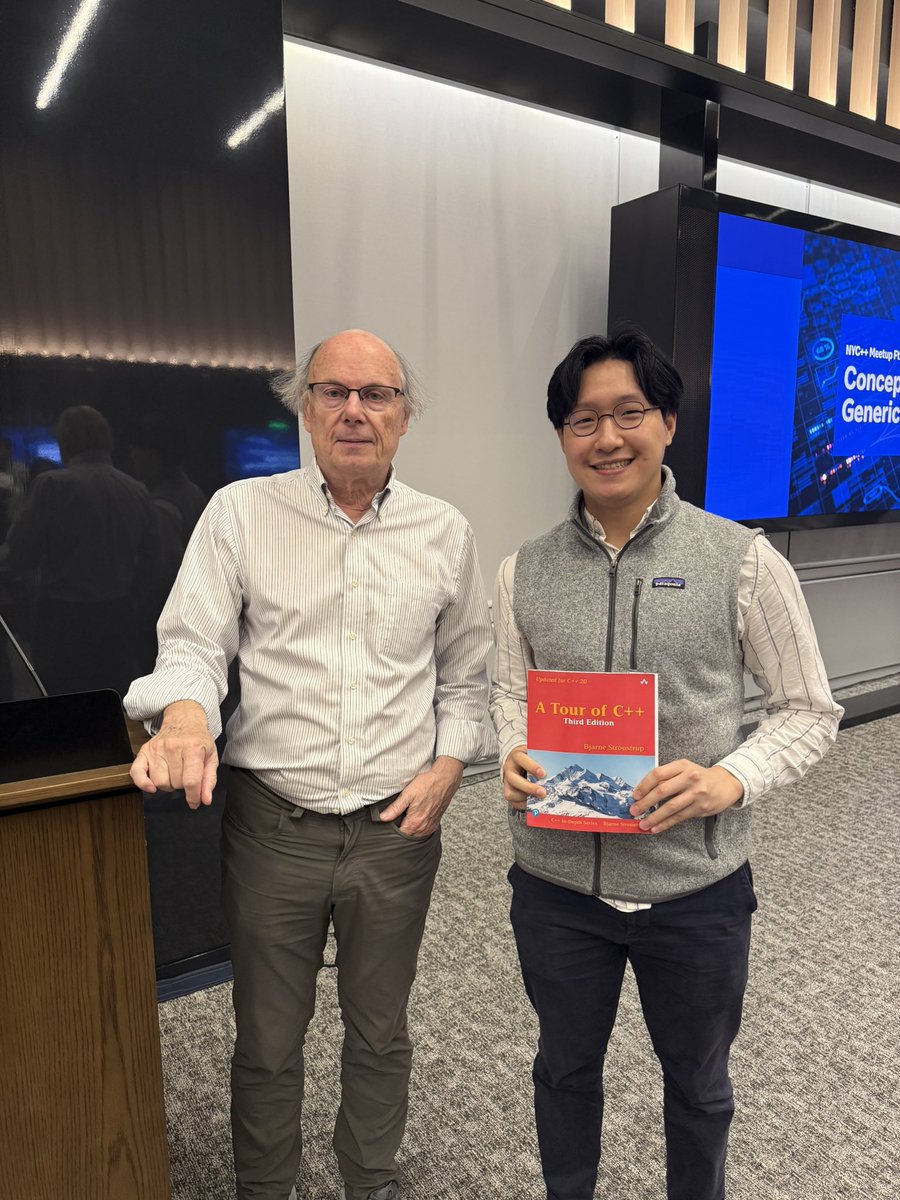
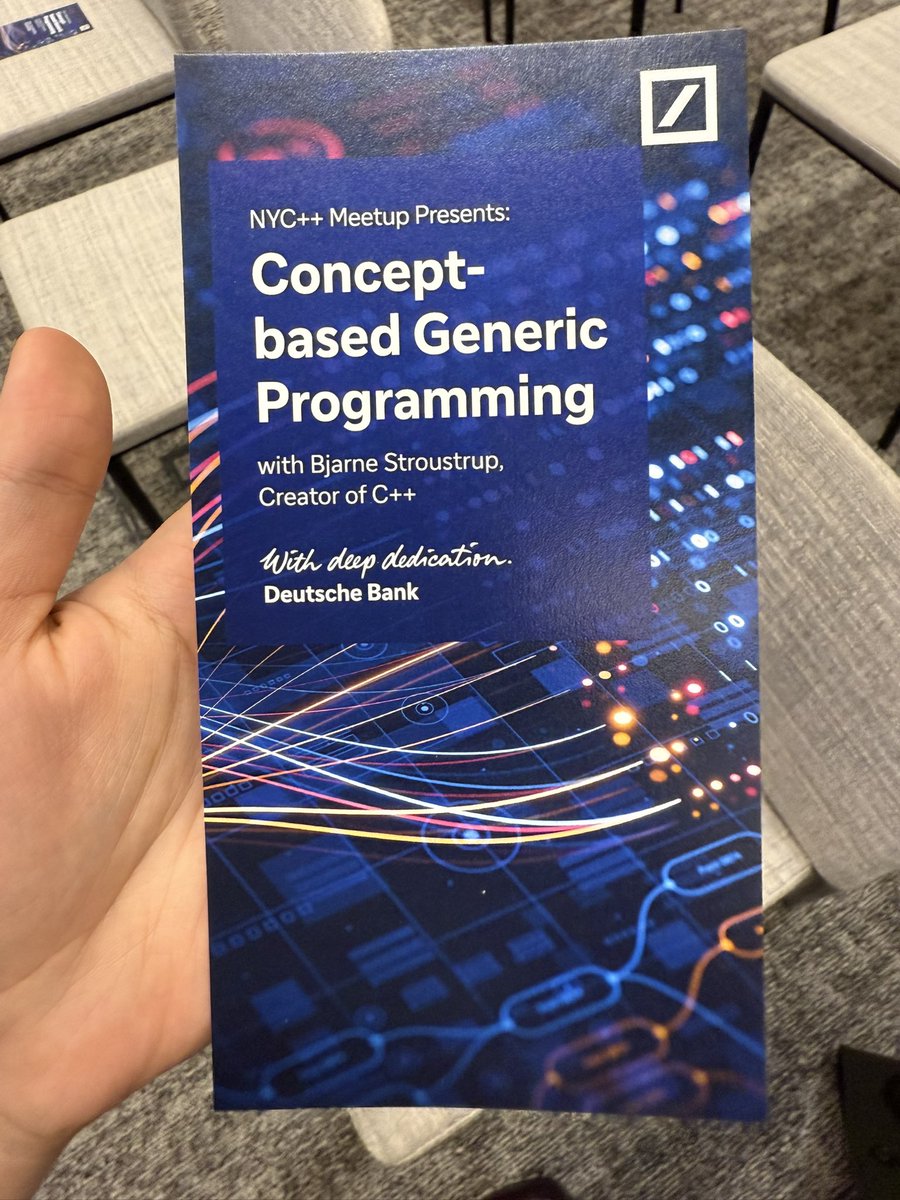
Dropped by the NYC++ meetup to hear Bjarne Stroustrup (creator of C++) speak on concept-based generic programming.
C++ was the second language I studied at UIUC (home of the LLVM compiler project), so it was meaningful to reconnect with the systems side of the field again.
Neel Nanda is leading a Google DeepMind research team at 26. He and I discuss:
• How that happened
• “If your safety work doesn't advance capabilities, it's probably bad safety work”
• Should people work at the safest or most reckless AI company?
• An AI PhD – with these timelines?!
• How to best operate in a big frontier AI company
• Neel's distinctive uses of LLMs and which cold emails he answers
• A common reasoning error in AI alignment
• Why he (@NeelNanda5) refuses to share his p(doom)
This is part 2 of our conversation, part 1 was a comprehensive update on his research area: mechanistic interpretability, which I'll link below.
Links to this episode of the 80,000 Hours Podcast below — enjoy!
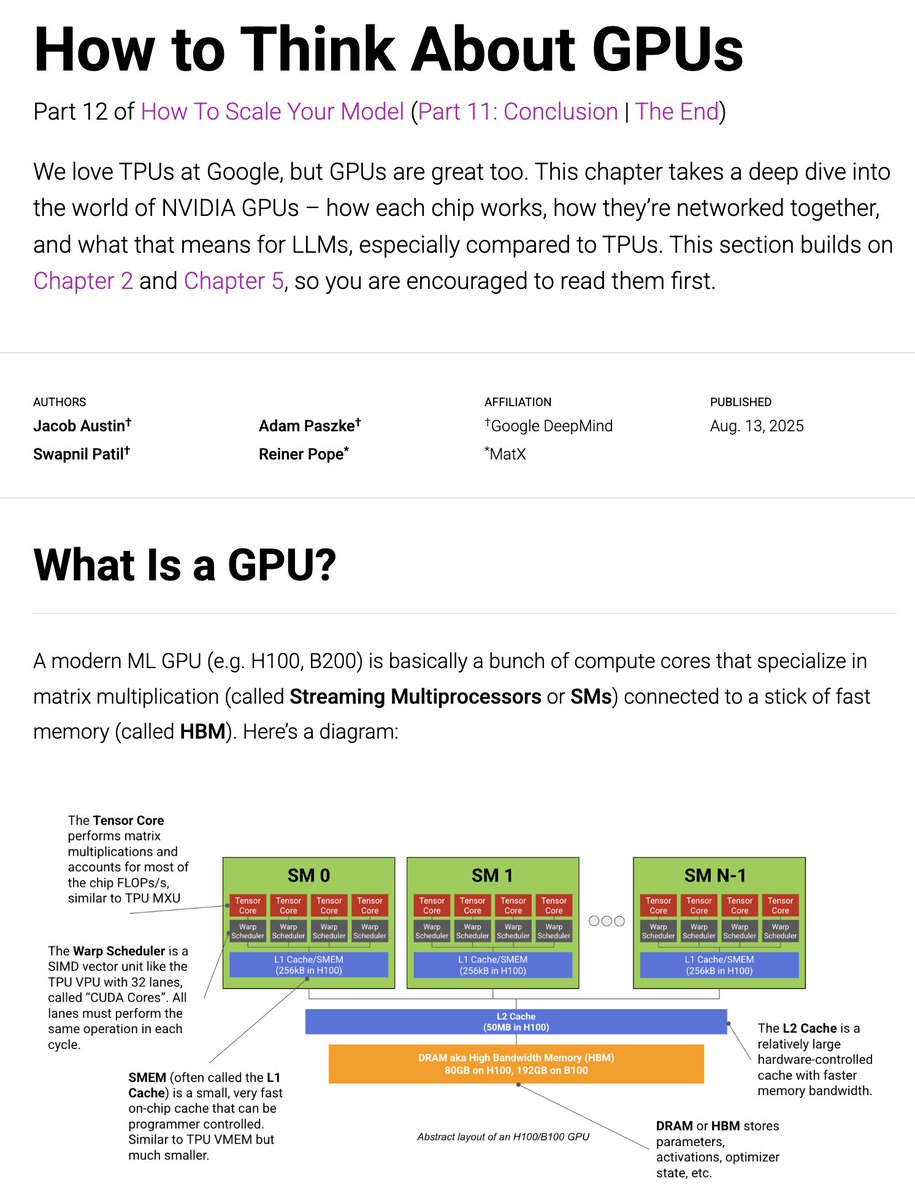
Today we're putting out an update to the JAX TPU book, this time on GPUs. How do GPUs work, especially compared to TPUs? How are they networked? And how does this affect LLM training? 1/n
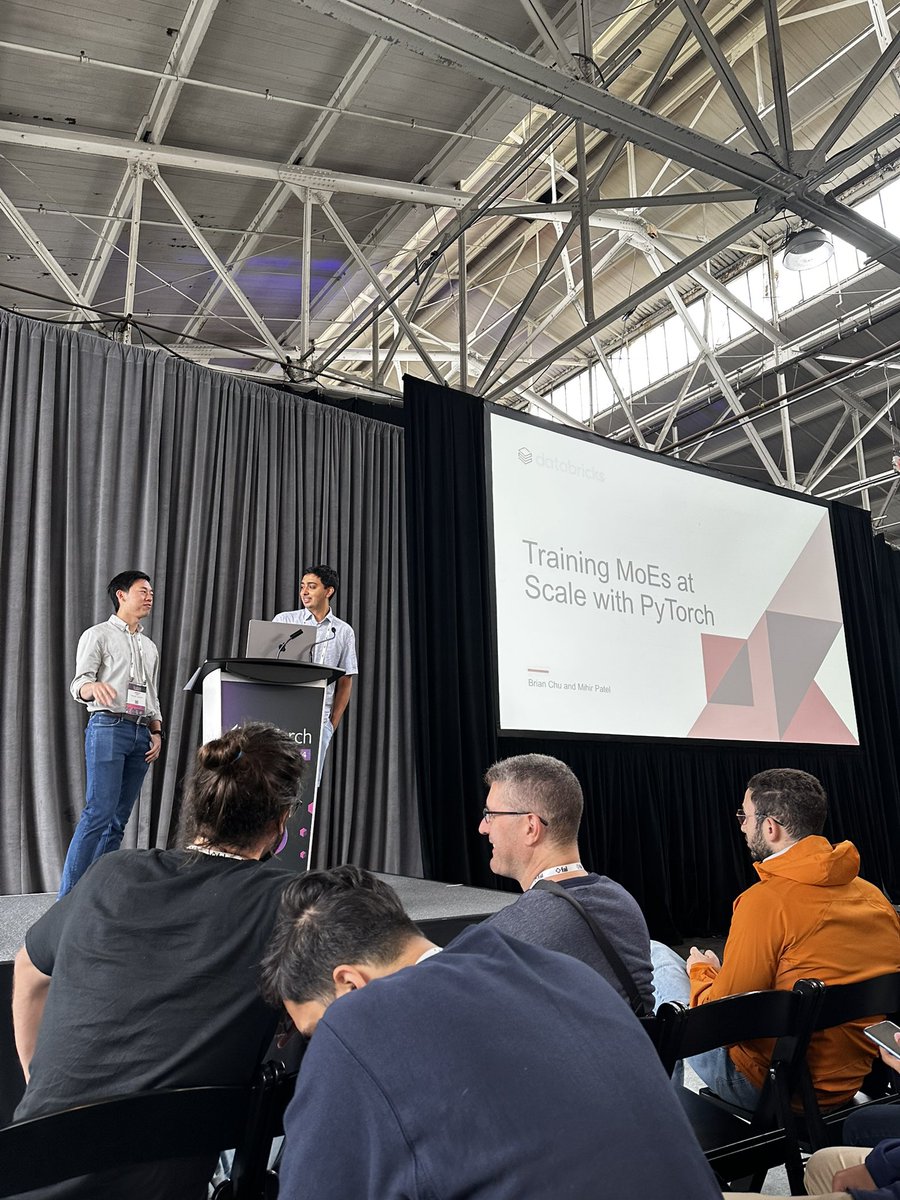
Interned at @agoda in Bangkok (2023) using @ApacheSpark + @llama_index for data projects + a GPT hackathon. Wild to see their creators a year later in SF at the @PyTorch Conference 2024
Reposting a few things from LinkedIn onto here since I’m new to Twitter.
This was from my May 2025 convocation (graduated December 2024) from University of Illinois Urbana-Champaign.
Just built my first PC ever — had to max it out with an RTX 5090 and AMD 9950x3d. Excited to run some deep learning experiments and graphics stuff locally with no bottlenecks. More to come.
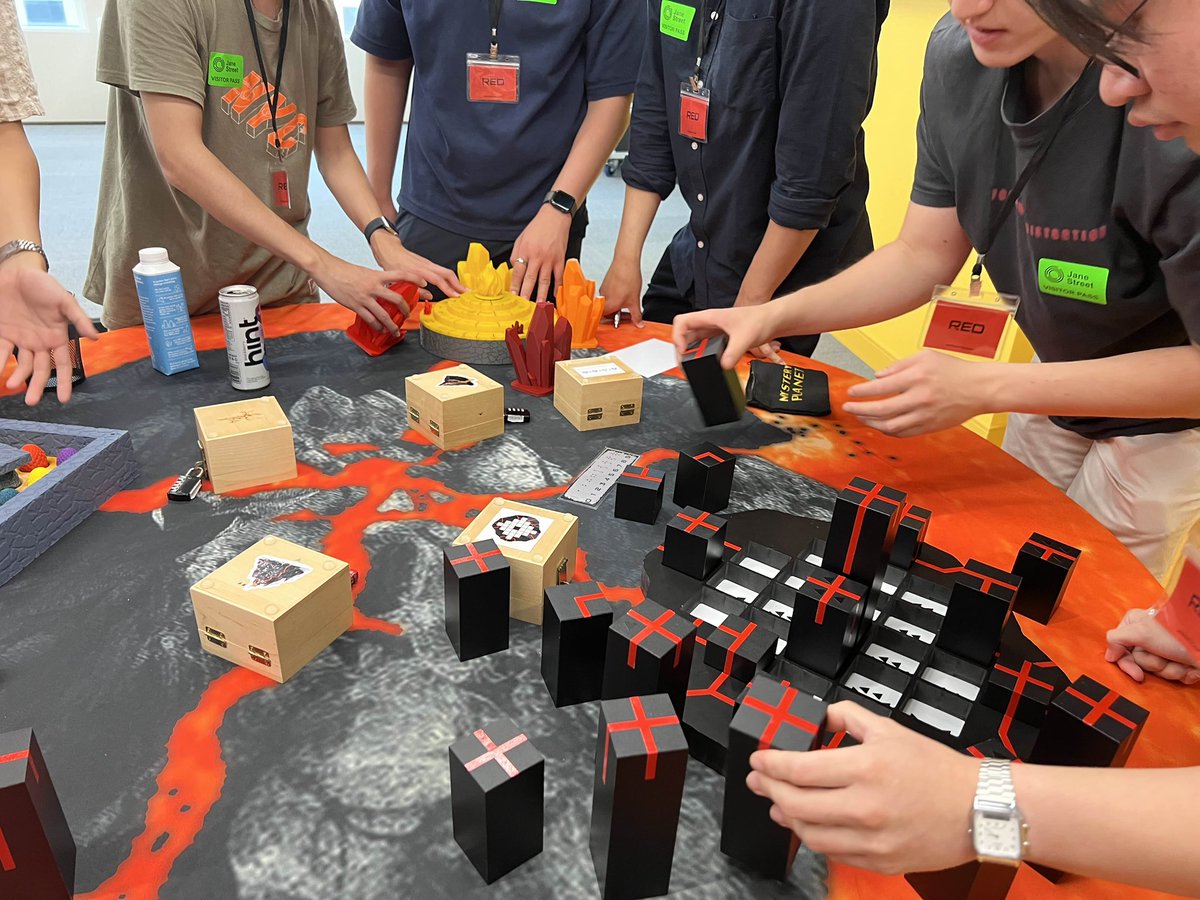
On Sep 6 in NYC, this won't be your typical hackathon where you do your own thing in a corner and then present at the of the day. You'll deploy real models to the market, trades will happen, chaos should be expected. The fastest model is great but time to market matters more.
BREAKING: Anthropic just figured out how to control AI personalities with a single vector.
Lying, flattery, even evil behavior?
Now it’s all tweakable like turning a dial.
This changes everything about how we align language models.
Here's everything you need to know: