If you run growth, ops, or sit in the CMO chair at a GLP-1, TRT, HRT, peptide, or longevity clinic, this is for you.
I put together the 2027 Telehealth Growth Playbook — the same framework I run before I touch a single ad account. Free, no pitch inside.
https://t.co/WvQ2bw7aEG
Your ad leads with the intro price. Patients never clock that month two bills full rate.
That's when cancellations and chargebacks spike, right after the second charge posts. The ad looks fine while retention quietly bleeds.
Show the ongoing price next to the intro price, warn before charge two, and offer a pause or downgrade, not just cancel.
@fwpharma Operator angle: weekly dosing gives telemed GLP-1 programs a built-in reason to check in. Monthly takes that away. Plan your own touchpoints, like clinician check-ins and progress reviews, before that shift lands, not after.
@notdwd Solid structure. In health ads that "why they fall short" beat is where scripts usually get flagged or overclaim. Win it on experience instead: no waiting room, a clinician who follows up, clear pricing. Have a clinician read the script before it runs.
@MohammedAlo Good reframe. Most GLP-1 programs still sell one number on the scale, so patients judge the whole thing by it and leave once it stalls. Set expectations at intake around labs, follow-ups, and habits, so there's a reason to stay past the plateau.
@danieldwalton Agreed. That add-on only works as a one-tap offer right after the first good delivery, not tucked in account settings. Prefill address and payment from the account so adding someone takes seconds, not a whole new signup.
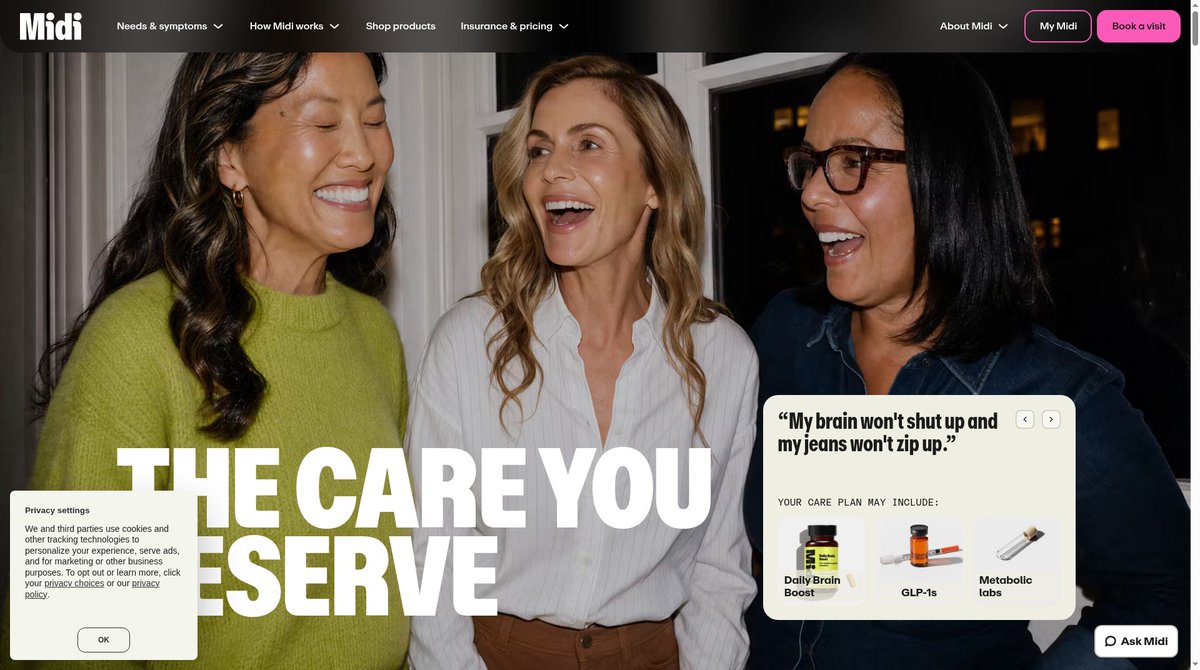
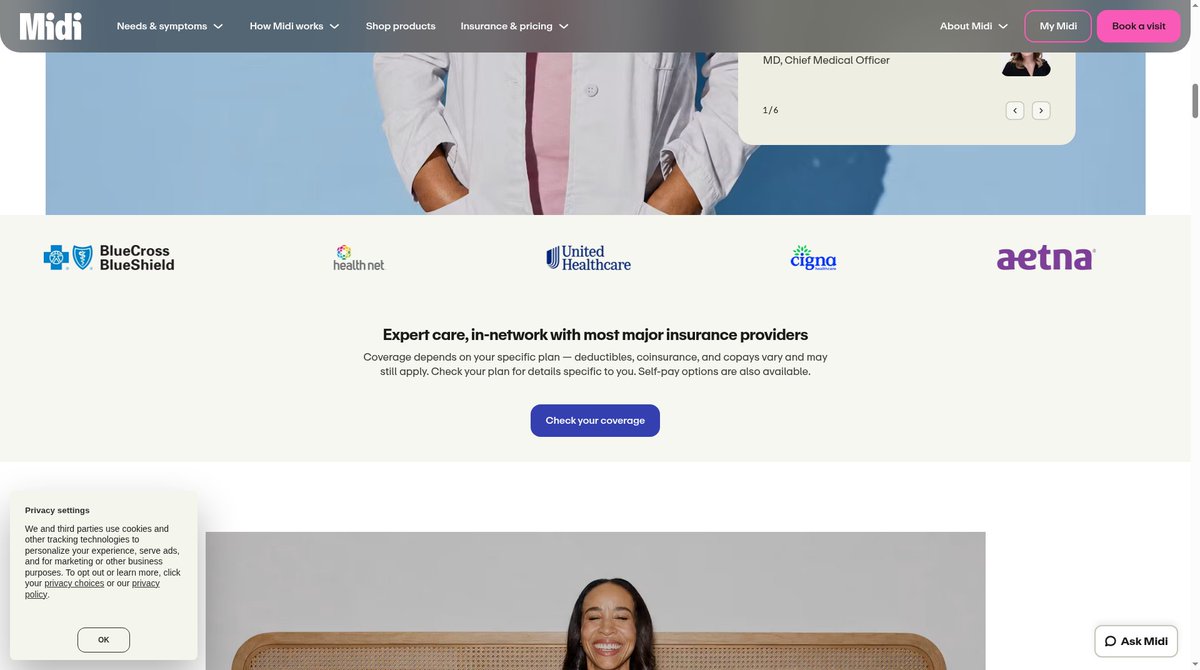
Teardown: Midi Health's homepage.
Insurance-covered menopause and perimenopause care.
The lesson every telemed operator should steal: write the hero in the patient's words, not the clinic's.
@NACDS@MilkenInstitute Patients already trust their pharmacist more than the box the meds show up in. Put a named pharmacist in the experience, a note or a line they can reach with the first shipment, so questions get answered instead of becoming a cancel.
@ZReitano Strong attract, strong repel works on the offer too. Most telemed clinics write for everyone and convert no one. Name the exact patient you're best for, then say plainly who you're not for. The repel is what makes the attract land.
Oura is paying $625M for Counsel Health, whose text-based AI encounters triage users on the way to a telehealth visit.
That's the market pricing the front door, not the intake form.
Your 30-question form isn't qualifying patients. It's where they quit.
Fix this week:
Q1: what do you need help with
One question per screen
Show the clinician and next step before payment or insurance
Save progress
Route to a human fast
Your telemed ads click straight into a checkout form. No clinician name, no face, no care model.
That reads like a drug storefront, not a clinic, to patients and ad reviewers alike. Trust drops. Conversion drops. Review friction goes up.
Show who treats them and what happens after they pay, before the form.
Free 2027 Telehealth Growth Playbook: https://t.co/glzdzjjoH5
@reptidesco This sets the buyer's mental model: labs, a clinician, ongoing support, a set price. Independent clinics can't win on price against that. Win on a clinician patients know by name and a plan that actually adjusts after labs. Show that before checkout.
@James9thLife That flyer earns the scan on guilt and curiosity alone. The real test is what's waiting past the QR in the first second. Same thing kills telemed ads: if the landing page doesn't match the hook's promise, you just paid for a bounce.