You’ve heard of Moore’s Law, which is how software gets faster and cheaper. Well so drug development goes backwards, getting slower and more expensive — so they call it Emoore’s Law https://t.co/obVpMvBckh
Kevin Warsh rode an AI-productivity argument to Trump's Fed chair nomination. He says the boom will hold down prices and let the Fed cut rates. The pitch has run into a public wall of opposition from his future colleagues before he takes the job.
"The rule proposed Monday makes clear that so-called continuation funds, where a firm buys a fund from its own affiliate using its own proprietary valuation methods, wouldn’t be eligible for the Labor Department’s safe harbor." https://t.co/s9kssXmy6U
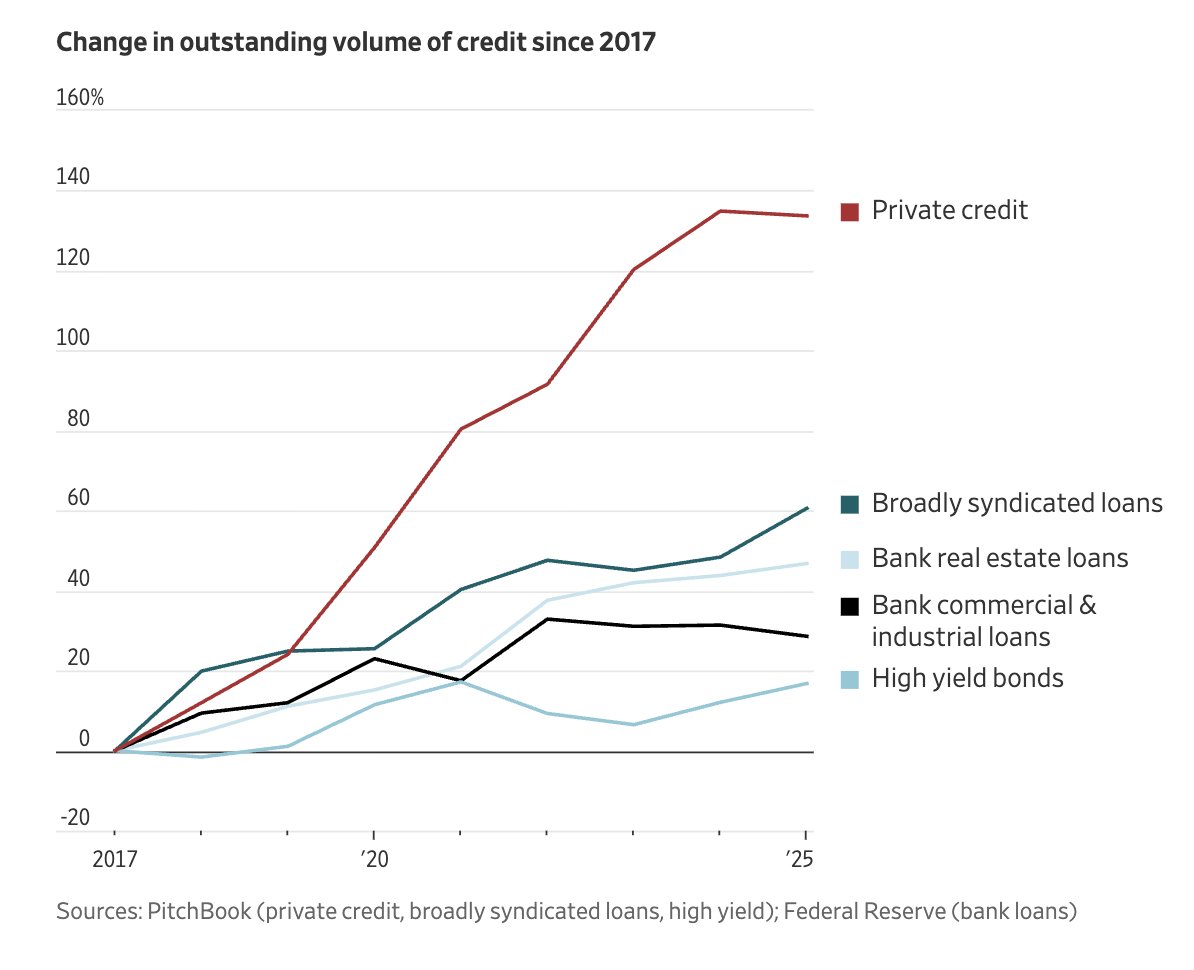
As private credit's troubles mount, it's natural to wonder if it could lead to another financial crisis, as with subprime. I spent some time studying the parallels. Here's my answer. https://t.co/bmRhA0D1v4
"This is the first time in history that a reporter has ever apologized"
A great Alan Greenspan line from this delightful piece by @davidmwessel, who had a ringside seat to the Greenspan Fed that shines through here
Greenspan turns 100 next Friday
https://t.co/rJYt7zAgUG
I asked @CliffordAsness what he thought of the #0dte trade
"These are bad ideas. You're paying too much. You're making Wall Street rich, and yourself poorer." 👀🎰
How are businesses absorbing tariff costs without raising prices? @Citi’s Adoniro Cestari Neto joins WSJ’s Take On the Week co-host @telisdemos to dive into "efficiency" strategies and supply-chain shifts that are reshaping global trade. Listen 🎧: https://t.co/OTSeyY4os0
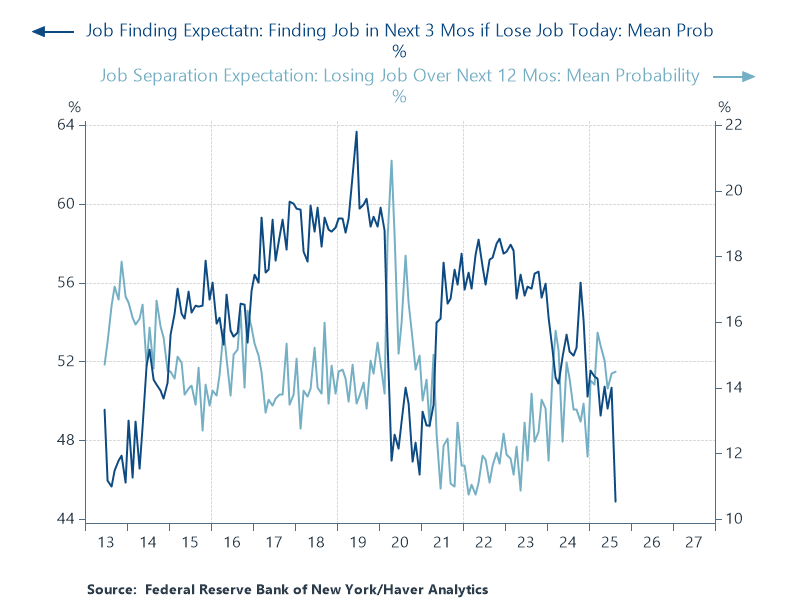
It seems that this state of affairs is seeping into consumer confidence -- those indexes are no longer just about "vibes," there's a growing concern about finding work https://t.co/2Gq54yLdwz
Job finding is the risk in the labor market. According to the NY Fed SCE, the probability of losing a job remains relatively low. However, the mean probability of finding a job if you lose one today plunged to 44.91%, a level never before seen in the history of this survey.
A big question from investors: Are we in a bubble? @TRowePrice's Sébastien Page joins WSJ’s Take On the Week’s @TelisDemos@GunjanJS on why he thinks the AI trade has a strong market position and what investors can learn from sports psychology. Listen 🎧: https://t.co/OTSeyY4Why
Harley-Davidson is in advanced talks to sell a stake in its financing unit as well as its existing motorcycle loan portfolio in a deal worth $5 billion to Pimco and KKR https://t.co/x9S3jF6Rrk
Harley-Davidson is in advanced talks to sell a stake in its financing unit as well as its existing motorcycle loan portfolio in a deal worth $5 billion to Pimco and KKR https://t.co/x9S3jF6Rrk
Folks, can someone help explain where the *new* demand for UST bills comes from? It can’t just be a deposit shuffling around. Is it from paper cash, perhaps a lot of it held overseas? Or is it the buying of bills at the expense of some other asset?
Apollo's Torsten Slok: "If the US dollar stablecoin market grows into the trillions, it will significantly grow demand for US T-bills." Currently, the market is largely just used for crypto trading, and even still it ranks as a notable owner of Treasuries. https://t.co/ALJomtv9z4
Hiring freezes and staff shortages have reduced how many prices and outlets the BLS can check, leading to a potentially less reliable consumer price index, @mattgrossman reports. https://t.co/OJO0jTfjsa