Serving professional money managers. Tweets are an exchange of ideas not investment advice. Life is short, if you're a jerk, you'll be unceremoniously blocked.
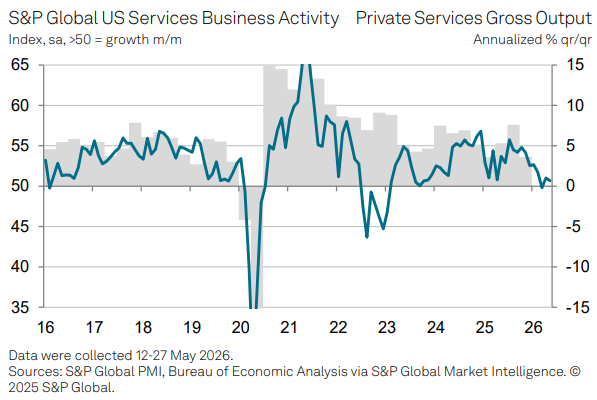
Important to remember that these two series don’t have the same industry composition. ISM “services” is really anything that isn’t manufacturing and includes mining and utilities.
Services PMI from @SPGlobalPMI looked quite different from the ISM PMI in May ... revised down from an initial 50.9 to 50.7, with the outlook falling to the lowest since October 2022
“Banking conditions were stable across most Districts; however, residential mortgages, consumer, and agricultural loan delinquencies were noted as rising in several of the Districts.”
The HPW Index ticked down to -0.14 in April from a revised value of -0.03 in March, driven by a lower quits rate. The monthly index is consistent with a pace of quarterly ECI (Employment Cost Index) wage growth of 0.72% and annual wage growth of 2.91%.
https://t.co/kJnSAtf4FN
$NDX printed a new high. Bitcoin is sitting ~45% below it's October peak. The liquidity proxy that led risk all of 2025 has decoupled - lower.
Broken relationship....or a warning? bitcoin:native
As odds for the CLARITY Act come down, Bitcoin is coming under pressure. We see near-term support at 62,600, then 52,400. In downtrends, support levels tend to be floors that are eventually broken.
The New York Knicks fan base isn’t real life. To wit, “regional (NY, NJ, CT) small businesses reported severe declines in employment and revenue growth in 2025 and became more pessimistic about growth in 2026.”
The latest from @LibertyStEcon
Struggling Regional Small Businesses Deeply Pessimistic About 2026 Prospects
By Will Aarons and Asani Sarkar
https://t.co/m0hlCp0lJV
@sonusvarghese@SamRo The "bear case" on the saving rate probably goes like this: If consumers see the rise in gas prices as temporary, they will draw down savings to maintain spending. If that intuition turns out to be correct, however, then the drop in gas prices won't do much to lift consumption.
"...the personal saving rate is notorious for being revised up because the government tends to undercount incomes in real time. Thus, as household income is 'found,' each vintage of the saving rate tends to get revised up. I remember this vividly in the mid-to-late 2000s. The saving rate was initially reported as negative only to be revised up later. In the end, it did not matter but the saving rate is not a useful timing tool either." @RenMacLLC
Inventory building has been an important driver of manufacturing activity of late. However, in May, fewer purchasing managers report their level of inventories as "too low." Thus, we'd expect less inventory building in the back-half of 2026.
Got a question and a face for finance?
Drop us a video or voice memo and you just might make the RenMac "Off-Script" pod. 🎙️
Submit a question, get a hat, join the club: https://t.co/T5BlzHauHZ
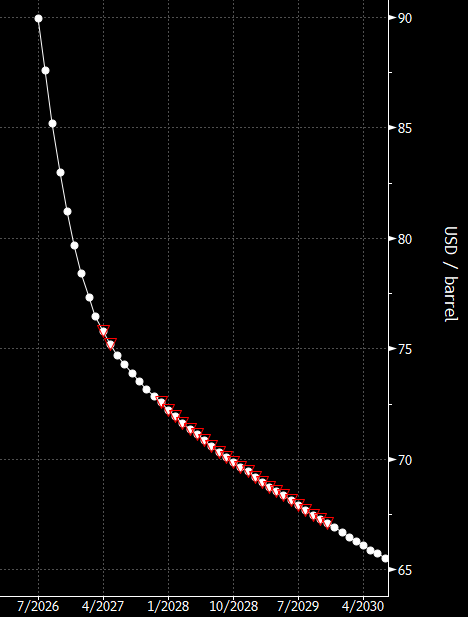
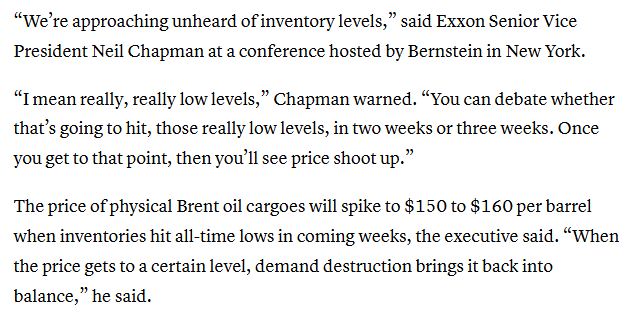
@JoshYoung Backwardation reflects tightness, but price is the balance between commercial hedgers and speculators (i.e. consensus future $ views GIVEN physical constraints). The collective mkt wisdom (i.e. they know what $XOM said) has probabilistically discounted that scenario to 0ish
This makes very odd assumptions about the market's forward-looking nature. If the price will rise in the next few weeks because of something that is already known (low inventory levels), then why hasn't it happened already?