Credit cards originated during 2020–22 experienced a sharp rise in serious delinquencies in 2023–24, potentially reflecting weaker borrower credit quality at origination. However, their contribution to new delinquencies has since diminished.
Source: https://t.co/j0hc7f6R7y
Since 2000, stocks have returned an average of 7.7% annually, but missing the 10 best trading days each year would have turned that gain into a 15.4% average annual loss, highlighting the risks of market timing.
Source: @RyanDetrick
Oxford Economics expects a record El Niño to leave lasting scars, with world GDP falling to a trough near 0.9% below baseline in 2028 and staying about 0.7% lower through 2031, as emerging economies bear the persistent loss.
Source: @OxfordEconomics
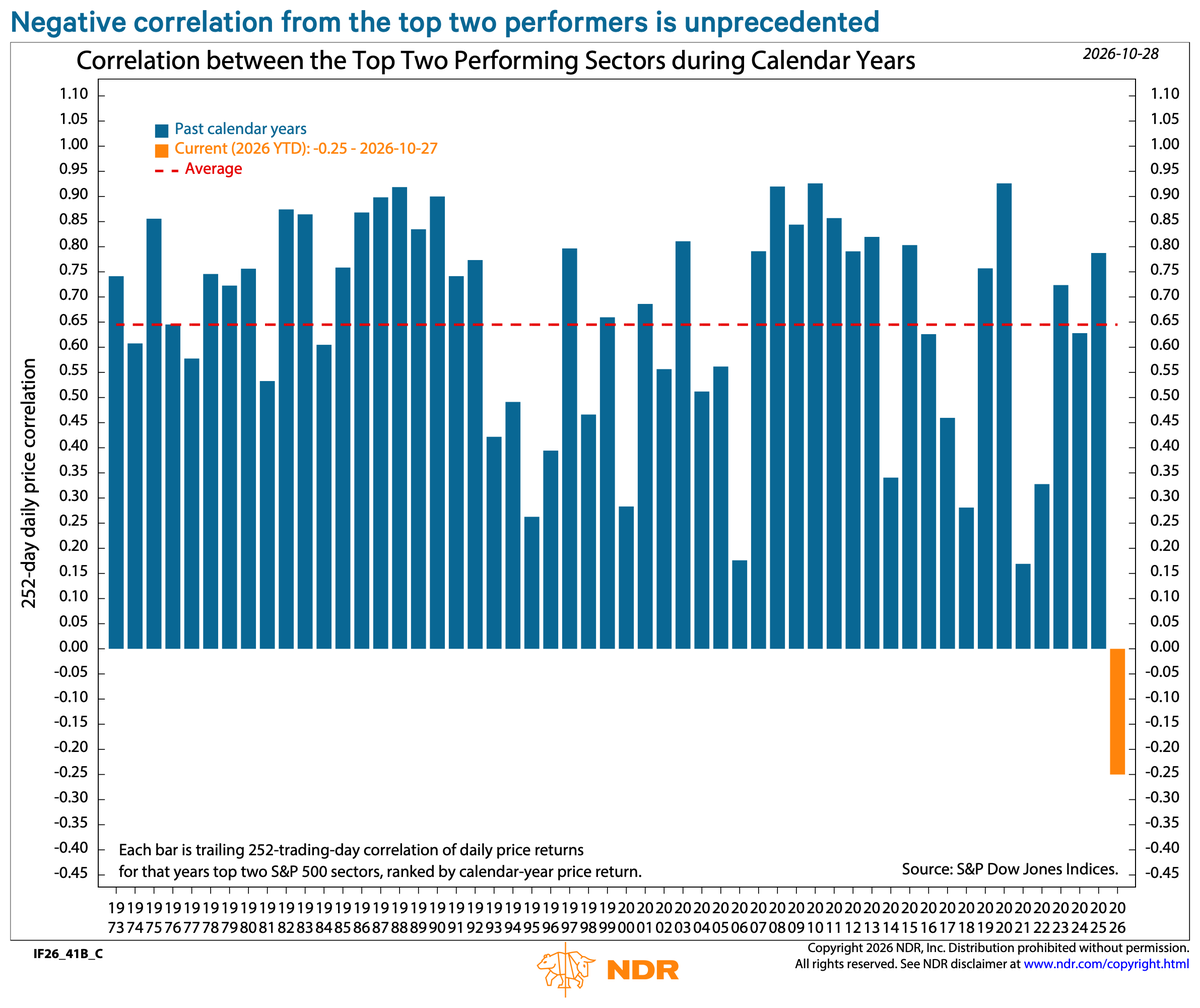
Energy and technology, the S&P 500’s two best-performing sectors in 2026, have exhibited a negative one-year return correlation, potentially marking the first such divergence between annual sector leaders in 54 years.
Source: @NDR_Research
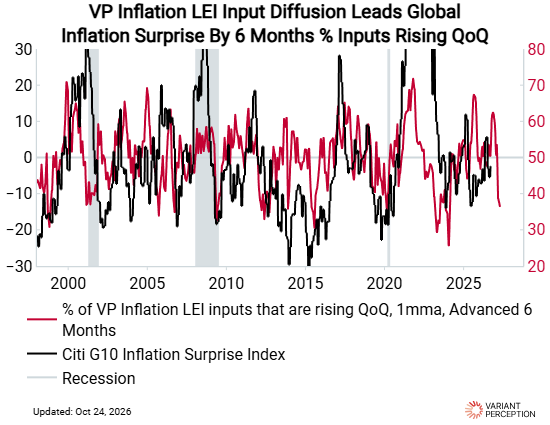
Our leading indicators show that both global growth and inflation impulses are now firmly negative.
The chop we have seen in our global growth diffusion has ended with a clear negative impulse. This suggests both growth and inflation surprises are biased negative over the next 6 months.
New-home inventory stands at 8.5 months of supply, but completed new homes represent just two months of supply, compared with 5.8 months in early 2009.
Source: @EPBResearch
Unlike the dot-com bubble, when global technology stocks surged far ahead of earnings, the current rally has been supported by stronger earnings growth.
Source: @steve_donze