Picking winners feels hard. Avoiding the losers feels easier.
$VPX uses the capital cycle, quality, and crowding to kick out the worst ~400 stocks from the largest 500 US stocks, while utilizing macro risk models to react to the business cycle.
Stay invested in America with Variant Perception.
Learn more at https://t.co/aVUOFZeMbG
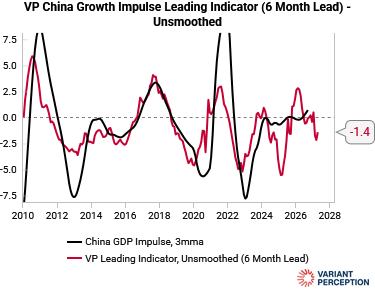
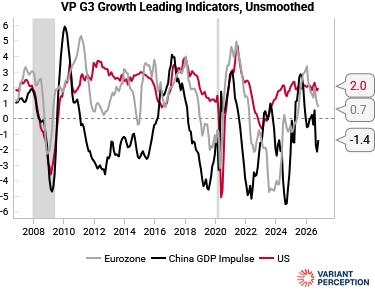
Our China growth impulse leading indicator ticked up this month but still remains at a very weak level.
In October we had thought China was moving closer to a policy pivot, but this uptick suggests we are not quite at policy panic levels yet.
It's genuinely late cycle, and it's going faster than I would have anticipated.
Our Macro Risk Indicator has seen this kind of deterioration five times:
2000, 2007, 2010, 2015, 2018.
Today feels more like 2000 or 2007, where the ability for policy to act pre-emptively is low.
First-time buyers face 7.0% mortgage rates, against an effective mortgage rate of 4.4% on all outstanding loans.
This lock-in keeps the market frozen.
Owners won’t move and give up cheap mortgages, so turnover stays low.
Structurally low affordability leaves housing exposed to more hikes
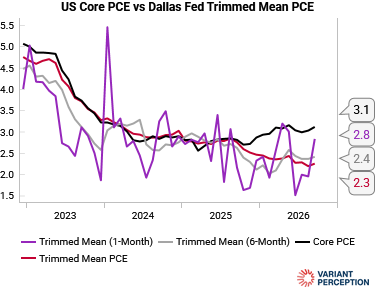
In our November Macro Snapshot, we noted markets were sniffing out a potential Fed pause, but October’s hot CPI makes that much less likely.
But the medium-term trend is still disinflationary.
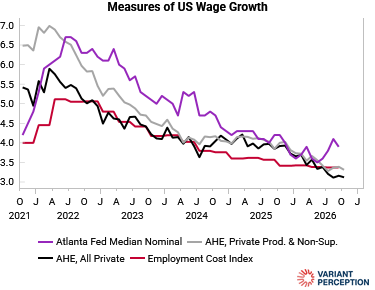
Wage growth keeps slowing on a year-on-year basis. Consensus sees broad, persistent inflation; we see a level problem, not a trend problem.
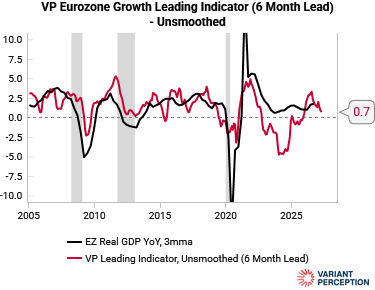
Our Eurozone inflation leading indicator ticked back up to the spring highs again.
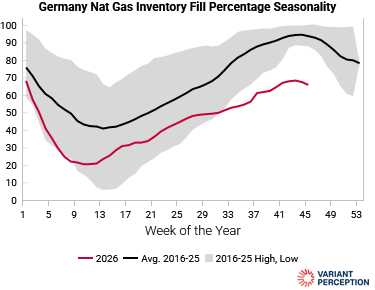
We continue to monitor the winter tail risk from depleted natural gas storage.
Stanley is way underfollowed. One of the few people I've met who is working in AI, and is bullish on AI, but who has a substantial background working in credit, and will actually speak candidly instead of just being a cheerleader or a doomer. Everyone follow @stanleylee21
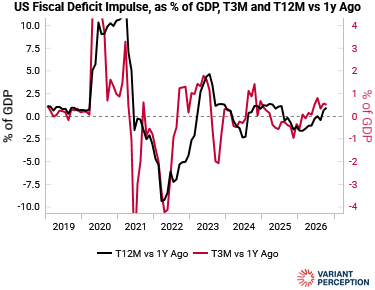
Consensus still expects a modest positive impulse in 2027, but a divided government makes new stimulus unlikely.
1. The midterms have fractured policy. Administration officials and Fed members are pushing their own agendas, and a divided Congress limits cooperation.
2. 2026’s fiscal boost was built on one-offs (the OBBBA and tariff refunds). Consensus still expects a modest positive impulse in 2027, but a divided government makes new stimulus unlikely.
AI and a positive fiscal impulse have supported growth this year, but the risks to both have shifted for 2027.
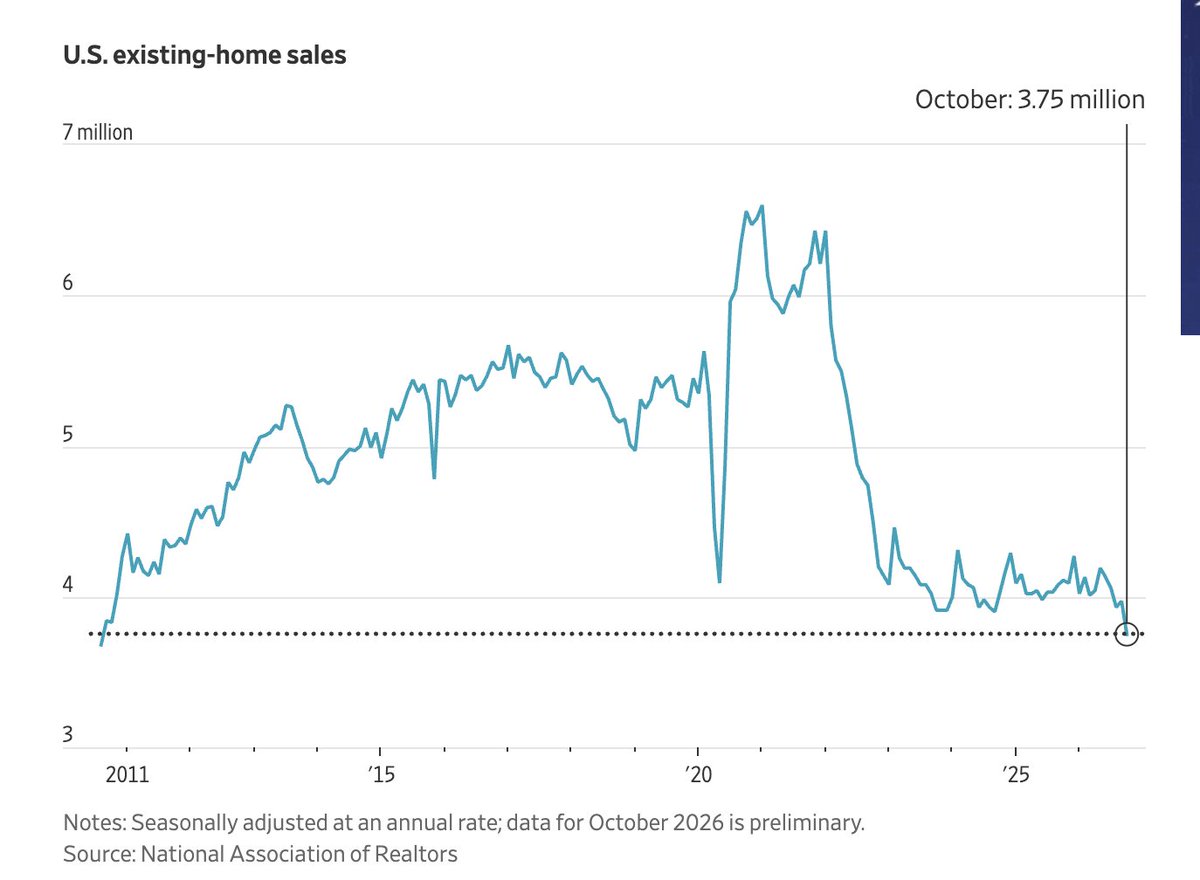
Housing is the classic late-cycle casualty of tighter policy.
October existing home sales fell to their lowest since August 2010, while building permits remain near multi-year lows.
Global Growth momentum weakening, falling excess liquidity points to flatter curves
-> US growth LEI is still steady
->China remains weak
-> Eurozone’s is deteriorating.
We remain in a late-cycle regime, where policy stays restrictive while growth slows.
NEW ODD LOTS;
The impossible trinity that hangs over the Nvidia crisis.
@tracyalloway and I talk to Tian Yang of Variant Perception about the simultaneous pressure on states to stabilize prices, maintain consumer comfort, and protect sovereignty. https://t.co/6w1OeH9MZU
Our dollar regime model is mildly bearish on the dollar.
The terms-of-trade shock usually means demand for the dollar goes up, but that needs to be offset against growth slowing next year and the political need for a weaker USD.
What's worrying us isn't necessarily the fundamentals of AI.
It's more macro liquidity and the credit cycle.
Since the Fed hike in September, the market is telling you we're running out of marginal buyers.
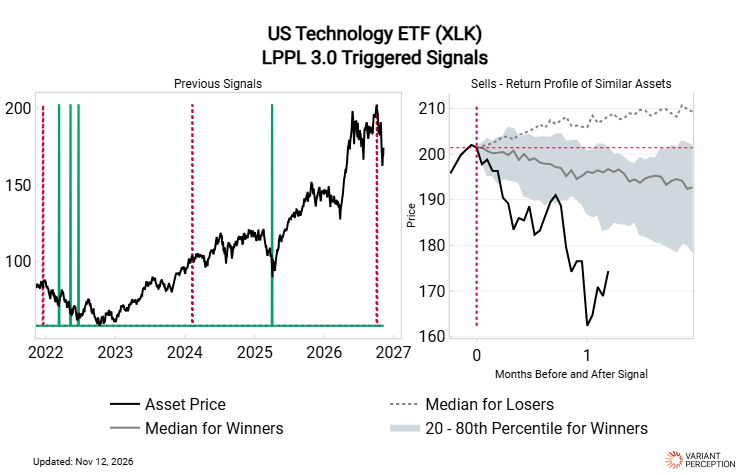
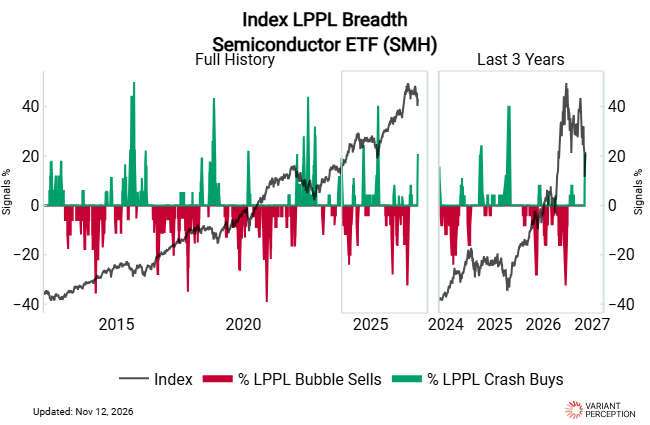
In hindsight that LPPL sell signal from October worked remarkably. Today, things have flipped with a cluster of LPPL buy signals on semi names over the past week
There's two aspects to the AI trade: investor behavior and fundamentals.
Behaviourally, there's a lot of analogs to the dot-com: breadth narrowing, central banks tightening, late-cycle IPOs.
Offset against that is the earnings momentum.
That's the tension, and why we're going to be stuck in this market chop.