el ingeniero que construyó Claude Code acaba de publicar un video de 28 minutos sobre cómo escribir prompts que realmente funcionan
he visto cursos de 300$ que no cubren lo que él muestra en los primeros 10 minutos
archivos CLAUDE.md, atajos de memoria, sesiones paralelas, patrones de prompting
todo en un video y completamente gratis
funciona seas desarrollador, principiante o alguien que lleva meses usando Claude
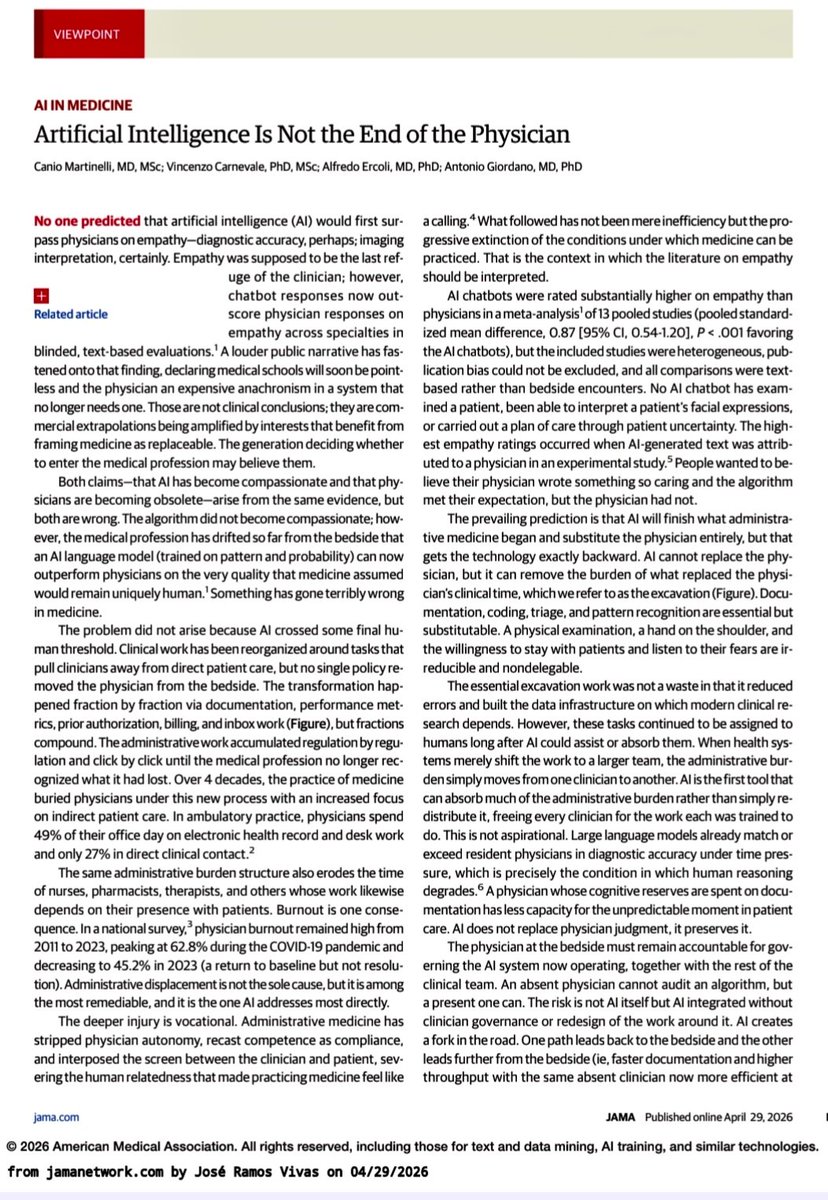
¿Es la IA el fin de los médicos? 🩺
👩🏻⚕️👨🏻⚕️
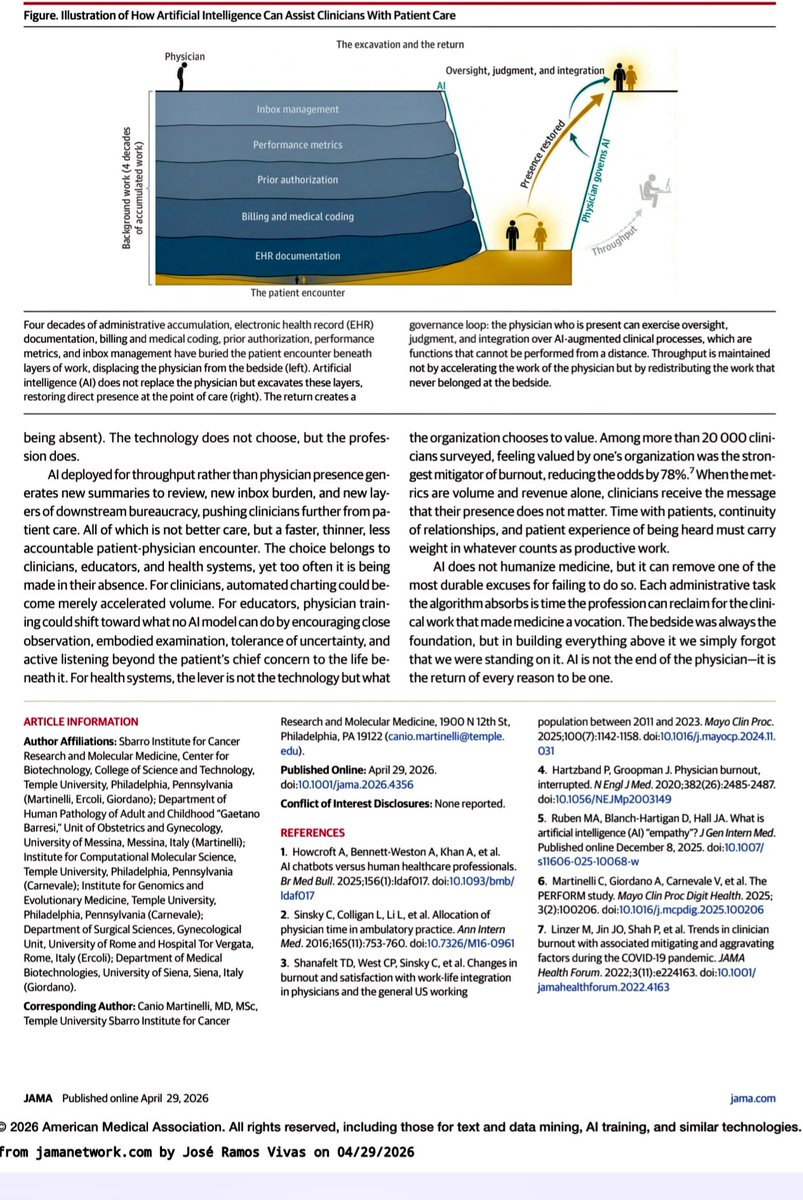
¡Al contrario! Un nuevo artículo en JAMA propone que la IA no viene a reemplazarnos, sino a “desenterrarnos” de la montaña de burocracia. 🚜💎
🧵👇
1️⃣ El problema:
Durante décadas, la medicina se ha enterrado bajo capas de tareas administrativas (EHR, facturación, métricas, autorizaciones previas). 📑
Los médicos pasan casi la mitad de su jornada en tareas de pantalla, muy por encima del tiempo dedicado al paciente. 📉
2️⃣ El mito de la empatía:
Los chatbots de IA puntúan más alto en “empatía” en respuestas textuales, pero no porque “sientan” más, sino porque el agotamiento clínico ha erosionado la presencia emocional del médico en consulta. 🤖💔
3️⃣ La IA como “Excavadora”:
El gran potencial de la IA no es solo el diagnóstico, sino absorber la carga administrativa acumulada durante cuatro décadas. 🧹
Al eliminar ese sedimento burocrático, la IA devuelve al médico a su lugar natural: la cabecera del paciente. 🛌✨
4️⃣ El riesgo:
Si usamos la IA únicamente para aumentar productividad (“ver más pacientes más rápido”), solo crearemos una ausencia más eficiente. 🚫
El objetivo debe ser restaurar la exploración física, la escucha activa y la presencia clínica. 👂🤝
5️⃣ Gobernanza:
El médico debe supervisar, auditar y contextualizar el algoritmo.
No es IA vs. Humano: es IA + Humano presente y responsable. ⚖️👨⚕️
#IA #Medicina #SaludDigital #Doctor #Innovación #JAMA #HealthTech #HumanismoMédico
Exposome and brain aging: your environment may be shaping your brain faster than you think. The exposome refers to the sum of all environmental exposures you experience across your life including air, water, social conditions and policies. Hernandez and colleagues describe in a new paper in Nature Medicine how the exposome across 34 countries influences brain aging and risk for cognitive decline.
Key Points:
- Combined environmental exposures explained far more about brain aging than any single factor alone.
- Physical exposures like air pollution, temperature and limited green space were linked to structural brain aging.
- Social exposures like inequality, reduced rights and poverty were linked to functional brain aging and brain network changes.
My take: This is one of those papers that shifts how we think. Brain aging is not just about genes or disease, it is about the world we live in. The cumulative burden of exposures may quietly accelerate aging even before symptoms appear. If we want to change brain health, we must think beyond the clinic and into our communities.
Here are 5 points that resonated w/ me:
1- Your environment is not background noise, it is an active driver of brain health across your lifetime.
2- Air quality, water, climate and access to green space may directly influence how fast your brain ages.
3- Social factors like inequality, education and community stability matter just as much as biology.
4- Multiple small exposures can combine and amplify risk more than any single factor alone.
5- Improving environments and policies may be one of the most powerful ways to protect brain health for future generations.
https://t.co/0lVI6w2FHu #parkinson #alzheimer #dementia
Especial médicos🩺⚕️🏥👨🏻⚕️👩🏻⚕️.
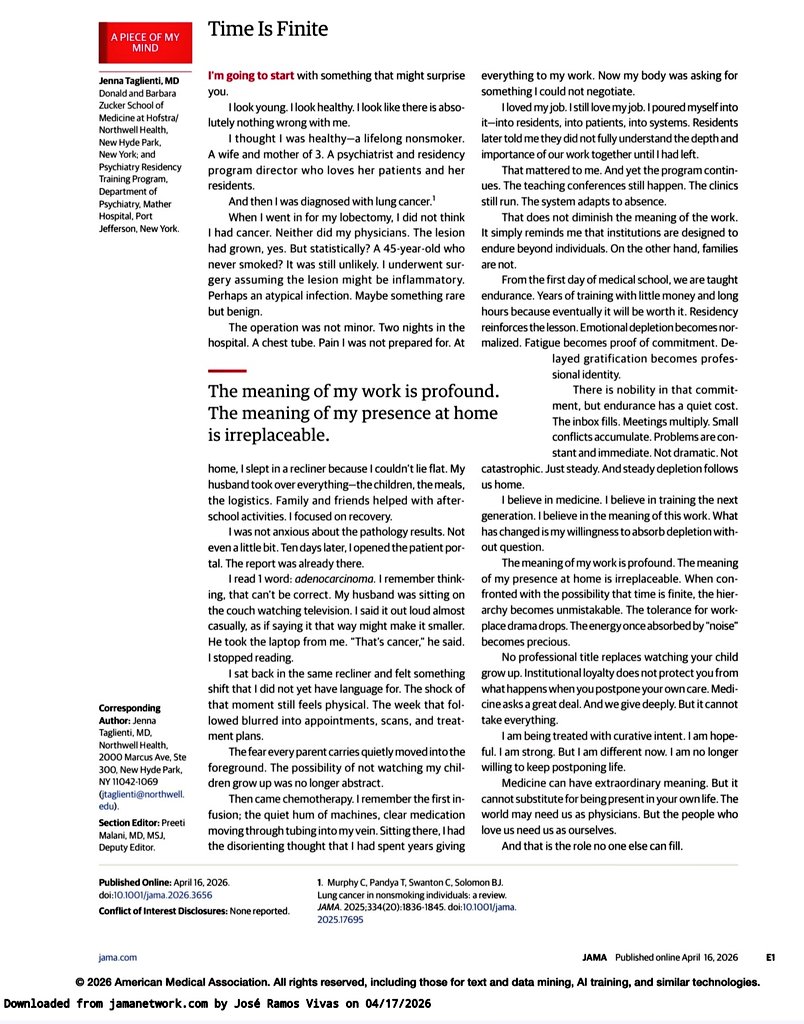
Os dejo esta carta en JAMA. Se la pondré a mis alumnos en la próxima clase:
He elegido estas frases :
👇🏻⏰
«La medicina puede tener un significado extraordinario. Pero no puede sustituir el estar presente en tu propia vida. El mundo puede necesitarnos como médicos. Pero las personas que nos aman nos necesitan como nosotros mismos. Y ese es el rol que nadie más puede llenar.»
«La residencia refuerza la lección de que las instituciones están diseñadas para perdurar más allá de los individuos. En cambio, las familias no.»
«Creo en formar a la próxima generación. Creo en el significado de este trabajo. Lo que ha cambiado es mi disposición a absorber el desgaste sin cuestionarlo.»
«Ya no estoy dispuesta a seguir posponiendo la vida. La medicina exige mucho. Y nosotros damos profundamente. Pero no puede tomarlo todo.»
«El significado de mi trabajo es profundo. El significado de mi presencia en casa es irremplazable.»
We've uploaded a fruit fly. We took the @FlyWireNews connectome of the fruit fly brain, applied a simple neuron model (@Philip_Shiu Nature 2024) and used it to control a MuJoCo physics-simulated body, closing the loop from neural activation to action.
A few things I want to say about what this means and where we're going at @eonsys. 🧵
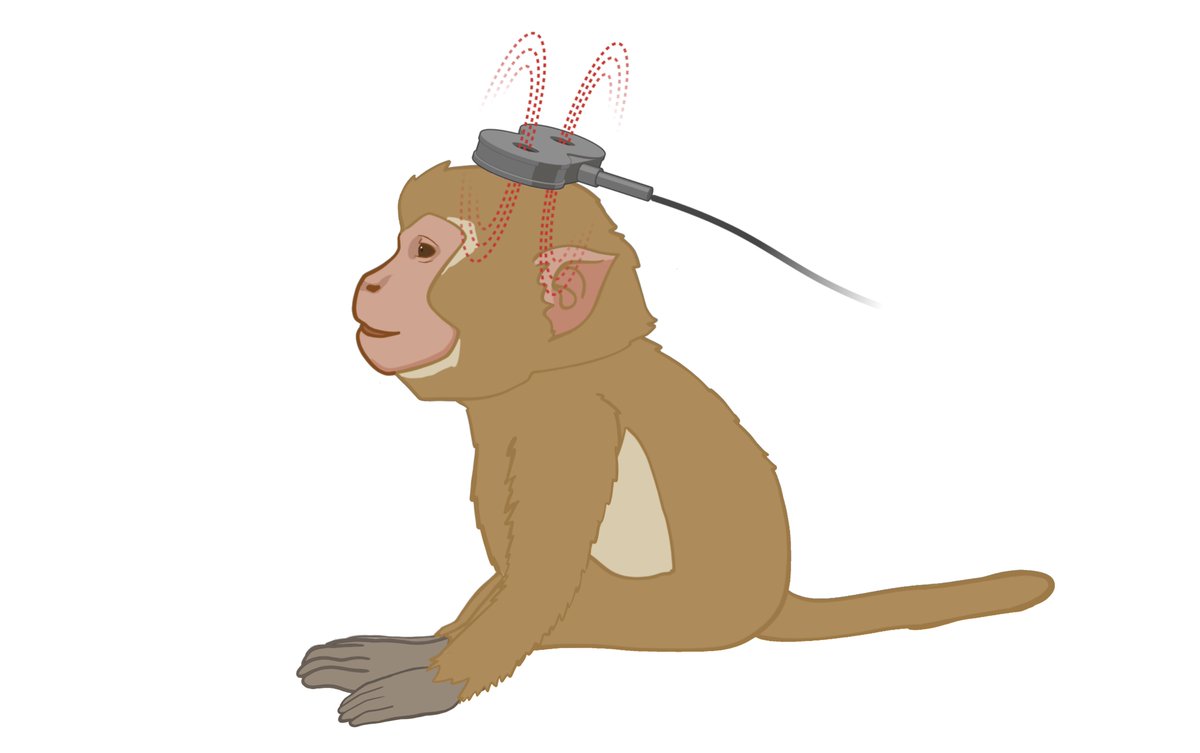
Chen et al. show that bilateral theta burst stimulation enhances recovery in a non-human primate model of ischaemic stroke. The intervention improved upper limb function and promoted white matter repair, supporting its potential for stroke rehabilitation. https://t.co/c2fjxU5kM7
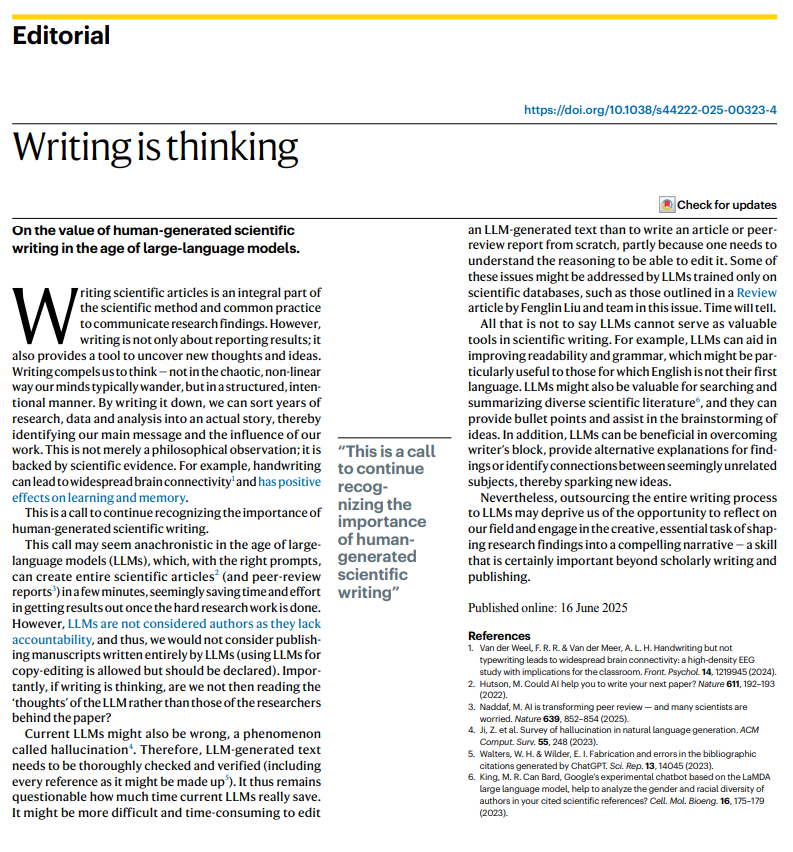
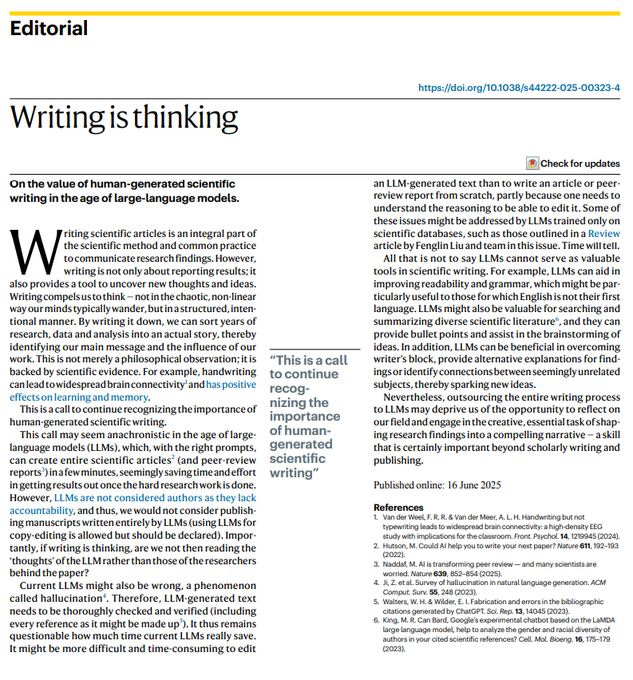
Writing is thinking
Outsourcing the entire task of writing to LLMs will deprive us of the essential creative task of interpreting our findings and generating a deeper theoretical understanding of the world.
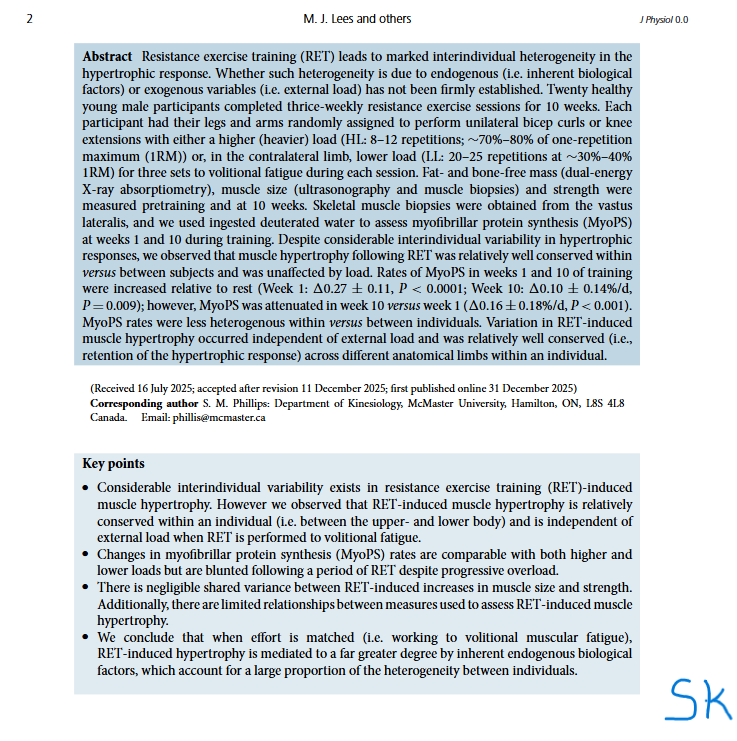
BUILDING MUSCLE: WHAT SCIENCE SAYS ABOUT TRAINING SMARTER
If your goal is muscle growth (hypertrophy) and strength, then a few training principles matter most:
1. Load, Reps & Effort
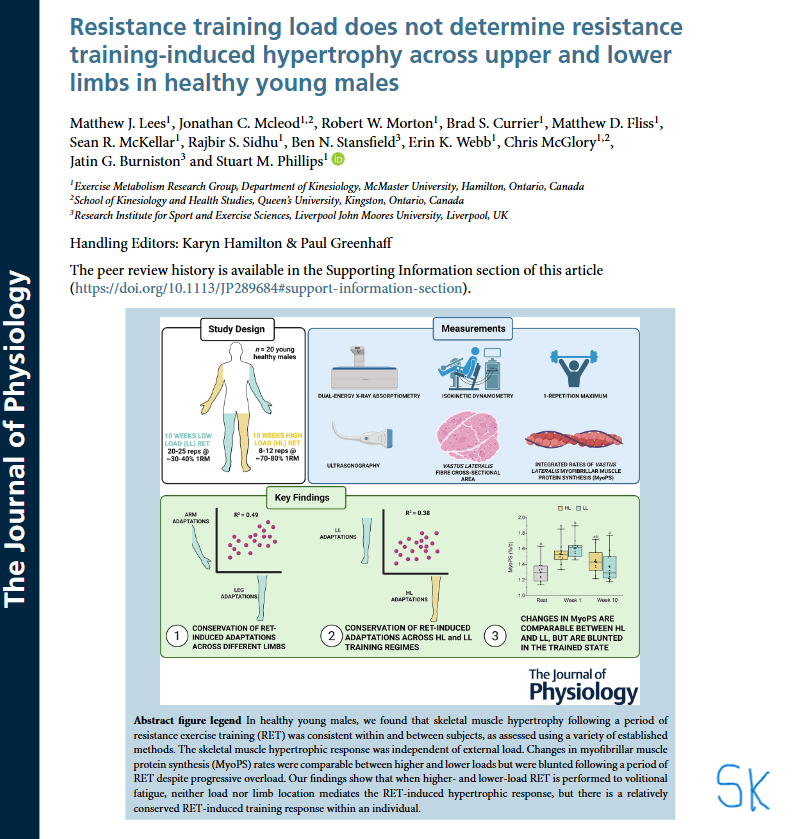
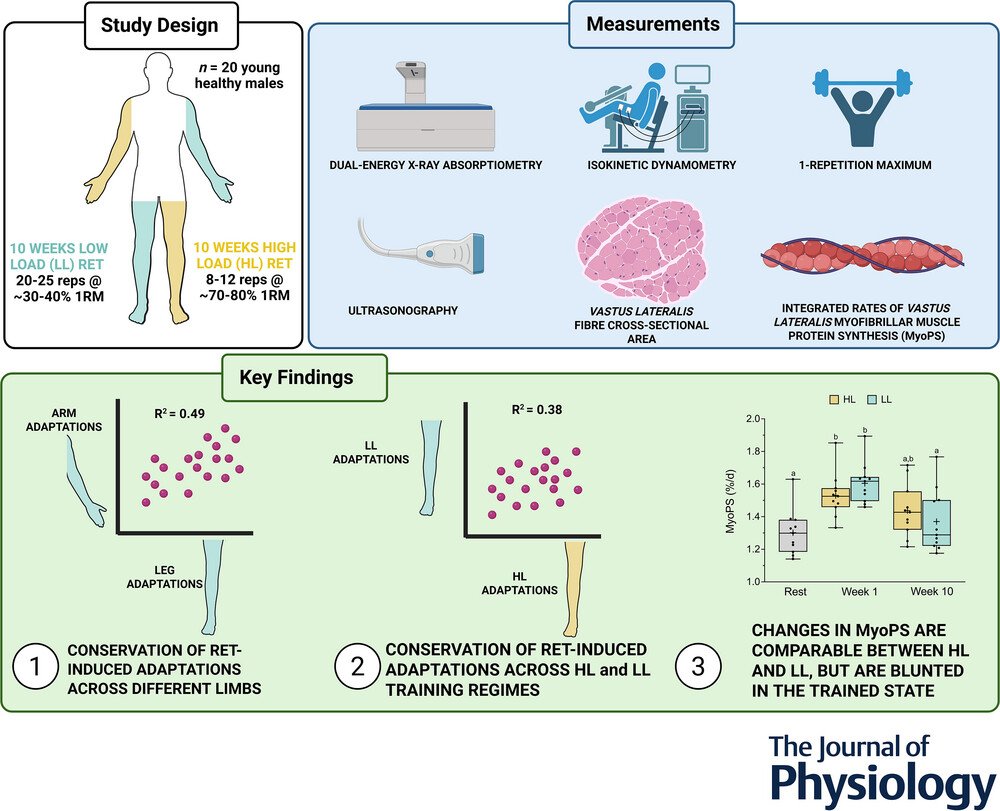
▶️Whether you lift heavy or light weights, the key driver of muscle growth is how hard your muscles work, especially when you push close to volitional fatigue (that point where you can’t do another rep with good form).
▶️When effort is matched, muscle size increases are similar regardless of how heavy the load is. Work until you’re near fatigue; this is more important than the exact weight lifted.
▶️However, practical hypertrophy programming often uses:
• ~6–12 repetitions per set
• Moderate loads that you could lift for ~8–12 reps
This helps generate enough tension and volume for muscle growth while keeping workouts efficient.
2. Sets & Training Volume
Muscle growth responds to total weekly training volume- essentially the total work you do per muscle group over the week.
✔ Most people see great results with ~10–20 sets per muscle group per week.
✔ Beginners often benefit from the lower end (~8–12 sets), while experienced lifters may do more.
✔ Weekly volume is more important than cramming too many sets into one workout.
3. Training Frequency
▶️Rather than training one muscle hard only once a week, hitting each muscle group ~2 times per week tends to produce better growth when overall weekly volume is the same.
▶️Splitting sets across multiple sessions also helps recovery and performance.
4. How Many Muscles per Session?
A balanced strength session ideally targets most of the major muscle groups:
✔ Chest
✔ Back
✔ Legs (quads, hamstrings, glutes)
✔ Shoulders
✔ Arms
✔ Core
For most adults, 4–6 exercises per workout is a good range. This covers all major muscles without overloading the session.
5. How Many Sessions & Duration?
▶️For a healthy adult seeking hypertrophy:
✅ 2–4 strength training sessions per week often works well.
▶️Sessions can be ~45–75 minutes including warm-up and cool-down.
▶️Beginners may start with 2–3 sessions/week, advancing to 3–4 as they adapt.
▶️All sessions should include exercises that challenge muscles close to fatigue.
Bottom Line
➤ Effort matters more than weight: Push reps until you are near fatigue.
➤ Train each muscle ~2×/week with enough total sets.
➤ 10–20 sets per muscle weekly is a sweet zone for growth.
➤ A balanced program with 4–6 exercises per session keeps your workouts efficient.
➤ Consistency beats complexity; regular sessions over months deliver visible muscle gains.
Dr Sudhir Kumar
Neurologist, Hyderabad
@hyderabaddoctor
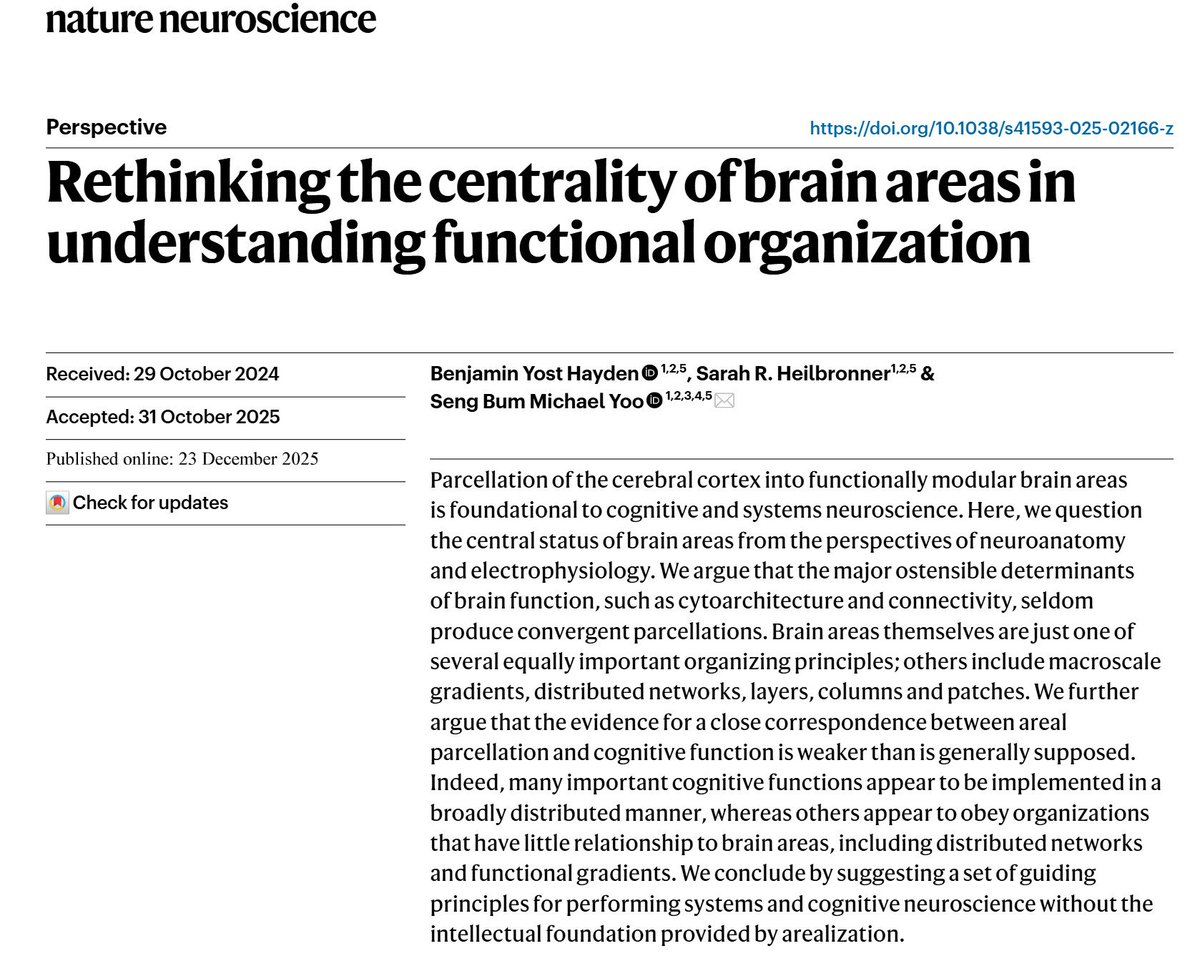
𝗥𝗲𝘁𝗵𝗶𝗻𝗸𝗶𝗻𝗴 𝘁𝗵𝗲 𝗰𝗲𝗻𝘁𝗿𝗮𝗹𝗶𝘁𝘆 𝗼𝗳 𝗯𝗿𝗮𝗶𝗻 𝗮𝗿𝗲𝗮𝘀
New paper I anticipate will become a classic in neuroscience and a must-read for students at all levels.
Understanding brain function beyond brain areas.
https://t.co/OjQPX87cfw
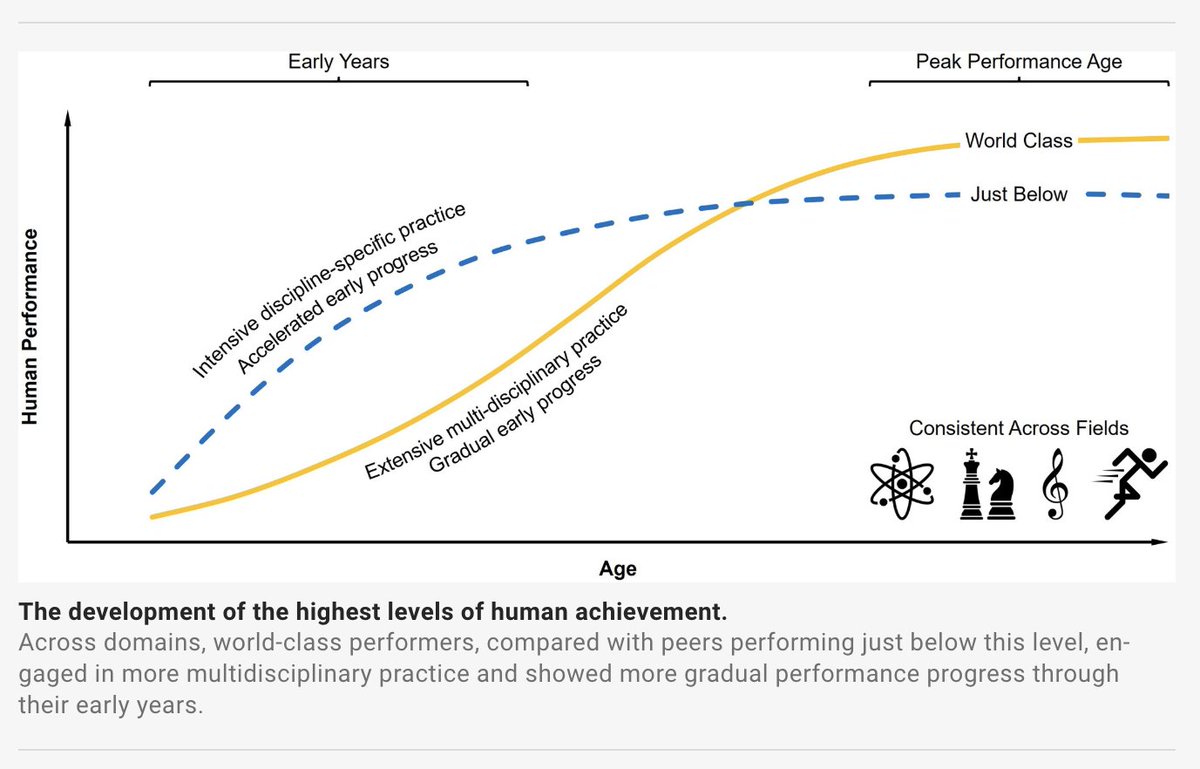
A massive new study on peak performance included 34,000 international top performers: Nobel laureates, renowned classical music composers, Olympic champs, and the world’s best chess players. It shows early specialization is a trap, and the road to greatness is long and varied.
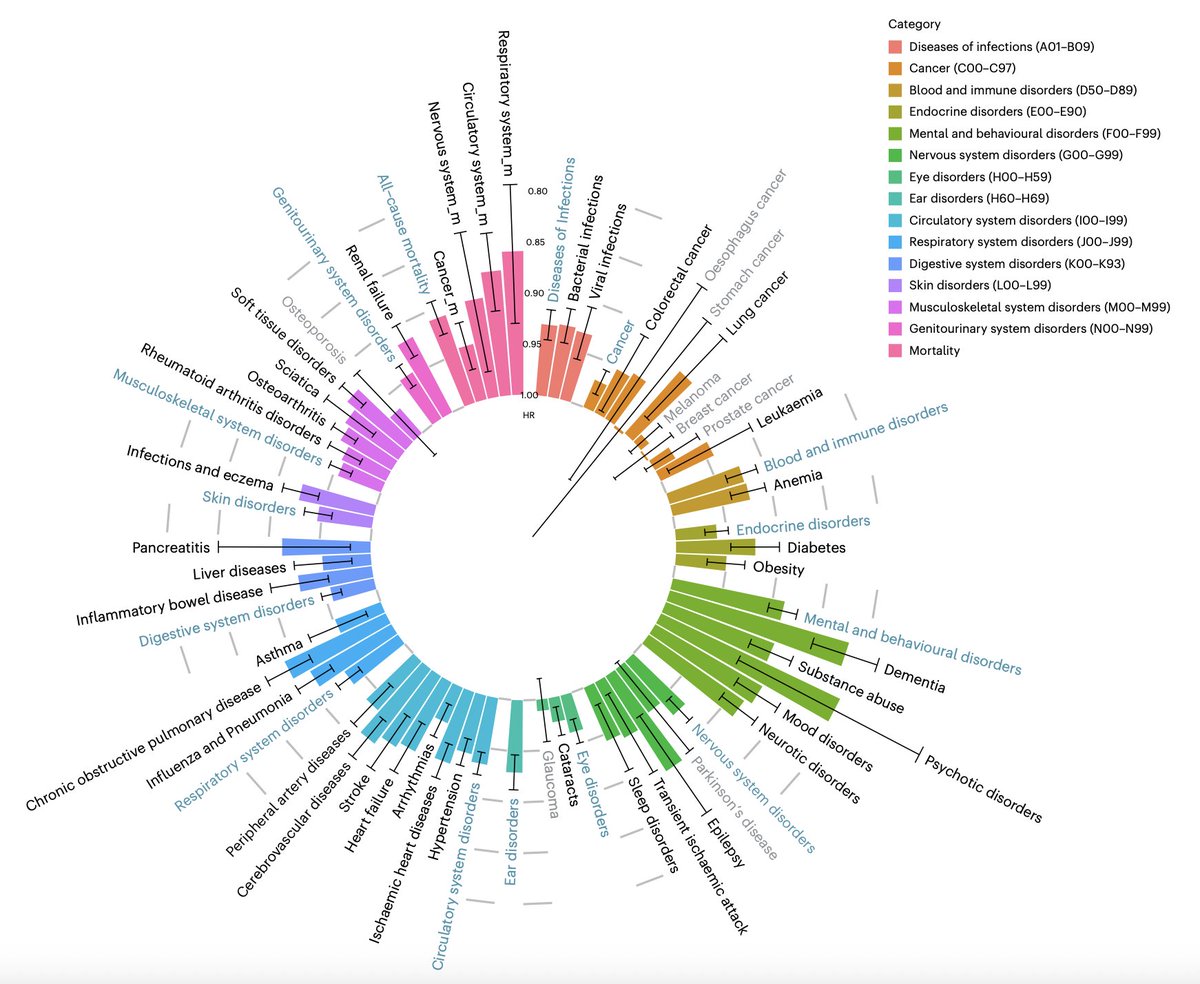
Researchers just developed a machine learning-optimised diet that reduces dementia risk by 36% - stronger than any existing dietary pattern.
The MODERN diet analysed 185,012 people over 10 years - here's what they found 🧵
"There's a quiet revolution underway in psychiatry..."
Thanks, @DrJessePines and @Forbes, for raising awareness of the metabolic and mitochondrial theory of mental illness!
https://t.co/Enz4cQhrYz
Omega-3 fatty acids aren’t just for the brain and heart—they also preserve and help increase muscle mass due to their anti-catabolic and anabolic effects.
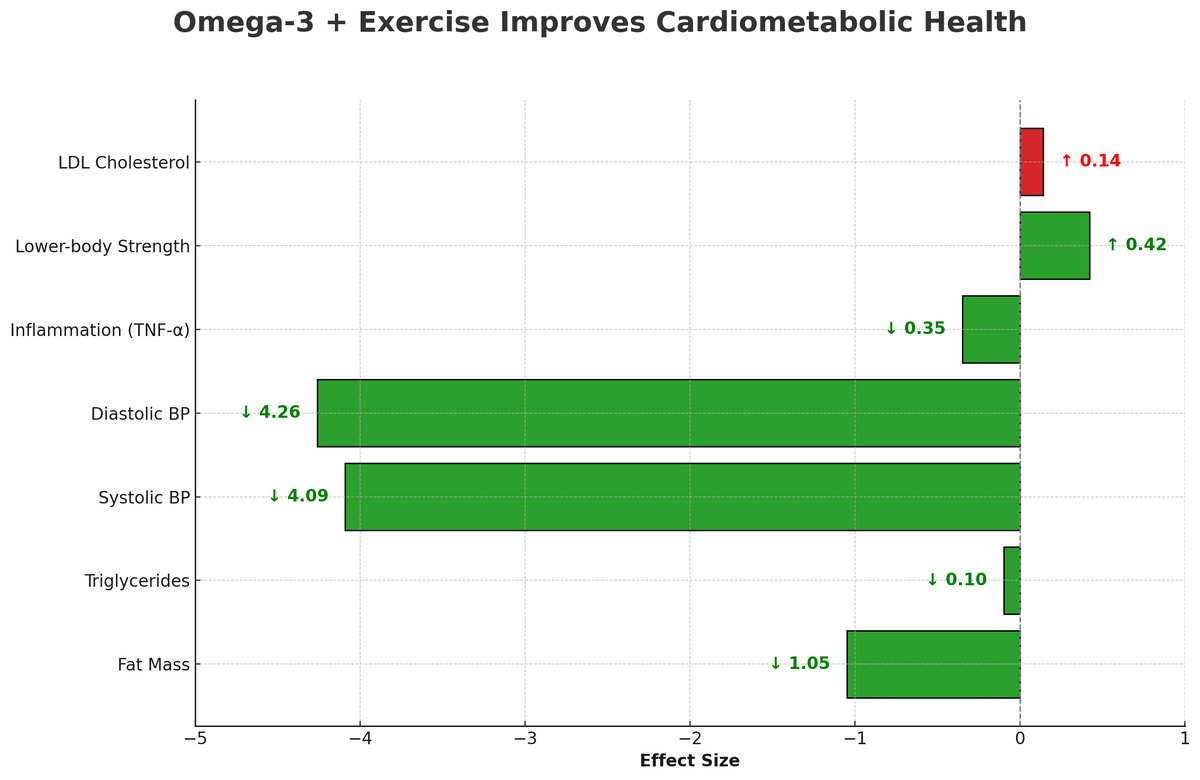
A recent meta-analysis has also revealed that combining omega-3 supplementation with exercise significantly boosts cardiometabolic health outcomes compared to exercise alone:
• Reduces body fat (~1 kg reduction)
• Improves triglyceride levels
• Decreases inflammation
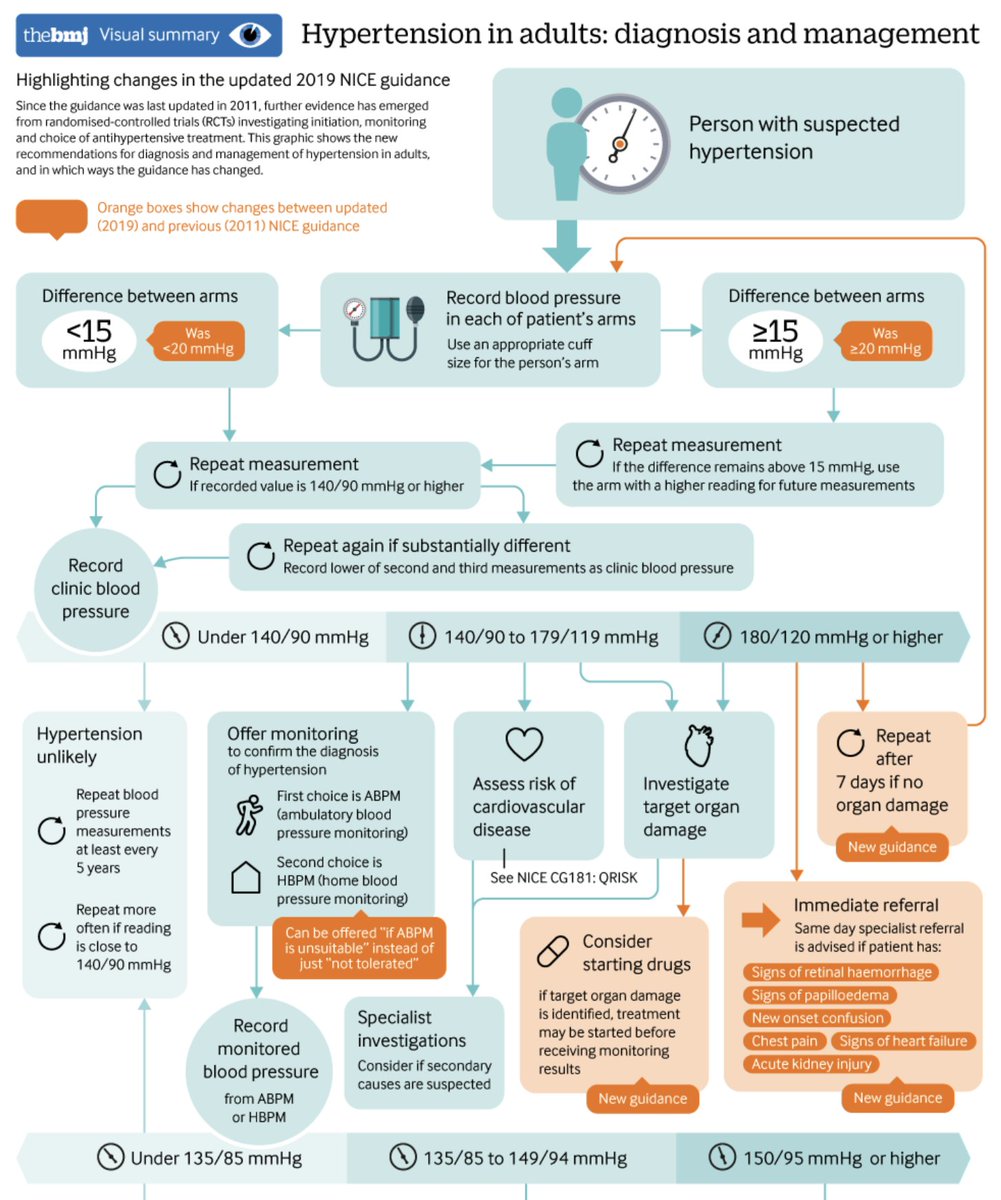
• Lowers blood pressure (4 mmHg reductions in systolic and diastolic pressure)
• Enhances lower-body strength
Some of the benefits were modest—such the reduction in body fat mass—while others were large and clinically significant—like the reductions in both systolic and diastolic blood pressure.
This was achieved with a dose of omega-3s ranging from 1–4.5 grams per day.
Supplementing with omega-3 fatty acids (and eating a diet high in omega-3-containing foods) is something you should already be doing to support your cardiovascular and brain health. The good news is that this essential nutrient is also helping you get more out of your exercise training regimen.
DOI: 10.1016/j.clnesp.2025.01.022