McDonald’s $MCD named Uber $UBER its preferred delivery partner across 14 key markets, deepening a relationship that puts more of the restaurant giant’s digital orders onto Uber’s network. The deal could strengthen delivery economics for both companies — but the bigger question is how much share Uber can consolidate as McDonald’s standardizes partners globally.
https://t.co/UO88W2fQPQ
CKX Lands $CKX surged after Brad Jacobs’ private-equity firm agreed to lead a $1 billion cash investment that will turn the company into a new public platform, with Jacobs set to become chairman and CEO while continuing to run QXO $QXO. The industry hasn’t even been chosen yet — which makes the size of the bet the real story.
https://t.co/0VjFp9HqXm
Sable Offshore $SOC plunged 75% after its sole downstream buyer halted crude purchases in early October for refinery maintenance, leaving the company with a revenue miss and near-term working-capital pressure. Sable says it has started selling to three additional Los Angeles-area refineries — but the market is clearly questioning how quickly that diversification can stabilize cash flow.
https://t.co/PIeCGkN6vb
The economy was one of the biggest issues for voters this election cycle, as Americans grow increasingly fed up with rising gas prices, the effects of tariffs and climbing interest rates.
We analyzed how Americans are being affected by Trump’s economy: https://t.co/n9RvOvcK8W
Amazon announced a two-part docu-series focused on first lady Melania Trump’s return to D.C. in 2025, saying the program will provide “unprecedented insight” into her life.
The program, titled “Melania, The Series,” will begin airing Nov. 20 on Prime Video. https://t.co/ZA93imhUN2
The Democratic Party’s takeover of D.C. threatens the AI boom that has been driving U.S. economic growth and stock values.
Investors worry that Democrats, emboldened by their landslide win on Tuesday, will slow the nationwide buildout of AI data centers. https://t.co/zyb0keM5Vt
Breaking News: Wall Street had its best day in months as investors welcomed the midterm results, putting political uncertainty behind them. https://t.co/VlXJqTN6B9
Breaking News: Stocks plunged over A.I. worries, erasing post-election gains and dragging the S&P 500 to its worst day in more than a year. https://t.co/nLoQjRvzqE
Musk's huge stakes in both SpaceX and Tesla mean he is worth more than Jeff Bezos and Google founders Larry Page and Sergey Brin combined. https://t.co/LMdSAbKeqR
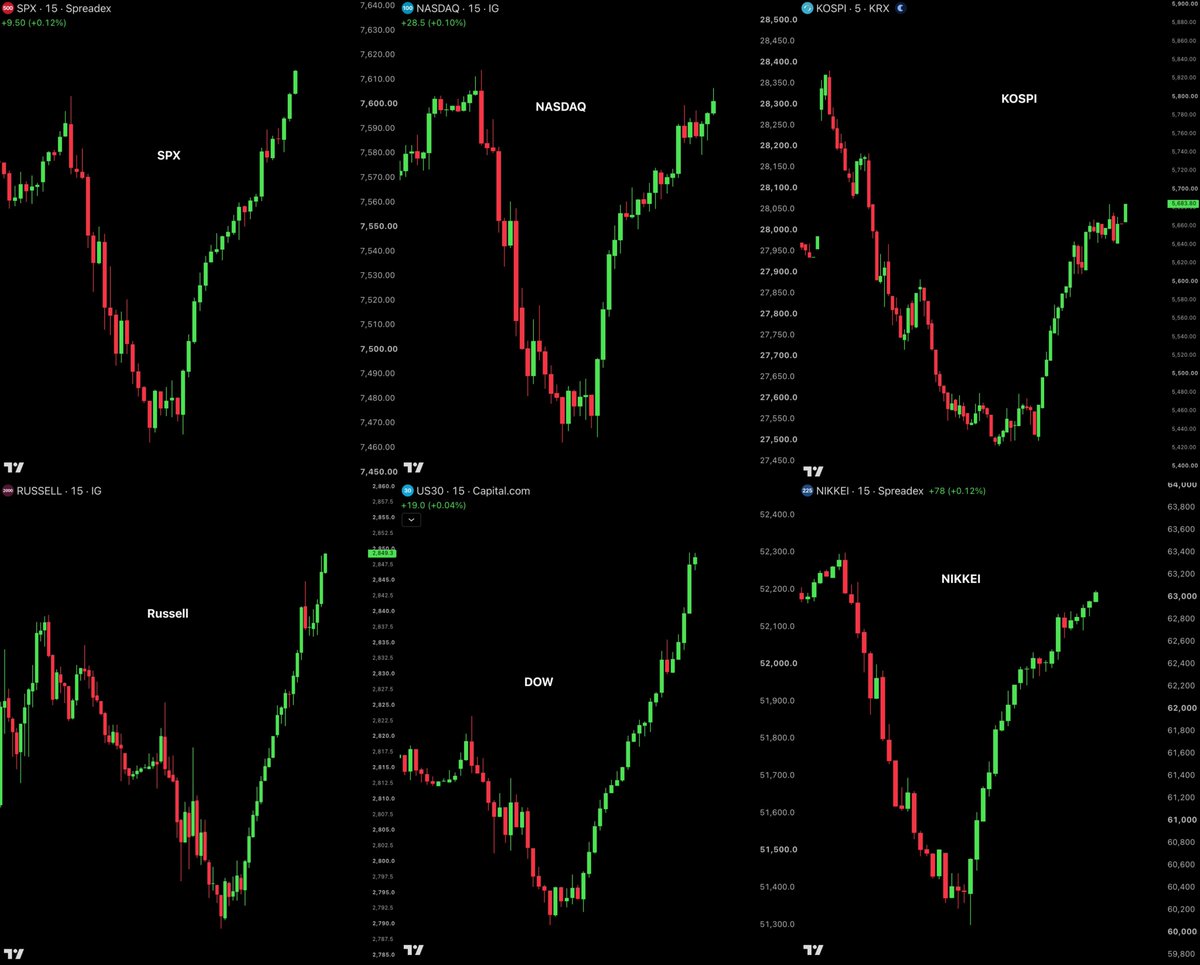
This market reversal is insane.
Just a few hours ago, global stocks were crashing as Democrats swept both the U.S. House and Senate.
Nasdaq futures plunged more than 2%, while Japan's Nikkei and South Korea's KOSPI suffered massive losses.
But now look at how much these markets have recovered from today's lows.
• S&P 500: +2.18%
• Nasdaq: +3.13%
• Russell 2000: +2.31%
• Dow Jones: +2.16%
• Japan's Nikkei 225: +5.09%
• South Korea's KOSPI: +4.71%
These are massive recoveries in just a few hours.
So why are markets suddenly recovering?
One reason is that investors are starting to understand what the Democratic victory actually means for Trump's remaining two years.
Democrats have won both chambers of Congress, but that doesn't mean Trump has lost all his powers.
First, Republicans still control Congress until January 3, 2027.
After that, Democrats can block new legislation, investigate the administration and push for changes to government spending, AI regulation and crypto policies.
But there's a major limitation.
Trump can veto legislation passed by Congress, and overriding that veto requires a two thirds majority in both the House and Senate.
Democrats have won majorities, but they don't have enough seats to override his vetoes on their own.
This means Democrats can make Trump's economic agenda much harder to pass, but they also can't simply force through every policy they want.
The same applies to the Iran war.
Democrats could attempt to restrict military funding or pass legislation limiting further strikes, but Trump could veto those measures.
So the election doesn't automatically end the war or completely change U.S. economic policy overnight.
And markets may be starting to price that in.
A divided government could lead to political deadlock, but it could also prevent major policy changes that investors were worried about.
🚨 ONE BANK FAILURE HAS NOW TURNED INTO A NATIONAL CRISIS IN PARAGUAY.
24 hours ago, the central bank shut down ueno bank, a bank used by 60% of the country's adults.
Now the damage is spreading.
• 13 mutual funds run by 5 different firms have frozen withdrawals because their money was invested in ueno
• Trading in all of ueno's bonds has been suspended
• $380M from the state pension fund is stuck, along with money from the state power company and the Itaipú dam
• 2 out of every 3 card payments at big stores ran through ueno, and Paraguay's main importers' association says retail is now "semi paralyzed"
Customers can only get back up to $1,700 for now, with no date given.
The political fallout is just as big.
The central bank chief, who used to run ueno, has resigned. President Peña cancelled a foreign trip to deal with the crisis, and authorities have ordered the arrest of 8 bank executives.
The anger has now reached the streets and Widespread protests are happening now.
The central bank says this is a one-off.
But in October, Paraguay's 14 private banks had already asked it to report on the solvency of other lenders.
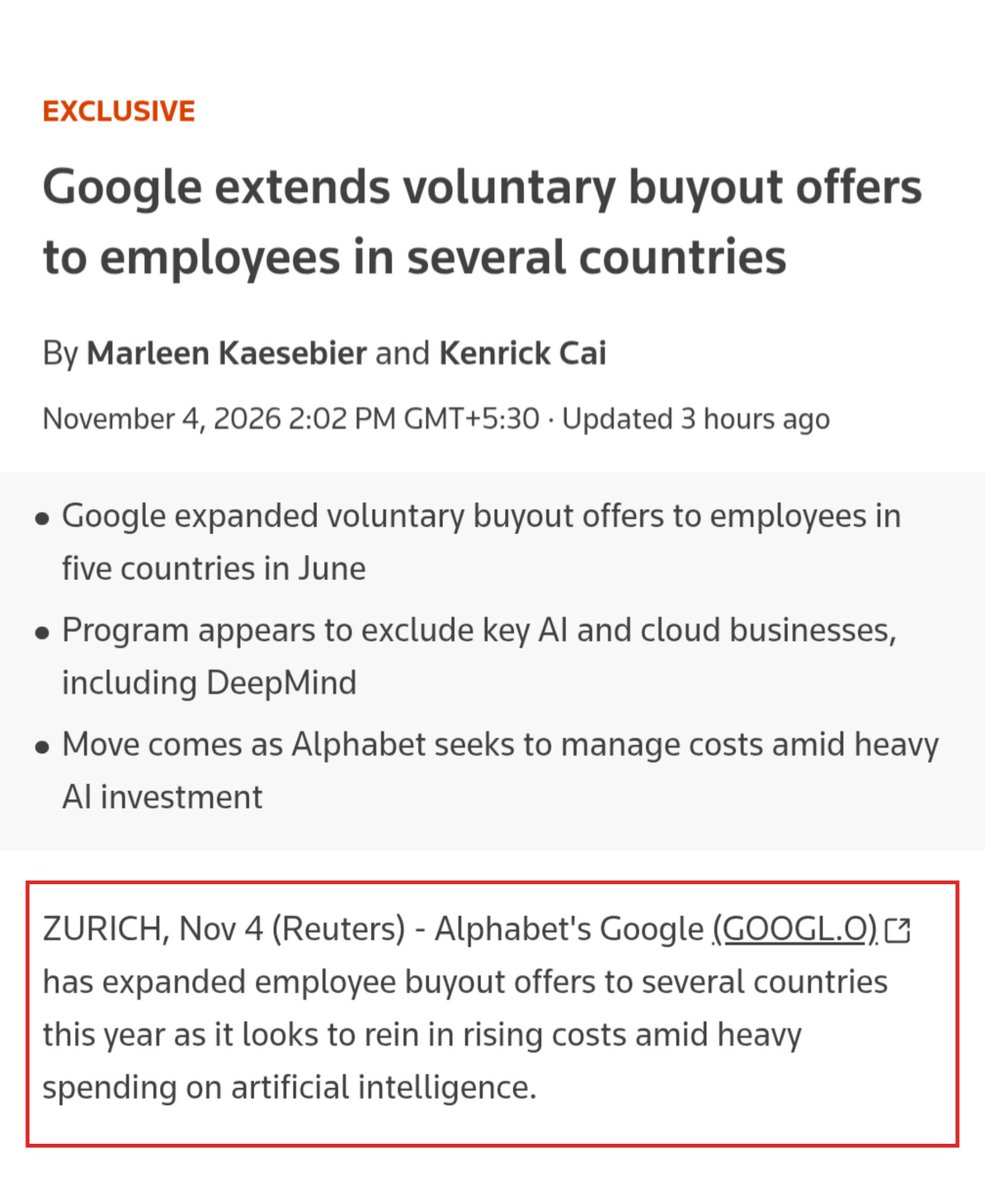
BREAKING: 🇺🇸 Google is now paying employees in 5 more countries to quit as AI spending costs keep rising.
Staff in Canada, France, Germany, Japan and Switzerland are being offered one month's pay for every year worked to leave.
The only teams left out are Google Cloud and DeepMind, its AI unit.
Just last week, Microsoft offered the same kind of deal to 60,000 employees, about a quarter of its entire workforce.
Big Tech is cutting staff to pay for AI, with Google, Microsoft, Amazon and Meta on track to spend $735 billion this year, mostly on data centers and chips.