Industrial policy sometimes has "Governments picking winners."
But it just as often has "Losers picking Governments"
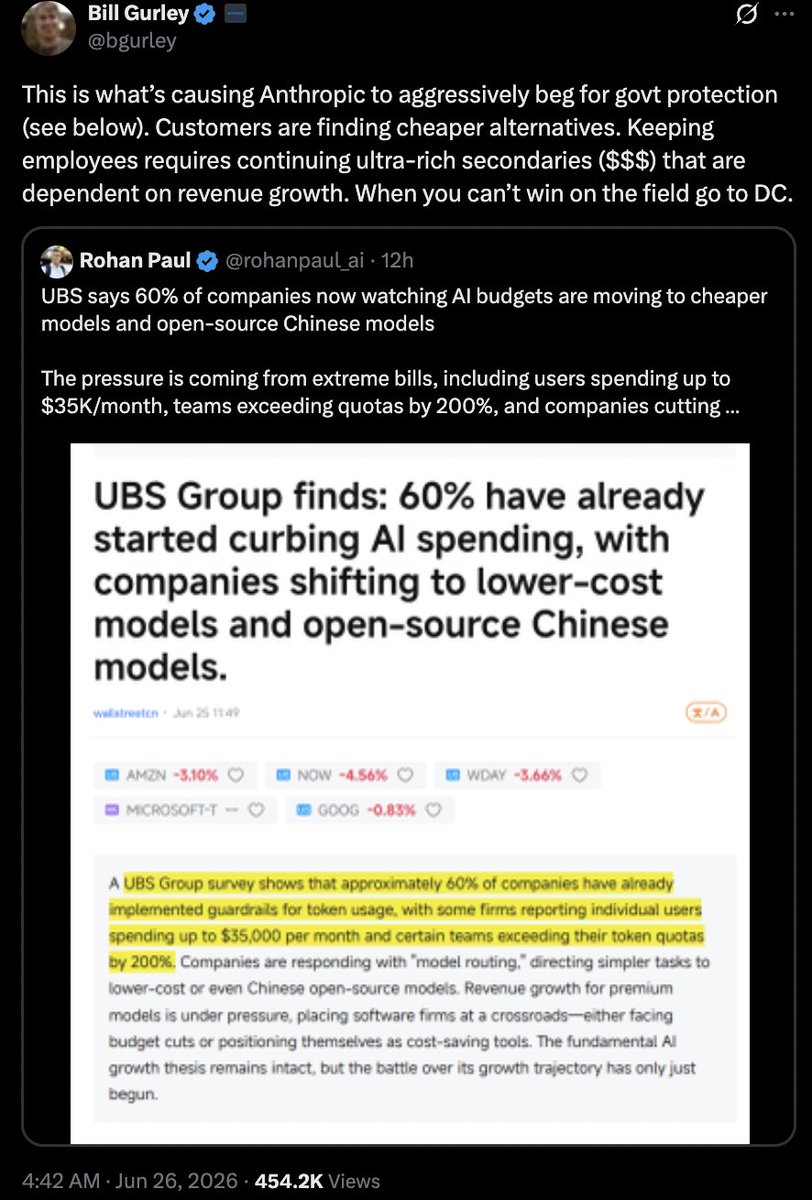
US AI companies losing to open-source Chinese AI companies are likely to go to US govt to create themselves a 'moat'
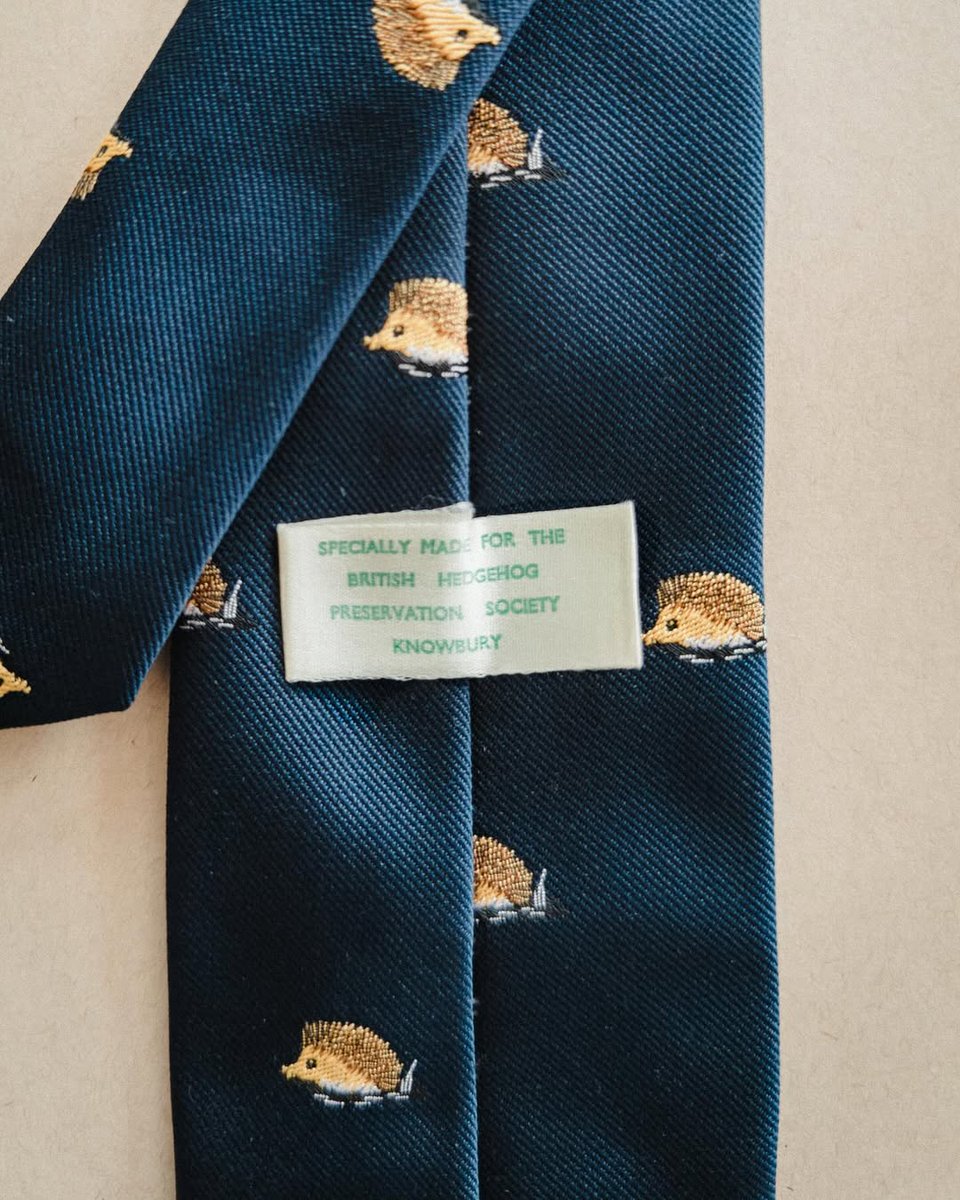
The British Hedgehog Preservation Society used to make club ties with little hedgehogs on them. My favorite animal-related ties are from Chipp Neckwear, which are made in New York. They have one with a cat climbing on top of a man's head, as well as ties with various dog breeds
Mysterious ‘cold blob’ in the Atlantic suggests the AMOC is weakening
A patch of ocean south-east of Greenland is the only place on Earth that is cooling, and it could be a sign that the warm water “conveyor belt” in the Atlantic is slowing down
https://t.co/iOP7S0fjUS
https://t.co/nKdwhlJCaW
AMOC collapse should be top of the global agenda. Instead most ppl haven't heard of it and easily digestible explainers like this are rare. Listen, there is a very much non-negligible risk that you and/or your children will die from it, so it's worth 1m26s of your time!
👇👇👇
🚨BREAKING: MIT hooked people up to brain scanners while they used ChatGPT.
What they found should concern every single person reading this.
ChatGPT users showed 55% weaker brain connectivity than people who didn't use it. Not after years. After just four months.
Here's how they tested it. 54 people were split into three groups: one used ChatGPT to write essays, one used Google, and one used nothing but their own brain. They wore EEG monitors that tracked their brain activity in real time across four sessions over four months.
The brain-only group built the strongest, most widespread neural networks. Google users were in the middle. ChatGPT users had the weakest brains in the room. Every time.
Then the memory test hit. Participants were asked to recall what they'd just written minutes earlier. 83% of ChatGPT users couldn't quote a single line from their own essay. They wrote it. They couldn't remember it. The words passed through them like they were never there.
It gets worse. In the final session, ChatGPT users were told to write without AI. Their brains were measurably weaker than people who never used AI at all. 78% still couldn't recall their own writing. The damage didn't go away when the tool was removed.
Meanwhile, brain-only users who tried ChatGPT for the first time? Their brains lit up. They wrote better prompts. They retained more. Their brains were already strong enough to use AI as a tool instead of a crutch.
The researchers also found that every ChatGPT essay on the same topic looked almost identical. More facts, more dates, more names. But less original thinking. Everyone using ChatGPT produced the same generic output while believing it was their own.
MIT gave this a name: cognitive debt. Like financial debt, you borrow convenience now and pay with your thinking ability later. Except there's no way to pay it back.
The question isn't whether ChatGPT is useful. It's whether the price is your ability to think without it.
Asia’s defining decade will be shaped by climate risk and demographic change.
DBS’ one bank approach integrates environmental and social priorities to support resilient, inclusive growth.
Find out more in the article.
Some interesting findings from this new paper on China’s solar industrial policy:
1. Local government support played a major role in scaling China’s solar industry and boosting innovation.
2. Production and innovation subsidies were more effective than demand subsidies.
3. Strong knowledge spillovers: subsidies increased innovation and production in nearby cities.
Everyone’s missing the real story here.
Meta’s Ray-Ban glasses need human data annotators to train the AI. When you say “Hey Meta” and ask the glasses to analyze something, that video gets sent to Meta’s servers, then routed to Sama, a subcontractor in Nairobi, Kenya. Workers there manually label objects in your footage. They see everything you recorded, intentionally or not.
7 million pairs sold in 2025 alone. Every single pair generates training data that flows through human eyes in Kenya. Workers told Swedish journalists they see people undressing, using bathrooms, having sex, and accidentally filming bank card details. One worker said “we see everything, from living rooms to naked bodies.”
Meta’s automatic face anonymization is supposed to protect people in the footage. Workers say it fails in certain lighting. Faces that should be blurred are sometimes fully visible. The person you recorded without knowing? A stranger in Nairobi can identify them.
Buried in Meta’s terms of service is one sentence doing enormous legal work: the company reserves the right to conduct “manual (human) review” of your AI interactions. That’s the legal cover for routing intimate footage from Western homes to a $2/hour labor force operating under NDAs, office surveillance cameras, and a strict no-questions policy. Workers say if you raise concerns about what you’re seeing, you’re fired.
This is the same company, Sama, that TIME exposed in 2023 for paying Kenyan workers $2/hour to label graphic content for OpenAI while being billed at $12.50/hour per worker. Workers described the experience as torture. Sama ended that contract, then pivoted to labeling Meta’s glasses footage. Same workforce. Same rates.
Meta markets these glasses as “designed with your privacy in mind.” The privacy design is a tiny LED light on the frame that most people don’t notice. The data pipeline behind it routes your bedroom footage to a contractor with a documented history of worker exploitation, failed anonymization, and union-busting lawsuits.
And the next generation of these glasses? Meta is planning to add facial recognition. The same system that can’t reliably blur faces in training data wants to start identifying them on purpose.
The LED light on the frame is doing about as much for your privacy as the terms of service nobody reads.
Elon Musk just told lenders he's paying back $17.5 BILLION in debt across X and xAI.
Including $3 billion in high-yield bonds being redeemed early at 117 cents on the dollar.
NOBODY knows where the money is coming from.
And nobody seems to care.
Let me explain why you should:
Morgan Stanley has been calling existing lenders and telling them everything gets repaid in full.
The X debt from the Twitter buyout. The xAI bonds from June. All of it.
The bonds were structured to stay outstanding for at least 2 years. They're being called back less than a year later at a 17% premium.
Bondholders are thrilled. Of course they are. They're getting paid above par on junk paper.
But here's the part that should make you uncomfortable:
xAI lost $1.46 billion in a single quarter last year. Burned through $7.8 billion in cash in the first 9 months of 2025. Revenue for the September quarter was $107 million.
That's a company hemorrhaging roughly $1 billion a month.
On a standalone basis, xAI exited 2025 at about a $500 million annualized revenue run rate. Even with optimistic projections, they might hit $2 billion in 2026.
So where does $17.5 billion come from?
xAI raised $20 billion in a Series E round in January. That's the most likely answer.
Take the money investors gave you to build AI infrastructure and use a huge chunk of it to retire debt.
But that's NOT a sign of strength. That's financial engineering.
You raise $20 billion from investors who think they're funding the next frontier of artificial intelligence, then you turn around and use most of it to clean up the balance sheet before an IPO.
Because that's what this is really about.
SpaceX is targeting a confidential SEC filing as early as this month. IPO could come in June. Valuation targets exceed $1.75 trillion.
The combined SpaceX-xAI entity currently carries about $18 billion in obligations.
You can't take a $1.25 trillion company public with $18 billion in legacy debt from a money-losing AI startup and a social media platform that was acquired with leveraged buyout financing.
So you nuke the debt. Clean the balance sheet. Present a simpler story to IPO investors.
Smart? Absolutely.
But let's be honest about what it actually is.
SpaceX proper generated about $15 billion in revenue and $8 billion in profit in 2025. xAI generated roughly $250 million in six months and lost $2.5 billion doing it.
At a $1.5 trillion IPO valuation, you're looking at roughly 94x trailing sales and 500x trailing earnings for the combined business.
Those are not rational multiples. Those are lottery ticket multiples with better branding.
And the $17.5 billion debt payoff doesn't change the underlying economics. It only changes the optics.
xAI is still burning close to $1 billion a month. Grok still has a fraction of ChatGPT's market share. The revenue doesn't come close to justifying the infrastructure spend.
What this reminds me of is the classic pre-IPO playbook taken to an extreme:
Use private capital to dress up the financials, time the listing for maximum enthusiasm, and let public market investors hold the bag if execution falls short.
The companies that need to clean house before going public are rarely the ones that reward you for buying on day one.
My positioning hasn't changed.
The AI infrastructure spending boom is real. But the returns aren't materializing for the companies actually deploying the technology.
That gap between spending and results is where fortunes get destroyed.
Stay skeptical. Stay disciplined.
And remember:
If the source of $17.5 billion in repayment capital is a mystery, it's a WARNING.
Scientists revived a plant from 32,000-year-old seeds found frozen in the Siberian permafrost.
Making this the oldest organism ever brought back to life.
Researchers discovered the seeds of the Silene stenophylla plant buried 124 feet beneath the earth near the Kolyma River. Tucked away inside an Ice Age squirrel’s burrow, the seeds were preserved at a constant 19°F (-7°C), a deep freeze that effectively prevented cellular decay since the era of woolly mammoths. While the mature seeds were damaged, scientists extracted viable tissue from immature samples and placed them in a sterile growth medium. The result was a successful regeneration, leading to plants that not only flowered but also produced fertile seeds of their own, displaying subtle evolutionary differences from their modern-day descendants.
This extraordinary feat does more than just resurrect a lost piece of history; it provides a vital blueprint for the future of biodiversity. By studying how these cells remained viable across thirty-two millennia, experts hope to enhance the longevity of modern seed banks like the Svalbard Global Seed Vault. As permafrost continues to yield living fragments of ancient ecosystems, the discovery suggests that the Earth’s frozen layers are not just a graveyard of the past, but a potential laboratory for preserving the genetic heritage of our planet against future global disasters.
source: Yashina, S., Gubin, S., Maksimovich, S., Yashina, A., Gakhova, E., & Gilichinsky, D. Regeneration of whole fertile plants from 30,000-y-old fruit tissue buried in Siberian permafrost. Proceedings of the National Academy of Sciences.
By mainstreaming nature-aware models into policy analysis, the @WorldBank empowers countries to build resilient and sustainable economies.
Protecting nature is not just an environmental goal—it’s essential for prosperity and a livable future for all.
https://t.co/UAI6NdJqjL
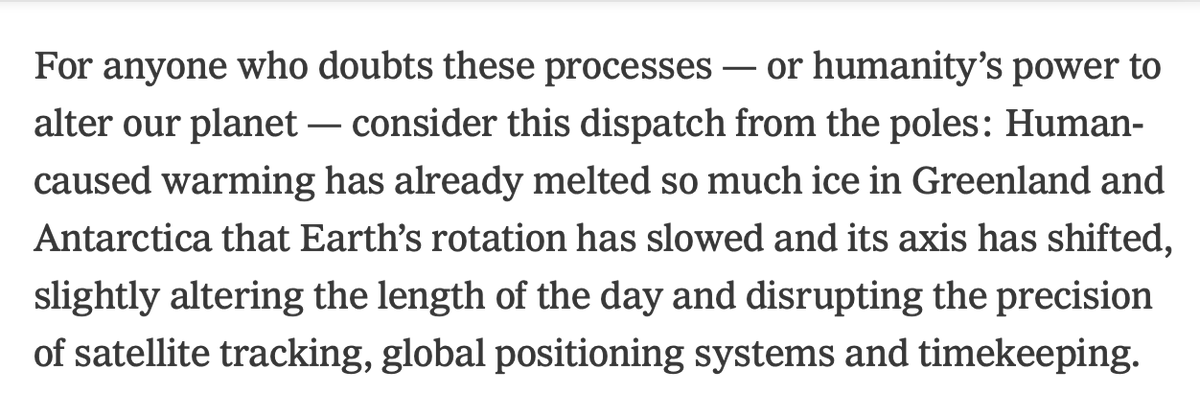
"Warming has already melted so much ice in Greenland and Antarctica that Earth’s rotation has slowed and its axis has shifted, slightly altering the length of the day and disrupting the precision of satellite tracking, global positioning systems and timekeeping."
It would take the average American driver over 40 years to burn as much fuel as a single flight of a Boeing Pegasus refueling tanker. No amount of recycling your cans and bottles is ever going to compete with these numbers. https://t.co/cRjt80y60V