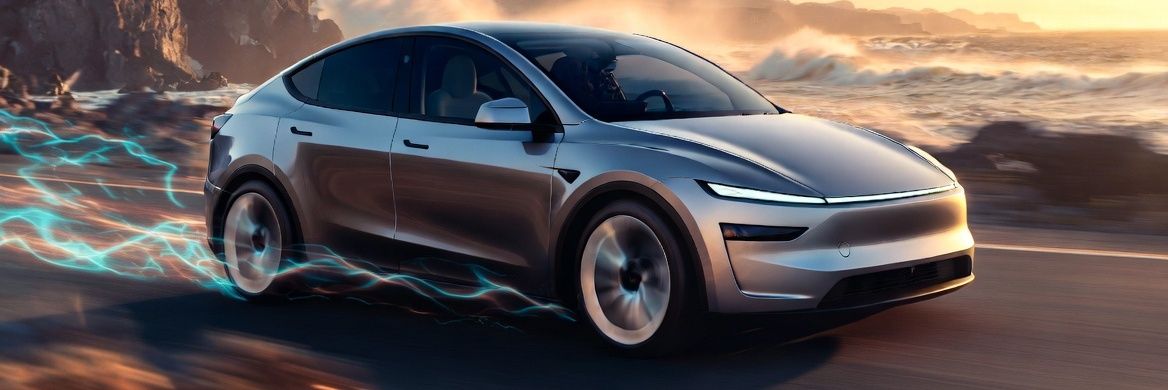
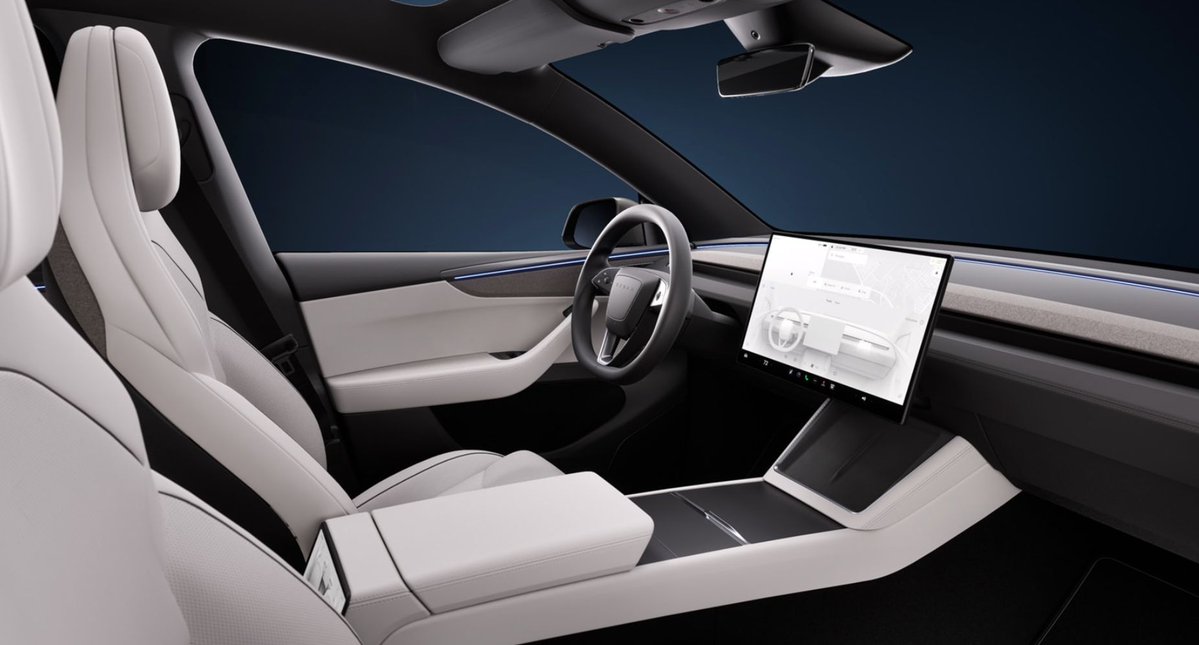
Since April 11, FSD has driven over 12,281 km in the Netherlands 🇳🇱
Safe. Smooth. Reliable.
It simply does the job.
Having a private chauffeur is starting to feel normal. 🤭⚡
@wholemars@elonmusk@teslaeurope
GOOD NEWS 🚨 Tesla has synthesized a split-personality fluid architecture to permanently rewrite the laws of friction inside its cutting-edge powertrains ⚙️
For decades, the automotive industry has been quietly bound by an invisible compromise. When electric vehicles first hit the market, manufacturers repurposed the heavy, viscous automatic transmission fluids of the combustion era to lubricate their new electric powertrains.
It was a functional shortcut, but a philosophical failure. Engineers were forced to accept a brutal tradeoff: use a heavy fluid that protects the gearbox but chokes the electric motor's cooling, or use a thin fluid that cools the motor but leaves gears vulnerable to catastrophic wear.
Tesla has decided to reject that compromise entirely. By tearing down legacy fluid dynamics and starting from the molecular level, they engineered a bespoke liquid ecosystem designed exclusively for the extreme thermal and mechanical demands of an EV.
First unveiled under world patent WO 2023/133200 A1, Tesla deemed this secret formula so vital to their vehicle roadmap that they recently doubled down with a July 1, 2026 update, logged as European patent EP 4768558 A1. Together, these files grant us our first unfiltered look at how custom base oils and hyper-targeted additives can drastically lower internal friction, drop stator temperatures, and unlock a new ceiling for electric powertrain efficiency.
To understand the magnitude of this chemical redesign, we must first look at the inherent flaws of the industry's default approach.
⚖️ The problem: The invisible compromise of combustion era fluids
Traditional automotive lubricants are fundamentally mismatched with the severe thermal demands of modern electric powertrains. Most commercial fluids are optimized for legacy automatic transmissions, prioritizing wet clutch material properties, which dictate the friction of gear shifting plates submerged in oil, and basic sliding wear protection.
When applied to an electric vehicle, these heavy molecular structures fail to provide adequate cooling for the motor while introducing massive parasitic drag within the gearbox. This parasitic drag acts like a form of fluid quicksand, forcing the electric motor to waste vital energy just churning through thick, resistant oil.
Furthermore, existing low traction oils, which are specialized lubricants engineered to let metal surfaces glide past each other with minimal fluid resistance, suffer from severe technical drawbacks when pushed to their operational limits. They often absorb excessive moisture from the environment, degrade rapidly under intense localized heat, and lack robust chemical stability.
Without tight molecular framework integrity, the fluid cannot protect gears from catastrophic fatigue and surface pitting. This is a destructive cycle where repeated mechanical stress causes tiny pieces of metal to break away and leave craters on the gear teeth. This leaves powertrain engineers stuck in a loop, forcing them to choose between mechanical longevity and raw vehicle range.
Recognizing that traditional oils were a dead end, Tesla set out to engineer a completely new paradigm from the ground up.
💡 Tesla's solution: A molecularly tailored fluid ecosystem
Tesla solved this structural engineering bottleneck by synthesizing a bespoke fluid formulation, which is essentially a tailor made chemical blueprint, that leverages advanced chemical architectures. Instead of relying on a single compromise oil, this patent introduces specialized low traction and high pressure viscosity formulations mixed with targeted anti wear additives.
These chemistry variations are engineered to stay thin enough for low drag during normal operation, while building a stronger protective oil film when gears and bearings squeeze the fluid under extreme contact pressure. This customized blend drastically lowers the friction coefficient, the numerical scaling value that defines baseline mechanical resistance, across boundary and mixed lubrication regimes.
These regimes represent the harshest operational zones where moving metal parts are either grinding directly against one another or are barely separated by a microscopic film of oil. By conquering these high friction zones, the fluid delivers a clear 0.2% to 0.8% drive unit efficiency gain and effectively flattens the classic Stribeck friction curve. This is an industry standard engineering graph that maps out how friction spikes or plunges based on relative mechanical speeds and fluid thickness, showing an impressive 30% to 50% traction reduction compared to standard alternative electric vehicle fluids.
The breakthrough extends beyond pure chemistry into physical vehicle architecture, detailing a highly optimized powertrain management strategy. Tesla pairs these engineered fluids with flexible, variable flow rate pumps that adapt dynamically to shifting motor speeds and changing torque demands, which are the variable rotational turning forces required to accelerate the car.
This synergy helps deliver the right oil volume across the speed-and-torque map, cutting drag without starving the hardware.
But a revolutionary fluid is only as good as the physical plumbing that delivers it.
🔀 Thermal separation: The operational magic of a dual fluid path design
Rather than forcing a single oil pool to handle 2 entirely distinct mechanical tasks, Tesla introduces an advanced fluid path layout. The patent is broad enough to cover both single loop and dual loop layouts, but the dual loop design is where the thermal advantage becomes most dramatic. This layout segregates the powertrain into a dedicated gearbox loop and a distinct motor cooling loop, essentially giving the heavy mechanical gears and the sensitive electronics their own specialized circulatory systems.
The gearbox loop utilizes the custom low traction fluid to minimize churning losses, which is the mechanical energy wasted when spinning gears are forced to physically drag themselves through thick pools of oil. At the same time, the motor path circulates a much thinner heat-transfer fluid directly over the internal machinery to absorb and carry away thermal energy.
This liquid flows directly over the stators and rotor, which are the stationary and spinning electromagnetic components inside the motor that generate the physical driving force. This structural separation yields a massive 5°C to 15°C drop in copper conductor temperatures, significantly raising the motor continuous power ceiling.
This ceiling dictates the maximum amount of output the car can sustain over long periods without overheating and automatically restricting its own performance. To keep this system optimized, the patent maps out a variable pump system capable of scaling gearbox fluid flow anywhere from 0.25 LPM to 20 LPM depending on real time speed and torque load.
With the physical architecture separated, engineers could finally tailor the exact molecular recipe flowing through each loop.
🧪 Secret sauce chemical blueprint: Engineering extreme efficiency
At the core of this breakthrough is a meticulously balanced quantitative recipe that abandons off the shelf compromises. The formula is overwhelmingly dominated by its highly refined or synthetic base oil backbone, which acts as the primary vehicle for everything else, comprising 70% to 95% by weight of the total blend.
This base oil is selected from high tier American Petroleum Institute groups, which are industry standard classification categories that grade foundational oils based on their refining purity and molecular design, ranging from Group II to Group V. This precise selection spans refined mineral derived base oils, highly stable poly alpha olefins, naphthenes, advanced low viscosity esters, and polyalkylene glycols.
The true differentiation occurs with the integration of 5% to 15% by weight of targeted chemical additives. Tesla names additive packages such as HiTEC 3491K, HiTEC 5769, HiTEC 35750, HiTEC 2571, and HiTEC 4780 to achieve extreme wear protection under intense mechanical pressures.
Finally, to prevent the fluid from thinning destructively at peak temperatures, the design utilizes 1% to 20% by weight of a viscosity index improver. This component relies on complex polymers that act like microscopic coiled springs, unraveling and expanding as the fluid heats up to stop it from thinning out into a watery layer that would cause internal components to grind together.
This specific improver boasts a massive standalone viscosity of 40 to 20,000 centistokes, the standard engineering units used to measure a liquid's physical thickness and resistance to flowing, at 100°C, granting the final fluid its unique thermal resilience.
This highly specialized chemistry directly translates into a new set of uncompromising physical tolerances.
📊 Exact performance metrics: Establishing new operational boundaries
Automotive boundaries are completely redefined by the strict operational limits established throughout this fluid architecture. The finished formulation is engineered to hit a precise kinematic viscosity window, which defines the fluid's physical thickness and natural flow rate under gravity. This target is set at 2 to 30 centistokes at 100°C. To put this into perspective, water has a viscosity of about 1 centistoke, while thick honey measures in the thousands. This means the hot fluid flows extremely easily, moving through the system more like a light liquid than a heavy mechanical sludge.
To ensure flawless winter performance, its cold weather flow threshold is capped between 300 and 20,000 centistokes at -20°C. Just as a bottle of syrup pours much slower when kept in the refrigerator, cold weather naturally causes lubricants to thicken. By capping this maximum thickness, the vehicle's internal pumps do not have to fight against a frozen, gelatinous barrier on a cold winter morning.
For the primary drive unit, the low traction fluid restricts its traction coefficient to a hyper efficient range of 0.005 to 0.06. This traction coefficient is a measurement of how much energy is lost to microscopic sliding friction between moving metal parts. A high traction coefficient is like dragging a heavy wooden box across rough concrete. By dropping the metric to this hyper efficient range, the fluid effectively transforms that concrete into a sheet of perfectly smooth ice, allowing the metal components to glide past each other with far less resistance.
The fluid also achieves a pressure viscosity coefficient of 10 to 20 GPa⁻¹ at 40°C. This is a critical metric showing how rapidly the fluid builds a stronger protective film when squeezed under immense physical pressure. You can imagine this behavior as a liquid shock absorber. While the fluid stays low-drag during normal operation, its pressure-viscosity behavior helps build a stronger localized oil film when gear teeth squeeze it under heavy load.
Meanwhile, the secondary boost motor variant focuses on high pressure viscosity behavior to reduce parasitic drag when the secondary motor is idling. This formulation pushes the coefficient significantly higher, hitting 12 to 30 GPa⁻¹ at 40°C.
This brings a 33% pressure viscosity coefficient enhancement, allowing the system to maintain an optimal film thickness under sudden torque shocks. Because the fluid defends itself so well under pressure, this may enable roughly 20% lower baseline viscosity in the secondary drive unit. The system can safely use a much thinner oil to drop parasitic losses during normal cruising without ever risking mechanical wear during hard acceleration.
To translate these raw numerical thresholds into actual mechanical protection, we have to look at the physics of surface separation.
🏎️ Decoding lambda ratio: Maximizing component life
To truly understand how this fluid protects the hardware from a first principles perspective, we must examine the lambda ratio, which directly correlates to lubrication related component life. This metric evaluates the ratio of the lubricant film's physical thickness to the microscopic surface roughness of the metal gears and bearings.
You can think of this ratio like comparing the depth of packed snow to the jagged rocks on a trail. If the snow layer is deeper than the rocks, a sled will glide safely over the top without scraping the ground.
The various drive unit components inside a Tesla operate across an incredibly wide range of extreme lubrication conditions. By engineering a fluid that naturally resists being squeezed out of the way when crushed between heavy mechanical parts, Tesla ensures this protective film remains thicker than the metal's surface imperfections.
Keeping this liquid cushion intact preserves a high lambda ratio even at intense sliding velocities, those moments when gears are rapidly dragging past 1 another rather than just rolling smoothly. This persistent liquid barrier directly extends the physical operating life of the drive unit's internal hardware by preventing the metal surfaces from ever truly touching.
Of course, theoretical physics and lab-grown chemistry only matter if they can survive the harsh reality of the road.
🔬 Grueling testing protocols: Validating endurance against the elements
Tesla did not just rely on theoretical chemistry; they subjected these formulations to brutal empirical stress tests. To track thermal abuse, they utilized the standardized CEC L 48 00 protocol, a rigorous industry test designed to measure exactly how well a lubricant resists breaking down and oxidizing under extreme heat.
The fluid was continuously baked for 600 hours at 150°C while exposed to an aggressive air flow rate of 5 liters per hour. To put that into perspective, this is the equivalent of trapping the fluid inside a high-speed convection oven running well above the boiling point of water for nearly a month straight. This accelerated environment is specifically scaled to emulate a grueling 1,000,000 miles of intense thermal use.
The testing also highlighted a massive victory in hydrolytic stability, which is simply a fluid's ability to resist chemical damage when exposed to water. Exotic low traction oils are historically prone to absorbing moisture, which causes them to break down into corrosive acids over time.
To test this, engineers ran a 192-hour water agitation test at 90°C. This is essentially violently blending the oil with near-boiling water for eight days straight. By sharply reducing water-driven acid formation during this torture test, the fluid protects against the internal corrosion and yellow metal decay problems that typically ruin real world EV drive units.
Finally, mechanical fatigue protection was proven by running a gear train under a heavy 400 N load at 60°C. The hardware was pushed to 3.5 m/s with a 20% sliding to rolling ratio. This is a critical metric: rather than gear teeth perfectly rolling against each other like a tire smoothly rotating on pavement, a 20% ratio means the heavy metal teeth are aggressively dragging and skidding against each other under immense pressure.
The strongest result was not just survival. Formulation 1 reached 30,000,000 cycles without failing the test, while also posting lower friction and lower wear loss than the comparative fluids, showing that Tesla was not merely preserving durability, but reducing the mechanical tax paid to get it.
Surviving extreme heat is only half the battle, as the true test of a versatile fluid is how it handles the freezing cold.
❄️ Sub zero resilience: Unlocking low temperature pumpability
Extreme cold is notoriously brutal on vehicle efficiency due to skyrocketing oil viscosity, the natural tendency of liquids to thicken into a resistant sludge when temperatures plunge. But Tesla engineered its new formulation to resist this thickening at sub zero extremes.
The low traction fluid keeps viscosity low enough at sub-zero temperatures to enable waste-heat battery-warming features 7°C to 10°C lower than competing fluids. These waste heat features act like an onboard thermal recycling program, capturing leftover heat generated by the spinning motor and actively redirecting it to warm up the sensitive battery pack.
Because the liquid remains thin enough to allow these systems to activate in much colder environments, this advantage translates directly to saving vital energy and substantially boosting winter driving range.
Ultimately, mastering these extreme temperature swings and mechanical loads is what gives Tesla a profound economic and strategic edge.
🚀 How this breakthrough fuels Tesla's present and future
The true genius of this patent is shattering the historical tradeoff between protecting heavy gears and cooling high speed motors. By separating the fluid paths and engineering distinct low traction and high pressure viscosity molecules, Tesla attacked parasitic drag without sacrificing mechanical armor. This key invention is not just a minor maintenance update. It is a structural multiplier that actively amplifies every other hardware innovation by reducing the amount of energy wasted internally.
If deployed across Tesla’s 2026 consumer fleet, this molecular mastery could reshape the economics of their entire lineup. By unlocking an extra 0.8% drive unit efficiency from reduced churning losses, Tesla optimizes vehicles like the 2026 Model 3 Rear Wheel Drive, stretching baseline performance to a stunning 4.6 miles per kWh. This means Tesla can use smaller, lighter battery packs to hit premium range targets, saving millions in manufacturing costs while consumers enjoy charging costs as low as 3.8 cents per mile.
Looking ahead, this fluid architecture represents a massive strategic implication for the autonomous Cybercab and the expanding Robotaxi network. If this architecture is deployed across autonomous vehicles like Cybercab, the payoff compounds quickly: lower internal drag, lower heat, smaller battery requirements, and less mechanical wear per mile.
While much of the public focuses on rigorous crash testing and the physical design details of the cab, the internal hardware faces an even steeper challenge: it must operate relentlessly around the clock. The 2026 Cybercab is a masterclass in extreme powertrain efficiency, targeting a certified 165 Wh/mi, which translates to about 6.06 miles per kWh on a compact 48 kilowatt hour battery. This extreme engineering could drive operational costs down to an industry leading 2.6 cents per mile.
For an autonomous ride hailing fleet to be truly profitable, vehicles must operate relentlessly without breaking down. By developing a fluid that slashes component fatigue and allows drive units to cruise through intense cycle thresholds without surface pitting, Tesla sets up a massive hardware advantage designed to secure their dominance in the autonomous transport sector.
Finding the limits of Tesla Self-Driving
@DavidMoss and I spent the day together testing FSD in a bunch of different ways, and truthfully I was shocked with how the car handled some of the tests.
This video showcases some of the most impressive aspects of FSD, but it also brings up some flaws with FSD today - which I think is always worth talking about.
Go watch and let me know what your favorite test was that we did.
If there's anything you'd like to see tested in the future let me know! I am trying to get back into posting content more regularly again.
https://t.co/n8r9wF6ZUD
NEWS: Florida is reviewing adding Teslas to its state vehicle fleet, Governor Ron DeSantis says
DeSantis said it on X in reply to a user's suggestion.
The user asked about Teslas for state agencies like the Florida Highway Patrol.
That comes as the Dodge Charger, a common police car, gets phased out.
DeSantis said "we are reviewing possibilities."
He has praised Tesla's self driving tech before while opposing EV mandates.
Ford is done.
GM is done.
Honda is done.
Toyota is dying.
Now FOUR of my employees have bought Tesla Model Y vehicles. They let me drive one. I was blown away... again. Full-Self Driving (FSD) is highly evolved. Human-like in its decisions. Feels safer than any human driver.
I told my staff to install a couple of charging stations at my company parking lot. We're going to offer free charging to any employee that drives an EV. (F*ck gas prices and war in the Persian Gulf!)
The future of personal transport vehicles on this planet belongs to Tesla, BYD, CATL and maybe a couple of other companies. And all of them will be EVs.
At this point, driving a combustion engine vehicle for daily tasks seems obsolete.
And I don't believe a single thing about climate alarmism and all those cultists who hate carbon dioxide. EVs make sense simply from an economics perspective: They're a fraction of the cost to operate, and much simpler to maintain (no oil changes, no engine air filter, no fuel filter, etc.). Plus, you can charge them from sunlight and get entirely off-grid with your "fuel" supply. (I'll be publishing videos showing this in my studio soon.)
Yes, I used to mock EVs. I once said I would never ride in a self-driving vehicle. I was wrong. The technology has been transformed. Battery chemistry improvements have enabled solid range capabilities and very good specifications on charge/discharge cycles. Tesla's FSD capabilities are far stronger than I thought was possible. They've outdone themselves.
Now, I'm absolutely convinced: I will never buy another combustion engine vehicle again.
I was in a Rivian showroom and pretty much everyone asked when is FSD coming? The store rep said it’s in development (aka product backlog.) We all know what it means.
@Tesla is just miles ahead (no pun intended) & literally pulling the industry forward.
Kudos @elonmusk
Rivian should simply license FSD from Tesla
With an NACS port and FSD support, millions of Tesla customers would consider one. Without it, it’s not an option for me and many others.
You will burn billions of dollars and years of time trying to come out with something that is equivalent. Preserve your capital and focus on ramping R2. There’s always an opportunity to vertically integrate in the future when you’re ready to do so.
No doubt.
If we save on fuel costs, reduce mishaps through FSD and get lower insurance rates, that could be some real benefits for taxpayers when applied across the fleet.
And from a law enforcement/performance perspective, the Teslas are very fast and powerful. I’d imagine that would stack up favorably to legacy vehicles.
Teslas vs legacy ICE vehicle fleets:
• Most American-made
• Cheaper to operate
• Faster & more powerful
• Safer
• Better tech
• Better for environment
• Can drive themselves
It's a no-brainer.
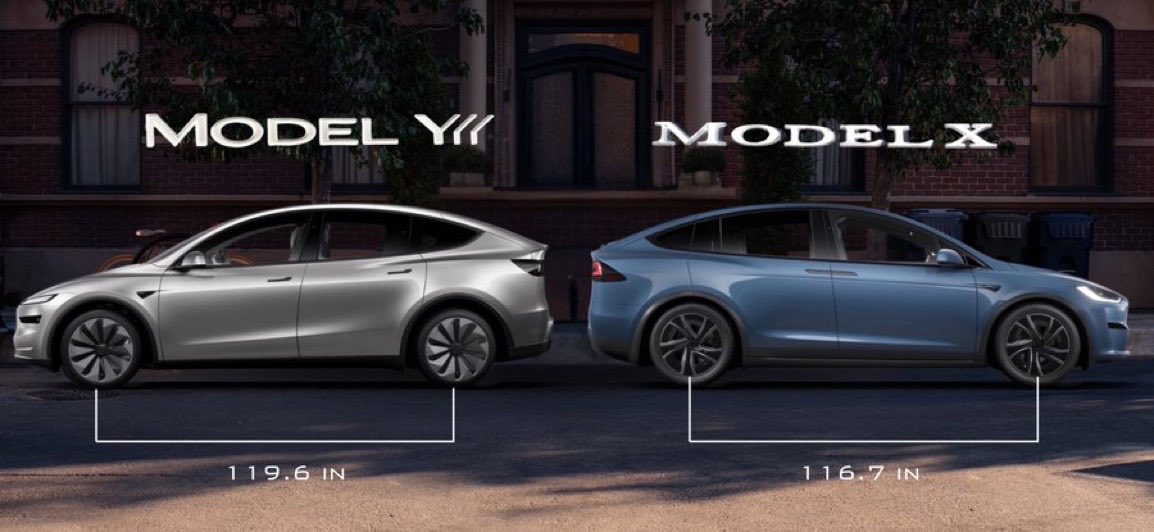
🚀 Model Y L이 Model X의 진짜 후계자다!
• 가격 약 $40K 절감
• 휠베이스 3인치 더 길음
• 3열 legroom/headroom 더 넓음
• 2열 파워 폴딩 플랫 캡틴 시트
• 보험료도 더 저렴
• 적재 공간도 동급 이상
Model X의 Falcon Wing Doors는 멋있지만,
실용성과 가격 경쟁력에서는 Model Y L이 압승입니다.
이 차, 미국에서 진짜 미친 듯이 팔릴 것 같지 않나요? 🇺🇸 한국에서처럼🇰🇷
여러분 생각은 어떠신가요? 댓글로 공유해주세요! 👇
북마크하고 주변에 알려주세요!