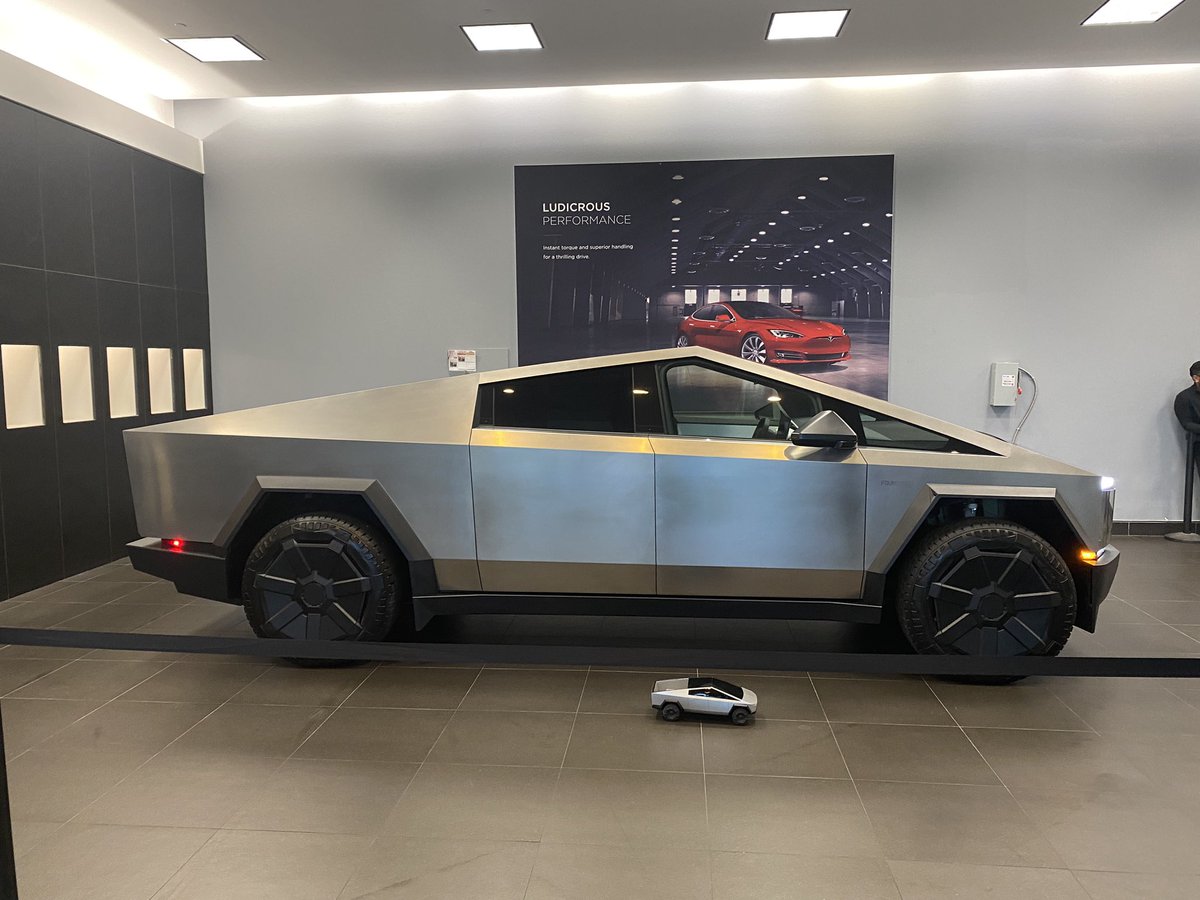
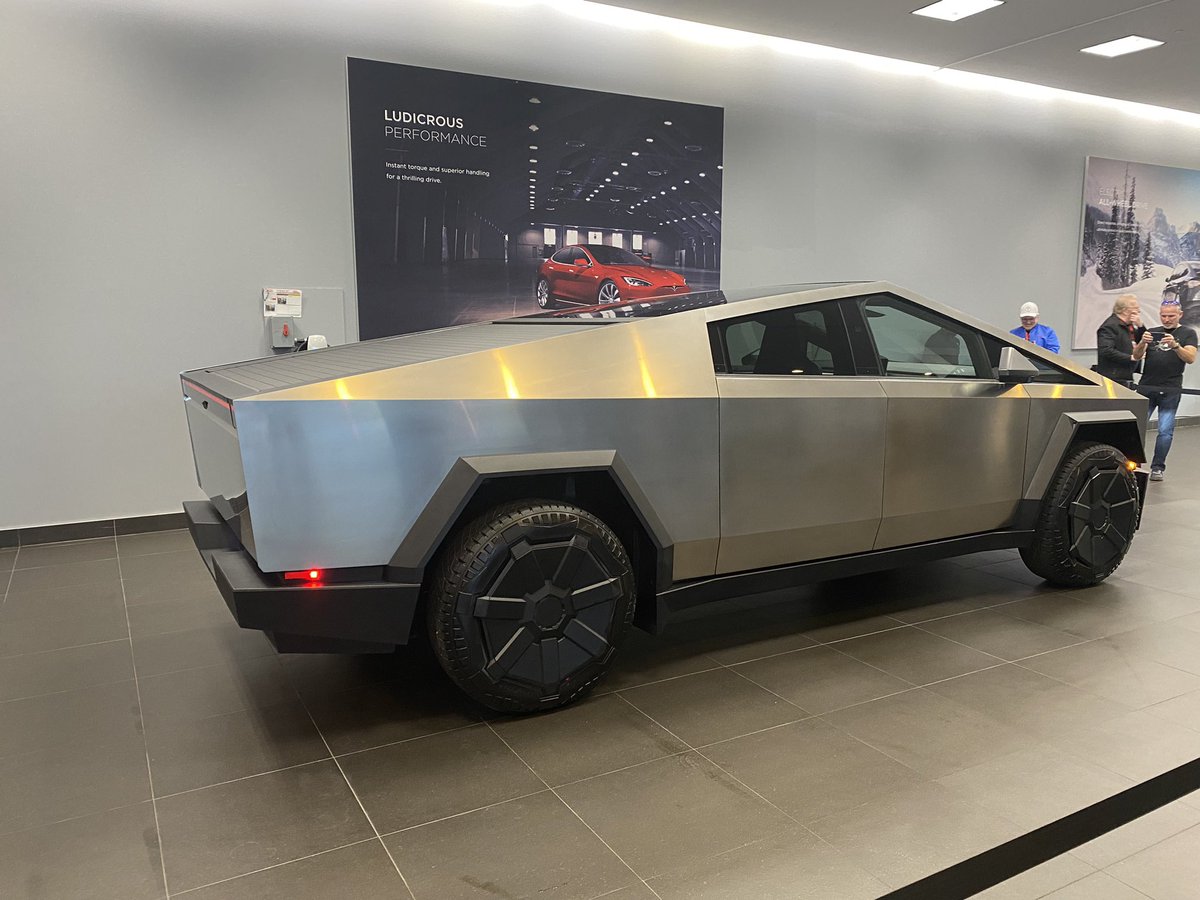
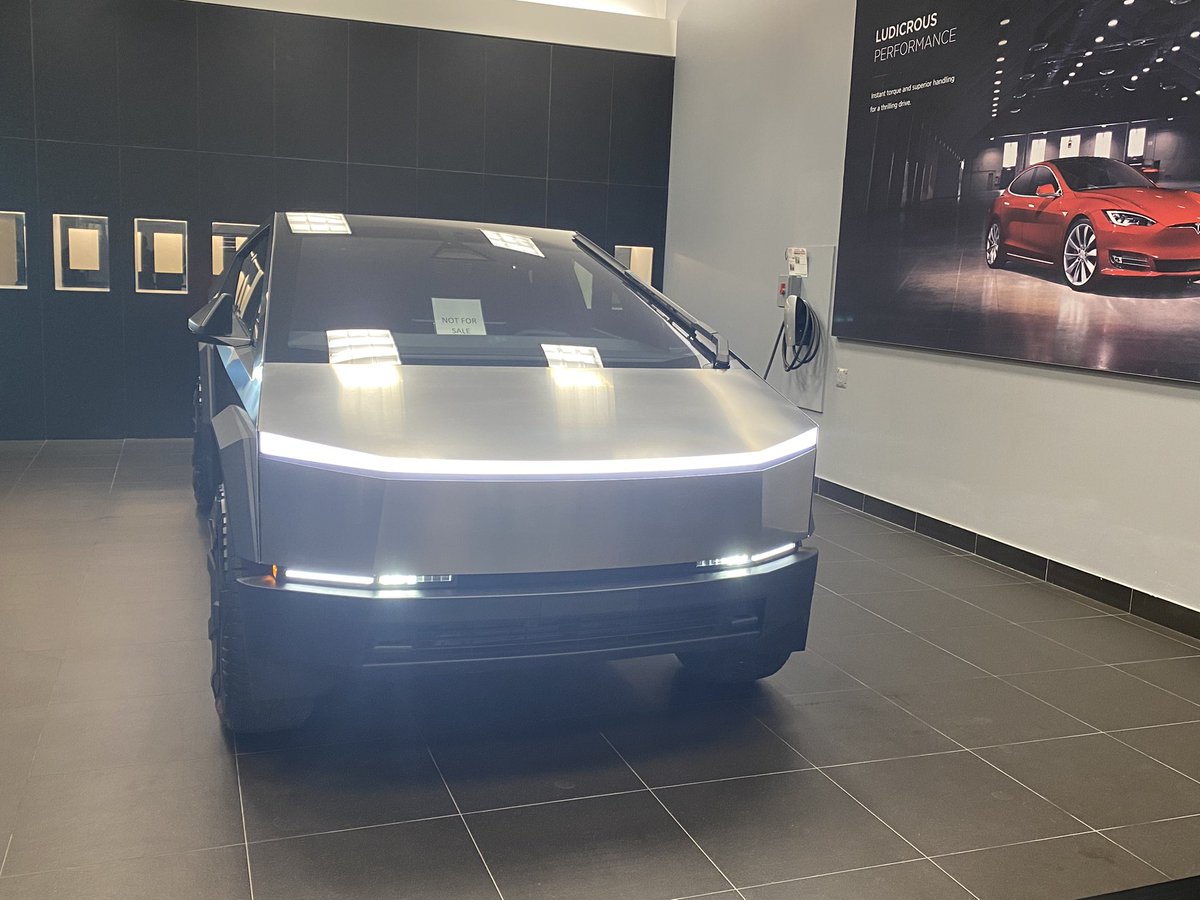
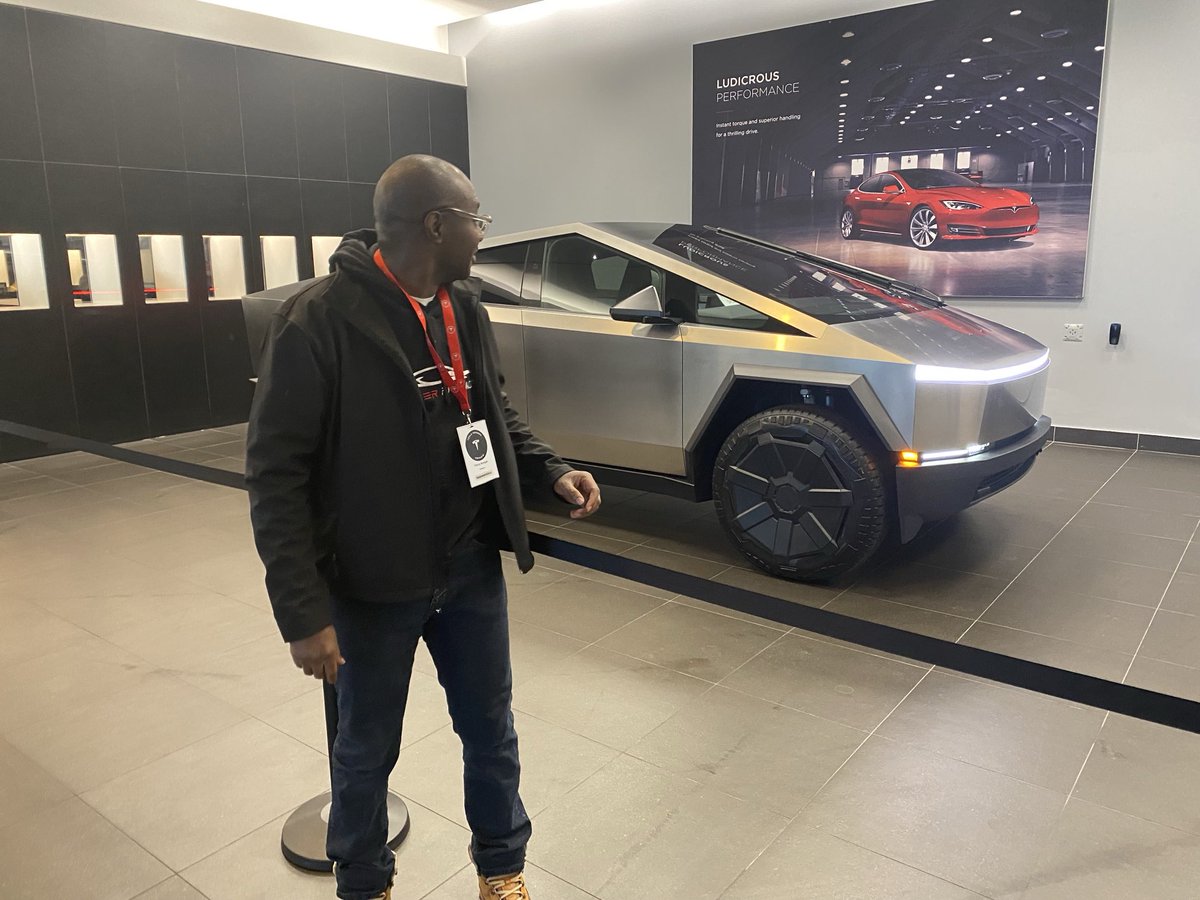
@KimberleyFlood Completion was a while back, apparently sorting out a few kinks before flipping on the switch. The addition of the L2 Chargers was a nice touch. We need more of those at the other plazas
Totally agree. I am stuck with a Ford for work all week and Blue Cruise is no where comparable to @Tesla FSD either. All the FSD hate is mostly FUD from haters
If someone tells you Mercedes "Level 3" DrivePilot is more advanced than Tesla FSD, they are either clueless or lying to you.
Mercedes DrivePilot:
1. Only works on certain models of the top end S class and EQS with special hardware. So only some versions of their most expensive car support it, or almost no cars. By contrast any Tesla built since October 2016 can run FSD.
2. Only works on pre-mapped highways in California or Nevada. By contrast Tesla FSD works on any road, highway or city streets across North America (and soon, Europe and China)
3. You must be in a traffic jam on the highway traveling under 40 miles per hour. By contrast FSD allows you to go up to 85 miles per hour.
4. You must have a vehicle right in front of you to follow, if they pull too far ahead you will be asked to take over. By contrast FSD does not require a lead vehicle.
5. You must have clear lane markings — if they are faded you will be asked to take over. By contrast FSD works without any lane markings.
6. Only works in good weather — if it's rainy, foggy, sun shining directly at car, etc you will be asked to take over. By contrast FSD works in a wide range of inclement weather conditions (but of course has limits too)
7. Only works in the daytime. Does not turn on at night. By contrast FSD works 24 hours a day.
8. You have to click ok to accept the first time you turn it on per drive. By contrast FSD just turns on without requiring you to click ok
9. DrivePilot still has a driver monitoring system that will beep at you / ask you to take over if you do anything that is not allowed (like leaning too far back)
10. You may be asked to take over at any moment for any reason and need to be ready to do so within 10 seconds.
11. If you don't take control, the vehicle will come to a dead stop in the middle of the highway
12. DrivePilot cannot handle interchanges or change lanes. By contrast FSD can handle lane changes and interchanges completely automatically. Mercedes can do lane changes in Level 2 mode, but in Level 3 mode you need to do them yourself. You will always need to pay attention to make sure you don't miss the exit
13. "Don't think of it as a fully automated do everything for you sytem. It's more like Level 2 enhanced, but enhanced in a really impressive way"
14. Relies on HD mapping to function. Mercedes needs to build and maintain these maps or the system will not work. The system does not work anywhere the maps don't go, such as city streets.
15. System is so reliant on maps to tell the car where to drive that they have to account for things like continental drift
16. When the system asks you to take over, you're sent back into manual driving mode — all lane keeping is turned off
17. Once it goes out of its operating conditions, you are liable again. So, for example, if someone changes lanes and there's no longer a lead car in front of you the system suddenly turns off, stops in the middle of the highway, and you're liable again "so it's always good to pay attention, even when these systems are on" (so what is the benefit exactly?)
18. Because mapping is so expensive to maintain, it costs $2,500 a year. By contrast FSD costs only $1,200 a year. It does so much more for less than half the price, and works on any Tesla.
19. No way to retrofit DrivePilot onto a car that doesn't have the LIDAR etc
20. "I came away from my time with DrivePilot a bit mystified. It's clear that developing this system was a complicated endeavor, with all the added sensors and complexity and while it was on I have to say it worked pretty flawlessly. But with the operating conditions being so narrow, I couldn't shake the thought of 'is this all worth it?' from my head. Even trying to film this video was difficult, as the vehicle would hand control back just as we were getting going especially with that low 40 mph speed threshold. And if I were paying $2,500 a year to use this system and it wouldn't stay on, I would find that pretty frustrating"
It is crazy and sad that people are being so misinformed about important safety technologies that could save or change their lives. If anyone tells you this system is more advanced than anything else out there, they are either a moron or a liar.
While there are many articles that do not accurately convey the nature of our safety systems, the recent Washington Post article is particularly egregious in its misstatements and lack of relevant context.
We at Tesla believe that we have a moral obligation to continue improving our already best-in-class safety systems (https://t.co/EMIEfc5kHo). At the same time, we also believe it is morally indefensible not to make these systems available to a wider set of consumers, given the incontrovertible data that shows it is saving lives and preventing injury.
Regulators around the globe have a duty to protect consumers, and the Tesla team looks forward to continuing our work with them towards our common goal of eliminating as many deaths and injuries as possible on our roadways.
Below are some important facts, context and background.
Background
1. Safety metrics are emphatically stronger when Autopilot is engaged than when not engaged.
a.
In the 4th quarter of 2022, we recorded one crash for every 4.85 million miles driven in which drivers were using Autopilot technology. For drivers who were not using Autopilot technology, we recorded one crash for every 1.40 million miles driven. By comparison, the most recent data available from NHTSA and FHWA (from 2021) shows that in the United States there was an automobile crash approximately every 652,000 miles. (https://t.co/RZjjBmylTk)
b.
The data is clear: The more automation technology offered to support the driver, the safer the driver and other road users. Anecdotes from the WaPo article come from plaintiff attorneys—cases involving significant driver misuse—and are not a substitute for rigorous analysis and billions of miles of data.
c.
Recent Data continues this trend and is even more compelling. Autopilot is ~10X safer than US average and ~5X safer than a Tesla with no AP tech enabled. More detailed information will be publicly available in the near future.
2. Autopilot features, including Traffic-Aware Cruise Control and Autosteer, are SAE Level 2 driver-assist systems, meaning –
a.
Whether the driver chooses to engage Autosteer or not, the driver is in control of the vehicle at all times. The driver is notified of this responsibility, consents, agrees to monitor the driving assistance, and can disengage anytime.
b.
Despite the driver being responsible for control for the vehicle, Tesla has a number of additional safety measures designed to monitor that drivers engage in active driver supervision, including torque-based and camera-based monitoring. We have continued to make progress in improving these monitoring systems to reduce misuse.
c.
Based on the above, among other factors, the data strongly indicates our customers are far safer by having the choice to decide when it is appropriate to engage Autopilot features. When used properly, it provides safety benefits on all road classes.
The Washington Post leverages instances of driver misuse of the Autopilot driver assist feature to suggest the system is the problem. The article got it wrong, misreporting what's actually alleged in the pending lawsuit and omitting several important facts:
1. Contrary to the Post article, the Complaint doesn't reference complacency or Operational Design Domain.
2. Instead, the Complaint acknowledges the harms of driver inattention, misuse, and negligence.
3. Mr. Angulo and the parents of Ms. Benavides who tragically died in the crash, first sued the Tesla driver—and settled with him—before ever pursuing a claim against Tesla.
4. The Benavides lawsuit alleges the Tesla driver “carelessly and/or recklessly” “drove through the intersection…ignoring the controlling stop sign and traffic signal.”
5. The Tesla driver didn’t blame Tesla, didn’t sue Tesla, didn’t try to get Tesla to pay on his behalf. He took responsibility.
6. The Post had the driver's statements to police and reports that he said he was “driving on cruise.” They omit that he also admitted to police “I expect to be the driver and be responsible for this.”
7. The driver later testified in the litigation he knew Autopilot didn’t make the car self-driving and he was the driver, contrary to the Post and Angulo claims that he was mislead, over-reliant or complacent. He readily and repeatedly admitted:
a.
“I was highly aware that was still my responsibility to operate the vehicle safely.”
b.
He agreed it was his “responsibility as the driver of the vehicle, even with Autopilot activated, to drive safely and be in control of the vehicle at all times.”
c.
“I would say specifically I was aware that the car was my responsibility. I didn’t read all these statements and passages, but I’m aware the car was my responsibility.”
8. The Post also failed to disclose that Autopilot restricted the vehicle's speed to 45 mph (the speed limit) based on the road type, but the driver was pressing the accelerator to maintain 60 mph when he ran the stop sign and caused the crash. The car displayed an alert to the driver that, because he was overriding Autopilot with the accelerator, "Cruise control will not brake."
More information and background can be found here → https://t.co/VoTuFFkP9D
If you are one of the lucky ones to have the first #Cybertrucks, we will wrap it any color you want for free. We will come to you if we have to. Please help us find a #cybertruck by liking or retweeting! 🙏
📸: @itskyleconner
@TheKarltopia @TeslaOwnersONT From my understanding the green plate is your authorization, however if you ever got pulled over or ticketed driving your EV with a non green plate, you could plead your case and the discretion of the officer will apply