Today we got to know that
ANI stands with CJP.
Extremely disappointed. Tuluvas are never with anti nationals . But someone had to prove it wrong and she did .
Japan should really be worried about the numbers of Pakis shouting "Naare Takbeer" in Japan. Hopefully, it isn't too late for them.
#AsianGames#Japan#Shintoism
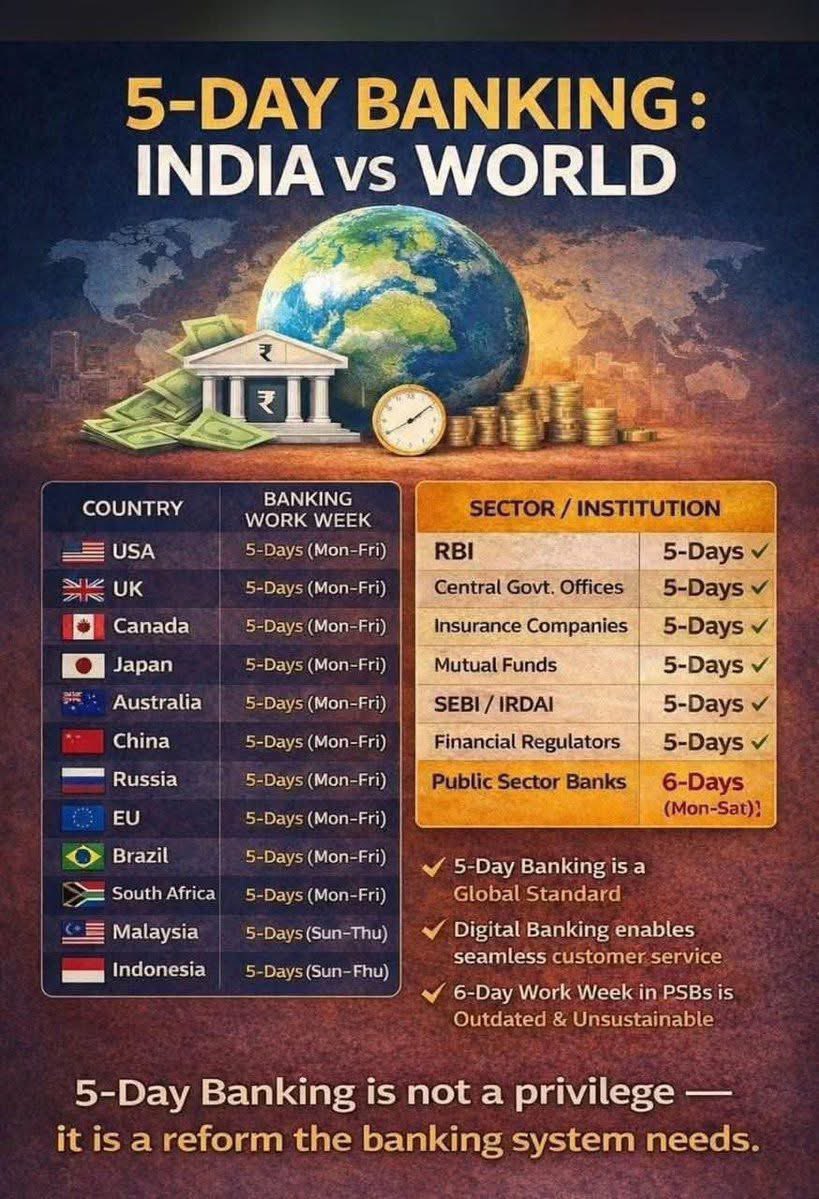
Finance advisor bata rahe hai ki 5 days banking se kisi ko problem nahi hogi par vo nalle
jinse Clerk ka exam bhi na nikale
Vo jinke bank account me 100 Rs. balance hai
Unko Saturday ko hi Bank aana hai..
#Banker#Bankstrike#UFBU#5daysbanking
Digital India thrives because PSBs deliver at the grassroots.
Time to recognize bankers with 5‑Day Banking & Fair PLI.
#5dayBankingNow#FBOIOA#BOIOAPune
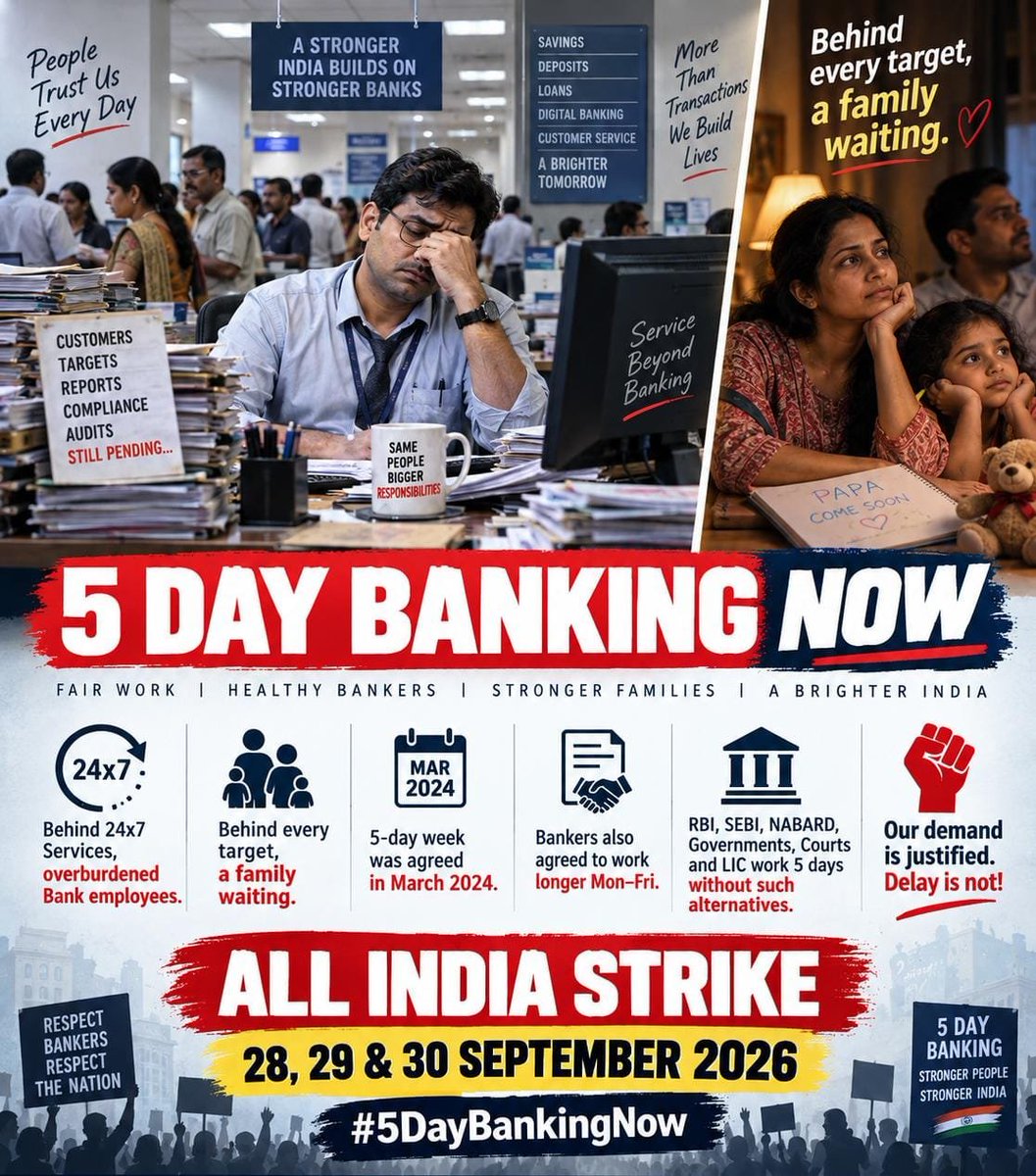
Bankers keep India connected 24×7.
But behind every transaction, target and deadline is a human being, with a family, responsibilities and a life beyond the branch.
A 5-day week was agreed in March 2024, with bankers accepting longer working hours from Monday to Friday.
The demand is reasonable. The commitment is proven. The delay is difficult to justify.
Implement 5-Day Banking now.
@PMOIndia@narendramodi@FinMinIndia@nsitharaman@DFS_India
#5DayBankingNow
PART 1 | LEAKED IB REPORT: DUTCH NGOs, KSU & THE CAMPAIGN AGAINST URANIUM MINING IN MEGHALAYA
In June 2014, a leaked Intelligence Bureau report brought Meghalaya into a much larger controversy over foreign funded NGOs, environmental activism and development projects in India.
The IB report, dated 3 June 2014, was titled:
“Concerted efforts by select foreign funded NGOs to ‘take down’ Indian development projects.”
KSU AND URANIUM MINING
According to The Telegraph, security agencies had carried out a “network analysis” of anti nuclear activism in India.
The IB claimed there was a larger network, driven by Greenpeace and prominent activists, beneath which operated five “territorial networks”.
One of those named was the Khasi Students’ Union (KSU), which had been opposing uranium mining in Meghalaya's Khasi Hills.
THE DUTCH NGO CONNECTION
The report focused on Cordaid, a Dutch NGO.
According to the IB, Cordaid intended to target:
Oil drilling in Manipur
Large dams in Arunachal Pradesh
Uranium and limestone mining in Meghalaya
A TRAINING PROGRAMME IN SHILLONG
The IB report further alleged that in October 2013 another Dutch organisation, The Coalition Factory, conducted a training programme in Shillong for activists from 10 Northeast NGOs.
Participants were reportedly taught to use GPS technology to build a GIS database mapping oil wells, mines, dams, forests, habitations and environmental impacts.
The IB claimed such a database could facilitate:
“targeted local protests and international activism.”
KSU DENIED IT
Then KSU president Daniel Khyriem categorically denied the allegations.
He told The Telegraph:
“The allegations are baseless and unfounded. We neither attended any training programme nor received any funding.”
So the IB report should be read for what it is: an intelligence assessment containing allegations, not proof that KSU received foreign funding.
But the document is significant because India's Intelligence Bureau placed Dutch NGOs, KSU, anti uranium activism and Meghalaya's mining projects within the same assessment of foreign funded campaigns against development projects in India.
PART 2: We will go directly into the leaked Intelligence Bureau document itself and examine what it actually says about Meghalaya, KSU, foreign NGOs and the Shillong programme.
Source: The Telegraph, 15 June 2014
https://t.co/8S2Yka19Qq
@ArunudoyB The audacity to talk about polluting waterbodies when we are forced to immerse our idols in what is basically sewage water flowing through the Polo river.
WHY I AM WRITING ABOUT SHILLONG
THE MOTHER WAITING
How many of you came home late from college and found your mother standing on the verandah?
Not worried because you were late.
Worried whether you would return home normally or beaten and bleeding.
We have.
Our mothers knew what could happen to a Bengali Hindu boy.
THE BOY WHO CAME HOME BEATEN
How many of you watched a bright, cheerful friend slowly become silent?
He would return home with swollen cheeks after being beaten.
His mother heated old clothes over a coal fire and applied them to his bruised body.
Next morning, he went back. The beatings continued.
We have.
His fault? Son of a poor Bengali Hindu.
KICKED ON THE ROAD
How many of you watched a classmate being kicked in the face on a pebbled road by boys wearing boots?
We have.
You stood there and watched, freezed.
That helplessness doesn't disappear.
THE STEEL TRUNK
How many of you slept wearing sneakers because you might have to run that night?
Steel trunk packed.
Mother wearing one of her better saris.
Lights switched off.
Waiting.
Our refugee colony was under threat.
And before going to sleep, mother told us:
Be ready to become refugees again.
Imagine those words coming from a woman who had already been uprooted once.
We don't have to imagine them.
We heard them.
THE MEN WITH RIFLES
How many grew up seeing curfew?
Empty streets.
Army flag marches.
CRPF.
And felt relieved when Indian soldiers appeared because you knew somebody was finally standing between you and genocide?
How many regarded CRPF as your protectors?
We have.
THE VEGETABLE SELLER
How many saw poor Bengali vegetable vendors humiliated?
Vegetables picked up.
Money not paid.
And if the vendor dared demand payment, he had to worry about whether he would be allowed to return to that market.
We have.
People learnt to swallow humiliation because survival was more important than dignity.
THE FOREIGNER
How many were called outsiders in India?
How many grew up understanding that someone could kick you or humiliate you & expect you to remain quiet?
We have.
Freedom wasn't something we discussed in textbooks.
We learnt what its absence felt like.
YOUR GOD IS INFERIOR
How many were made to feel that the Gods you worshipped were inferior & Devil?
How many regularly cleared religious literature about the “Good News” from their letterboxes?
We were souls waiting to be rescued. Bengali Hindu refugees.
We have.
Yet our parents didn't convert. We remained Hindu.
DURGA PUJA
How many Bengalis waited an entire year for Durga Puja & still couldn't take even the freedom to worship for granted?
We have.
For refugee Bengali families, Maa wasn't an academic discussion about religion. Maa was our Safe place.
REFUGEES. AGAIN.
Our parents had already been uprooted. They chose India.
Then their children grew up hearing that they were outsiders here too.
What exactly were we supposed to do? Become refugees again?
WHERE WERE THE HINDU ORGANISATIONS?
Where were the organisations claiming to speak for Hindus when we needed someone to stand beside us?
What I remember is Bharat Sevashram Sangha.
I remember the bond between refugee Bengali Hindu families.
I remember CRPF, the Indian Army.
They kept us alive.
THE TIPPING POINT
The attack on memorials of Netaji and Swamiji in Shillong.
Enough.
I DON'T NEED A FUKCING LESSON IN NATIONAL INTEGRATION
Don't tell me today that Bengali Hindus must understand everybody else's sensitivities.
Our parents understood enough. They understood what it meant to lose a homeland. They understood what it meant to start again with nothing.
They understood what it meant to keep quiet so their children could survive.
What I want to know is:
WHO UNDERSTOOD OUR SENSITIVITIES?
Who spoke when Bengali Hindu boys were beaten?
Who spoke when we lived under threat?
Who spoke when people left Shillong?
Who told:
You are Indians. You belong here. Nobody has the right to make you run again.
SHILLONG 1987: WHAT THE GOVERNMENT OF INDIA’S OWN HOME MINISTRY REPORT REVEALS - THE KSU AGITATION
There is an official Government of India document recording what happened in Meghalaya during the violence of 1987.
The Ministry of Home Affairs Annual Report 1987–88, under its section on Meghalaya, is remarkably explicit.
THE KSU AGITATION
The Home Ministry records that from the middle of May 1987, the Khasi Students' Union had begun an agitation.
In the Government's own words, the KSU had been trying to whip up “anti-outsiders sentiments.”
The report lists its demands:
• Solution of the foreigners issue in Meghalaya
• Extension of the Inner Line Regulations to Meghalaya
• Removal from the fresh electoral rolls of names of foreigners and non-tribals from outside Meghalaya
The Meghalaya Government held a series of talks with the KSU over these demands.
Reference: Ministry of Home Affairs, Government of India, Annual Report 1987–88, Para 2.11.
THEN CAME THE KILLINGS
The report records the human cost in a single chilling sentence.
During the KSU agitation against foreigners,
12 persons were killed in the Khasi Hills between June 1987 and January 1988.
The report separately records violent incidents between Garos and non-tribals in the Garo Hills.
This is not a later interpretation of the violence.
This is what the Government of India itself recorded in 1988.
Reference: Ministry of Home Affairs, Government of India, Annual Report 1987–88, Para 2.11.
DELHI INTERVENED
The Centre was clearly aware that the situation had become serious.
The Home Ministry records:
“Additional para-military forces were provided by the Central Government to bring the situation under control.”
The Meghalaya Government was directed towards restoring law and order and providing security and shelter to affected persons.
Reference: Ministry of Home Affairs, Government of India, Annual Report 1987–88, Para 2.12.
A UNION MINISTER CAME TO MEGHALAYA. TWICE.
The report reveals something even more significant.
The Minister of State (States), Ministry of Home Affairs, personally visited Meghalaya:
21–22 July 1987
and again
13–14 October 1987.
He visited both Shillong and Tura and held discussions with the Chief Minister of Meghalaya.
And what were they discussing?
The rehabilitation of displaced people and measures to ensure their speedy return to their original homes and occupations.
People had therefore been displaced on a scale serious enough for rehabilitation and return to become matters for discussion between the Union Home Ministry and the Meghalaya Government.
Reference: Ministry of Home Affairs, Government of India, Annual Report 1987–88, Para 2.12.
AND THEN THE REPORT MOVES ON
The Home Ministry concludes by saying that the situation was returning to normal and that the Meghalaya Assembly elections were peacefully held in February 1988.
But read Paras 2.11 and 2.12 carefully.
The Government tells us:
Anti-outsider sentiments were being whipped up.
12 people were killed.
Violence spread to the Garo Hills.
Additional Central paramilitary forces were deployed.
People were displaced.
A Union Home Ministry minister visited Meghalaya twice.
Rehabilitation and return of displaced people were discussed.
There can therefore be no question that Delhi knew what was happening in Meghalaya in 1987.
But the two paragraphs tell us remarkably little about what happened afterwards to those responsible for the killings.
How many were arrested?
How many were prosecuted?
How many were convicted?
That is the part of the story that deserves to be investigated.
Primary Source: Government of India, Ministry of Home Affairs, Annual Report 1987–88, Meghalaya, Paras 2.11–2.12, p.7.