Congratulations to Henri B. Kagan and Kenso Soai for the 2026 Nobel Prize in Chemistry, "for the discovery of non-linear effects and autocatalysis in asymmetric organic synthesis."
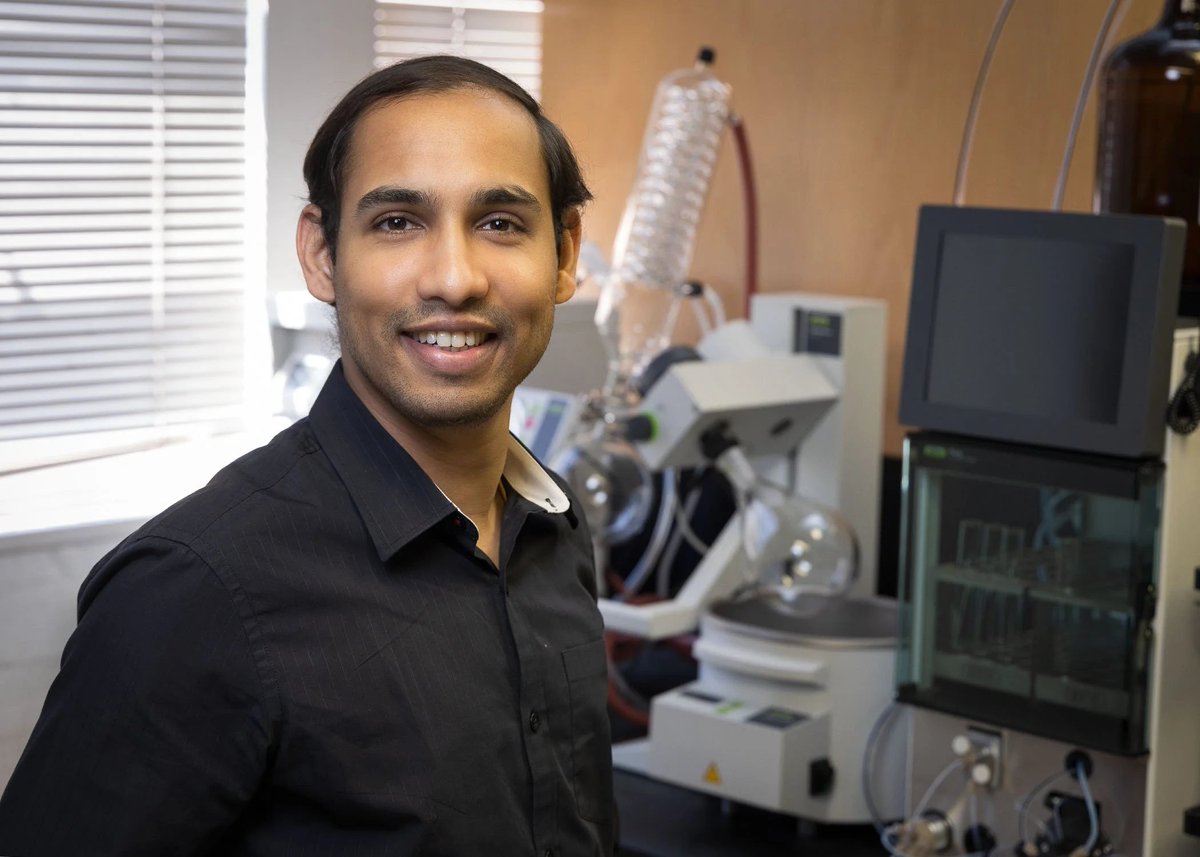
And this story has a boy from Pune in it....
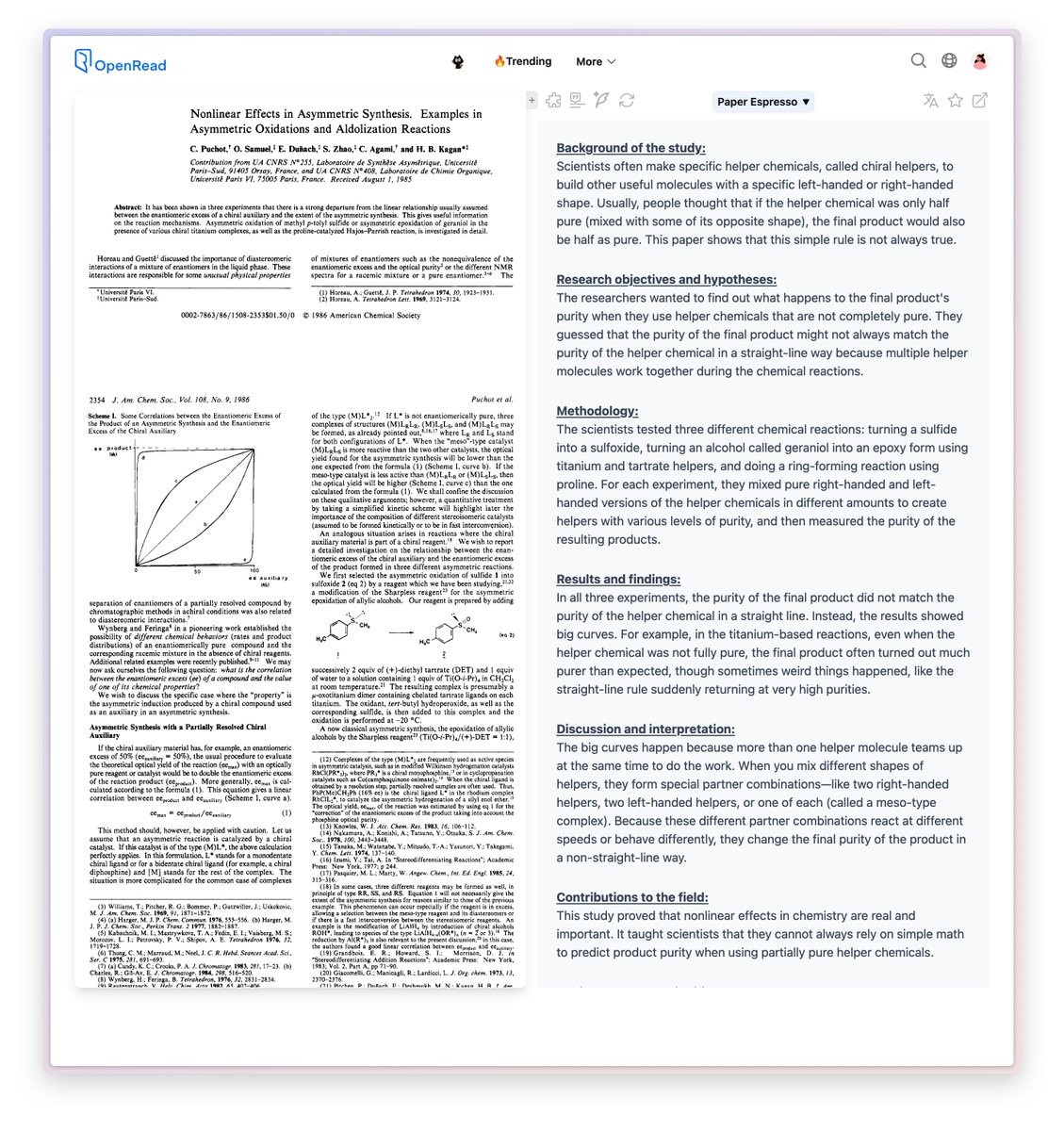
Kagan's half began in 1986. He showed that a catalyst carrying only a small excess of one handedness can produce a product with a much larger excess. The small imbalance does not stay small.
Soai's half came in 1995: a reaction that makes more of itself, and prefers its own mirror image. By 2003 he reported a version that produced only one hand.
A tiny imbalance, amplified until one mirror image dominates. Extraordinary, and for about 25 years the machinery behind it resisted explanation. Many models were proposed. None stuck.
Then a boy from Pune decided the unexplained part was the only part worth doing.
Soumitra Athavale grew up in Pune, studied chemistry and biology at IISER Pune, and went to the University of Illinois in 2014 for a PhD in molecular and cell biology.
But he could not let the Soai mystery go. So he started cold emailing organic chemistry profs, asking to work on this one puzzle. Professor Scott Denmark met him, said yes, and found the money.
In 2020, Athavale was 1st author of the Nature Chemistry paper with Adam Simon, Kendall Houk and Denmark that gave the reaction the structural picture that stuck: a homochiral tetrameric catalyst, working almost like an enzyme, explaining the amplification the field had chased for a quarter century.
Denmark says students like Soumitra come along once or twice in an academic career.
The man who found the reaction is Japanese. The man who helped explain it was born in Pune.
Congratulations again to Kagan and Soai. And here is to Soumitra Athavale, the Indian who went looking for the mystery everyone else had learned to live with.
Full Claude Course
Master Claude to automate repetitive tasks, build apps without coding, create real portfolio projects, and become more valuable at work.
The #NobelPrize in Chemistry 2026 recognises discoveries that have enabled chemists to drive chemical reactions that lead to homochirality.
Life’s chemistry is what chemists call homochiral, after the Greek words for “same” and “hand”. Like hands, all amino acids exist as two mirrored variants, but only one of them is found in the proteins in your cells. The other is rarely found in nature.
For a long time, chemists wondered how homochirality can emerge. When they began to experiment with chemical reactions that can form two mirrored molecules, they always obtained equal proportions of both in their test tubes. However, chemists strived to produce only one of these mirror images, because in the development of molecules that will interact with living beings – such as in pharmaceuticals – only one mirror image will have the desired effect.
Thanks to laureates Henri Kagan and Kenso Soai, we now know how homochirality can emerge. Their discoveries have been decisive for chemists who design reactions for the manufacture of pharmaceuticals.
Congratulations to Henri B. Kagan and Kenso Soai!
Henri B. Kagan's most renowned paper:
• Nonlinear effects in asymmetric synthesis. Examples in asymmetric oxidations and aldolization reactions
Kenso Soai's most renowned paper:
• Asymmetric autocatalysis and amplification of enantiomeric excess of a chiral molecule
Kagan discovered that in some reactions, making a catalyst only a little more “left-handed” or “right-handed” can make the product much more strongly one-handed than expected.
Soai discovered a chemical reaction in which a molecule helps make more copies of itself and can magnify an almost invisible preference for one mirror-image form into an overwhelmingly one-sided mixture.
Cocoa prices have tripled in 7 months, hitting all-time highs! Discover the factors behind this "price chaos" in the cocoa market, from production declines to the impact of the EU Deforestation Regulation. #CocoPrices#CocoCrisis#AgriMarkets
A climate-resilient coffee seed has been developed.
“Starbucks recently announced that it has developed six new varieties of coffee seeds that can withstand the effects of climate change, which some experts say is ‘critical’ for the future of coffee.” https://t.co/42SlnlORrf
Thrilled to see the @wef feature our recent deal with First Movers Coalition member, @Microsoft! We'll need many more partnerships like this between buyers and suppliers of permanent carbon removal on the way to gigaton scale removal and the goals of the Paris Agreement.