PSA, we tried to make it super easy for your coding agent of choice to use Gemini Neon and all of our models via the Gemini API CLI we shipped a few weeks ago!
It is open source and just requires an API key to get started: https://t.co/nhYEabtJZ7
I asked Claude to populate a Civilization-style game map with real data from the US. Opus 5.5 downloaded and parse a ton of public data and 7 hours and 45K lines of code later... it works :)
- 31 real data sources including Census, BEA, BLS, EIA, NOAA, USGS, DoD, NPS, FAA, FEMA, CDC...
- Real elevation, land cover, GDP, jobs, power plants, mines, ports, airports, bases, parks, universities, freight flows, disasters; all reconciled onto one 25 km hex grid.
- The data is converted into Civilization language, e.g. Gold yield is GDP. A city's districts are its real industry specializations: San Jose gets a Campus, Detroit is "Motor city". Its citizens are its real workforce: 1 in 4 San Jose workers are engineers, coders or scientists, against 1 in 14 nationally. Wonders are chosen by published rules, such as national parks by visitor numbers and universities by R&D spending, etc etc.
- 19 lenses (income, degrees, faith, disasters…), a City View for 524 metros, and nine advisors plus an Explorer. The Explorer turns any column for any of 3,100+ counties into a table and scatter plot, linked to the map.
- Claude decided to skip a few states and territories sry
- Built using Claude Code desktop app, Opus 5.5 on medium and turning on ultracode.
It's deployed here: https://t.co/QMhmafXMj5 and the "?" has the source link too. I don't exactly know where I was going with this but it's really fun to browse and play with. Possibly it can be expanded or built into a game. I only have half of my weekly Claude quote left though so someone else will have to take over :D. Claude also made a trailer:
No, I do not believe that we should “surrender human free will” to AI systems, and it’s absurd to suggest that I do. I have written hundreds of pages of essays and a constant theme in them is the need for AI to be governed by legitimate democratic processes. For millennia (going all the way back to Greek and Roman philosophers), advocates of autocracy have claimed that it leads to better, faster, or more decisive decision-making than the messy process of democracy. Even if this were true (which I doubt!), we should never sacrifice legitimacy or self-determination at the altar of efficiency or security. This argument against autocracy applies word for word against governance by AI, and I feel equally strongly that turning over governance to AI is a bad idea.
No one who had carefully read my writing or my interviews could reasonably conclude that I believe anything different. For example in an interview on CBS a couple months ago, I specifically called for AI to be governed democratically. I call for the same in Policy on the AI Exponential, Machines of Loving Grace, and The Adolescence of Technology, and We Must Pace the Frontier. Machines of Loving Grace contains an extended section on using AI to revitalize democracy, and discusses the use of AI as an aid to citizens in their decision-making, "aggregat[ing] opinions and driv[ing] consensus among citizens, resolving conflict, finding common ground, and seeking compromise.” The clear and obvious implication is that humans should remain the ones making political and governance decisions. The Adolescence of Technology has an entire section on fighting against AI-driven tyranny, and I even discuss the danger of AI labs usurping power and come out strongly against it — by implication, this definitely includes an AI lab usurping power and giving it to AI itself!
If I thought any of this was a good idea, I would be advocating for it in public, just as I have not been afraid to advocate for many, many unpopular views over the last few years. But I am not advocating for it, because I think turning over governance to AI is a terrible idea.
Separately, I think there is frequent conflation (including in this article) between the idea of “surrendering human free will” to AI in some grand sense of global governance, and the more prosaic idea that as AI systems advance, they become capable of doing specific tasks in a more automated way. This is not AI “running the world,” but AI driving a car, designing a cancer drug, or writing software end-to-end. Here, my view is mixed. AI doing more complete or larger tasks is economically valuable and can drive important advances in software, medicine, transportation, energy, etc. It is clearly desirable in many cases and will save a lot of lives. But it has downsides as well, and in some areas it may not be worth it.
For example, using AI too autonomously to build the next generation of AI systems (known as recursive self-improvement, or RSI) may cause AI to improve faster than we can control or adjust to it, so we may want limits on this process. As we said publicly in early November, we don’t expect it to be safe for Claude to build successive frontier models fully autonomously, without meaningful human supervision or understanding. Second, in some contexts, using AI in too end-to-end a manner may be a cause of serious job disruption, and it may make sense to slow or even stop some AI deployments to give people more time to adapt. Third, while the use of AI for alignment research is an incredibly valuable tool, it must be done with caution, because we may not be able to trust the work of the AI system. Finally, in many cases, humans would simply prefer to do some activities themselves, so they can stay deeply engaged in what matters to them, even if AI can do those activities better. There are countless other examples and hard cases. I don’t think there are any easy answers here, nor is there (nor should there be) any single decision-maker: some of these decisions will be made by society, some by government, some by AI companies, and some in a decentralized manner by individuals expressing their own preferences as consumers, which may differ from the preferences of others.
I don't think that other AI leaders or AI companies have significantly different views from me on whether specific tasks should be automated. Certainly the products that they offer don’t differ materially in their orientation towards automation of tasks; every company seems to be releasing models more and more capable of task automation (as that’s been the general consequence of scaling up AI training), and every company claims to understand there are risks and downsides of such automation and to offer safeguards. If anything, Anthropic has been the most vocal and the most proactive about acknowledging these downsides and trying to address them. For instance, it’s fairly absurd to cite my statement that fully autonomous weapons might “one day be needed for the defense of democracy” as differing from that of other AI companies, when I was willing to risk Anthropic’s future as a company to refuse to allow our existing AI models to be used for autonomous weapons even in the face of legal sanctions, and no other AI company did the same.
To summarize, as applied to grand questions of how we govern increasingly capable AI, I have been vocal and consistent that AI needs to be governed by a legitimate, democratic process and that “surrendering human free will” to AI systems is a terrible idea. As applied to automation of specific tasks by or for people, my views are more mixed, but I don’t think they differ from those of other AI companies — most other companies seem to be offering similar products and confronting similar tradeoffs without having perfect answers to them. What is happening is that there’s a sort of vibes-based commercial and political positioning that some AI CEOs are engaging in, where they repeat slogans like “human control and agency,” or “AI should be just a tool,” without actually doing anything different in their products or taking seriously the difficult questions that lie behind these slogans.
Want to fine-tune Gemma 4 on your own data, audio, receipts, or reasoning tasks?
Our new fine-tuning hub is live on https://t.co/0LtUIr7f3X: 17 guides and 40+ illustrations covering the entire training pipeline. Ranging from continued pre-training and custom chat templates, all the way to (Q)LoRA and GRPO.
PULSE-1 is here! 💥
Our proprietary AI Sales model trained on billions of GTM data which gets you up to 2.2x more positive replies.
Only available in Instantly and now free to try until December 1. Try it here: https://t.co/tduxSqaAqL
After weeks of running evals and building daily with Gemini 4 Neon, I realized that many of the guardrails, skills, and rules I wrote for older models were slowing it down.
Here are 5 things I changed. https://t.co/uNBAj0kSIa
The CIA and the US Treasury were both reported hacked on the SAME day.
That makes 4 US government hacks reported in 5 days. And 6 days before that, the head of US intelligence told Congress there was no coordinated attack.
11/20 - USDA: the system that pays US farmers
11/20 - FBI: the national crime database
11/24 - CIA + US intel systems
11/24 - US Treasury
This is what's actually known about each one.
CIA: Hackers got into a network shared by the CIA and the Office of the Director of National Intelligence. The agency that handles satellite imagery was reportedly hit too. It's the network analysts use for social media, commercial satellite images and data bought from brokers. Officials say it was unclassified and there were "no disruptions to critical capabilities or classified systems". Nobody has said what was taken.
Treasury: The part that got hit is FinCEN. That's where US banks send their reports on suspicious transactions. FinCEN confirmed "unauthorized access to a limited subset of its systems" and pulled some systems offline. It also pushed filing deadlines to Dec 30, and that covers reports that were due as far back as Nov 18.
FBI: The National Crime Information Center. Police all over the US use it to check warrants and stolen cars. It held over 19.3 million records last year. It's the FBI's 2nd reported breach since September, and the FBI still hasn't confirmed it publicly.
USDA: Staff were told on Nov 19 that the system used to pay farmers was hit. A USDA official said it was a cyber threat and that no personal data was lost.
Now the part I can't get past.
On Nov 18, after a week of outages at the FAA, the NSA and big banks, Director of National Intelligence Jay Clayton told Congress they were "not a coordinated or state-sponsored attack". He said it was maintenance.
The Washington Post reports the CIA break-in happened several weeks ago. If that's right, hackers had already been inside a network his own office uses when he said it. Nobody has said if he knew.
To be fair, he was talking about the outages. Nothing public connects the outages to the hacks, or the 4 hacks to each other. Nobody has been blamed for any of them. And officials say nothing classified was touched.
Maybe it's 4 different hackers and bad timing. I just think 4 in one week deserves a better answer than "limited".
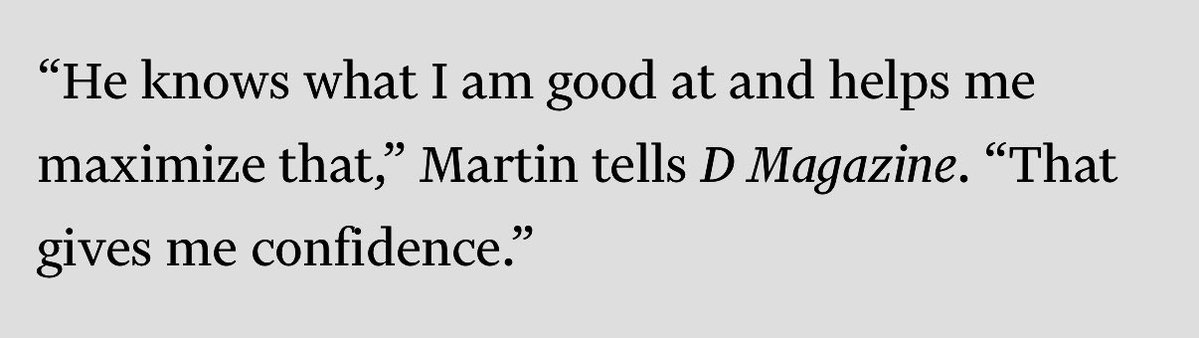
Caleb Martin set a career high with 5 steals to go along with 10 points in the first half tonight.
Martin joined Michael Finley, Adrian Griffin, Jason Terry, Jason Kidd and PJ Washington Jr. as the only Mavs in the play-by-play era (since 1996-97) to record a 10-pt, 5-stl half.
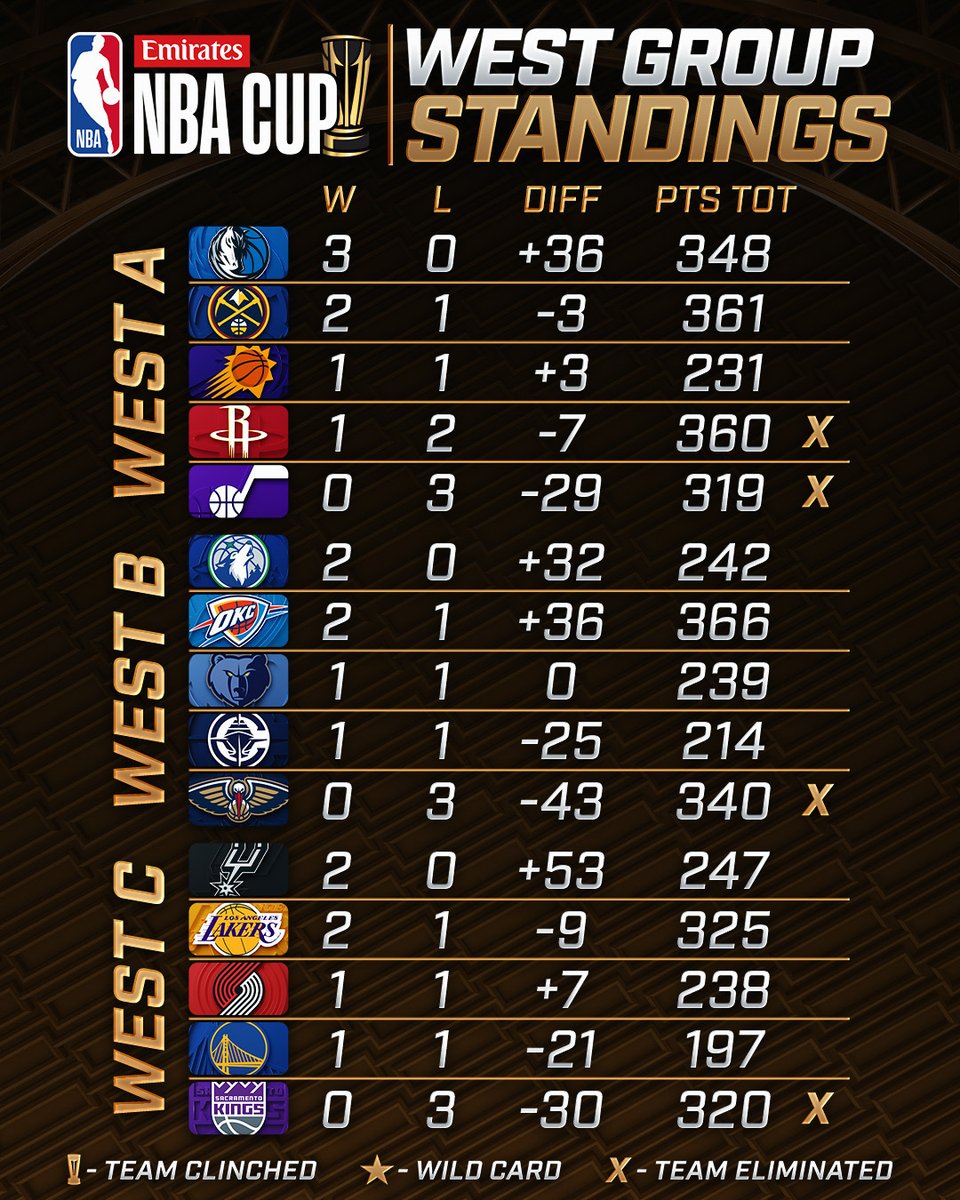
Dominant Mavs win in Denver. Coop had “a quiet” 24-6-12, lol, but Caleb Martin probably had the biggest singular impact in this contest. Team win for sure. Phenomenal defense. Lots of solid contributors. 8 dudes had 9+ points. Mavs won in the paint 68-38 and fast break 35-7. This team is legit.
Cooper Flagg has recorded his 45th career 20-point effort tonight at DEN, passing Kevin Durant (44) for the third-most 20-point games by a teenager in NBA history.
Flagg is now 5 20-point games away from passing former Nugget Carmelo Anthony (49) for the second-most by a teen.
Well as interesting this is and as cool it is, does it even matter? We have this number of humans who'd beat four AIs in predicting how clickable something is, but in practice, does it yield the same results? If not it's not that interesting. It's a cool exercise and experimentation but that's all it is. If it does result in predictive behavior being actual behavior, it's very good, but the alpha will close day by day due to AI.
Curious to see how it pans out long term.
I'll actually revise this post and further this point. The thing is, if they can predict how clickable something is and then in actuality it is actually that clickable, that's great. It's fantastic. They can be high-leverage tastemakers.
The downside is, if that's the case, you lose out on, I think, niche specifics and nuance, which matter quite heavily potentially. Furthermore they're not executors. They're just people who know how clickable something is.
But does that same skill transfer to designing something that's clickable in the first place? It could be a completely different skill and I'd argue probably actually not but maybe it is. I have no idea. I'm curious to see how it pans out. If it means there's a tangible thing where I can be like, "This is the most clickable packaging," that's awesome. That's great.
You can now install Claude artifacts as desktop apps on Mac and Windows.
Ask Claude to build an artifact, click "Install as app", and open it like any other app. It can use your connectors and, if you allow it, send notifications or add a menu bar item.
Man they give up at 25 (latest)
Competition doesn’t exist if you’re actually going hard. Then you enter the real battle grounds with other winners. Difficulty goes vertical once you make it to the coliseum.