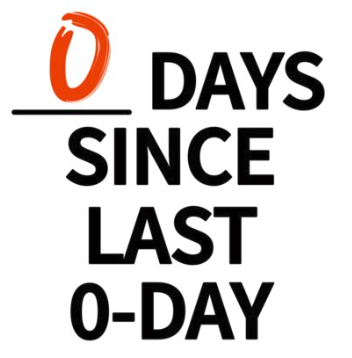
J'ai perdu le pass root d'un serveur, c'est contrariant, bon, je ne m'en fais pas, dans 2h une nouvelle CVE sera de sortie pour avoir une élévation de droit sans problème.
The biggest opportunities right now:
1. build for solving loneliness (the more AI floods everything, the more people crave real human connection, IRL and small social)
2. build for places with no cameras and no recording (being offline and unseen is turning into the new status symbol)
3. build for the crisis of young men. Millions of guys in their 20s feel completely lost with work, dating, and purpose. Whoever builds real brotherhood, mentorship, and an actual path forward wins a massive market (and helps a ton of people).
4. build for protecting people's brains (feeds are turning everyone's attention to mush, tools that protect your focus and mood are an easy sell)
5. build for the death of "everyone agrees" (you can find a chart or a podcast clip to prove any point now, people are starving for one source they actually trust)
6. build for day 2, not day 0. Anyone can launch an app in a weekend now. But how can you keep it running, fix the mess, and grow it for 3 years.
7. build for throwaway software (not everything needs to be a $20 a month subscription, tiny apps made for one trip, one wedding, or one group chat are coming)
8. build for people whose ego just got bruised by AI. Millions of smart people are realizing their job was mostly pattern matching. Help them figure out what they're good for next.
9. build for things that take effort on purpose (when everything is instant and free, nothing feels earned, people will pay for slowness and craft)
10. build for people who miss being told they're wrong. AI agrees with everything you say now. Real rooms where smart people actually push back on your ideas are becoming a luxury.
11. build for skin in the game. The internet is full of free takes and bots. Any platform where people have to put real money, real names, or real work behind what they say wins.
12. build for agents that need to spend money (they're getting virtual cards and budgets, someone builds the spend controls, fraud protection, receipts)
13. build for the end of fake email jobs (half of corporate America knows their job is theater, build the exit ramp for people who want to do real work)
14. build for the friend with great recommendations (nobody trusts Yelp reviews etc anymore because it's all bots and SEO, people will pay one obsessive person to just tell them where to eat and what to buy)
15. build for life after the chat box. Typing prompts already feels old. The best AI products won't look like chatbots at all, they'll just sit in the background and proactively handle things.
16. build for markets too small to matter before (500 lobster fishermen was never worth a team, now it's a real business if you can figure out what to build value to add to these fishermen lives!)
17. build for helpful without being creepy. AI is getting very personal very fast. Whoever figures out how to make it feel warm instead of weird owns consumer tech.
18. build for small private rooms (the public internet feels like an ad and a bot farm, all the good conversations and deals are moving into small invite-only groups)
19. build for someone taking the blame. AI can write the contract or read the scan, but a machine can't look you in the eye when it goes wrong. People still pay for a human on the hook.
20. build for learning that actually keeps up (a four year degree is way too slow for how fast things move now)
21. build for the anti-AI premium (as everything gets generated, human-made and unpolished become status symbols people pay up for)
note: more trends/ideas https://t.co/a5ARFnvSnA (free to sign up)
22. build for the return to the physical (screens fill with slop, people crave the real world, the hands on, the local, the analog)
23. build for the caregiving wave. The population is aging fast, tens of millions are caring for parents, and the whole burden is landing on families with no support.
24. build for finding things you didn't know to search for (algorithms just feed you more of what you clicked yesterday, people miss stumbling onto something totally different)
25. build for the housing and rootlessness problem (people can't afford to settle down, and the whole idea of a stable home base is up for grabs)
26. build for anti marketing (the slickest, most polished websites now look like AI slop or a scam, sometimes a plain text page from 1998 converts better because it feels like a real person built it)
27. build for agents that sit on hold for you (canceling a gym membership, fighting a medical bill, haggling with your internet provider, aint nobody got time for that)
28. build for software you actually own (people are exhausted from renting 30 different subscriptions every month, pay once and run it on your own machine is a massive wedge)
29. build for stuff that only works locally. The internet feels like one giant mall where every city has the exact same coffee shops and trends. Things that refuse to scale are suddenly cool again.
30. build for the 90% automated, 10% human sign-off model (clients don't actually care if AI did the heavy lifting, they just want one real expert to check the work and put their name on it)
31. build for infinite creative testing. Some brands are lighting money on fire on Meta because their ads die in 10 days. Build an automated pipeline that pumps out 100 fresh UGC and static ad variations a week based on what's actually converting in their ad account.
32. build for cold outreach that doesn't look like cold outreach. Mass blasting 50,000 people with "Hope this finds you well" is dead lol. Build an agent that watches for one specific trigger like a new VP hire or a broken checkout page, builds a custom teardown on the fly, and sends it before a human SDR even wakes up.
33. build for programmatic free tools instead of blog posts. Spin up 200 tiny, hyper-specific calculators, little apps and templates for one niche, rank them, and turn the traffic straight into conversions.
34. build for the food and toxin awakening (people are finally waking up to ultra processed food, microplastics, and why everyone feels sick and tired all the time)
35. build for the death of third places (there is almost nowhere left to just hang out without spending $50, which is why run clubs, saunas, and neighborhood clubs are blowing up)
36. build for people who can't retire at 65. Either they can't afford it or they're going to live to 95 and don't want to spend 30 years watching TV. The second act"market is huge.
37. build for the "undo" button for agents. Giving an AI access to your inbox, calendar, or bank account is still terrifying. Whoever makes it safe to let go of the wheel wins.
38. build for the sports betting and day trading hangover (a whole generation of young people are addicted to gambling on their phones and blowing up their bank accounts)
39. build for the death of the attention span. Smart adults can't even sit through a movie without checking their phone or finish a book anymore, and they're starting to hate themselves for it.
40. build for keeping marriages alive. Couples are stretched thin with work, kids, and money, and traditional therapy is $250 an hour with a waitlist. Anything that actually saves relationships is priceless.
41. build for people who don't own anything anymore. You rent your apartment, lease your car, stream your music, and subscribe to your software. Anything that helps regular people actually own an asset again wins.
KEEP BUILDING
Now that Jensen Huang is gone, I think America is about to discover something the hard way:
Nvidia didn’t just lose a CEO. It lost the one guy who knew how to run an Asian supply chain like an old-school merchant.
You can replace him with a brilliant American executive, an Indian executive, a Chinese executive — whatever.
The title is replaceable. The relationships are not.
Anyone who grew up around old-school Chinese business culture will recognize Jensen’s style immediately. You eat together. You drink together. You remember who helped you twenty years ago. When you decide someone is your guy, you keep dealing with him for decades. Contracts matter, of course, but when things go wrong at 2 a.m., what matters even more is whether the person on the other side will pick up your call.
Look at Nvidia’s supply chain. TSMC makes the chips. SK Hynix makes the HBM. Foxconn, Quanta, Wistron, Pegatron and others build the systems. Jensen didn’t suddenly discover these companies when ChatGPT arrived. He spent decades personally building relationships with the people running them.
TSMC is probably the best example. Back in 1998, when Nvidia was still tiny and short on manufacturing expertise, TSMC sent two production people over to help. The relationship became so close that Morris Chang later asked Jensen twice if he wanted to become CEO of TSMC. Jensen said no both times.
Decades later, Jensen was still flying back to Taiwan, eating with Morris Chang, Barry Lam and half of the island’s tech establishment. At one Taipei dinner, the guest list looked less like a restaurant reservation and more like the control room of the global AI supply chain: TSMC, Quanta, Pegatron, Wistron, Asus, Acer, Inventec, Foxconn.
That stuff looks almost comically old-fashioned in an industry obsessed with AI agents and trillion-dollar market caps. But then you see what happens when Nvidia actually needs something.
In 2024, Jensen wanted SK Hynix to move its HBM4 supply schedule forward by six months. Six months in semiconductors is insane. You’re talking about engineering, capacity and production plans that were set long before Jensen showed up asking for more.
SK chairman Chey Tae-won publicly told the story later. Jensen asked. Chey went back to his people and pushed.
That is not something you reproduce by handing the next CEO a supplier spreadsheet.
And Jensen also knew what it meant to owe somebody.
In Nvidia’s early days, its project with Sega went badly enough that the company was in real trouble. Jensen went to Japan, admitted the technology wasn’t going to work, and Sega still gave Nvidia $5 million that helped keep the company alive.
Thirty years later, Jensen went back to Tokyo and thanked former Sega president Shoichiro Irimajiri in person. His message was basically: without what you did for us back then, there would be no Nvidia today.
He did the same thing on the other side of the table.
Serve Robotics CEO Ali Kashani has talked about December 2023, when his company was so close to dying that he had already discussed bankruptcy. An investor pulled out right before Christmas. Kashani called Jensen. Nvidia helped carry the financing, other partners joined, and a few months later Serve was ringing the Nasdaq bell.
That’s the Jensen playbook. Eat with people. Remember favors. Return favors. Call directly when there’s trouble. Keep relationships alive for twenty or thirty years.
Silicon Valley has a fancy word for this: “network.”
My family would probably just call it doing business,and now Jensen is gone.
Nvidia can transfer his office, his org chart, his contracts, his procurement team and every supplier database to the next CEO.
What it cannot transfer is the invisible ledger sitting inside the heads of dozens of people across Taiwan, Korea and Japan:
He helped me once. I helped him once.
We’ve known each other for 25 years.
If he calls, I’ll listen. There is no handover document for that.
🚨 Guys, just an IMPORTANT HEADS UP!
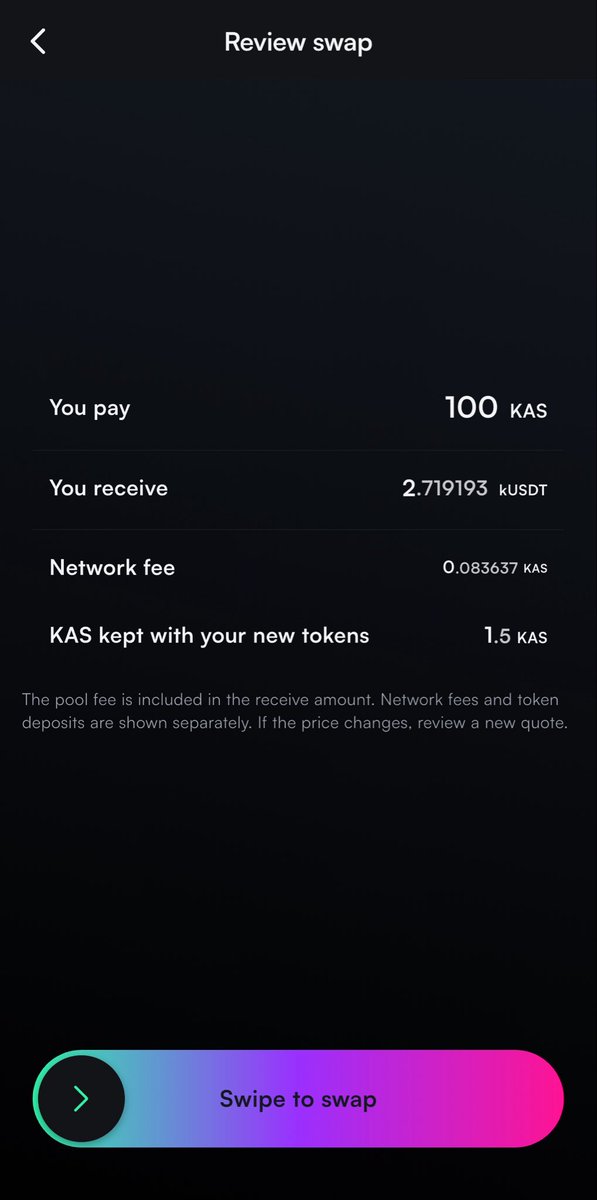
There's a FAKE KSNV TOKEN in KCC20: https://t.co/FXDI2qYwdp
That token is not ours!
We have not migrated to KCC20 yet. You all gonna know the moment is available, because:
we're gonna migrate KRC20->KCC20 1:1, so all of your current $KSNV holdings will be intact.
Love you all. Do not feed the scammers. RT please.
This is interesting.
We have no valid contest yet for November in @KasanovaWallet, because the minimum volume hasn’t reached.
But we have the volume required by users that did not select WIN benefit for this month.
They could be winning a pool of 500 $KAS at least.
Help me spread the word! #kaspa
Jensen cheating on his wife is disgusting, and my heart absolutely breaks for her.
BUT… after this second alleged affair comes out, does anyone else get the feeling someone is deliberately trying to take this man down? Because this is starting to feel less like a coincidence and more like a coordinated effort to destroy his reputation and force him out of NVIDIA.
I don’t know what’s going on behind the scenes, but something about this whole situation feels VERY off.