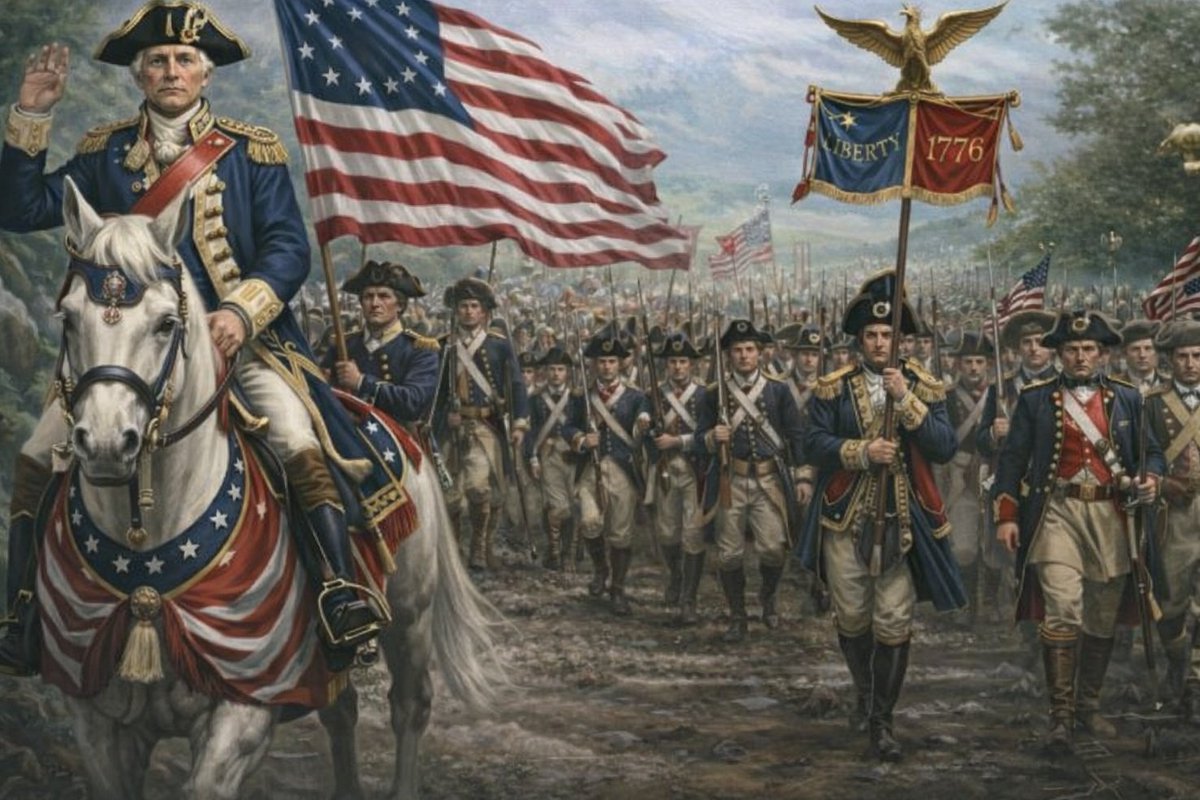
I’m starting a little side project. I’m finding relatively obscure songs from American history and giving them a fresh coat of paint. -The first song I’ve chosen is “God Save the Thirteen States”. It was first published in 1779.
Song 4 of the American music revival. “Britannia’s Disgrace” is an American Revolutionary-era song written during the war, celebrating American resistance and British military setbacks. It’s written from the point of view of a British soldier fighting in America.
Wrath of the American
In the shadowed corridors of modern American society, a simmering fury brews among White men, a demographic increasingly alienated from the traditional pillars of purpose and legacy. Stripped of the once-assured paths to family and stability, these men find themselves adrift in a cultural landscape that mocks their aspirations and dilutes their identity. This wrath is not born of mere entitlement but of a profound existential void, where economic pressures, social engineering, and demographic shifts conspire to render procreation an unattainable dream. As they gaze upon a nation transformed beyond recognition, their anger coalesces into a quiet storm, waiting for the moment to unleash.
The childlessness plaguing these generations is no accident but a symptom of systemic disenfranchisement. Wages stagnate while costs soar, affirmative action sidelines merit, and a relentless influx of immigration alters the ethnic fabric of communities once familiar. One can observe that those who cannot create—barred from building families by financial ruin or cultural disdain—inevitably turn to destruction as a surrogate for meaning. Family men, tethered by the responsibilities of fatherhood, channel their energies into protection and provision, but the childless wanderer has no such anchor. Instead he hones a mindset of unbridled intensity, unencumbered by the softening influences of domestic life. This shift marks a generational pivot from builders to potential breakers, fueled by the betrayal of promises unkept.
Yet, this wrath manifests not in random chaos but in an anticipation of a grand reckoning, a day where accumulated grievances demand resolution. These young men, with nothing to live for except this pivotal clash, embody a latent force in American history—the undercurrent of rebellion that has periodically reshaped the republic. From the frontiersmen who tamed the wild to the revolutionaries who defied empires, the American spirit has always harbored a capacity for wrath when cornered. They are primed to collect souls and scalps, a metaphorical invocation of the soul-crushing battles ahead, where survival instincts override civility. In this view, their isolation is not a weakness but a divine preparation, sharpening them for the conflicts that family-oriented counterparts might shy away from.
Ultimately, this struggle will birth new meaning into the lives of men, implying that this era of desolation serves a higher purpose in the cosmic order. The wrath of the American, particularly these dispossessed white men, may be the forge from which a renewed society emerges, tempered by trial and tribulation. Whether through reformation or revolution, their pent-up energy underscores a timeless truth: nations ignore the disaffected at their peril. In the end, everything has a reason, and the childless destroyers of today could become the reluctant saviors of tomorrow, channeling their fury into the rebirth of a fractured land.
Song 3 of the American music revival series- “Perry’s Victory” tells the story of Commodore Oliver Hazard Perry’s dramatic triumph at the Battle of Lake Erie on September 10, 1813, a crucial American victory in the War of 1812.
After his flagship Lawrence was battered nearly beyond use, Perry transferred his flag to the Niagara and rallied his squadron to break the British line, capturing the entire enemy fleet. The song appears to have originated in the years immediately following the battle.
On August 21st, 1863, 400 Missouri guerrillas rode to the town of Lawrence, Kansas. They sought retribution for losses they’d taken in the border war. 150 men and boys died that day. Many of the survivors died a little too.
-Bleeding Kansas