Our dark sky is one of the most precious things we have. It is important for our health and wellbeing as well as for the health and wellbeing of the planet and other beings. Please follow us for more updates
Looking forward to our Solar Eclipse Safari this evening with @ingramvalleysafaris
August 12 = Partial Solar Eclipse in Northumberland ✨
Begins 6:15pm | Max 7:12pm | Ends 8:05pm
#StargazingUK#Astronomy#Eclipse2026
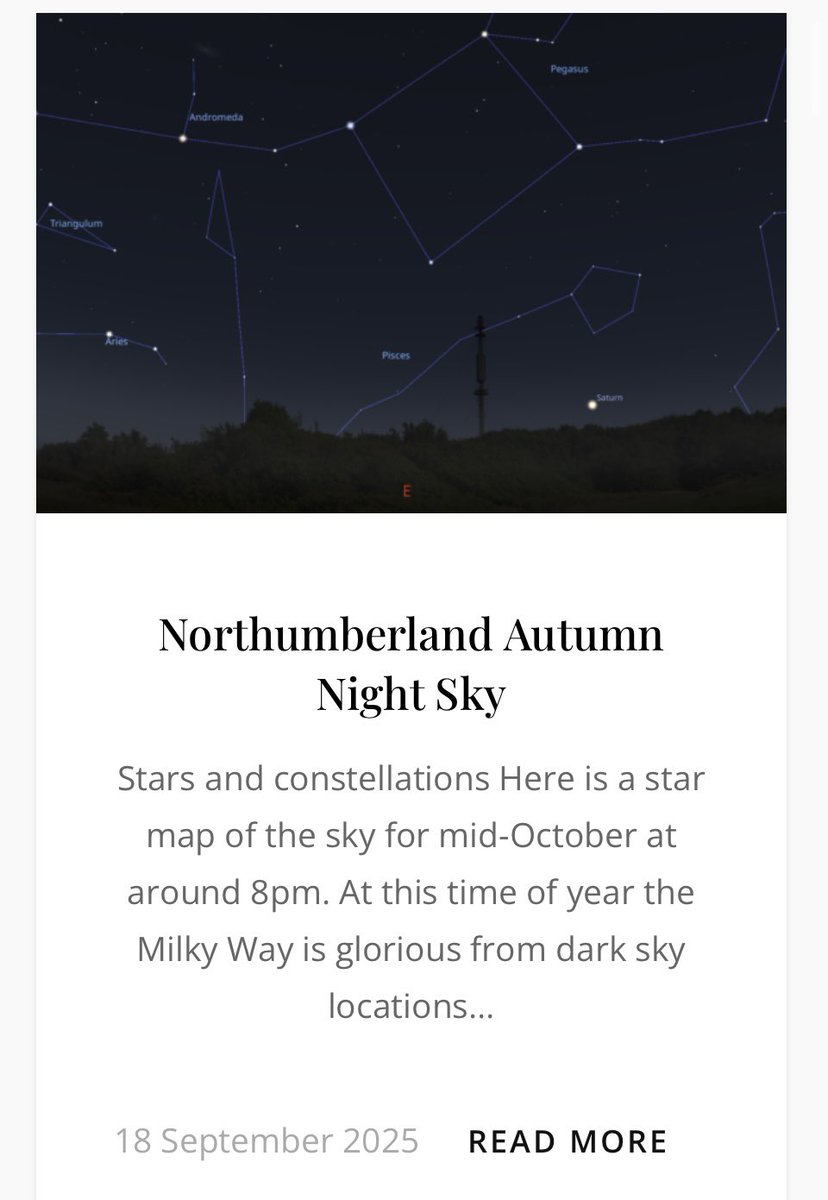
The Winter Stars: Colour, Brilliance, and Our Place in the Milky Way - Star in the Countryside Blog
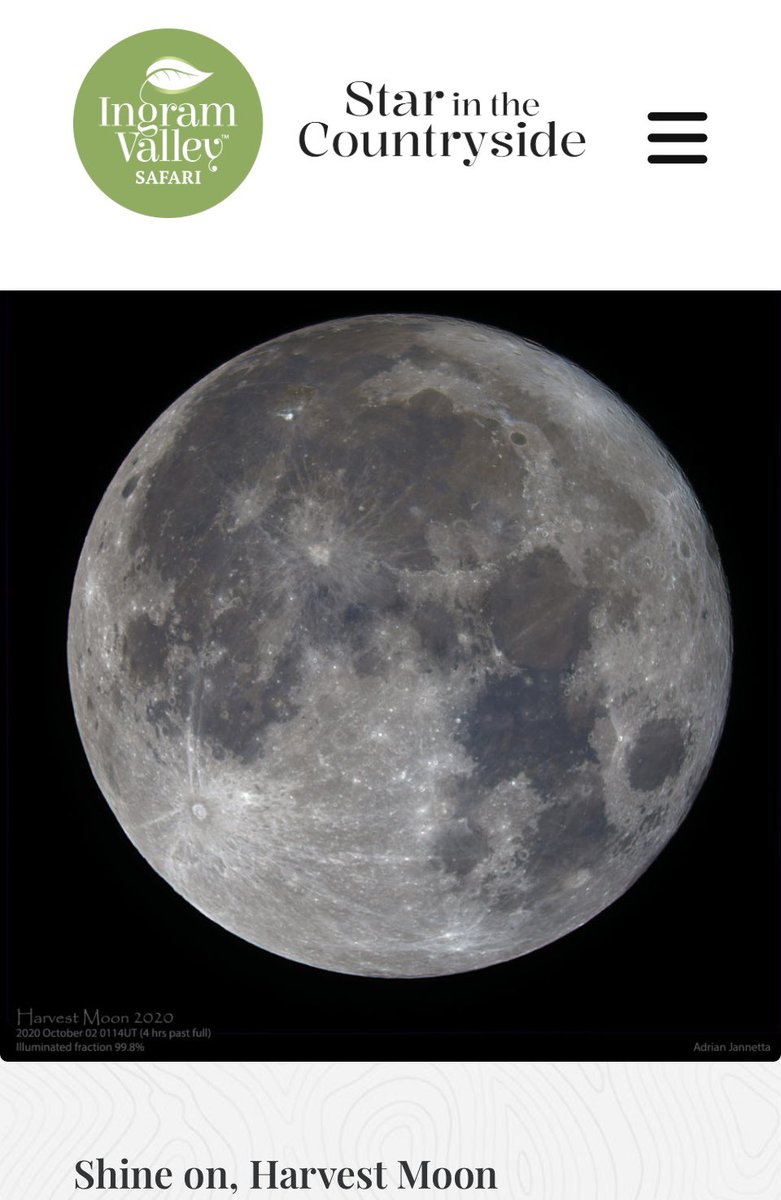
Thank you @AdrianJannetta https://t.co/nMvheO5PbQ
Comet Lemmon (2025 A6) captured with the Seestar S50 tonight. Around 15 minutes of exposure time. Comet and stars stacked separately to freeze the motion of the comet. #Northumberland#Comet
Super interesting!
A few days ago, a research team announced the discovery of a fascinating trans-Neptunian object, 2023 KQ14, nicknamed "Ammonite", thanks to the FOSSIL II project with the Subaru Telescope, during the first year observations (2023).
Follow-up observations in 2024 with the Canada-France-Hawaii Telescope (CFHT), combined with archival data from the Víctor M. Blanco Telescope (Chile) and the Kitt Peak National Observatory (KPNO, USA), enabled astronomers to reconstruct Ammonite's orbit over a 19-year arc, confirming its existence.
This celestial object, located approximately 71 astronomical units (au) from the Sun (71 times the average distance between the Earth and the Sun) at the time of discovery, has an extraordinary orbit: its perihelion (closest point to the Sun) is 66 au*, well beyond the influence of Neptune, and its semi-major axis is 252 au.
Ammonite is the fourth known Sedna-like object, after Sedna, 2012 VP113 and Leleākūhonua, and stands out for its dynamically stable orbit over 4.5 Gyr (4.5 billion years), immune to perturbations from known planets.
Why is this important?
Trans-Neptunian objects like Ammonite, with perihelions beyond 60 au, are true "time capsules" of the Solar System. Their orbits, unaltered by the giant planets, offer clues to how our system formed billions of years ago.
Ammonite, in particular, fills a "perihelion gap" (between 50 and 75 au) in the distribution of distant objects, helping us better map the outer regions of the Solar System. Unlike other Sedna-like objects, its perihelion does not align with those of Sedna and its companions, suggesting a unique orbital dynamic.
The team's simulations show that Ammonite has remained stable for billions of years, but its orbit raises intriguing questions. Scientists guess that a hypothetical distant planet, with an estimated orbit around 500 au, may have influenced these unusual orbits.
This hypothetical distant planet, proposed by studies such as those from Batygin and Brown, may have "sculpted" the trajectories of objects like Ammonite in ancient times. Furthermore, analyses suggest that around 4.2 billion years ago, Ammonite and other Sedna-like objects may have shared an orbital alignment, perhaps caused by a primordial event, such as an encounter with a star or a rogue planet now lost to the Solar System.
Ammonite is not only a fascinating discovery, but a key piece in deciphering the history of the Solar System. Each new trans-Neptunian object brings scientists closer to confirming or denying the existence of a distant planet still hidden.
Future surveys promise to reveal further secrets of the most remote regions of our corner of the universe.
----------------------------
References
Paper: Chen, YT., Lykawka, P.S., Huang, Y. et al. 'Discovery and dynamics of a Sedna-like object with a perihelion of 66 au'. Nat Astron (2025) ➡️https://t.co/R8ji8pQxcl
➡️https://t.co/k1RfiMITub
➡️https://t.co/MiqcaHe8fn
Video: Orbit of Ammonite (red line) and other known Sedna-like objects (white lines). The yellow dot shows Ammonite position in July 2025.
Video Credits: NAOJ (National Astronomical Observatory of Japan)
------------------------------------
*At 66 au, Ammonite has the third largest perihelion among International Astronomical Union Minor Planet Center (MPC)-listed objects.
- FOSSIL stands for 'Formation of the Outer Solar System: An Icy Legacy'
- The Subaru Telescope is a large optical-infrared telescope located near the summit of Maunakea, on Hawai'i Island.
The first full moon of summer in the Northern Hemisphere — the buck moon — rose into the night sky late on Thursday, July 10. (Photo: Lorenzo Di Cola/NurPhoto via Getty Images)
https://t.co/HHMOfygP7A