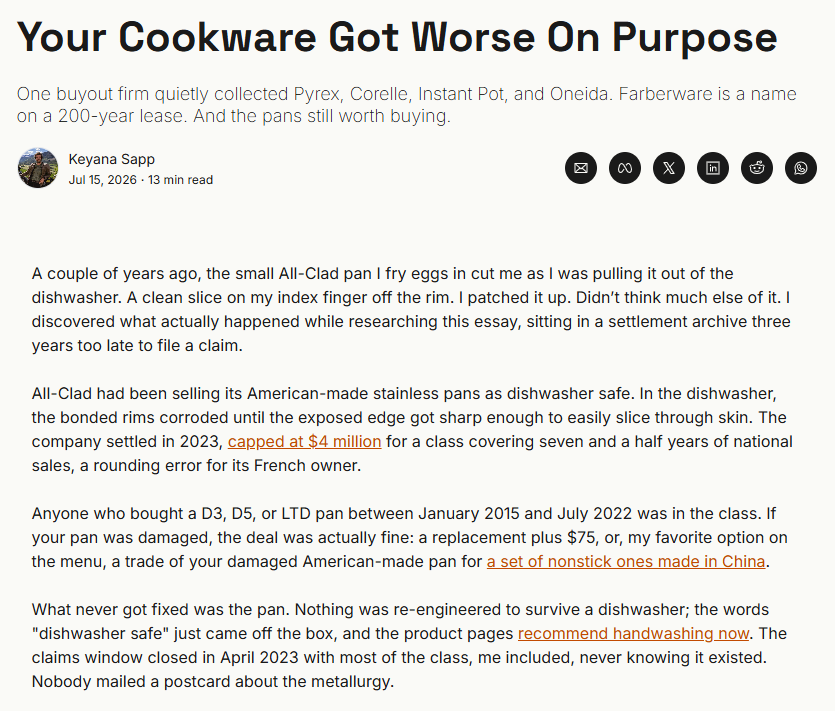
This amazing website, called "Worse on Purpose," is cataloguing all the ways companies are deliberately and secretively degrading their own products
As usual, in most cases the culprit is private equity extracting enormous sums while everyone else is left worse off.
The 12 most spoken languages on Earth:
English: 1,500,000,000
Mandarin: 1,100,000,000
Hindi: 609,500,000
Spanish: 559,100,000
French: 309,800,000
Standard Arabic: 274,000,000
Bengali: 272,800,000
Portuguese: 263,600,000
Russian: 255,000,000
Urdu: 231,700,000
Indonesian: 199,100,000
German: 133,200,000
Note: number of speakers in 2023
According to Ethnologue
Sweden now the most multilingual country in the Western world
More than 40% of all children and young people in Sweden now have a foreign background.
https://t.co/wd4wRnKt63
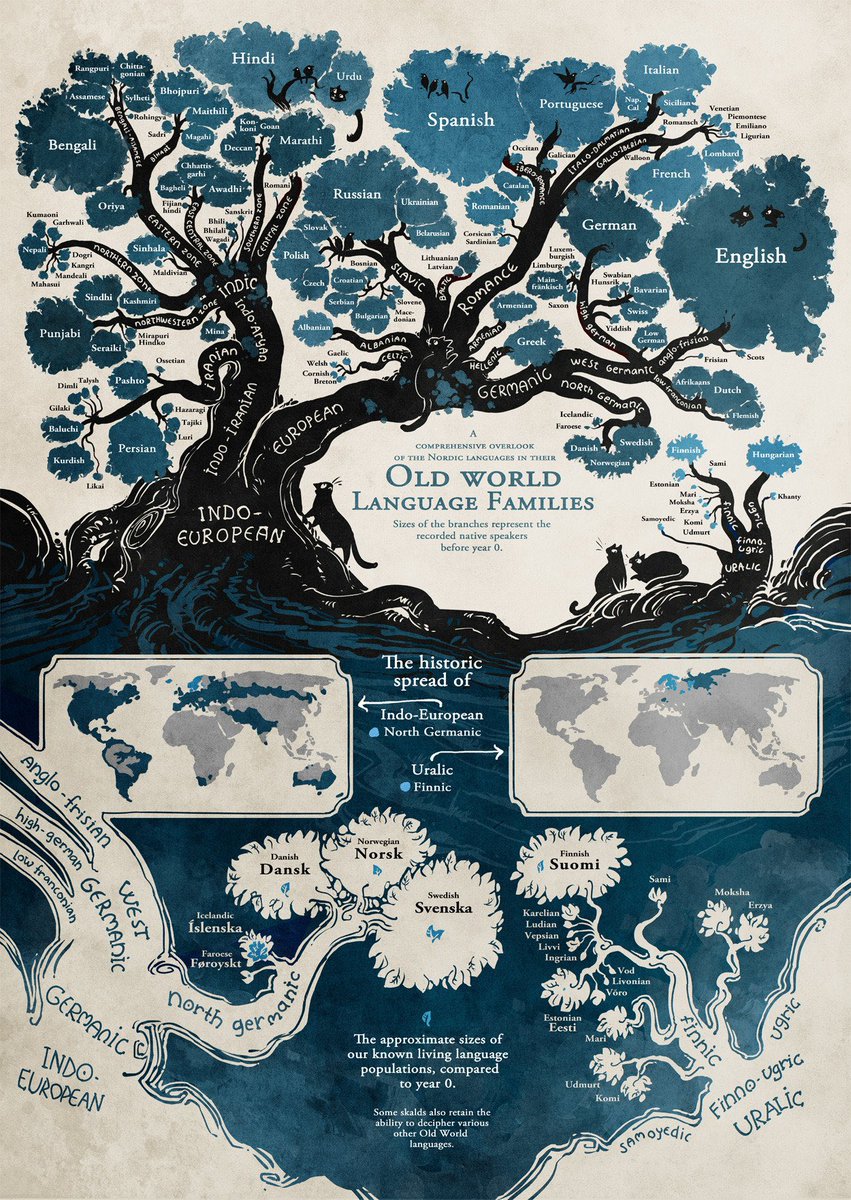
The evolution of the English language over a 1,000-year time span traces back to the 5th century when England was invaded by different tribes, including the Angles, Jutes, Saxons, and Frisians. Their languages produced what we know today as Anglo-Saxon or Old English, which sounded similar to German. In the 8th, 9th, and 10th centuries, invasions by the Vikings of Denmark, Norway, and Sweden brought another form of the same Germanic language, Old Norse, which mixed with Old English.
In the year 1066, French forces led by William the Conqueror conquered England. Over the next 300 years, thousands of French words entered the English language, especially those related to governance and food. During the English Renaissance, many Latin-based words also entered the language, partly due to English poets, writers, and playwrights. Shakespeare, for instance, wrote plays set in Italy, such as "Romeo and Juliet," "The Merchant of Venice," and "Julius Caesar."
By the mid-1500s, a modern-day English speaker would be able to communicate with some patience and concentration. While there would be some archaic pronunciations, shifting meanings, and evolving figures of speech, the language overall would be recognizable.
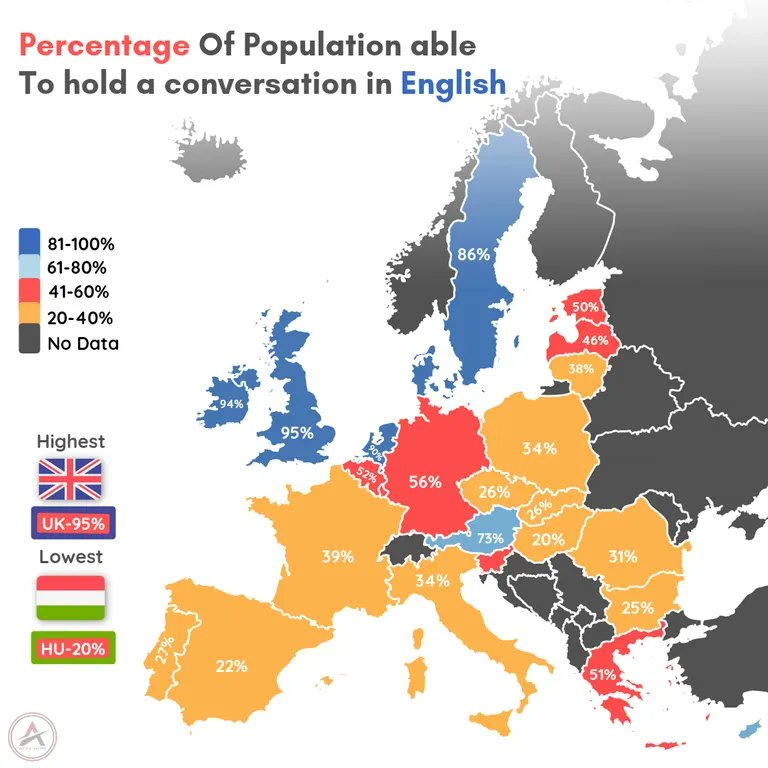
Share of the of population that is able to hold a conversation in English. The difference between Germany and Austria is curious! Source: https://t.co/2c3V3SkRZg
West Country English still contains (ed?) elements of old West Saxon, including 'bis' for 'are'. 'thee bis', related to German 'du bist' https://t.co/8lPIU9O3Xo