📢 Follow me for daily doses of fascinating facts, stunning destinations, hidden history, and mind-blowing science insights that bring the world to life!
In 711 AD, a small army crossed from North Africa into Spain.
By 718, nearly all of Iberia was under Muslim control.
The Christians fought back in a conflict that lasted 781 years.
This is the story of the Reconquista—how Spain was lost and reclaimed:
10/10
The Great Depression was vanquished through bold leadership, innovative policies, and the sheer determination of the people. Its legacy—social safety nets, infrastructure, and financial regulations—endures to this day.
How America Ended the Great Depression 🇺🇸📈
The Great Depression (1929–1939) was one of the most challenging times in American history. Yet, through innovation, perseverance, and decisive action, recovery was achieved.
A tale of resilience and ingenuity. Worth remembering, wouldn’t you agree? 🧐
#GreatDepression #NewDeal #WWII
🧵👇
9/10
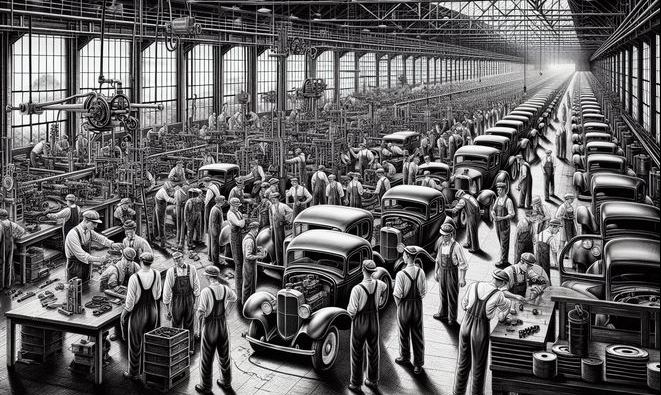
Factories that had lain dormant now hummed with activity, churning out aircraft, ships, and weapons. Wartime spending eliminated unemployment almost overnight, and by the war’s end, the United States stood as the world’s leading economic power.
8/10
Yet, despite these efforts, recovery remained incomplete. What truly brought America out of the Depression was World War II. The global conflict unleashed a wave of production, creating jobs and revitalising industries on an unprecedented scale.
7/10
In 1935, FDR introduced the Social Security Act, a watershed moment. This provided pensions, unemployment benefits, and aid for vulnerable populations. It became a cornerstone of modern American welfare—a blueprint admired worldwide.
6/10
Farming communities were saved by the Agricultural Adjustment Act (AAA), which stabilised crop prices. Meanwhile, the Tennessee Valley Authority (TVA) brought power, jobs, and development to underprivileged rural areas. It was a remarkable success.
5/10
Mass unemployment was tackled with public works. The Works Progress Administration (WPA) employed millions to build roads, schools, and parks. Even artists, writers, and musicians were supported—a cultural silver lining during dark days.
4/10
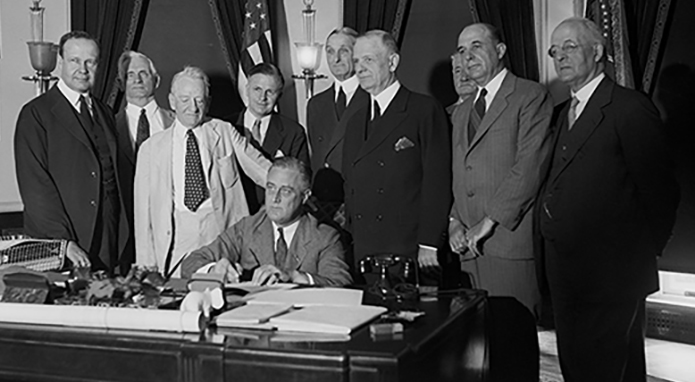
One of the most significant reforms was the Glass-Steagall Act (1933), which curbed risky banking practices and introduced the FDIC, insuring deposits. Confidence in the banking system was gradually restored—a crucial step toward recovery.
3/10
During his first 100 days, FDR’s government sprang into action.
Initiatives included:
The Civilian Conservation Corps (CCC) for jobs in conservation.
The Public Works Administration (PWA) for vital infrastructure.
The Federal Emergency Relief Administration (FERA) to assist the destitute.
2/10
Enter Franklin D. Roosevelt (FDR) in 1932. With his now-legendary New Deal, FDR approached the crisis with three principles:
Relief for the suffering.
Recovery for the economy.
Reform to prevent such a disaster from recurring.
1/10
The Great Depression started with the infamous Wall Street Crash of 1929. Chaos ensued: banks failed, businesses closed, and unemployment soared. By 1933, one in four Americans was jobless. A grim scene indeed, but change was on the horizon.
10/10
The Great Depression was vanquished through bold leadership, innovative policies, and the sheer determination of the people. Its legacy—social safety nets, infrastructure, and financial regulations—endures to this day.
9/10
Factories that had lain dormant now hummed with activity, churning out aircraft, ships, and weapons. Wartime spending eliminated unemployment almost overnight, and by the war’s end, the United States stood as the world’s leading economic power.
8/10
Yet, despite these efforts, recovery remained incomplete. What truly brought America out of the Depression was World War II. The global conflict unleashed a wave of production, creating jobs and revitalising industries on an unprecedented scale.
7/10
In 1935, FDR introduced the Social Security Act, a watershed moment. This provided pensions, unemployment benefits, and aid for vulnerable populations. It became a cornerstone of modern American welfare—a blueprint admired worldwide.
06/10
Farming communities were saved by the Agricultural Adjustment Act (AAA), which stabilised crop prices. Meanwhile, the Tennessee Valley Authority (TVA) brought power, jobs, and development to underprivileged rural areas. It was a remarkable success.
05/10
Mass unemployment was tackled with public works. The Works Progress Administration (WPA) employed millions to build roads, schools, and parks. Even artists, writers, and musicians were supported—a cultural silver lining during dark days.
04/10
One of the most significant reforms was the Glass-Steagall Act (1933), which curbed risky banking practices and introduced the FDIC, insuring deposits. Confidence in the banking system was gradually restored—a crucial step toward recovery.