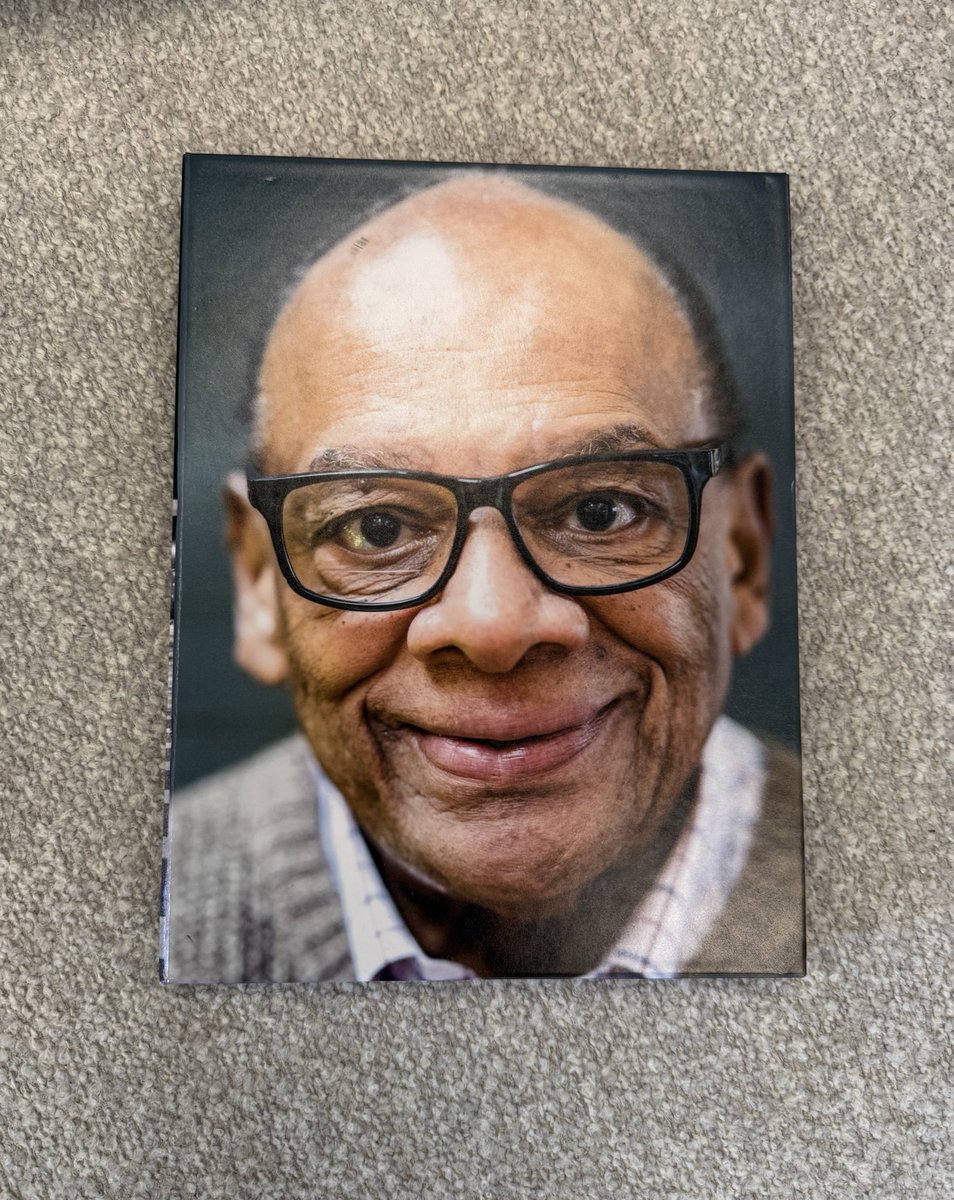
I watched Unraveling George last night on HBO Max and it is a must watch if you are into basketball and the history of our game. It was an educational experience for me about my dear friend and mentor George Raveling.
Coach @CoachStrong_, who has spent 40 years coaching at the college football and NFL levels, shares the story of landing his first head coaching job at Louisville, during Daily Coach TV, Leading Yourself.
Former Stanford women’s basketball coach Tara VanDerveer, who led the U.S. women’s national team to Olympic gold in 1996, shares how she approached relationships with parents, during Daily Coach TV: Leading Through the Noise.
Missed us live? Register below to watch the full episode through the end of the day on Sunday before it goes into the vault: https://t.co/5xg3SfwwnP
Coach Tara VanDerveer, who finished her coaching career with a 1,216-271 record and 3 NCAA championships, shares her perspective on player personal brands, during Daily Coach TV: Leading Through the Noise.
Missed us live? Register below to watch the full episode through the end of the day on Sunday before it goes into the vault: https://t.co/5xg3SfwwnP
Former Baltimore Orioles manager Dave Trembley shares the attributes of his most successful players and the importance of knowing when to step in and help them through a slump, during Daily Coach TV: Leading Through the Noise.
Missed us live? Register below to watch the full episode through the end of the day on Sunday before it goes into the vault: https://t.co/5xg3SfwwnP
Head Men's Basketball Coach at Missouri State University, @CuonzoMartin, shares the story of his battle with non Hodgkin's lymphoma at 26 years old, and why the experience taught him the importance of letting people into your life, from Daily Coach TV Leading Yourself.
Coaches Tara VanDerveer and Dave Trembley, who bring more than 80 years of coaching and managing experience across the college and professional levels, join Daily Coach TV live on Tuesday, November 3 at at 12:00 pm EST/9:00 am PST for a discussion on on how to keep yourself, your staff, and your players grounded in your program's values despite the noise from outside expectations, parents, and the people closest to your players.
Register here to join live or watch the free replay through next Sunday, November 8th: https://t.co/FqgODQ2Rtr
Former Baltimore Orioles manager Dave Trembley, who has spent more than 40 years coaching baseball and won more than 1,500 games in the minor leagues, joins the next Daily Coach TV live show, “Leading Through the Noise”.
Register at the link below to join live on Tuesday, November 3 at 12:00 pm EST/9:00 am PST or access the replay on demand: https://t.co/FqgODQ3piZ
Assistant coach for the WNBA's Dallas Wings, @coachneighbors, shares how he borrowed organizational strategies from concert roadies to save time, from his interview with The Daily Coach.
Coach @TeriMoren, Indiana’s all-time winningest women's basketball coach and 2023 National Coach of the Year, shares how building a relationship with their fans became a foundation for the program’s growth, from her interview with The Daily Coach.
"The people in Indiana, when March comes around, it's basketball. So they were all searching for something, some type of entertainment."
"The entertainment happened to be Indiana women's basketball. Tyra Buss, Amanda Cahill, two of the top all-time greatest in Indiana women's basketball history were seniors at the time."
"By the championship game, we filled the entire Assembly Hall. 17,007 fans were there to see that championship game."
" The fans became a part of our program. That changed everything because at that time, we didn't have season tickets. It was general admission."
"Once you start winning, then you can get in the homes of the Grace Berger's, those five-star recruits because they're like, "Oh, wow, yeah, they're turning the tide there at Indiana. They're doing something special, and I want to become a part of that."
Head Baseball Coach at Denison University, @CoachDeegan shares how he evaluates coaching staff, from his interview with The Daily Coach.
"When evaluating coaches, if you can have them do some element of the job, or if you've seen them do some of the element of the job before, that's like gold."
"I'm less and less impressed with the actual interview process, because people can tell you whatever they want."
"If I've seen you work in some capacity or seen you engage in your work, those are the signals that this person could be really good in our system."
Mike Neighbors, assistant coach for the WNBA's Dallas Wings, shares the small changes he made to his daily routine to get more time back, from his interview with The Daily Coach.
"I became very intentional about every second of every day, trying to find 5, 10, 15 minutes along the way."
" Every year, I throw all my socks out and buy 50 pair of the same white Nike sock. I throw them in one drawer and I don't have to pair my socks up and look for them in the morning."
" And I bet that saves me maybe 15 minutes a year. Okay, big deal. But that's 15 minutes that I get to read or 15 minutes that I get to help my son that I wouldn't have had otherwise."
"I park in the very first parking spot I see everywhere I go. I don't hunt for the front row. I just take the first spot and walk in. I probably save 15 minutes that way."
"We have to find out what works for us as coaches, but you have to be aware of it."
Coach @CuonzoMartin on the importance of saying no and protecting time with your family, during Daily Coach TV: Leading Yourself.
Missed us live? Register below to watch the full episode through the end of the day on Sunday before it goes into the vault: https://t.co/mZnqxLXvmp
Coach @CuonzoMartin shares how the coaches who impacted him most taught life alongside the sport, during Daily Coach TV: Leading Yourself.
Missed us live? Register below to watch the full episode through the end of the day on Sunday before it goes into the vault: https://t.co/5xg3SfwwnP
Ben Sasse cultivated a career most people would call remarkable: college president, U.S. senator, bestselling author.
The former U.S. senator learned last year that he has terminal pancreatic cancer. Rather than step back from public life, though, he recently sat with a handful of journalists, to talk about what the diagnosis had taught him.
He told CNN's Jake Tapper: "I have serious regret about how much I traveled. That's a hell of a lot of missed dinners," he said.
Sasse named three specific things he'd change if he had the years back.
Keep phones off the dinner table.
Cap business travel.
Live closer to family.
None of this is regret about the career itself, the regret is more about proximity, as he pictured his kids wearing "a chain around their neck with an hourglass," and realized he was the one watching the sand fall rather than being there for it.
Career and status climb toward the top of the list, especially for top coaches and leaders. Husband, dad, mom, whatever the other role is, slides down, even though we'd all say it's what matters most.
What you say you value and where your time goes turn out to be two different lists. It took a diagnosis for Sasse to notice the gap, and now he said he’s living his final days with those regrets.
But from where he is now, the order of operations is obvious to him in a way it wasn't before.
You don't need a diagnosis to learn that, of course. You just need to act like the clock is already running, because it is.
Coaches @CuonzoMartin and @CoachStrong_, who bring more than 60 years of coaching experience across the college and professional levels, join Daily Coach TV live on Wednesday, September 16 for a discussion on how to build a development system for yourself as rigorous as the one you run for your team.
Register here to join live or watch the free replay through next Sunday, September 20th: https://t.co/FqgODQ3piZ
In 1971, about 300,000 girls played high school sports. Seven years later, that number exploded to more than two million, and today, it’s 3.5 million. And the number of female intercollegiate athletes more than doubled to 64,000 between 1971 and 1976. In 2026, it’s an astonishing 242,000.
The reason was Title IX, which passed in 1972 to give women equal opportunities in education and school sports.
The systems in place perpetuated a long-held culture of inequality.
But in the early 1970s, Gloria Steinem became one of the most powerful voices challenging those systems.
Title IX and other new laws enacted throughout the 1970s eventually provided legal protections for women to get their own credit cards, mortgages, rental leases, and to keep their jobs during and after pregnancy.
Steinem didn’t make those laws happen, but she did create the awareness and political momentum that helped bring them about. She first did this as a journalist, covering women’s inequality. Then as an activist, who co-founded a political caucus to help get women elected into the law-making system.
Change often begins with someone noticing that what’s accepted as “normal” is actually not right.
Steinem’s legacy urges us to recognize that changing the culture requires changing the conditions or systems that reinforce the culture. In what ways could we do that in our own organization?
Coach @CuonzoMartin, who has spent more than 20 years coaching at the NCAA Division I level, leading four programs as a head coach, joins the next Daily Coach TV live show, “Leading Yourself”.
Register at the link below to join live on Wednesday, September 16 at 12:30 pm EDT/9:30 am PDT or access the replay on demand: https://t.co/FqgODQ2Rtr
On Aug. 28, 1963, a 26-year-old volunteer security guard stood on the steps of the Lincoln Memorial and felt the ground shift beneath his feet. He didn't know where the country was going. Nobody did. But everyone on those steps that afternoon knew, with the certainty of something felt in the chest before it is understood by the mind, that there was no going back.
When Dr. Martin Luther King Jr. finished speaking, the young man leaned over and asked a simple question.
"Dr. King, can I have those papers?"
King looked at him and handed over the handwritten manuscript of the "I Have a Dream" speech without a word.
That young man was George Raveling. He had no idea what he was holding.
He was just a kid from Washington, D.C., who happened to be standing in the right place at the right moment, who had the instinct, the audacity, really, to ask for a piece of history. He tucked the pages under his arm and carried them home, and he carried them for the next 62 years. In all that time, he never stopped moving in the direction that afternoon had pointed him.
He believed in the land those words described. He spent his whole life trying to take people there.
The I Have a Dream Train never stopped running. It carried the lost and the found, the broken and the whole, the ones who knew where they were going and the ones who just knew they couldn't stay where they were. He preached constantly:
Dreams will not be thwarted. Faith will be rewarded.
George Raveling made good on that promise every single day. And now every person he ever pulled aboard, every coach he called out of nowhere, every young man he handed a book to, every weary traveler he told to keep going, is still out there, still moving, still carrying what he gave them, still passing it forward to people he will never meet.
The conductor may be gone, yet the I Have a Dream Train keeps running here at the Daily Coach. We welcome all. Climb aboard.
Coach Cecile Reynaud, who won 635 games leading Florida State volleyball, says one of the best ways to build ownership within a team is to ask players for input during practices and games, from her interview with The Daily Coach.
" I do think it's so important to ask them what they think, and I would do that during timeouts. I'd say, are we playing the right defense?"
"Are we attacking the right places at the net? They were out on the court and they knew what we needed to do."
" If you're trying to get them to do something and they don't feel like it's the right system, you might as well change and not lose a game or a match because you were in the wrong system."