We study how successful nations get built.
Lessons from the Asian Tigers (Singapore, South Korea, Taiwan) on leadership, industry, society, and statecraft.
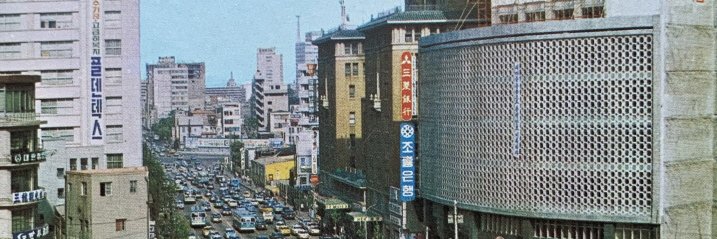
In the early 1960s, South Korea was destitute.
GDP per capita sat below $100. In 1961, that meant it was poorer than most African countries. It had virtually no industrial capacity, almost no capital, and still bore the heavy scars of war.
The World Bank and other international lenders rejected Korea's plans for an integrated steel mill. They didn't believe the demand existed to justify it, in effect telling Korea that heavy industry was beyond its reach.
President Park Chung-hee pressed forward anyway. (1/6)
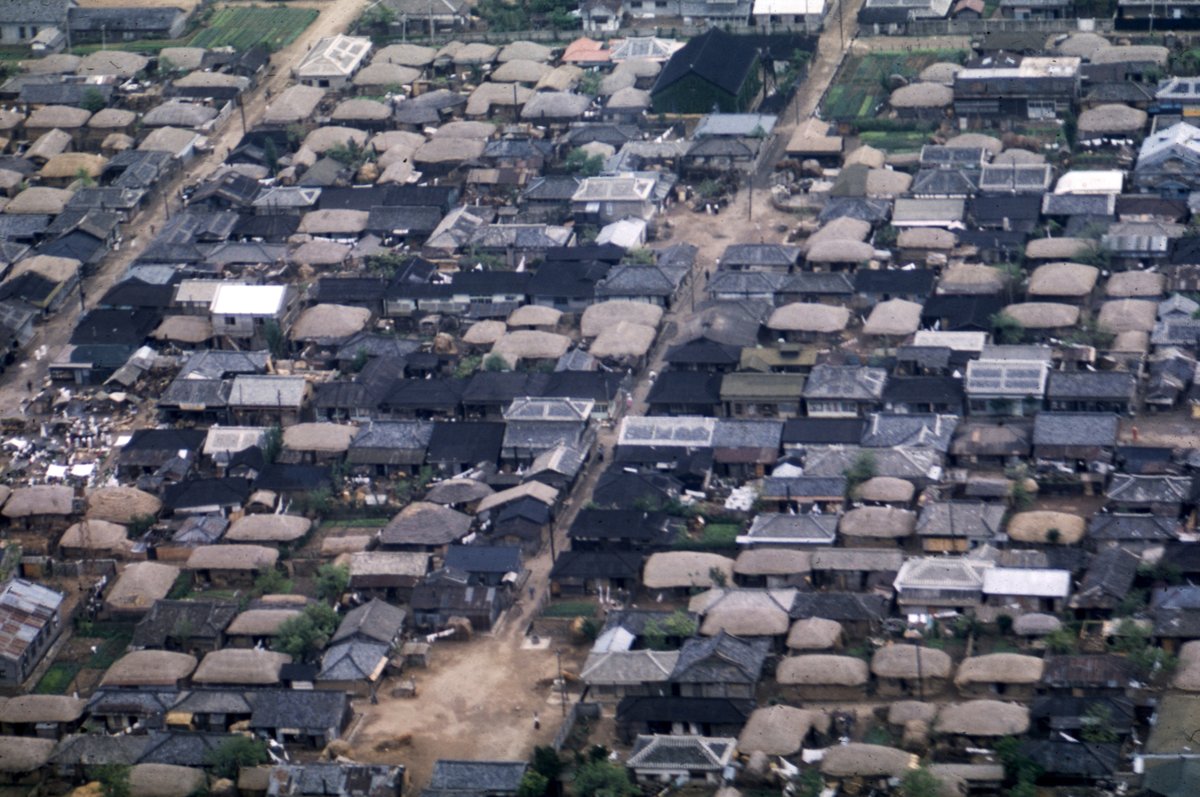
(Image: Seoul outskirts, May 1960)
I recently spent two weeks in Japan, and I have to say, the trip really opened my eyes to just how much better we could be doing here in America.
I’m not exaggerating. Some of the differences were shocking.
Here are a few things I noticed:
- In two weeks traveling through some of the most densely populated cities in the world, I saw TWO visibly homeless people. TWO!
I saw just ONE person who appeared to be struggling with drug addiction.
- The high-speed rail system was incredible. Clean, affordable, fast, and efficient. Meanwhile, Americans are still arguing about whether high-speed rail is even worth building.
- I never once felt unsafe walking around with my kids, even in massive cities surrounded by thousands of people.
- There were barely any public trash cans, yet somehow the streets were almost spotless.
- The difference in income inequality was noticeable. The infrastructure, housing, and public services reflected a society that seems to take much more pride in making everyday life work for everyone.
Now, I already know what some people on the right are going to say.
“Japan doesn’t have mass immigration!”
“Japan isn’t run by Democrats!”
OK, but can we stop turning EVERYTHING into a partisan argument for five minutes?
Japan isn’t perfect. It has its own serious problems, and I’m not pretending two weeks makes me an expert on the country.
But what I saw made one thing painfully obvious to me.
We have normalized so many problems in America that we’ve convinced ourselves they’re simply unavoidable.
Homelessness. Dirty streets. Failing infrastructure. Terrible public transportation. People feeling unsafe in their own communities.
Why?
We are one of the wealthiest nations in human history. We have the money. We have the technology. We have the talent.
What we seem to lack is the willingness to stop making excuses and demand better.
I’m proud to be an American. But being proud of your country shouldn’t mean pretending other countries haven’t figured out how to do certain things better.
Patriotism isn’t ignoring America’s problems. It’s wanting America to be better.
And after spending two weeks in Japan, I’m more convinced than ever that we can do a whole lot better.
Conventional wisdom: Small, vulnerable nations should rely on "international law", moral appeals, the rules-based order, and the goodwill of superpowers to survive.
Taiwan’s reality: Goodwill is not deterrence.
Through the 1970s, one country after another severed diplomatic ties with Taiwan and switched recognition to Beijing. Particularly painful was the fact that US President Jimmy Carter gave Chiang Ching-kuo roughly eight hours' notice before publicly announcing the severance of official diplomatic ties on December 15, 1978.
Despite these major setbacks, Taiwan did not choose isolation.
It built.
ITRI. Hsinchu. UMC. TSMC.
Targeted industrial policy helped turn a diplomatically isolated island into one of the most strategically consequential pieces of the global economy. TSMC alone closed 2025 with $122.4 billion in annual revenue, supplying the chips that allow superpowers to function.
There is a big lesson there for small states.
Don't just ask great powers to care what happens to you. Instead, give them something they cannot afford to lose.
(Taiwanese citizens watching President Chiang Ching-kuo's televised address following the U.S. diplomatic break, December 16, 1978)
@CFR_org@mariaressa Authoritarianism often gains its appeal not because voters reject democracy, but because democracy has failed to deliver. If you want to stop it, take corruption, stagnation, public safety, and social cohesion seriously, or voters will turn to someone they think will.
@TheEconomist Why do you want this operation to fail so badly? Clickbait cynicism or something worse? It’s a terrible and ugly look for your publication
Public order is often the ultimate economic stimulus. This Salvadoran plan in many ways echoes the developmental playbook that Lee Kuan Yew executed in Singapore:
1. Establish a monopoly on legitimate force and totally restore public order
2. Eliminate bureaucratic friction and streamline permitting
3. Roll out the red carpet for foreign capital, advanced industries, and global talent
Capital and builders don't just need subsidies. They need physical security, predictable rules, and a state capable of moving fast and effectively
“El Salvador is making a play for the global AI and robotics industry.
The Central American country is positioning itself as a destination for tech companies with a national artificial intelligence agency, regulatory frameworks designed for innovation, and an accelerator that connects founders with government resources.”
https://t.co/6AUAZfd9mu
@theaiagencysv@elsalvador@SLVNewsEnglish@nayibbukele
@strxwmxn Not a good look for Jensen. This, like industrial outsourcing, is a good example of how an American company “winning” and US interests prevailing aren’t always the same thing
@AngelaLMorabito@AStuttaford It’s also crazy how the transit officials seem to have only recently discovered this pervasive fare evasion. Incompetence at minimum
@Polymarket $220 million in water infrastructure upgrades will likely benefit the surrounding community for decades and strengthen drought resilience. Huge win-win story
@iloveholykorea Another underappreciated achievement of Park's presidency was South Korea's massive reforestation campaign. He played a huge role in helping transform Korea's once-barren mountains into the beautiful landscapes of today.
“Postponing action in the hope that time solves everything usually makes your predicament worse.”
- Goh Keng Swee, Former Deputy Prime Minister of Singapore
One of Singapore's chief economic architects, Goh helped establish the Economic Development Board, build the country's first major industrial estate at Jurong, and develop its defense institutions.
@SAcerton@MsMelChen Consistent application is the key. Singapore really goes after litterers with this sentence vs. just keeping it on the books like certain US municipalities
@CoreyWriting An effective state helps cultivate a civic culture that prevents decay like this in the first place. This is why libertarianism (among other ideologies) is incredibly unserious.
@NaithanJones For rational people you are right. However, the Maryland data center opposition heavily involved "Party for Socialism and Liberation" activists. More generous incentives aren't going to satisfy extremists whose objection is to development itself.
@Polymarket The burning question is how a public transit system reaches the point where nearly two-thirds of passengers aren't paying, and this is treated as a budget problem rather than a failure of governance. Who was accountable this whole time?