A 55yo #Parsi woman, married to a Muslim, spent her life crossing social boundaries, which returned with a vengeance as both communities refused her last rites. It were the #Hindus, often accused of #intolerance, that did it.
READ: https://t.co/UBOzW3YcNQ
#ParsiWomenRights#VHP
Twenty-Two Million Followers. A Few Hundred at Jantar Mantar. India Has Seen This Before.
Reports say the Cockroach Janta Party gathered at Jantar Mantar in New Delhi on June 6, 2026, the day The Daily Telegraph published a piece framing the movement as Narendra Modi's 'biggest challenge' in twelve years of rule. Hundreds of mostly young people, many in cockroach masks and carrying dog-eared exam guides, assembled at India's most famous protest strip, attempting to turn an online joke into a real-world force. The foreign press filed its dispatches. Instagram metrics were cited with the reverence normally reserved for election results. The movement's founder announced that it had arrived.
What actually arrived at Jantar Mantar, as anyone who has covered Indian political mobilisation for longer than three weeks could have told the Telegraph's correspondent, was the latest iteration of a pattern that repeats with metronomic regularity in Indian public life: a social media surge, foreign media amplification, street turnout that bears no relationship to digital numbers, and a government that continues governing while the cycle exhausts itself.
The CJP was founded on May 16, 2026, by Abhijeet Dipke, a political communications strategist and Boston University graduate who formerly worked with the Aam Aadmi Party. It emerged in response to remarks by Chief Justice of India Surya Kant during a Supreme Court hearing on May 15, in which he compared unemployed youth who criticise the government to 'cockroaches' and 'parasites of society.' Within 78 hours, the Instagram account crossed 3 million followers. It subsequently surpassed 22 million, overtaking the official Instagram accounts of both the BJP and the Indian National Congress. Several notable personalities and politicians, including Samajwadi Party supremo Akhilesh Yadav and Trinamool Congress members Mahua Moitra and Kirti Azad, endorsed the parody account.
Twenty-two million Instagram followers, delivered in days, by a political communications professional with reported AAP connections, operating from Boston. The Telegraph described this as Modi's biggest challenge in twelve years. That description requires the reader to believe that Instagram follower counts are a reliable predictor of political consequence, that a satirical movement founded by an opposition-linked strategist living abroad represents authentic grassroots discontent, and that hundreds at Jantar Mantar constitute a political reckoning for a Prime Minister whose party won 206 seats in the West Bengal assembly election three weeks earlier. None of these propositions survives contact with India's actual political geography.
The Telegraph's framing is not an aberration within Western media's coverage of India. It is the house style. The New York Times has run a guest essay titled 'Modi's India is Where Global Democracy Dies' - a headline whose apocalyptic certainty was not supported by the electoral arithmetic of the country it described. An examination of the essay's author's portfolio, as ThePrint documented, revealed articles that consistently carried paeans to China alongside a string of negative assessments of India, prompting Shashi Shekhar Vempati, former CEO of Prasar Bharati, to observe that certain Western publications appeared to have become 'unwitting carriers of anti-India narratives as part of what appears to be pro-China propaganda to undermine Indian democracy.' The New York Times has not updated its democratic death certificate for India in the years since the essay was published. India has continued holding elections. Voters have continued voting, with turnout figures that the established democracies of the West cannot consistently match.
The Washington Post, whose editorial policy the BJP's foreign affairs department formally described as 'biased and agenda-driven,' has maintained a coverage pattern on India that applies critical frameworks to the BJP government with a consistency it does not extend to comparable governments in comparable geopolitical contexts. The Post's India bureau has covered exam controversies, farmer protests, anti-CAA agitations, and unemployment statistics as components of a singular narrative about democratic erosion, without applying the same analytical rigour to the democratic erosion documented in countries whose governments the Post's editorial orientation treats more sympathetically. Jeff Bezos visited India and described the twenty-first century as the Indian century. His newspaper's India coverage has not noticeably reflected that assessment.
The Economist, which in the weeks preceding the 2024 Indian general election suggested that the Indian opposition should question the legitimacy of the results if Modi won by a large margin, has treated the democracy watchdog rankings - V-Dem's 'electoral autocracy' classification, Freedom House's 'Partly Free' downgrade - as settled institutional verdicts rather than contested methodological positions. The Journal of Democracy published a rebuttal titled 'The Exaggerated Death of Indian Democracy' in July 2023, which observed that under the BJP, India's political system had produced increased voter turnout alongside more centralised party control, and that citizens surveyed expressed satisfaction with democracy, a data point that the democracy-downgrade narrative has consistently struggled to accommodate. The rebuttal generated a fraction of the global circulation that the downgrade narrative produced, because correction is less commercially valuable than crisis.
The CJP is not a new phenomenon. It is a new brand applied to an old model, and the model's track record is unambiguous. The farmer protests that began in November 2020 attracted sustained international media coverage, multiple foreign government statements, celebrity social media campaigns from Rihanna, Greta Thunberg, and Mia Khalifa, a toolkit controversy, and constant framing in the Western press as an existential threat to Modi's political standing. The three farm laws were eventually repealed. The BJP won Uttar Pradesh in the 2022 assembly elections with 255 of 403 seats, in a state with a substantial farming population. The farmer protests were real. The political reckoning the foreign press predicted from them was not.
The Maratha reservation protests produced massive street mobilisations in Maharashtra across 2018 and sustained coverage framing them as a threat to BJP governance. The BJP won Maharashtra in 2019. The agitation's primary demand was struck down by the Supreme Court on constitutional grounds, a judicial outcome that no amount of street pressure could alter. The Aadhaar protests filled foreign media columns across 2017 and 2018 with predictions of a surveillance state and constitutional devastation. The Supreme Court upheld Aadhaar's constitutional validity and left the system intact. The database today holds over 1.3 billion records and is the backbone of India's direct benefit transfer architecture, through which over Rs 38 lakh crore has been transferred to citizen accounts since 2014. The anti-CAA protests produced Shaheen Bagh, covered by international media as the most significant civil resistance movement in India in a generation. The Citizenship Amendment Act remains on the statute book, its rules notified in March 2024. The BJP won a third consecutive national mandate in the 2024 general election.
Critics have insinuated that the CJP may have been orchestrated by opposition parties, given Dipke's past links to the AAP. Whether it is orchestrated or organic is, in the immediate term, less analytically important than the question of what it can deliver. The AAP itself, whose creative political communications machinery produced some of the most technically sophisticated opposition messaging of the past decade, lost Delhi in the February 2025 assembly elections to the BJP after a decade of city government. Arvind Kejriwal, who built AAP on precisely the kind of anti-establishment, social media-amplified, ordinary-citizen energy that the CJP is attempting to replicate, is no longer Delhi's Chief Minister. The model the CJP is operationalising has been tested by its own creator in its own state and found insufficient to survive contact with an electorate that votes in booths rather than on Instagram.
The Bloomberg gold report sits in the same analytical category as the CJP's 22 million followers, a number that produced significant anxiety, significant media coverage, and ultimately no consequence that the institutional record supports. Bloomberg Economics estimated that the RBI had sold $12 billion worth of gold in two weeks. The RBI issued a formal clarification stating that these reports were not correct, that the physical stock of gold remained unchanged at 880.52 tonnes, and that members of the public were advised to rely on official information published by the RBI. Gold's share of India's foreign exchange reserves had in fact risen from 13.92 per cent at end-September 2025 to 16.85 per cent as of May 22, 2026...the precise endpoint of Bloomberg's alleged sale window. The Congress party had already distributed the Bloomberg estimate as evidence of Modi selling India's gold before the RBI's data had been consulted. The clarification reached a fraction of the audience the estimate had reached. The damage was done, the correction was filed, and the narrative moved to the next cycle.
This is the operational structure that The Telegraph's piece reflects without examining. The challenge is assembled from components that individually appear significant: 22 million Instagram followers, hundreds at Jantar Mantar, a Bloomberg estimate about gold, fuel prices rising, the rupee under pressure, exam paper leaks generating student anger. Each component is real. The fuel prices are real. The exam scandals are real. Youth unemployment among Indians aged 15 to 29 stands at approximately 9.9 per cent, and surveys confirm widespread anxiety about jobs and economic opportunity. These are legitimate grievances that deserve serious policy engagement. The question is whether a satirical movement founded three weeks ago by an opposition-linked strategist based in Boston, whose street demonstration produced hundreds at Jantar Mantar against a claimed Instagram following of 22 million, is the vehicle through which those grievances will translate into political consequence.
The ratio of followers to physical participants is not a sign of a movement building toward critical mass. It is a sign of a movement that has reached its ceiling, which is, as every comparable Indian social media phenomenon of the past decade has discovered, the ceiling of the smartphone screen itself.
Police in riot gear and steel barricades were deployed at Jantar Mantar for the CJP protest. Dipke told supporters that 'cockroaches don't ever fear.' The theatrical competence of the moment should not be mistaken for political competence. Mask-wearing protesters at Jantar Mantar with dog-eared exam guides, led by a Boston University graduate flying in for the day, photographed by Al Jazeera and cited by the Telegraph as evidence of Modi's greatest challenge, constitute a media event rather than a political movement. The distinction is the difference between what trends on Instagram and what moves votes in Azamgarh, Patna Sahib, Coimbatore, and the 543 constituencies whose aggregate verdict determines who governs India.
The Telegraph's piece, like Bloomberg's gold estimate, like the Rihanna tweet, like the Greta Thunberg toolkit, like the New York Times' democracy obituary, like the Washington Post's agenda-driven coverage, like the Economist's pre-election suggestion that the opposition should pre-emptively contest a result it had not yet lost, like the international media's annual discovery that India is on the cusp of a political convulsion that does not arrive, is a document of a particular kind of foreign media engagement with India: one that consistently mistakes the intensity of English-language social media discourse for the condition of Indian political opinion, and consistently discovers, after the election results are counted, that the two are not the same thing.
The pattern extends from Time magazine's 2021 cover story on Modi asking 'India's Divider in Chief?,' published by the same publication that had described him as 'India's Reformer in Chief' in 2015, under an article written by then-US President Barack Obama, to the BBC documentary on the 2002 Gujarat riots broadcast in 2023, timed to coincide with India's G20 presidency and described by India's External Affairs Minister S. Jaishankar as a 'propaganda piece designed to push a particular narrative.' Time's editorial position on Modi correlates precisely with the temperature of US-India relations in any given year, shifting from admiration to alarm as the geopolitical weather changes without the magazine acknowledging that its journalism has tracked the weather rather than the facts.
India's electorate has voted in four consecutive national elections, three of which have delivered the BJP to government, and twelve years of state elections in which the party has won large states and lost others with the regularity of a functioning democracy. The farmer protests did not remove the government. The anti-CAA movement did not repeal the Act. The Shaheen Bagh occupation did not alter the electoral arithmetic of 2024. The Maratha agitation did not produce the constitutional outcome its participants demanded. The Aadhaar opposition did not dismantle the system. The Bloomberg gold estimate did not move India's reserves by a single tonne. The New York Times' democracy death certificate has not been executed. The Economist's suggestion that election results be pre-emptively contested was not followed by the opposition that received it.
The haters will continue to hate. That is their constitutional right, available equally to Indian citizens and foreign publications that choose to exercise it from offices in London, New York, and Washington. The consistency of that hatred's failure to produce the political consequences it predicts is, at this point, the most extensively documented pattern in Indian political journalism since 2014, and the one that its practitioners show the least interest in examining, because examining it would require acknowledging that the story they have been telling about India and the story India has been living are, by the electoral record, the institutional record, and the economic record, two substantially different stories.
Twenty-two million followers. A few hundred at Jantar Mantar. The government is still there. The gold is still there. The election is still three years away. The foreign desk, presumably, is already preparing its next dispatch about the challenge India has never quite managed to mount against a Prime Minister it has now elected three consecutive times.
#CJP #cjp_पार्टी #Dipke #Cockroaches #DharmendraPradhan #CockroachJantaParty #JantarMantar #DelhiPolice #CJPProtest #JaiBhim #StudentProtest #SonamWangchuk #EducationMinister
#DelhiFire | The tragic #fire in Delhi has exposed deep structural weaknesses in India's regulation of B&Bs, homestays & platform-listed accommodations. Solicitor Gajanan Khergamker says the problem is in the lack of #law enforcement.
READ: https://t.co/Fuo7PWfupv
#FireSafety
While travelling through South Goa, The Draft's Manu Shrivastava (@manumatters) found an unexpected #climate lesson in the giant Matti trees that naturally cool landscapes and sustain entire ecosystems.
READ: https://t.co/znLudinzOA
#ClimateChange#Indigenous#Sustainability
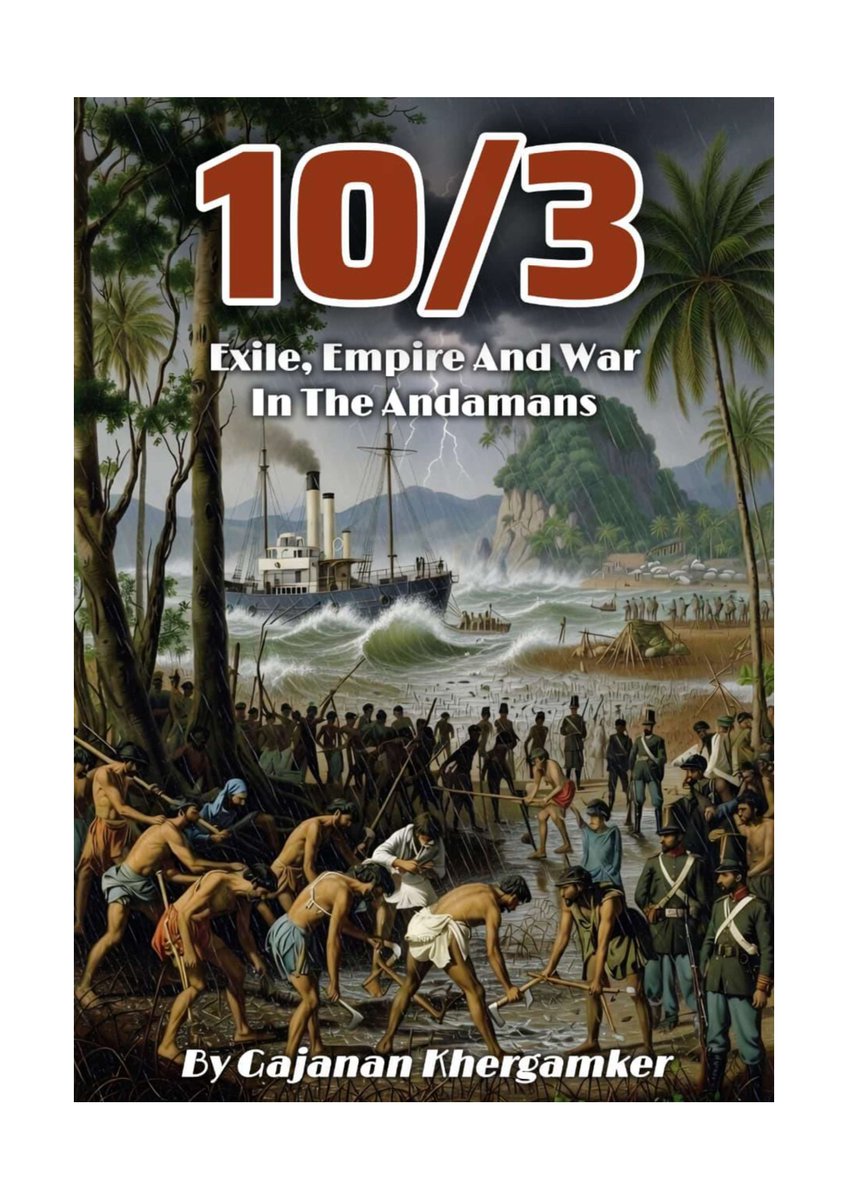
On #Savarkar’s 143th birth anniversary, a chapter of Gajanan Khergamker's (@indiarighter) '10/3: Exile, Empire And War In The Andamans' revisits the Cellular Jail through documented #history, not political mythology.
Report: https://t.co/jhEux4giSu
#VeerSavarkar#AndamanAnnals
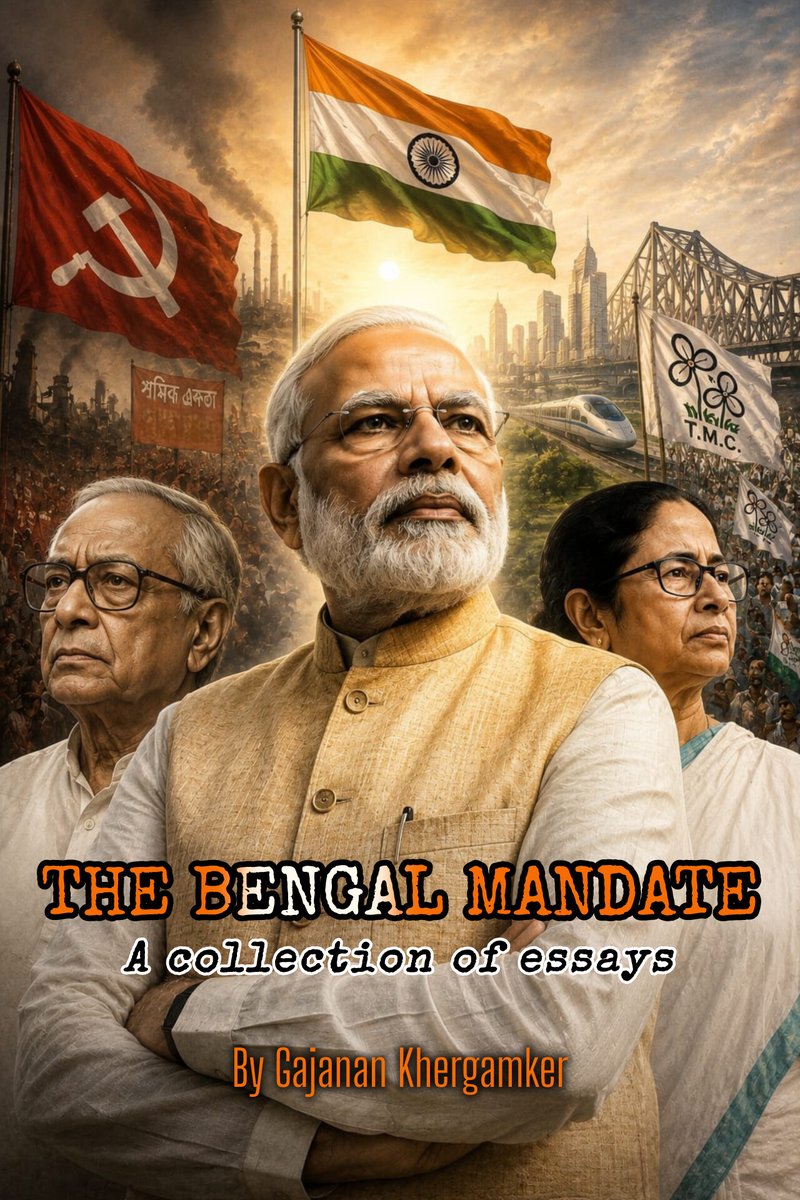
#KolkataDiaries | I did not travel to Kolkata expecting to write a series of essays. I travelled there to listen.
To walk through College Street’s fading intellectualism, to sit quietly at tea stalls where politics is discussed with the seriousness of scripture, to observe a state standing at the edge of what may become one of the most consequential political transitions in contemporary India.
What I encountered in West Bengal after the BJP’s phenomenal victory was not merely celebration or resistance. It was something far more layered. Fatigue. Curiosity. Anxiety. Assertion. Silence. Reinvention.
That journey eventually became this collection of essays.
Bengal as Blueprint is not a campaign chronicle, nor is it an exercise in partisan applause or ideological lamentation. It is an attempt to examine what happens when a state that long resisted the BJP’s political vocabulary suddenly begins speaking in a different electoral language. It asks uncomfortable questions about power, identity, federalism, bureaucracy, political violence, cultural negotiation, minority anxieties, the eclipse of the Left, and the future of opposition politics in India.
Over several essays, I explore whether Bengal is witnessing the end of an era, or merely the mutation of one.
Can a party built on command governance adapt to Bengal’s deeply localised political culture? Has Hindu consolidation genuinely reshaped the state’s political imagination, or is this only a temporary realignment? What becomes of Mamata Banerjee in opposition? Can the BJP govern Bengal without unsettling its cultural grammar? And perhaps most importantly, does this victory become a blueprint for eastern India, or a cautionary tale about the limits of political replication?
Bengal has never been politically ordinary. It absorbs ideology differently. It negotiates power differently. It remembers differently.
This was written in hotel rooms, cafés, taxis, railway compartments, and long walks through Kolkata’s restless streets immediately after the verdict. It attempts to capture not just the politics of a result, but the atmosphere of a state in transition.
For readers who follow Indian politics beyond headlines and television binaries, I hope these essays offer a more layered conversation.
Because West Bengal is rarely just about West Bengal.
Read my collection of essays 'The Bengal Mandate' here: https://t.co/fKKlXFKC07
#WestBengal #Kolkata #BengalPolitics #Politics #Essay #NewsEssay #Election #Elections2026 #DraftCraft
Beneath Lonavala Lake daily thousands of vehicles pass through Mumbai-Pune Expressway ‘Missing Link’. Above, the #ecosystem stays untouched. The Draft's Manu Shrivastava explores what may be India’s greatest #engineering success as yet.
https://t.co/oXFMUgAB33
#Infrastructure
#TheWomanSurvivor | The rape-murder of a young UPSC aspirant in #Delhi that shocked India did not begin that morning. It had been building quietly in the gaps between trust and caution.
#Mumbai has seen its own unsettling echoes of this pattern. Watchmen and security guards (1/5)
#LegallySpeaking | The ‘No Photography’ signs across #Fontainhas reflect local fatigue with constant intrusion, but raise a key question: can locals restrict freedoms that the #law permits in public spaces?
Legal Analysis by Gajanan Khergamker.
#Nuisance#Privacy#PublicSpace
Panjim’s #Fontainhas residents have been hollering hoarse for #tourists to stop ‘invading’ their spaces, even put up posters banning #photography and more but have failed in keeping the tourists away. Can they do it legally?
https://t.co/L9hSIUZeNI
#Goa#Tourism#Nuisance#Law
#DelhiCrime | The sexual assault, killing of a 22 yo daughter of an IRS officer is a systemic warning urban India can't ignore. The crime didn't begin that day but in the blind spots of informal hiring and unverified trust.
READ: https://t.co/MJ4SFOUJhj
#Crime#CrimeNews#Delhi
#EarthDay | Earth Day has long invited symbolism but this year, the data leaves little room for it. India leads #solar expansion with 150 GW capacity & a 53% clean #energy share, with non-fossil sources now dominating the power mix.
https://t.co/YS6qrxulzA
#Sustainable#India
A month ago, on 10 March 2026, I released my e-book '10/3: Exile, Empire And War In The Andamans' in a limited offline digital format, symbolically at Flag Point overseeing Ross Island, in Port Blair. It was never meant to be a finished product. It was, instead, the beginning of a conversation, one burgeoning with patriotic nostalgia.
Today, after a month of sustained engagement across lecture halls, seminar rooms, and discussion forums with academia, students, professionals, and policy observers, I have made the work publicly accessible online.
This journey began in the Andaman & Nicobar Islands, where I spent time alongside a remarkable cohort of journalists, environmentalists, researchers, and legal minds. What emerged from that experience was not a travelogue, nor a static documentary narrative, but a layered exploration of a geography that resists simplification.
The Andamans compel you to confront uncomfortable questions.
...Development here is not an abstract policy ambition; it is a lived disruption. Every road, every structure, every intervention redraws equations that have existed for centuries...
The deeper I went, the clearer it became that documentation itself is not a neutral act.
...To document the Andamans is to confront a paradox. The more one observes, the clearer it becomes that visibility itself alters the subject...
And beyond the visible lies memory, often unarticulated, frequently ignored.
...Memory in these islands does not rest in monuments alone. It lingers in landscapes, in silences, and in narratives that remain deliberately unrecorded...
Over the past month, the responses, critiques, and conversations around 10/3 have reshaped my own understanding of the work. What I had initially conceived as a publication has now evolved into something far more dynamic.
Project 10/3 is no longer just a book. It is a live, evolving framework. And, with this, I am opening that framework to you.
I invite researchers, institutions, practitioners, and engaged citizens to read, question, critique, and contribute. The intent is not passive readership, it's participation.
This is only the beginning. The road ahead will involve deeper field studies, interdisciplinary collaboration, and continued documentation of vulnerable geographies that demand nuanced attention.
If 10/3 does anything, I hope it unsettles certainty and provokes inquiry. The work is now out there. What it becomes next will depend on how we choose to engage with it.
Do have a read...
Click to View/Download PDF: https://t.co/rSqC7ak4GW
#EBook #Publication #Research #History #Andaman #FreedomStruggle #Chatham #ChathamIsland #FreedomFighters #Opportunity #Internship #IndiaRighter
Ambedkar Jayanti in 2026 reminds us that equality is still an unfinished revolution. The distance between constitutional promise and lived reality remains vast. The question is simple: Are we ready to close that gap?
READ: https://t.co/7fBZYYMfxf
#AmbedkarJayanti#Reservation