📢 We’ve launched the Crisis Leadership Simulation website!
For years, we’ve developed a hands-on leadership tool for media teams, used in training, workshops, and international programs to turn theory into real decision-making under pressure.
Now, it has a dedicated site with an overview of its impact. If you run a media programme, hackathon, or team training, check it out here 👉 https://t.co/JnfmHM83jC
The Student List’s landslide victory in Serbia shows that the media field, one of the hardest to fix after years of authoritarian rule, will be a top priority. The students have already made their first moves, and experts point to possible directions for its reconstruction.
https://t.co/Vt7BfxeVr6
Kyiv Independent has grown its team of staff to 100 people funded by a paying membership of 37,500 people
It continues to prove that there is journalistic opportunity in even the most trying of circumstances
The Fix is going to London for Newsrewired on 25–26 November. The event is run by JournalismUK @journalismnews and brings together about 150 people working in digital publishing. This year’s themes are AI in the newsroom, young audiences and social media, creators and journalism, audience loyalty and revenue, and where publishing goes next.
On 26 November at 15:25, Jakub Parusinski @j_parus, director of The Fix, is running a workshop called “Crisis leadership simulation.”
Newsroom leaders get tested under pressure, but most of their training happens in calm settings like lectures, case studies and discussion groups. This workshop puts participants inside a media crisis instead. Teams take charge of a fictional media organisation and work through several realistic challenges against the clock, with the scenario unfolding based on their decisions.
The 45-minute session has three parts:
→ a short case for simulation-based learning, both as training and as team building for newsrooms;
→ the simulation itself;
→ a moderated debrief.
The workshop is based on our Crisis Leadership Simulation. More than 300 participants have taken part in it through programmes at SSE Riga, the International Press Institute, FOJO/Linnaeus University, UN Women and other organisations. It can be run online, on-site or in a hybrid format, in several languages. You can read more about it here: https://t.co/JnfmHM83jC
The Fix Media Foundation is running the session. It’s a nonprofit that supports independent media in Eastern Europe.
If you’re coming to Newsrewired, join the workshop or say hello to Jakub between sessions. The full agenda is here: https://t.co/785PmpH9MP
Ukraine’s largest independent news site launched paid subscriptions in 2026, running on the open-source REMP platform built by @DennikN. @pravda_eng's executive director, @mediaborscht, talks about their editorial approach, digital strategy, shared numbers, and what did not work.
https://t.co/8TSRL9JmHd
We spoke about which legacy publisher is doing the best job adapting to the AI age right now, what news media can learn from book publishers, whether micropayments can finally pay off, Google Zero, Substack, and much more.
Watch the full conversation on YouTube or listen wherever you get your podcasts:
▶️ Youtube 👉 https://t.co/q8oWCGxtQH
🎵 Spotify 👉 https://t.co/vFmhP0JtCn
🍏 Apple 👉 https://t.co/jg0qjxnvGf
🎧 Other 👉 https://t.co/TI6SFcNdaQ
For this episode of FixEd, we spoke to @SimonOwens, a US-based media industry journalist. Simon writes a media newsletter that we at The Fix always follow, so we wanted to get his takes on some of the most important trends in the media industry right now.
https://t.co/17iU8l56se
.@AlbertoPi examined the case of "Aria Bloom"—one of 15 synthetic AI personas publishing daily tech and science coverage on UniteAI. Bloom was presented with a photorealistic lab-coat avatar, a legacy "Dr." URL slug, and the title of "giornalista."
https://t.co/kwyfwMFJdA
.@pravda_eng launched a paywall and now has 8,200 paying subscribers. In an interview with @DavidTvrdon for FatChilli, executive director @mediaborscht explains why discounts sold better than a streaming bundle, why investigations convert best, and how changes to Google Discover hit traffic.
https://t.co/8TSRL9IORF
The latest JX Fund research, covering eight countries, shows how authoritarian powers try to bring the flow of information under their control, and how independent media forced into exile try to adapt.
https://t.co/E6cZyyLHo5
Independent journalism depends on the safety of its practitioners, yet press freedom across Europe remains under sustained pressure.
In 2025, Europe recorded 1,481 attacks on press freedom and the killing of four journalists. Since 2020, the European Centre for Press and Media Freedom has documented over 5,000 violations and directly protected more than 4,000 media professionals.
ECPMF and Impact Hub Leipzig are crowdfunding €12,000 by December 18 with these goals:
- €2,000: 20 therapy sessions for journalists coping with trauma and threats
- €5,000: 20 initial consultations on residency rights in Germany
- €12,000: An A1 German course for 40 journalists in exile
Separately, through our joint Voices of Ukraine initiative, The Fix Media Foundation and @ECPMF have also delivered urgent, practical support to Ukrainian journalists and independent newsrooms working during wartime.
If you work in media or value independent reporting, please consider contributing or sharing the campaign 👉 https://t.co/4TpSuQiSW2
New from The Fix: the latest JX Fund research shows how independent media in exile, from Iran to Belarus, adapt to pressure from authoritarian regimes. We picked key findings from the report.
https://t.co/E6cZyyLHo5
.@AlbertoPi explored the Italian edition of the tech site @UniteAi and found "Dr. Aria Bloom"—an AI-generated "biotechnology specialist" complete with a photorealistic lab coat, a hidden doctorate in her URL slug, and the legally protected Italian title of giornalista. He then examined the site's code and contacted the publisher and Italian media regulators. Here are his findings.
https://t.co/VIcqlFsQnm
Keeping up with tech stack costs shouldn't eat into the budget for independent journalism.
The Fix and V-Ventures are launching NewsTech — a shared services platform connecting newsrooms and tech partners to lower costs and pool operational leverage.
Here is how it works 👇
#NewsTech brings together independent publishers, tech providers, and industry experts to provide:
• Discounted access to key software & tools
• Peer-to-peer knowledge sharing
• Direct lines to vendors building for media
As Lot Carlier, Executive Director of Stichting Veronica / V-Ventures, notes: "We believe there is a lot to gain by working together, sharing knowledge and making better use of existing tools and services... so newsrooms can focus more of their resources on what really matters: independent journalism."
"Ultimately, the goal is to give publishers a sense of agency – that tech is not just a risk or something to play catch-up with, but rather a partner that can empower them," says @j_parus, Director of The Fix.
Applications for the first cohort of newsrooms and service partners are now open. Early members get priority access to negotiated deals and input on upcoming tool bundles.
Learn more & sign up 👉 https://t.co/TmnDCRawJn
🇷🇸 Serbia’s recent elections have created a historic opportunity for media reform – but rebuilding a media landscape shaped by years of political capture is not easy. Lela Vujanic explores the path to fixing Serbia’s media field.
https://t.co/RCYzRarbEs
.@dennikN's @filip_struharik joined @DavidTvrdon to discuss AI-drafted articles, voice clones, deepfake thumbnails, and why readers may accept AI-generated news before AI-written stories.
Listen to the full conversation wherever you get your podcasts, or read the highlights from the interview 👇
https://t.co/7BSkEFHwT6
As cyberattacks against the media industry intensify, how can publishers and journalists prepare to minimise the risks? We spoke with digital security expert Grégoire Gregoire Pouget, co-founder of the NGO @N0thing2Hide, to understand the biggest threats and the most effective countermeasures.
▪ "The most common is clearly phishing," says Pouget. "The hackers will sometimes target everyone in one media outlet because, among all the people inside this media, there's a greater chance that someone will give their passwords." Once inside, they can move through the entire information system.
▪ A key vulnerability lies in the reliance on major US platforms. "You have to keep in mind that data held by Microsoft and Google isn't protected... Google, which is an American company, is required by the Patriot Act... to provide information to the American government if requested." His advice is stark: "If you're working on the Trump administration, I would recommend not using Microsoft or Google."
▪ However, technology is only part of the solution. The biggest hurdle is often internal. "The challenge remains to change the habits of people and teams... There are people who think it's not in their interest to do that and that it doesn't concern them." Pouget warns that "hackers are interested in these weaker people so they can then access other sensitive accounts."
▪ Another major threat is targeted digital surveillance via spyware on smartphones. "This is the most intrusive, and the consequences are very dramatic because it leads to self-censorship." A key piece of advice for journalists on sensitive beats is to separate professional and personal devices as much as possible.
❓The security of a newsroom is only as strong as its least secure member. In an environment of escalating digital threats, how can publishers effectively instill a culture of security that protects both their journalists and their sources?
📍 Read the full deep-dive on our website here 👉 https://t.co/XhnlBG4BPX
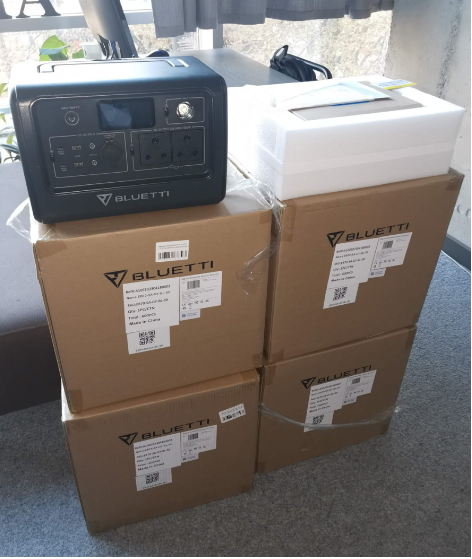
For nearly three years, Mykolaiv News has been unable to work from their official office after a missile strike. Thanks to basic technical support administered by The Fix Foundation – a new computer, monitor, UPS, and a Canon lens – they continue laying out their weekly print issue from home and managing a website reaching over 100,000 monthly visitors.
“Your support has given us the tools – and the belief – to keep going in one of the toughest years yet,” the outlet said.
Learn more about how Ukrainian media are preparing for the most difficult winter 👉 https://t.co/0UGkebUm2I
Since 2022, The Fix Foundation has raised €3.5M+ and helped deliver over 1,000 pieces of critical equipment to 148 media outlets across Ukraine and beyond.
But with Russia’s attacks on the energy grid intensifying ahead of winter, the needs far outweigh available resources: we can currently fulfill just 10.4% of emergency equipment requests.
Small regional newsrooms rely on these lifelines to keep reporting. Help us bridge the gap:
https://t.co/GoufzzJ5Nt
Learn more: https://t.co/0UGkebTOda
Using AI in the newsroom is not that different from what other companies are experiencing. Some let staff bring their own AI to use at work, while others offer AI tools bundled with products procured by the IT team. But many in the newsroom still frown upon using AI at all.
@filip_struharik, a media reporter at @dennikN, sits somewhere in between: he uses AI to sharpen his interview questions, but he won't clone his voice or let a model decide what matters to his readers. This summer, he tested whether three AI models could write his weekly newsletter on media and journalism. They copied the style but missed the point.
@DavidTvrdon, an audience revenue and engagement specialist at FatChilli for Publishers and an occasional The Fix contributor, spoke with him about where the line falls for a reporter in a newsroom and why it falls elsewhere for an independent creator.
Listen to the full conversation on YouTube or wherever you get your podcasts:
▶️ Youtube 👉 https://t.co/dJIAVSbbKB
🎵 Spotify 👉 https://t.co/KWCwKPI5Al
🍏 Apple 👉 https://t.co/gQvedJ6wR9
🎧 Other 👉 https://t.co/EHkJtlkqmd