The Real Reason You Haven't Made It Yet (And How SMB Fixes It)
Want to know what actually separates a seven-figure or eight-figure prop trader from the independent guys who spend years spinning their wheels in the retail markets?
Hint: It sure as heck isn’t just about having "good psychology."
I recently watched a value-packed interview for the trading community with Jeff Holden, Head of Trader Development at SMB Capital. Jeff has had a front-row seat for the entire journey of our desk's top performers, taking raw talent and helping them become consistently profitable traders.
To Jeff, if you are a new or developing trader, you need to understand that the markets are opportunity-generating machines—they aren't out to get you. But to consistently extract money from them, you have to run your trading like a serious business owner, not an amateur.
Jeff dropped some absolute gold standard lessons in this interview that will fundamentally change how you view your edge, risk, and daily process.
1. Fix the System, Not Just the Psychology
The single biggest mistake developing traders make is blaming every single losing streak or bad day on "trading psychology." They walk into a review and say, "Bella, my psychology was just completely off today." Most of the time, it isn't a mindset issue—it's a lack of edge. Your trading edge is the stable legs of a table, and your psychology is just the tabletop. Without a stable base of positive expected value (EV), the table wobbles and collapses, no matter how strong your mindset is.
Take a common bottleneck Jeff sees all the time: a trader capturing a massive trending stock but scaling out of half their position too quickly to "manage their fear." They think they have a psychological problem. The reality? Their system needs an improved exit strategy. And that is the work they need to focus on intensively.
2. Ground Yourself in the ASSETS Protocol
If you want to stop trading like a piker, you have to eliminate what we call "spaghetti against the wall" trading—just throwing random positions out there to see what sticks. To enforce structural discipline, Jeff formalized the ASSETS Protocol.
Most retail traders look at a chart and immediately jump straight to the entry. The pros do the exact opposite. While training with Jeff at SMB, you must follow this precise sequence before you ever touch the keys:
A – Allocation: Determine your dynamic risk allocation first. For developing traders, a solid rule of thumb is to take your total account balance, divide it by 50 to establish your maximum daily stop limit (2%), and then only risk a small subset of that per trade.
S – Stop: Before you even think about buying, identify exactly where you are wrong on the trade.
E – Entry: Once you have your allocation and your stop, you calculate your position size, and then you execute your precise entry.
T – Target: Know your target before entering a trade. Jeff recommends using standardized "measured moves" to remove emotion from your profit-taking.
3. Build Your Proof of Concept (The 20-Trade Rep Rule)
You don't build a 10-year trading career by chance. You build it by mastering one specific trade setup at a time until it makes so much sense to you that you can't comprehend why anyone would trade it any other way.
When you want to add a new strategy to your PlayBook, you have to earn the right to scale it. That means taking a strict sample size of 20 live reps.
You aren't trying to make a million dollars during these 20 reps, and you don't even have to be net profitable over the sample. The goal is to perform a detailed trade write-up for every single execution. You absorb the feedback the market gives you by asking: What happened? Why did it happen? What can I learn from this? Once you survive those 20 reps and master the structural nuances, you earn the right to dynamically scale your risk.
4. The Golden Rule of Feedback Loops
Here’s the one mistake that will get you kicked off our floor: rewarding bad behavior.
If you violate your rules, chase an entry, or take a random yolo trade outside of your PlayBook, and you end up making money on it—that is a catastrophic feedback loop. Amateurs celebrate the unearned green on their screen. Rising stars recognize that they just acted like a piker, disrespected the firm's capital, and exposed themselves to ruinous habits.
You must be absolutely ruthless with yourself when you are winning to understand exactly why you are succeeding. Conversely, when you are in a drawdown, you must learn to be forgiving of yourself as long as you are strictly adhering to your PlayBook.
Mindset vs. Psychology: The Final Separation
To pull this all together, you need to understand the distinct difference between mindset and psychology.
Your mindset is the high-level lens through which you view the trading arena. Are you showing up to be great, or are you just chasing a quick buck?
Your psychology is how you interact with the real-time data and feedback loops of the market. When you get stopped out, does your psychology view it as an emotional threat, or simply a cost of doing business and an opportunity to learn?
Trading is a beautifully brutal, unforgiving profession. It is the absolute best job in the world, but it demands that you show up as a true professional every single day. If you have the hunger, the obsession to learn, and the discipline to execute the protocols, the upside in this game is entirely limitless. On our desk, the upside is becoming a Market Wizard.
Stop throwing spaghetti at the wall. Build your process, master your 20 reps, respect your capital, and go put in the work diligently, intensively, and consistently. Go become great!
$100M Trading Coach: I Fire Traders Who Make Money If They Make THIS Mis... https://t.co/ezUGJx7jV1 via @YouTube
"Books are the closest thing you’ll ever come to finding cheat codes for real life. You can access the entire learnings of someone else's career in a few hours." —@tobi
"If my mental health was a priority I wouldn't be as successful as I am."
That's YouTube star Mr. Beast, who recently explained why no one makes videos like his. It’s become a popular take: greatness requires you sacrifice everything, even your mental health.
Too bad it's wrong.
There’s a vibe about hard work that breaks everything down into two camps:
1. The Kumbaya Camp: obsess over your feelings, chase balance, downplay ambition, then wonder why you're not successful.
2. The Alpha Camp: suppress your emotions, wear burnout, anger, and broken relationships as a badge of honor.
These two camps yell at each other on the internet. But it’s a total clown show, and it’s utterly removed from the truth of greatness.
Here’s a useful mental image: Picture a force inside you—an inner mongrel, a dynamic drive.
Channeled well, it fuels your greatest work and contributions. But in order to contain it, you need to build a durable pipe. That pipe is made out of materials such as friends, relationships, sleep, therapy, and exercise.
The pipe can handle the occasional weak spot—for example, a three-week period of intensive work where you skip the gym, sleep less than usual, and cancel social plans. But if the casing rusts for too long, the force will burst it, degrade your performance, and even wreck your life.
Hard work is hard! You have to make tradeoffs, sacrifices, and have a dog in you. It’s not for everyone.
You will not be balanced. There will be times in your life when you may be singularly focused on your craft. You will wonder how some people are content to work a traditional 9-5 and simply enjoy their lives. You may even find yourself jealous. But you are wired differently, and no amount of meditation or yoga will compete with that wiring.
However, If you don’t have any constraints around your drive, neglect relationships and health, try to white knuckle everything, refuse to ask for help when you need it, never allow yourself to process your feelings, take pride in how worn down and psychologically broken you are, then not only will you be miserable,
but eventually your performance will suffer and you won’t last very long at whatever it is you do.
"But what about Jordan and Kobe?" I get asked this all the time.
They're actually a solid case for my argument, not against it. Both worked with the same psychotherapist, George Mumford. Both were coached by Phil Jackson, basketball's resident mindfulness guru.
Jordan and Kobe were maniacs, but they also had just enough counterbalancing forces that kept them from completely self-destructing. At the very least, I don’t think they would have won as many championships.
It’s why I can’t stand takes like Mr. Beast’s, and it’s why I also can’t stand people who say you can have it all, be perfectly balanced, and achieve great things. Both are selling lies to audiences who want to be lied to.
The actual truth about hard work: If you don’t sacrifice enough, you’ll never be great, but if you sacrifice too much, the force underlying your greatness is likely to turn into anger, depression, and despair.
How long can you push, and when should you pull back? What buffers do you need to protect yourself from yourself? What values are integral to your character? These are not questions you answer once. Wrestling with them is the hard work of a lifetime.
There is also a big difference between attracting attention on the internet and actual elite, quality performance. Being an excellent athlete or surgeon or coach or teacher or musician or carpenter or writer is fundamentally different than trying to be popular on the internet, which increasingly demands a velocity that will make you insane if you aren’t already.
Ken Griffin on the single factor he looks for when hiring at Citadel:
"show me an athlete who did well academically."
"an athlete because they know what it takes to win and they've had to experience loss."
talent is everywhere. what's rare is someone who knows how to lose, recover, and still perform at a high level.
same thing separates profitable traders from everyone else.
Here is the most basic exercise we can implement daily to change our trading psychology in real time. The goal is not to replace negativity with positivity, but to replace distraction and arousal with calm focus: https://t.co/rCQrmg5wGh
1985'te Warren Buffett, tarihinin en ikonik röportajını verdi.
Eğer zenginliğin psikolojisini anlamak istiyorsanız, bu 10 dakika tam bir altın değerinde.
Bu nadir görüntüleri saklayın, tekrar tekrar izleyeceksiniz.
STANLEY DRUCKENMILLER: "I SHORTED $200 MILLION OF INTERNET STOCKS IN MARCH 1999. IN THREE WEEKS I COVERED THEM AT A $600 MILLION LOSS."
"I was short 12 stocks. They all went bankrupt. Every one of them."
He was right on every single pick. Still lost $600M.
"If you're dead wrong on a long, you can lose 100%. If you're dead wrong on a short, you can lose 10 times your money."
"Frankly, I'm not sure I've ever made money in shorts. I've never had a down year, but I'm not sure I've made money in shorts. I like it. It's fun. But you can get your head handed to you."
"Don't try that at home."
Start thinking of yourself as an elite trader.
In everything you do, do what an elite trader would.
Sleep like an elite trader.
Prepare like an elite trader.
Review like an elite trader.
Collaborate like an elite trader.
Build technology like an elite trader.
Eat like an elite trader.
Execute like an elite trader.
Risk Manage like an elite trader.
Exercise like an elite trader.
Research like an elite trader.
Build a PlayBook like an elite trader.
Be open-minded like an elite trader.
Think of yourself as an elite trader.
I attended 2 trading conferences where elite traders presented, and will share the top 8 trading lessons with you.
1. The "AI-Era" Survival Triad
At the SMB Summit, I shared the three traits required to thrive over the next decade. As AI tools level the playing field, "standard" isn't enough. To be a modern Market Wizard, you must be:
a) Adaptable: Markets will move differently as AI scales.
b) Curious: You must constantly hunt for what is working now.
c) Relentless: You don't stop until you find the setup that fits you.
2. The $500,000 Logic
@MaxGanik (8-figure-a-year trader) dropped a truth bomb that captivated the room:
"I would rather lose $500k on one A+ setup than lose $50k on ten B- setups."
3. Kill the "World-Class Isolation."
@steenbab , the world’s leading trading coach, gave us a reality check: “You cannot achieve world-class performance with world-class isolation.”
4. Find Your "Trading DNA"
Jeff Holden, our Head of Trader Development, categorized the three types of successful "predators" on our desk: The Finisher, The Runner, The Player.
5. No Solution, No Exit
I had the honor of introducing @TheOneLanceB , a two-time Trader of the Year, @Traders4ACause. His secret to moving from "Top 10" to "#1" was simple but grueling:
Never leave the desk before finding a concrete solution for a trading mistake.
6. Become Your Own Risk Manager
Our Risk Manager, CBry, is the most popular man in the room during breaks for a reason. His advice: Develop a clear risk plan for every trade—no exceptions. *Set your capital, stops, and targets before the entry.
Find an accountability partner to "talk through" the plan in real-time. If you did this, how much would your P&L improve tomorrow?
7. The 10-Hour AI Edge
In a Miami hotel lobby, a 7-figure SMB trader told me his secret for hitting 8 figures this year: "Bella, I'm spending 10 hours a day using Claude to improve my productivity."
8. The "Wall Street Warrior" Shock (Funny story)
A former trader showed me an IMDb page that shocked me. Remember the young lady who trained with us on the show Wall Street Warriors? He claimed she didn't just learn to trade—she (according to this trader) became a major movie star (think Game of Thrones). *Personally, I am sure it is not true, but it is a funny story and was an actual scene at a charity event in Miami.
It begs the question: Does SMB produce elite traders AND move stars?
Train well, trade well.
#PropTrading #stockmarket #TradingStrategies
The Keys to Trading Success (From Real Prop Traders) https://t.co/EEWNpMT04n via @YouTube
@MikeBellafiore ‘s “ONE GOOD TRADE” mentality is broader than the trade, it’s the day, it’s the issue, it’s the one struggle or improvement at a time. It’s the “next” mentality from @InvestorsLive. I’ve never had an issue with alcohol but some of my friends who are in/ been in AA talk about the “making it through today” concept. You don’t need to make it weeks or years, you need to make it through today, then tomorrow you make it through the day. Sound familiar to Mike’s book? “you make one good trade, then… one good trade… then one good trade” To me this is all the same. It works for a reason. Whatever you’re trying to improve whether positive or a debilitating issue, take it one ☝🏽 at a time. You’re not trying to fix it today, you’re simply trying to be better today. Just today, that’s it. You can do that! What’s one issue you’re having in your trading? Make that the goal today. You’re totally capable of being better on that one thing today. You don’t walk a mile in 3 steps, you take it 1 simple easy step at a time, before you know you’re just in a rhythm of progress, putting one foot (improvement) in front of the next. When you get to the mile, you don’t remember each step, only where you started and how far you’ve come to be where you are. Good luck everyone, have a great day and be proud of all your efforts!
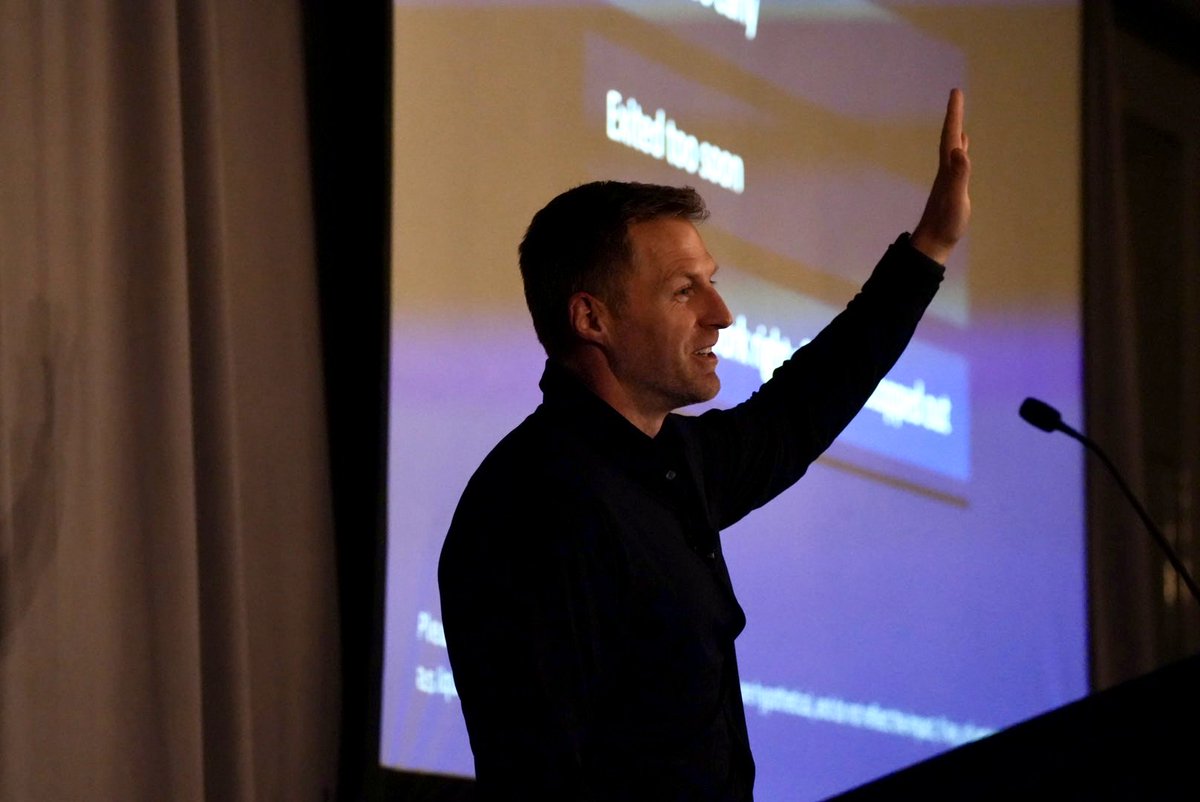
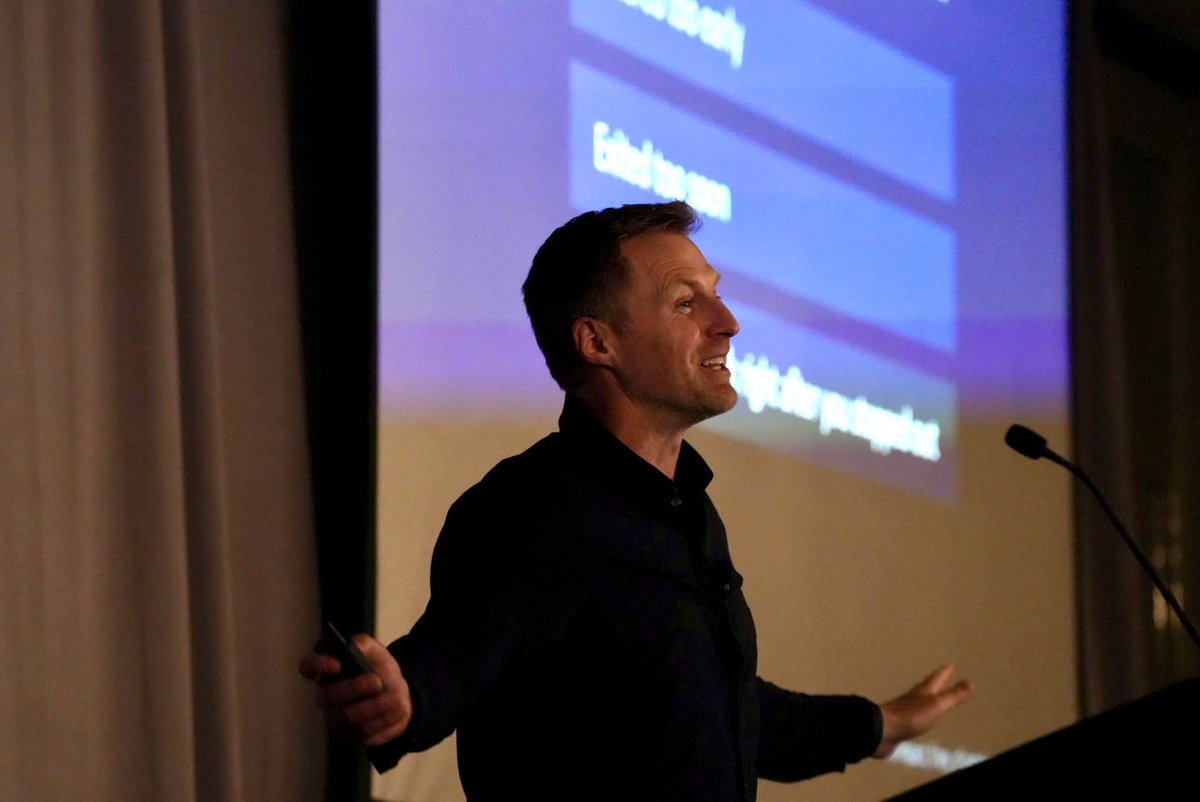
Jeff Holden breaks down the 3 types of traders at the SMB Trading Summit:
The Finisher. The Runner. The Player.
The key is figuring out which one you are.
FEB 2026 @SMBCAPITAL TAKEAWAYS
1. It was universally agreed that February was a slower month versus most of 2025. Traders rightfully pulled back risk considerably.
The big distinction to make is that the market has been rangebound. As a result market plays, swing momentum, and similar need to be reduced.
Where traders deployed risk was in the opportunities moving idiosyncratic from the market like the crypto and SaaS melt.
So so important to recognize when to pullback risk, where to pullback risk, and where to keep swinging the bat.
2. Something happened over the last month where traders are now utilizing Claude and AI at a much higher level than previously seen.
It’s becoming more and more apparent that traders who don’t will face a widening gap in knowledge, speed, and productivity.
3. Now with the Iran war in full-swing, gameplanning is coming to the forefront.
What could the big headlines be? What would be the first and second order impacts of those headlines?
Traders that didn’t have futures access during gold and silver learned their lesson the hard way, but hopefully now are prepared for the extra market access for crude and nat gas which futures provides.
4. Despite the slowdown, traders interestingly weren’t struggling like many did in late 2025. Many have moved to shorter timeframe scalps, hitting singles, and increased selectivity.
Off to NYC for the @smbcapital conference this weekend ✈️🙏
During a monthly meeting, a trader was doing a really good job of beating himself up.
Shark- soon to be highlighted in the next Market Wizard, stopped him:
"Dr. Steenbarger's book (Positive Trading Psychology) would be good for you to read so you can pull on your strengths more than beat yourself up on what you did wrong."
The lesson?
"Think about what you did right and how you do more of it... biggest winners and how could you have made more there and not just eliminate what you did wrong." 📈
#TradingPsychology #StockMarket #DayTrading