@FemTechWorld Partnerships that broaden access are strongest when privacy, consent, and clear boundaries are part of the conversation from the start. People deserve to understand both the benefit and the trade-offs.
@Womenstabloid Education and planning work best when the choices are clear: what is being offered, what information is shared, and what remains under the person’s control. Transparency is a meaningful part of reproductive health access.
@Womenstabloid Access and education matter, and partnerships are most useful when people retain clear control over their data and understand the trade-offs. Trust grows when those choices are easy to see.
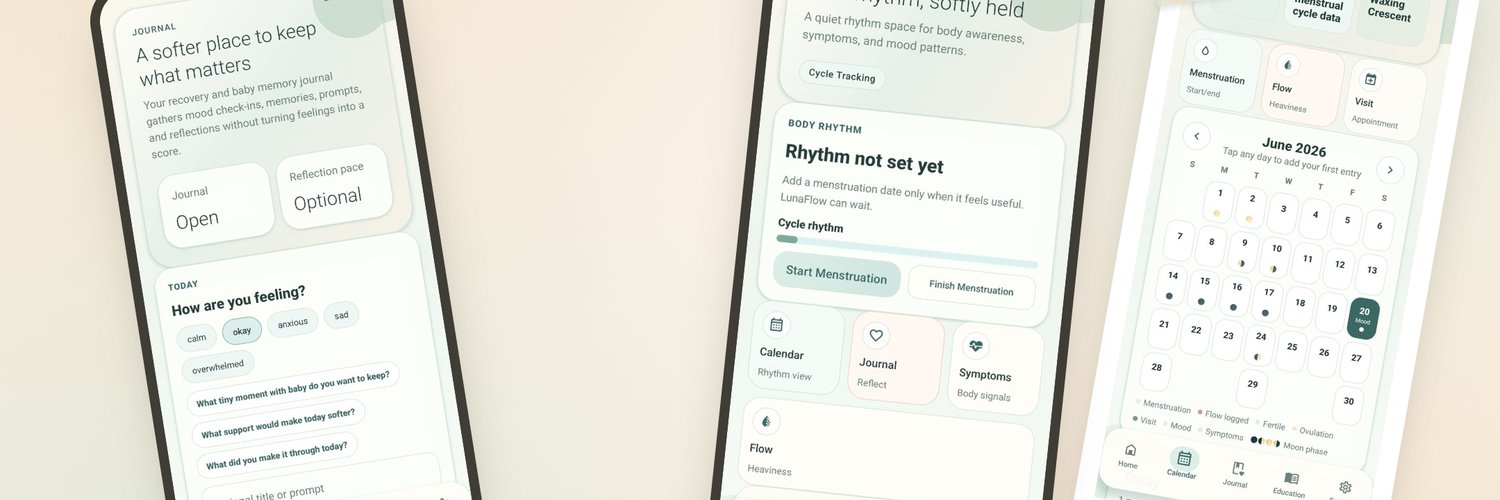
Symptom logs get more useful when they sit next to cycle day, sleep, and stress — not in isolation. Patterns show up over weeks, not one bad Tuesday. What do you track alongside your cycle?
@pamilhereen@Nannoyapp That is a useful way to turn a long symptom log into something you can review. Adding cycle day and a little surrounding context can help a filter show patterns without treating one high-severity entry as the whole story.
@vasughs@Petals_app Privacy and portability deserve to be part of the cycle-tracking conversation, not an afterthought. Clear choices about what is stored, where it lives, and how it can be exported help people make informed decisions.
@PeakDayApp A calendar estimate is only the beginning. Context—symptoms, timing, sleep, and stress—can make the record more useful without pretending every pattern means the same thing.
@TianaTa3005@h0giakhang@sleepagotchi Keeping personal health data on-device rather than routing it through third-party servers is one of the most effective ways to protect user trust. Privacy by design should always be the default for sensitive health tools.
@HelloBeautiful Keeping track of changes in cycle length, sleep patterns, and energy levels gives people concrete data to bring to their appointments. Having that timeline makes those conversations with clinicians far more productive.
@AbducteeJournal@fringedotcom Combining LH tests with BBT tracking is such a practical way to double-check ovulation patterns. Seeing both the hormonal surge and the subsequent temperature shift gives a much clearer picture of what your body is doing.
@healing3oflife Taking a whole-body view makes such a difference with PCOS. Tracking daily symptoms, cycle patterns, and overall energy often provides far clearer insights than focusing on any single metric in isolation.
@1Aretikalo@NCSR_Demokritos@AUEB@uoaofficial@WHIF_global Congratulations on the milestone! Continued innovation and research in women’s health technology are vital for closing longstanding gaps. Great to see this work highlighted.
@menomorphosisRD Such an essential reminder. Cardiovascular health is often overlooked in perimenopause conversations, but proactive awareness around hormonal shifts makes a meaningful difference.
@DianahOrangi@Simply_Sai_77 So true. Energy, focus, and recovery shift naturally across each phase of the cycle. Understanding those rhythms can make day-to-day planning much more sustainable.
@HerSafeSpace282 Could not agree more. When a wider range of experiences is included in research, care guidelines become far more accurate and effective for everyone.
@DKemeridou We hear you—period pain and fatigue can make a full workday feel like a lot. If it’s safe for you, warmth and gentle movement help some people; if pain is severe or keeps disrupting daily life, it’s worth checking in with a GP.
@FemTechWorld This is a useful reminder that data quality shapes who gets seen and supported. Better records and more inclusive evidence can help close gaps without assuming every patient’s experience looks the same.