The Resurrection of Jesus wasn't peer reviewed either, and yet you believe it.
If you're gonna argue contra Catholic vindicatory miracles, you must do so without falsifying the one vindicatory miracle upon which rests the whole validity of the Christian faith.
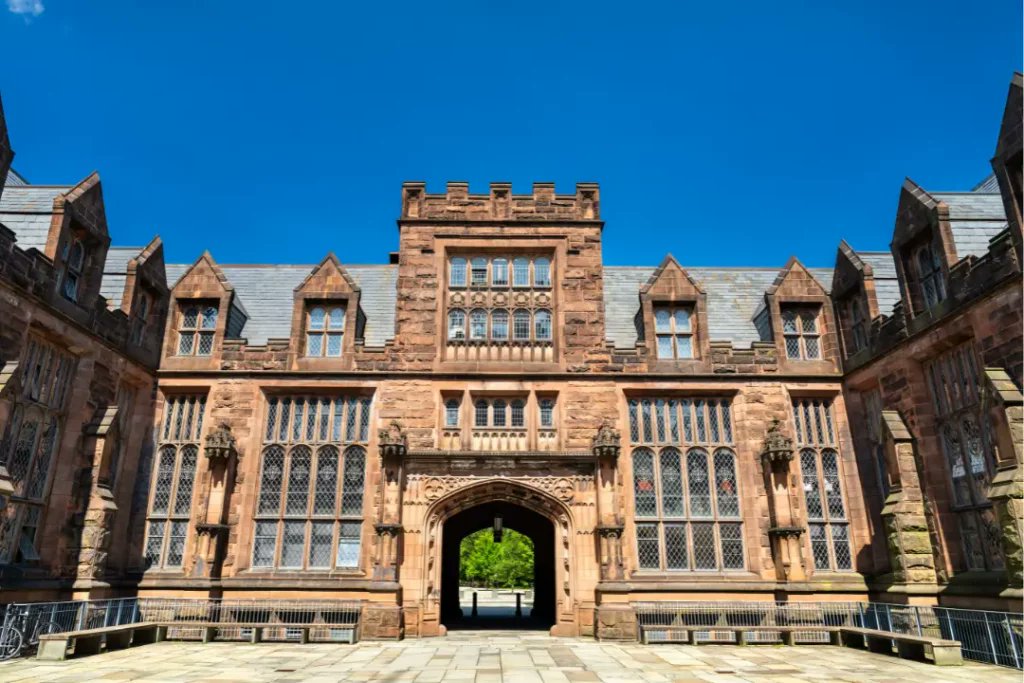
BREAKING: Another Princeton philosopher has announced his conversion to Catholicism as a result of studying miracles.
Noah McKay joins Joe Schmid as the second philosopher to convert at the prestigious university.
Word has just come down that St. Paul’s Cathedral in London—the second most important church in the Anglican world—has imitated Canterbury Cathedral in permitting “raves,” nightclub-like entertainments, to take place in its confines.
The usual reasons for acquiescing to this have been trotted out: reaching out to the young, trying to get with the times, etc. But this development simply shows that the leadership of the Church of England has lost any sense of the crucial distinction between the sacred and the secular.
Across the centuries and across the cultures, our ancestors seem to have intuitively grasped the importance of this demarcation. Whereas the secular is the arena of ordinary experience and activity, the sacred is another realm, a different dimension.
Accordingly, in the properly sacred space, one is lifted out of the conventional and introduced into the numinous. This is why Christian cathedrals are filled with images of the saints and angels and why their interiors are meant first to disorient us and then to reorient us toward the divine.
It is also why, in the initiation rituals of primal peoples, a young person is purposely ripped out of the ordinary and introduced into the mythic and mystic dimension. And it is why, throughout the Bible, sacred spaces are carefully set apart from common spaces.
The contemporary West is, quite literally, the first culture in human history that is in danger of collapsing the sacred into the secular, or better, losing any sense of the difference between the two.
This is doing enormous damage, especially to young people, whose lives have been flattened into a preoccupation with money, worldly success, and material things.
The Church indeed should go out into the secular space to find those who have wandered away from God, but it should then lead those wanderers back to the holy.
Having “raves” in the nave of one of the most sacred spaces in the Christian world is, I’m sad to say, another sign of our pitiful surrender to ideological secularism.
Word has just come down that St. Paul’s Cathedral in London—the second most important church in the Anglican world—has imitated Canterbury Cathedral in permitting “raves,” nightclub-like entertainments, to take place in its confines.
The usual reasons for acquiescing to this have been trotted out: reaching out to the young, trying to get with the times, etc. But this development simply shows that the leadership of the Church of England has lost any sense of the crucial distinction between the sacred and the secular.
Across the centuries and across the cultures, our ancestors seem to have intuitively grasped the importance of this demarcation. Whereas the secular is the arena of ordinary experience and activity, the sacred is another realm, a different dimension.
Accordingly, in the properly sacred space, one is lifted out of the conventional and introduced into the numinous. This is why Christian cathedrals are filled with images of the saints and angels and why their interiors are meant first to disorient us and then to reorient us toward the divine.
It is also why, in the initiation rituals of primal peoples, a young person is purposely ripped out of the ordinary and introduced into the mythic and mystic dimension. And it is why, throughout the Bible, sacred spaces are carefully set apart from common spaces.
The contemporary West is, quite literally, the first culture in human history that is in danger of collapsing the sacred into the secular, or better, losing any sense of the difference between the two.
This is doing enormous damage, especially to young people, whose lives have been flattened into a preoccupation with money, worldly success, and material things.
The Church indeed should go out into the secular space to find those who have wandered away from God, but it should then lead those wanderers back to the holy.
Having “raves” in the nave of one of the most sacred spaces in the Christian world is, I’m sad to say, another sign of our pitiful surrender to ideological secularism.
Christianity honors work, but it doesn’t idolize productivity. The dignity of work comes first from the dignity of the worker: work is for the human person, not the human person for work.
That’s why the Sabbath matters. Rest before God reminds us that our worth isn’t measured by what we produce, accomplish, or earn. Before we are laborers, we are His.
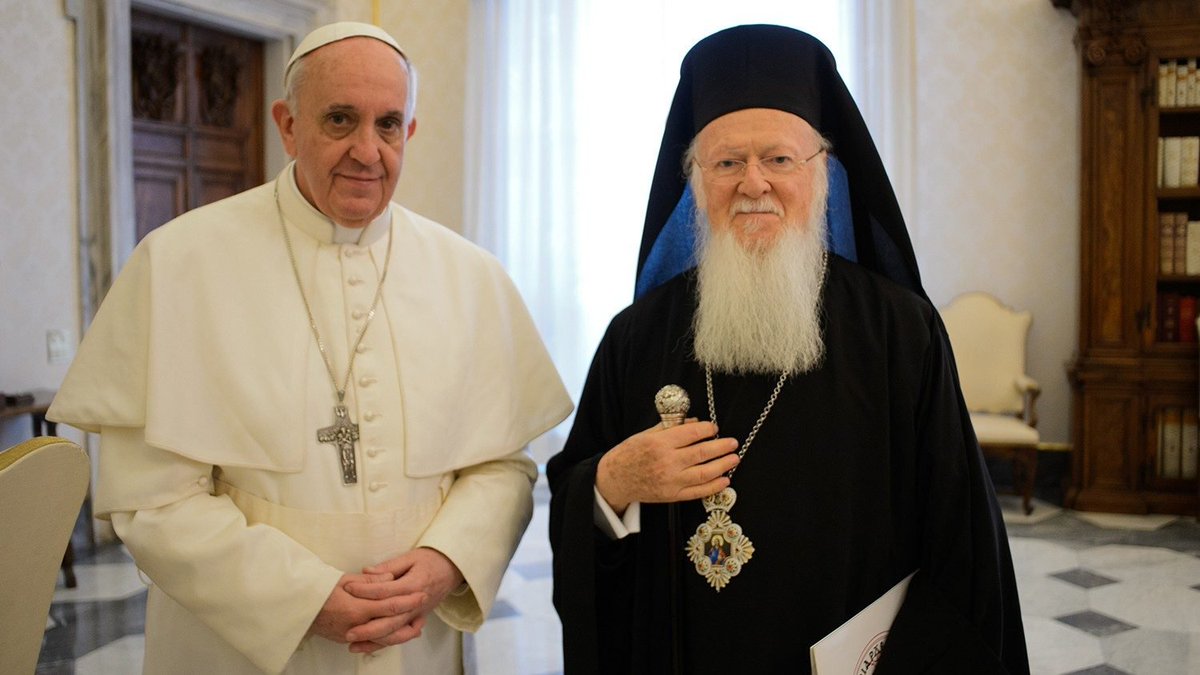
🚨 Patriarch Bartholomew has said that he hopes for REUNIFICATION between the Orthodox and Catholic Church
'We await – by grace and help from above – the restoration of full communion with the Church of Rome in the one Body of the One, Holy, Catholic and Apostolic Church, so that the Pentarchy may once again become whole and the ‘five-stringed lyre’ of the universal Church may once again resound in the fullness of its ancient harmony'
Today is the Feast Day of St. Mother Teresa of Calcutta.
In 1994, she attended a Clinton prayer breakfast and spoke to the largely pro-abortion audience about the horrors of abortion.
Mother Teresa, pray for us.
It’s Saturday afternoon, and many parishes offer the sacrament of confession during these hours. Inevitably, some penitents will leave without receiving the sacrament because time runs out and the priest has to leave to celebrate Mass.
Often this happens because individual confessions are taking much longer than they should.
I’ll say it directly: a typical confession with a well-prepared penitent should take about 2–3 minutes. If the confessor needs to prompt the penitent or offer some counsel, perhaps 4–5 minutes.
A 10–15 minute confession should be exceedingly rare, not routine.
Confession is not counseling.
Confession is not spiritual direction.
For many Catholics, confession may be the only occasion they have to speak privately with a priest or receive spiritual counsel. That’s understandable.
But more involved spiritual direction belongs outside the sacrament. A priest can—and should—invite the penitent to make an appointment with his pastor or another priest he trusts.
Keeping confession focused isn’t being hurried or impersonal. It respects the sacrament—and the people still waiting in line.
Hail, Mary, full of grace, the Lord is with thee.
Blessed art thou amongst women,
and blessed is the fruit of thy womb, Jesus.
Holy Mary, Mother of God,
pray for us sinners, now and at the hour of our death. Amen.
Um antigo fragmento de papiro descoberto no Egito, atualmente preservado na John Rylands Library, em Manchester, contém aquela que é considerada a mais antiga oração conhecida dirigida à Virgem Maria. Identificado como Rylands Papyrus 470 e datado de 250 d.C.
O texto chama Maria de Theotokos, isto é, “Mãe de Deus”, um título que só seria oficialmente definido pela Igreja no Concílio de Éfeso, em 431. A existência dessa oração, porém, demonstra que ela já fazia parte da devoção cristã muito antes da definição conciliar.
Bishop Fulton Sheen, half a century ago:
"Just think, my dear ladies, of how many mentally disturbed women we are going to have in the United States in the next 10 or 15 years when the guilt of abortion begins to attack the mind and soul.". 🤯