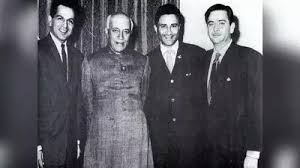
Jawaharlal Nehru with little Rajiv Gandhi.
Rajiv Gandhi is remembered as a leader who tried to bring India into the modern technological age, though his career was marked by both reforms and controversies.
Hecame Prime Minister of India in 1984 after the assassination of his mother, Indira Gandhi.
His major contributions:
Promoted technology and modernization in India
Expanded telecommunications and computerization
Supported education reforms and youth involvement
His tenure was affected by controversies like the Bofors scandal and political unrest in regions like Punjab and Sri Lanka.
He was assassinated in 1991 during an election campaign by a suicide bomber linked to the LTTE (Liberation Tigers of Tamil Eelam).
#nehru #rajivgandhi #primeministers #indiragandhi
Jawaharlal Nehru at the Salarjung Museum, Hyderabad.
The Salar Jung Museum is one of India's most famous museums and is regarded as one of the largest repositories of art and antiques collected by a single individual.
Located on the southern bank of the Musi River in Hyderabad, it preserves an extraordinary collection of objects from India, Europe, the Middle East, and East Asia.
The museum's collections were primarily assembled by Nawab Mir Yousuf Ali Khan, the former Prime Minister of the Hyderabad State under the Nizam. After resigning from office in 1914, he devoted much of his life and wealth to collecting rare artworks, manuscripts, sculptures, furniture, weapons, textiles, and decorative objects from around the world.
Following the death of Salar Jung III in 1949, his vast collection remained in the family's ancestral palace, Dewan Devdi. To preserve these treasures, a museum was established and opened to the public on 16 December 1951. The inauguration was performed by India's first Prime Minister, Jawaharlal Nehru.
#SalarJungMuseum #Salarjung #Hyderabad #Nehru
कठिन परिश्रम और देश के विकास को लेकर भारत के पहले प्रधानमंत्री पंडित जवाहरलाल नेहरू के विचार बेहद स्पष्ट, आधुनिक और व्यावहारिक थे। उनका मानना था कि आज़ादी मिलना तो सिर्फ एक शुरुआत है, असली चुनौती एक आत्मनिर्भर और आधुनिक राष्ट्र का निर्माण करना है, जो केवल निरंतर मेहनत से ही संभव है।
नेहरू जी का नारा "आराम हराम है" केवल एक वक्तव्य नहीं, बल्कि देश के युवाओं और नागरिकों के लिए उनका सबसे बड़ा संदेश था। उनका मानना था कि कोई भी देश केवल भाग्य या बातों से महान नहीं बनता, बल्कि उसके नागरिकों के पसीने और कड़ी मेहनत से बनता है।
#economicequality#industry#communism#socialism#capitalism#nehru
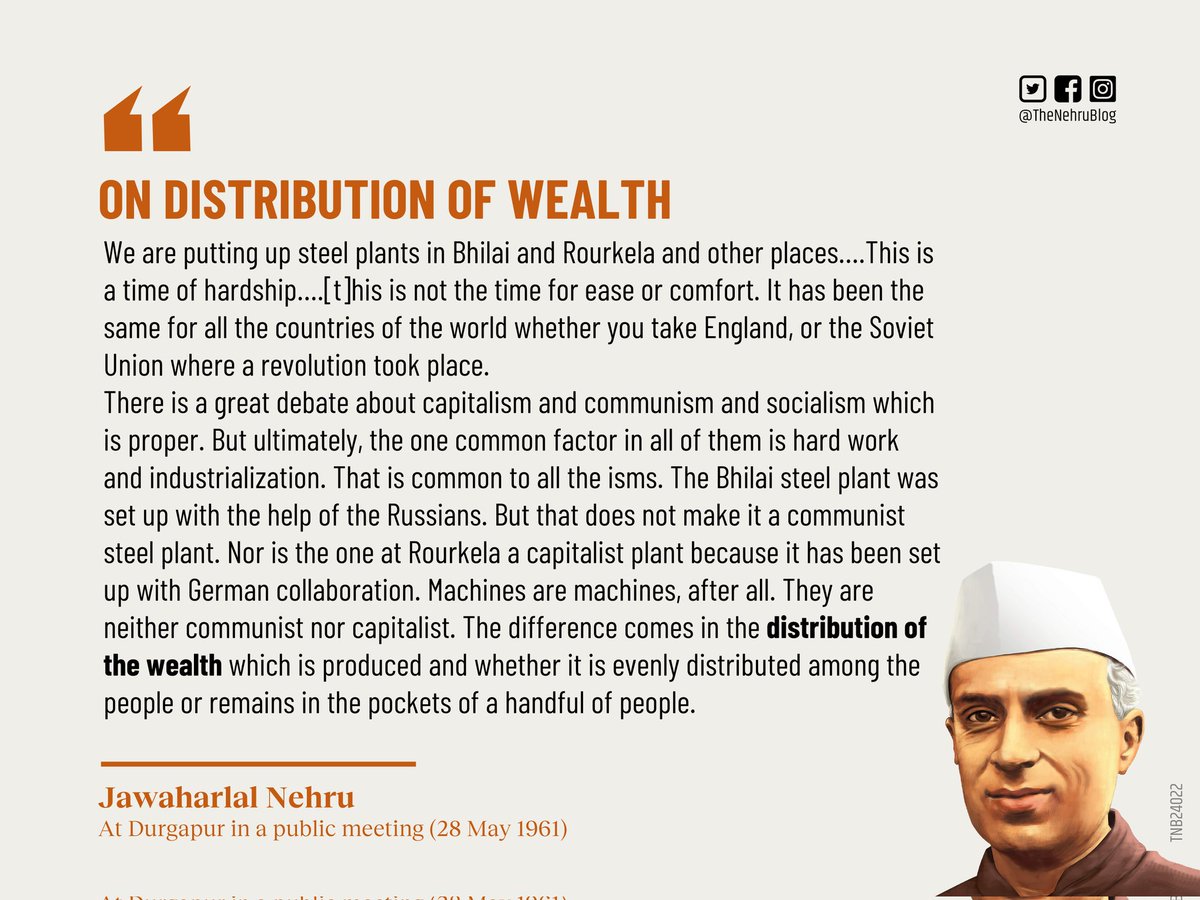
नेहरु आर्थिक समानता को ही वास्तविक स्वतंत्रता मानते थे। दुर्गापुर में उन्होंने एक जन सभा में कहा कि हम मुल्क के अलग अलग हिस्सों में इस्पात के कारखाने लगा रहे हैं। भिलाई में लगा रहे हैं, राउरकेला में लगा रहे हैं। भिलाई का कारखाना रूस की मदद से लग रहा है, तो इसका मतलब यह नहीं हुआ कि यह कम्युनिस्ट कारखाना हो गया, या जर्मनी की मदद से बनने वाला कारखाना कैपिटलिस्ट कारखाना हो गया।
'हमारे सामने आज़ादी के बाद से बड़ी चुनौतियां हैं। इस वक़्त यह मायने नहीं रखता कि हम किस विचारधारा को मानते हैं, और अमेरिका या जर्मनी किस विचारधारा के मानने वाले हैं। बल्कि सबसे अहम बात यह है कि "धन/सम्पदा का वितरण" किस तरह हो रहा है। क्या किसी मुल्क में पैदा होने वाली धन दौलत वहां के लोगों में बराबर बांटी जा रही है, उसका लाभ सभी को बराबर मिल रहा है या सिर्फ़ वह कुछ ही लोगों के हाथों में सिमट कर रह गई है।'
कारखाना किसी भी मुल्क में बने लेकिन उसमें दो ही चीज़ समान होती है जो उसको कामयाब बनाती हैं। पहली, कठिन परिश्रम और दूसरी, औद्योगिकीकरण। इसके अलावा कामयाबी का कोई रास्ता नहीं है। यह हर विचारधारा में लाज़मी तौर पर मौजूद है।
कारखानों में उत्पादन के बाद विचारधारा का प्रश्न उठता है कि उनसे होने वाले उत्पादन का लाभ किसको मिलेगा? आम जनता को या फिर कुछ रसूखदार लोगों को।
Letters from a Father to His Daughter is a cherished collection of 30 letters written by Jawaharlal Nehru to his daughter, Indira Gandhi, during the summer of 1928.
At the time, Indira was only ten years old and staying in Mussoorie, while Nehru was working in Allahabad.
The letters were intended to teach her about the natural history and the evolution of civilizations, serving as a foundational precursor to his later, more expansive work, Glimpses of World History.
Foreword to new editions is written by @priyankagandhi
#Nehru #JawaharlalNehru #thenehrublog #IndiraGandhi #NehruBooks
One of the best books I have read. He used to write from jail or during his travels, teaching Indra Gandhi about the history of the world, great leaders, and important events of history. #justsaying
यह तस्वीर Indian National Congress की संसदीय कमेटी के चुनाव में वोटिंग के वक्त की है। जवाहरलाल नेहरू लाइन के ठीक बीच में (नेहरू टोपी और अचकन पहने) अपनी बारी का इंतज़ार कर रहे हैं। उनके ठीक आगे और पीछे कांग्रेस के दूसरे नेता अपनी बारी का इंतज़ार कर रहे हैं। यह तस्वीर भारत में लोकतंत्र की शुरुआत का एक अनोखा उदाहरण है, जहाँ प्रधानमंत्री और देश के बड़े नेता भी एक आम नागरिक की तरह वोट डालने के लिए लाइन में खड़े थे ।😎खैर छोड़ो
Jawaharlal Nehru's speech while laying the foundation stone of Nagarjunasagar Dam.
The Nagarjunasagar Dam is one of India's earliest and most massive multi-purpose river valley projects. Built across the vibrant Krishna River, it straddles the border between Palnadu district in Andhra Pradesh and Nalgonda district in Telangana.
On December 10, 1955, Prime Minister Nehru laid the foundation stone for the project. It was named Nagarjunasagar (meaning "The Ocean of Nagarjuna") to honor the ancient philosopher whose valley would soon be submerged.
#Nagararjuna #nagarajunasagar
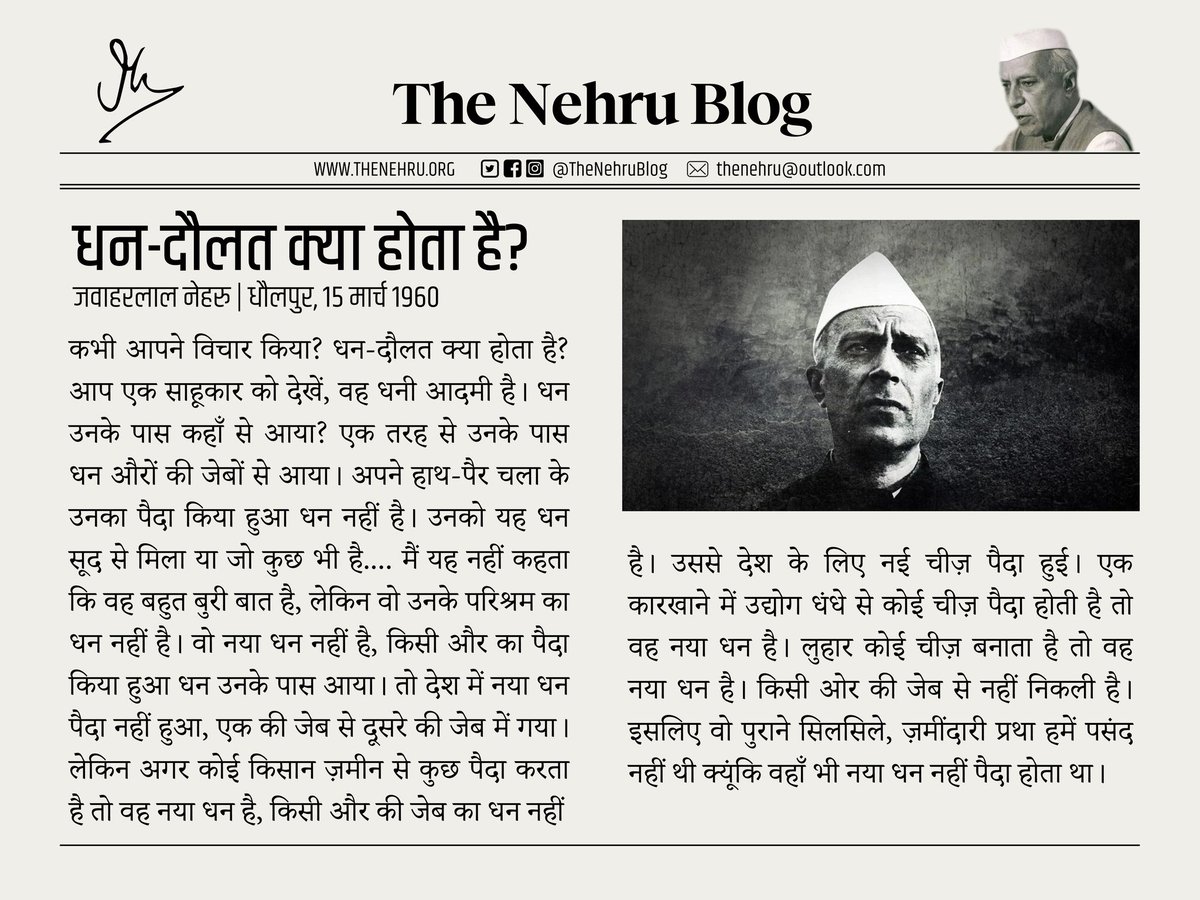
जवाहरलाल नेहरू उत्पादक अर्थव्यवस्था यानी प्रोडक्शन इकोनॉमी के कायल थे।
वह देश में होने वाले नए उत्पादन को ही वास्तविक दौलत मानते थे।
उनके अनुसार जब कोई किसान अपने खेत में अनाज पैदा करता है तो वह वास्तविक सम्पदा की श्रेणी में आता है। इसी तरह कारखानों में पैदा होने वाली चीज़ें ही धन, दौलत या संपत्ति के रूप में गिनी जा सकती हैं। (production and manufacturing)
नेहरु ऐसी किसी भी कारोबार को अच्छा नहीं मानते थे जिस में कोई नया उत्पादन न हो और सिर्फ पैसा एक हाथ से दूसरे हाथ में जाये।
नेहरु की दृष्टि से देखा जाए तो आज की सेवा अर्थव्यवस्था यानी सर्विस इकोनॉमी कोई अच्छी परिकल्पना नहीं है।
इस बारे में आप क्या कहते हैं?
#nehru #economy #jawaharlalnehru #thenehrublog #service
यह घटना 1960 की है।
कर्नाटक यूनिवर्सिटी के कुलपति ने इच्छा व्यक्त की कि वह यूनिवर्सिटी में प्रधान मंत्री जवाहरलाल नेहरू के नाम से एक सम्मान/पुरस्कार शुरू करने जा रहे हैं।
उन्होंने प्रधानमंत्री सचिवालय को इसकी जानकारी दी। जब यह मामला माननीय प्रधानमंत्री के संज्ञान में आया तो उन्होंने कुलपति जी को एक पत्र लिखा।
पत्र में नेहरू जी लिखते हैं कि हम तो इस बारे में पहले से ही विचार कर रहे हैं कि जीवित व्यक्तियों के नाम से किसी पुरस्कार या सम्मान को शुरू न किया जाए।
ऐसे में अगर हम आपके मशवरे को मान लें तो यह तो हमारे अपने ही उसूल के ख़िलाफ हो जाएगा।
इसलिए, मुझे यक़ीन है कि आप मेरी बात को समझेंगे और मेरे नाम से किसी पुरस्कार की शुरुआत करने से बचेंगे।
मेरी शुभेच्छाएं आपके साथ।
#nehru #thenehrublog #jawaharlalnehru
प्रोफ़ेसर मनोज झा @manojkjhadu के हालिया X आर्टिकल में झा साहब ने मोदी-नेहरु वार्ता के बाबत नेहरु जी के हवाले से लिखा है:
"मेरे पास हर सवाल का जवाब नहीं होता था। बस एक सुविधा थी। मुझे चौबीसों घंटे, सातों दिन चुनाव नहीं लड़ना पड़ता था। शासन चलाने और चुनाव लड़ने के बीच थोड़ा-सा फर्क बचा हुआ था। इसलिए कभी-कभी देश के बारे में सोचने का समय भी मिल जाता था।"
इसे पढ़कर नेहरु जी की यह बात याद आ गई 👇👇
Jawaharlal Nehru in a Mushaira with noted poet Josh Malihabadi (3rd from the left).
Shabbir Hasan Khan (1898–1982), popularly known by his pen name Josh Malihabadi (Urdu: جوش ملیح آبادی), was one of the most celebrated and revolutionary Urdu poets of the 20th century.
Known as Shair-e-Inqilab (The Poet of Revolution), his powerful command over the Urdu language, vast vocabulary, and fiery anti-colonial poetry left an indelible mark on the Indian subcontinent's literary and political landscape.
He was born in Malihabad (near Lucknow, Uttar Pradesh, India) into an affluent family.
He was deeply educated in Arabic, Persian, Urdu, and English, which later contributed to his unparalleled linguistic depth and mastery of metaphors.
#nehru #josh #joshmalihabadi #jawaharlalnehru