“A man has made at least a start on discovering the meaning of human life when he plants shade trees under which he knows full well he will never sit.” - D. Elton Trueblood
Bless this man - doing the Lord’s work in NYC
(h/t @CBSNewYork)
🚨 Announcement 🚨
NFL+ welcomes @Filmwatchers1!
Pete will appear weekly on NFL+ X and IG breaking down the strategy behind your favorite plays of the week!
claude code is fucking insane
i know literally NOTHING about coding. ZERO. and i just built a fully functioning web app in minutes.
http://localhost:3000/
check it out
Don’t forget to leave a comment.
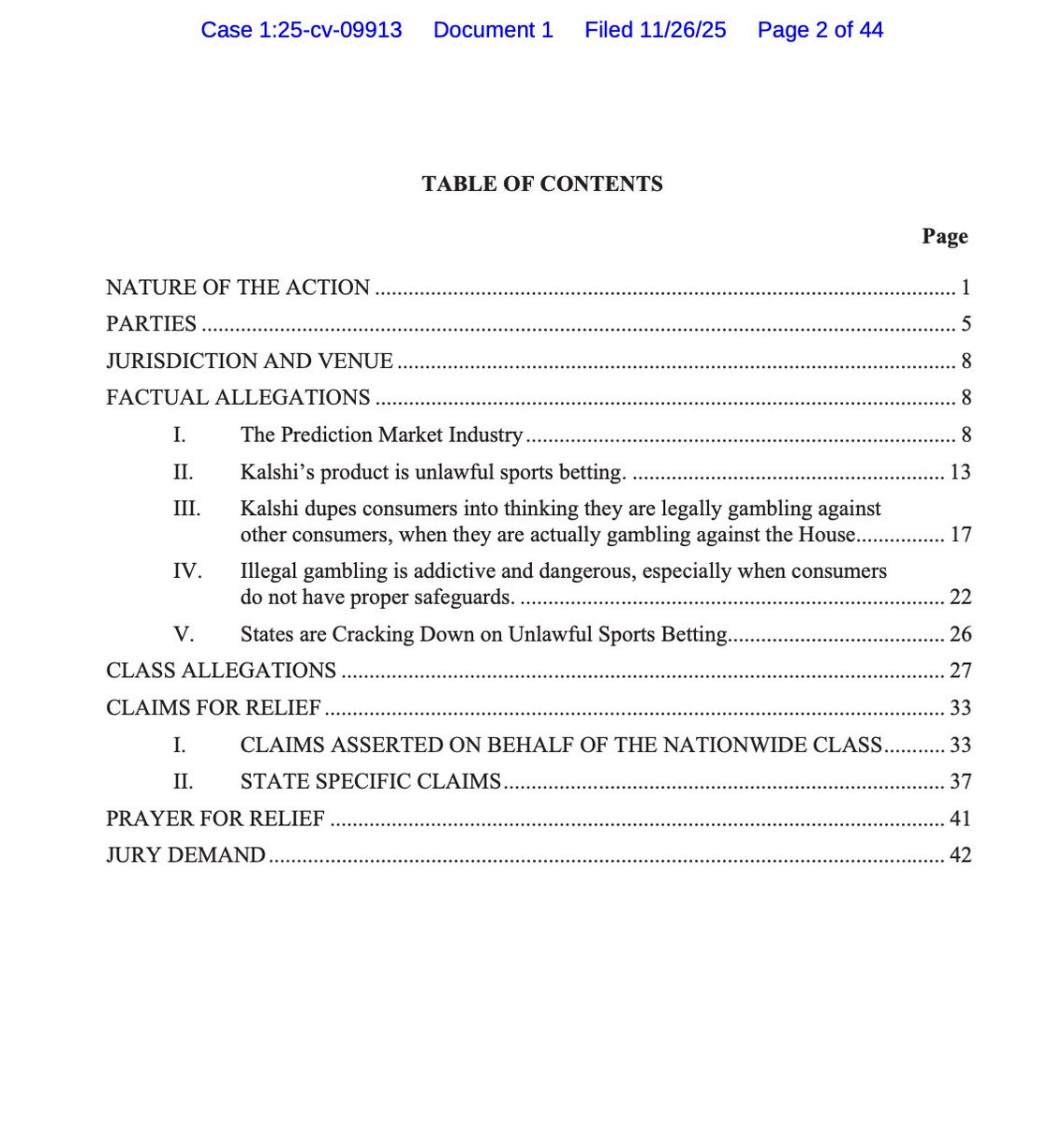
NEW: Kalshi has been hit with a nationwide class action lawsuit in the SDNY for operating an illegal online sports betting platform and for "duping" customers into believing that they are legally gambling against other consumers when they are actually gambling against the house.
In our competitive society, where it seems that only the strong and winners deserve to live, sport also teaches us how to lose. It forces us, in learning the art of losing, to confront our fragility, our limitations and our imperfections. It is through the experience of these limits that we open our hearts to hope. Athletes who never make mistakes, who never lose, do not exist.
Paul George isn’t the Paul George of Paul George’s. Paul George is the LeBron of Paul George’s, the Paul George of Paul George’s is like Khris Middleton
One aspect of Strauss's critique of radical historicism/Heidegger
Strauss critiques historicism for its reliance on a 'fundamental experience' (that of the abyss of freedom) that claims to legitimate itself. This experience, rooted in the enigmatic nature of human existence, is assumed to be self-evident and understandable without reference to non-demonstrable or hypothetical possibilities. H. argues that interpreting this experience through inferred possibilities misunderstands or diminishes its depth and seriousness. But experiences are inherently ambiguous and open to multiple interpretations. No single experience can guarantee its own status as 'fundamental,' especially when other experiences—such as those underlying the concept of natural right—seem equally significant.
Since all experiences are susceptible to various interpretations, only theoretical reasoning and argument can determine which interpretation is adequate. This, in turn, requires knowledge of the whole, which H. lacks. An interpretation that merely articulates what is directly experienced is not inherently superior to one that considers inferred possibilities. Even if some experiences can be adequately interpreted on their own, the fundamental experience H. invokes—the insoluble riddle of human life and the exhilarating free fall accompanying its recognition— points beyond itself. It raises questions about human origins (what is before and after the human) and the cause of what is specifically human, questions that cannot be answered by the experience itself. That is, even the experience of the abyss of freedom presents to a fundamental alternative: whether the cause (or causes) of all beings is such that humans can love it (or them). Strauss explores the question of the lovability of the cause through the poem of Schiller's about his angel. Schiller’s angel, as a symbol of the cause of all beings, embodies a combination of the terrible and the gracious.
Doch mit grausendem Entzücken
Seh’ ich ihn, den fernen, nah!
Schrecklich kommt er mir entgegen,
Doch ich fühle: er ist da.
Is the cause simultaneously so terrible and gracious that it must be conceived as a person? This raises the stakes of the theoretical inquiry, suggesting that the nature of the cause—whether it is lovable or not—conditions how we understand our place in the world and our experiences.
Refusing to pursue this question arbitrarily severs the experience from its full meaning, committing the fallacy of “dogmatic empiricism” (despite Strauss’s ultimate focus on the primacy of the perceptible). H. raises two objections against pursuing such theoretical questions:
1) H. argues that theoretical reflection destroys the depth or seriousness of human life. By transcending the fundamental experience and engaging with questions like the lovability of the cause, one risks undermining the gravity of existence. Yet it is not serious or depth-preserving to avoid discussing right and wrong or to foreclose the pursuit of genuine criteria for understanding human life. True depth and seriousness require grappling with these questions, even if they remain unresolved.
2) A second objection is that theoretical reflection, particularly on insoluble questions, is not in accord with the dignity of humanity. But isn't to close one’s eyes to inevitable questions—even if they prove unanswerable—precisely to diminish the dignity of human beings? Might not the dignity of humanity lie in the willingness to confront these questions, rather than foreclosing them for the sake of a spurious sense of depth or seriousness?