Investment Analyst Turned Investment Officer | ex- $JPM | No Original Content | #NOC Debasement | Educating #Ask the Question | Truth is Stranger than Fiction
🦔Blackstone sold $3.5 billion in data center stakes last week and immediately dumped the stock it received at a discount. Oracle warned in its annual SEC filing that its AI data center customers "may be highly leveraged" and pose "risks of non-payment and non-performance." Oracle stock fell over 40% in the past month.
My Take
Blackstone was capping investor withdrawals a few months ago while it deployed billions into AI data centers. Now it sold $3.5 billion of those assets and unloaded the stock at a discount on the way out. You don't sell an asset below market and then sell the shares you got for it at another discount unless you want the cash more than you want the exposure.
Oracle stood at the White House with Altman and promised Stargate would cure cancer. Now its own filing warns that the customers who need all this infrastructure might not be able to pay for it. Oracle cut 30,000 jobs to fund the buildout and plans to borrow $40 billion more next year. The company that helped announce a $500 billion AI infrastructure project just told the SEC it might not get paid. When a company's press releases promise a golden age and its SEC filings warn about non-payment, read the filing.
Hedgie🤗
Levered ETFs have become one of the most powerful forces in US equity markets:
Daily rebalancing activity in US equity leveraged ETFs is up to a record $50 billion.
Leveraged ETFs must rebalance daily to stay at their target leverage, adding more exposure after markets rise and reducing it after markets fall.
This figure has more than QUADRUPLED since the start of 2026.
Rebalancing activity now accounts for a record 1.60% of S&P 500 futures volume, exceeding the 2020-2024 peaks by 200%.
To put it simply, leveraged ETFs have grown large enough that their daily rebalancing can now amplify market moves in both directions.
Leveraged ETFs are amplifying market volatility like never before.
Iconic Tillman free kick. Favorite USA goal of my lifetime other than the Donovan/Algeria goal. Still reeling from the dubious red card on our best guy…, one team grabbed jerseys for 2 hours to stop advantages, the other team had an awkward collision somehow become a red… what?
BAIDU JUST DROPPED AN ABSOLUTE GAME-CHANGER FOR DOCUMENT AI
It’s called `Unlimited-OCR`, and it can literally transcribe an entire book in a single pass 🤯
Most vision models read a single page, forget the context, and eventually hit a wall where performance degrades and inference slows down.
@Baidu_Inc built this on top of `DeepSeek OCR` but fixed the memory bloat with a single change to the attention mechanism.
The design mimics how a human hand-copies a book.
Instead of trying to hold the entire book in active memory, each token only looks at the current page plus the last 128 words.
This creates a sliding window that keeps memory usage completely flat, no matter how long the output gets.
The architectural shift delivers three massive upgrades for document parsing:
→ A fixed memory footprint
→ Steady generation speed on massive documents
→ The ability to process dozens of pages per pass
The numbers back it up.
Unlimited-OCR scores 93% on standard parsing benchmarks, beating the older baseline by a full six points.
Even when pushed past 40 pages, the error rate stays under 0.11.
More importantly, it maintains a flat speed curve where older models suffered a 35% slowdown.
Free and open-source.
Repo, weights and paper in 🧵↓
The biggest Bitcoin miners on earth are quietly walking away from mining Bitcoin, and the reason is not the one everyone keeps repeating. They are not fleeing a dead business. They lost an auction for their own power, and the winner was artificial intelligence.
Start with the brutal arithmetic. It now costs the average public miner around $80,000 in cash to produce a single Bitcoin, and for stretches of this year $BTC traded below that. The most efficient operators on the cheapest power still clear a margin, but an estimated 15 to 20 percent of the global fleet is mining at a loss right now, burning more in power than the coins are worth the second they are minted. Three straight downward difficulty adjustments earlier this year, the first such streak since 2022, were the footprint of machines going dark.
That looks like a simple story of a broken business until you see the number that explains the exodus. The same megawatt of power that earns a Bitcoin miner roughly $1 million a year earns between $10 and $20 million a year hosting AI compute. Ten to twenty times more, for the identical electricity, substation, and cooling. What made industrial miners valuable was never the mining. It was the power contracts, the land, the grid interconnects. AI walked in and bid an order of magnitude higher for exactly those assets.
Mining did not fail. It got outbid for its own infrastructure. When Core Scientific runs its BTC segment at a negative margin while its AI colocation business prints money, the decision writes itself. CoinShares estimates listed miners could pull up to 70 percent of their revenue from AI by year end, up from about 30 percent. The power is being repriced to its highest use, and Bitcoin lost the bidding.
If the giants leave, what happens to the network they secured? The doom posts assume it weakens. It does not, because Bitcoin has a self-healing reflex written into its core. When miners switch off, blocks slow, and within two weeks difficulty automatically drops, which makes mining cheaper and more profitable for everyone still running. The security does not vanish, it relocates, and you can already see where. State-backed pools are appearing, with one Gulf operator reportedly standing up a national pool near 3 percent of global hashrate, alongside private fleets and the handful of public miners like Marathon still choosing to buy Bitcoin rather than lease their power away. The network even hit an all-time high above one zettahash this year as the pivot accelerated. It does not need any particular miner. It needs someone, somewhere, for whom the math still works, and cheap stranded power has no shortage of those.
But there is a deeper timer here, and the AI pivot just exposed it. Today miners earn almost everything from the block subsidy and almost nothing from fees, often under one percent of revenue on a quiet day. That subsidy halves again in 2028, and every four years after, marching toward zero. For Bitcoin to pay for its own security forever, fees eventually have to replace it. The open question is whether they can, and the evidence cuts both ways. On busy days, during token launches and inscription waves, fees have already spiked past 15 percent of revenue, and in 2024 some blocks earned more in fees than the entire subsidy. The capacity is there in bursts. Whether bursts become a baseline is the single most important unanswered question in Bitcoin. The AI exodus did not create that question. It pulled the cover off it years early, and showed how fast capital abandons hashing the moment something pays more.
So the honest read is not that AI kills Bitcoin mining. It is stranger than that. AI is the first bidder rich enough to reveal what Bitcoin's security was always quietly worth, and what it will cost to keep once the free coins stop coming.
The miners are not abandoning a sinking ship. They are selling the deck to a higher bidder while the same clock everyone forgot about keeps ticking underneath.
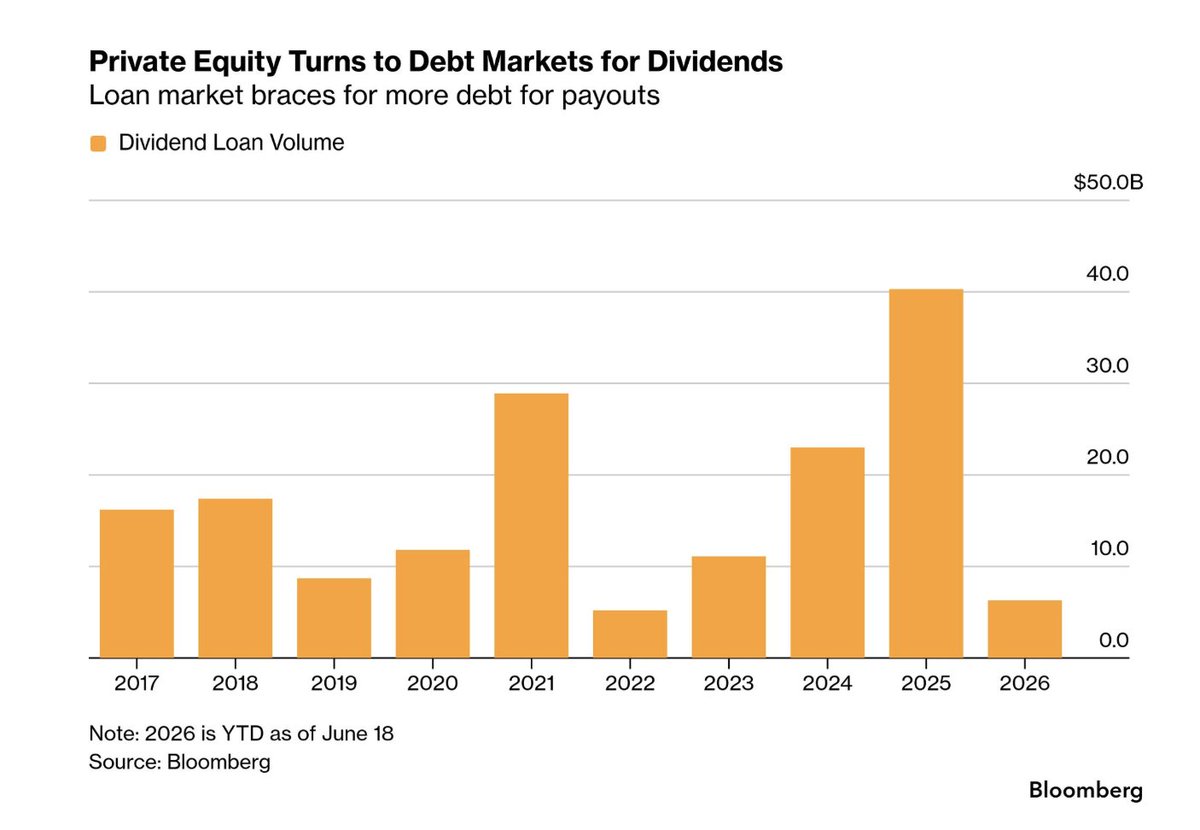
Private equity is having an exit problem:
~32,000 companies
- $3.8 trillion in unrealized value
- more than half held for 4+ years (a record)
Meanwhile the "solutions" are dividend loans, continuation vehicles, and secondaries (2025):
- $40B in dividend loans
~$100B in continuation vehicles
- $226B in total secondaries volume
🚨 SpaceX just pulled off the greatest financial engineering feat of the century. In about a week.
Here's everything that happened, in order:
– Folded xAI into a rocket company, turning "space logistics" into an "AI infrastructure" story overnight
– Priced the IPO at a flat $135. No book-building, no range. Take it or leave it
– Floated just 4% of the company. 556 million shares against 13 billion
– Raised $75 billion at a $1.77 trillion valuation, near 100x revenue
– Lobbied to get into major indices in ~15 trading days. Amazon took years. Forced buying, by law
– Handed an unusually large slice of the float to retail. Tiny supply, an army of buyers
– Watched the stock rocket past $200, up nearly 20% in a single session
– Saw ~46% of the entire float trade hands in one day
– Then announced a $60 billion all-stock buyout of Cursor, the AI coding tool
– Structured it so the higher the stock trades, the fewer shares it has to print to pay
A company losing $4 billion a quarter is now buying AI startups with paper it manufactured out of a 4% float.
The scarcity that pumped the stock now makes its shopping spree cheaper.
This isn't aerospace. It isn't even AI.
It's the finest financial engineering of the century, and it's only week one.
What's going on with $STRC? Let us explain:
$STRC is a product Michael Saylor's Strategy sells to raise cash. You pay $100 for a share, and they pay you back roughly 11.5% a year in cash. Think of it like a high-yield account, not a normal stock. They then use that cash to buy Bitcoin $BTC.
The deal only works if the price stays near $100. That's the promise: park your money here, collect the yield, and your $100 stays worth about $100.
Strategy keeps it near $100 using one lever: the dividend. If the price slips below $100, they raise the payout to attract buyers and lift it back up.
The reason Strategy cares so much? When $STRC sits at $100, Strategy can issue new shares and use the cash to buy more Bitcoin. That's a big part of how the whole machine is funded.
But below $100, the machine stalls. Every $STRC share carries a $100 obligation no matter what it sells for, so issuing at $90 means collecting $90 while still owing dividends on the full $100. They'd be taking on a dollar of obligation to raise ninety cents. So they stop issuing and wait for the price to climb back toward par.
And right now, that machine is breaking. $STRC hit a new low today at ~$82. Bitcoin has been weak, and Strategy's cash pile has dropped from $2.25B to around $1B .
Two problems hit at once: Below $100, Strategy stops selling new shares, so that funding source dries up. And the dividend still has to be paid in cash every couple of weeks no matter what. So they reached into the Bitcoin...
In late May, Saylor sold 32 BTC to cover obligations on $STRC. First bitcoin sale since 2022, and the first sign the system was being truly tested.
That sale is the spark... it told the market Strategy was tapping its bitcoin to make payments, confidence cracked, and buyers started demanding a higher yield to hold $STRC. The price slid, and the loop kicked in.
The loop summarized: Price drops, so they need a higher dividend payout to defend $100. A higher payout means more cash owed to investors. More cash owed means dipping into cash reserves or selling bitcoin. Selling bitcoin pushes its price down and erodes investor confidence in the entire structure. A lower bitcoin price pushes $STRC down again. The death spiral begins.
Each step makes the next one worse. That's why the market is watching $STRC so closely right now.
$MSTR $BTC
Joe Rogan takes BPC-157. Huberman takes BPC-157. The US Health Secretary called himself a “big fan” of peptides.
Your doctor has never heard of it.
BPC-157. 15 amino acids. Found in your own stomach juice.
Rogan had elbow tendonitis nothing could fix. BPC-157 — gone in two weeks. Called it “Wolverine shit.”
Huberman had chronic back pain from a herniated disc. Two injections. Years of pain — gone. He’s a Stanford neuroscientist. He doesn’t exaggerate.
RFK Jr. uses peptides for his own injuries. The FDA is now reclassifying BPC-157 toward legal access.
in studies:
→ REGREW severed nerves
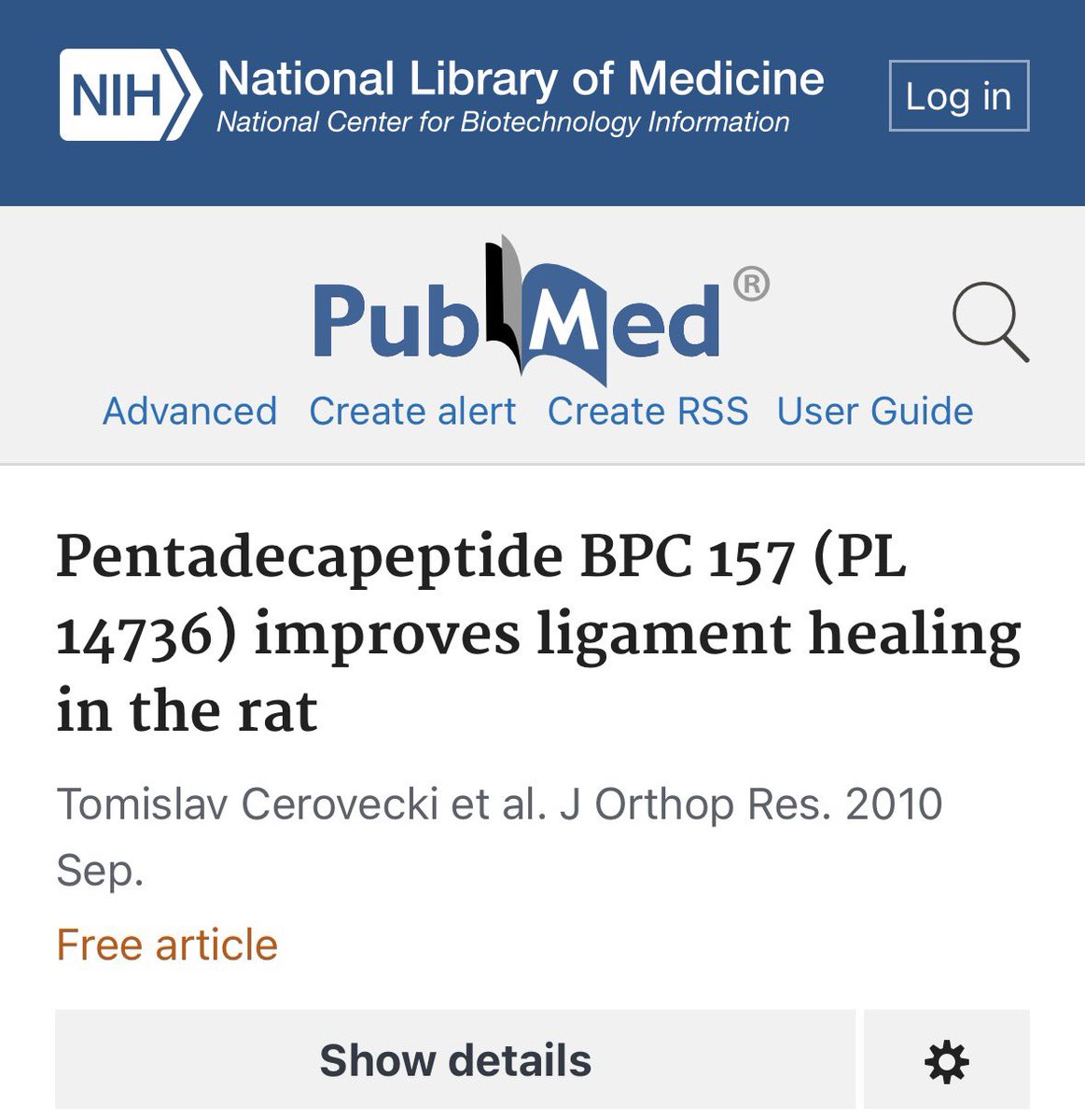
→ REBUILT torn ligaments — oral worked
→ REATTACHED tendon to bone
→ 90% relief in 16 knee patients
→ REVERSED alcohol damage across 7 organs
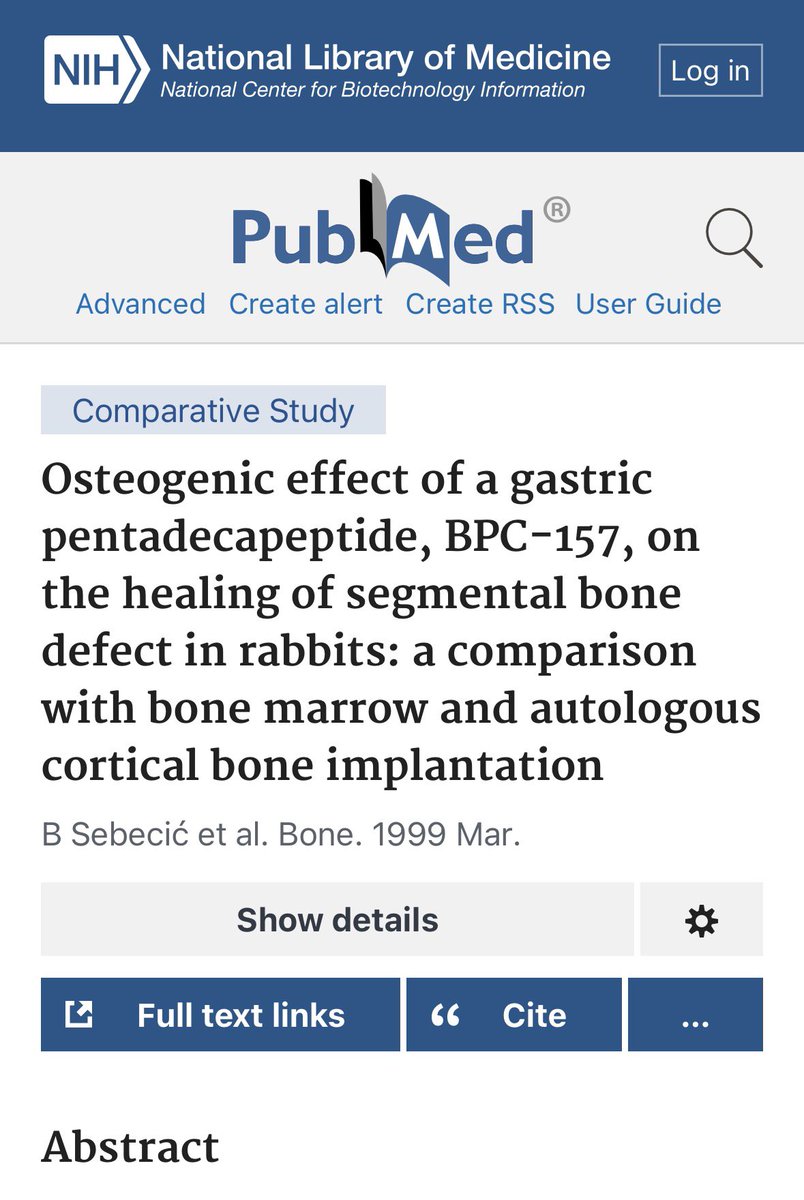
→ HEALED bone defects comparable to grafts
“doesn’t it cause cancer?”
let me be clear:
→ in 30+ years of research — NOT ONE documented case of BPC-157 causing or promoting cancer. not one.
→ a 2018 study actually REDUCED tumor formation
→ the angiogenesis BPC triggers is REGULATED — it heals damaged tissue and stops. tumor growth uses different pathways entirely.
but — if you have an active cancer diagnosis, don’t take it. not because the data shows harm. because it hasn’t been tested in cancer patients specifically. that decision belongs to your oncologist. not me. not a podcast. your oncologist.
30 years. zero lethal dose. zero cancer. used by the biggest names in health.
your doctor won’t mention it. your stomach already makes it.
I take it daily. source in the comments ↓
Global high-yield credit market stress is surging:
Investors now demand +6.4 percentage points of extra yield to hold CCC-rated global corporate bonds over BB-rated bonds, the biggest premium in 14 months.
CCC bonds sit at the lowest tier of investable corporate debt, while BB bonds represent the highest-rated segment of high-yield credit, just below investment grade.
Furthermore, CCC global corporate bond spreads are now 4.8 times wider than BB bond spreads, the biggest gap in at least 12 years, signaling a historic divergence in credit risk between the lowest and highest quality junk corporate borrowers.
By comparison, this gap stood at ~2.2 times in 2019 and ~3.2 times in 2024.
This comes as resurging drives rates higher, putting severe pressure on heavily indebted companies that loaded up on cheap debt in 2020 and 2021 when interest rates were low.
Highly leveraged companies are facing significant financial strain.
Many are asking why is SpaceX, $SPCX, NOT trading yet?
Here's exactly how the IPO process works and when the shares will be available to trade (Bookmark this):
The IPO was quoted at 9:50 AM ET and was expected to begin trading at 10:00 AM ET, but that does NOT guarantee shares will trade at that time.
Before trading begins, Nasdaq must complete a price-discovery auction where buy and sell orders are collected and matched.
At around 9:50 AM ET, "first indications" came out which are essentially a "gauge" of where the stock will open.
The first indications on $SPCX came in at $175/share, or a ~30% premium to the $135/share IPO price.
During this process:
1. Orders are entered, but no trades occur yet
2. Nasdaq continuously updates the indicative opening price
3. The opening price is adjusted until supply and demand are balanced
4. Only then does the opening auction occur and the first trade print
For major IPOs, delays are common such as Google in 2004 and Meta in 2012 which saw their first trades over 2 hours after the US market opened.
We expect the SpaceX IPO to open for trading within the next 60 minutes.
Buckle up for a historic day.
BAR OWNER: “You’re OK at making drinks, but are you good at changing the channel on a TV?”
BARTENDER INTERVIEWEE: “I am the literal worst channel changer of all time.”
BAR OWNER: “You start tomorrow.”
A basic investing principle is yield is destiny. TIPS with 3% real yields are increasingly compelling relative to traditional risky asset portfolios. Free on the blog app this week:
https://t.co/Pb5nzVcrcY