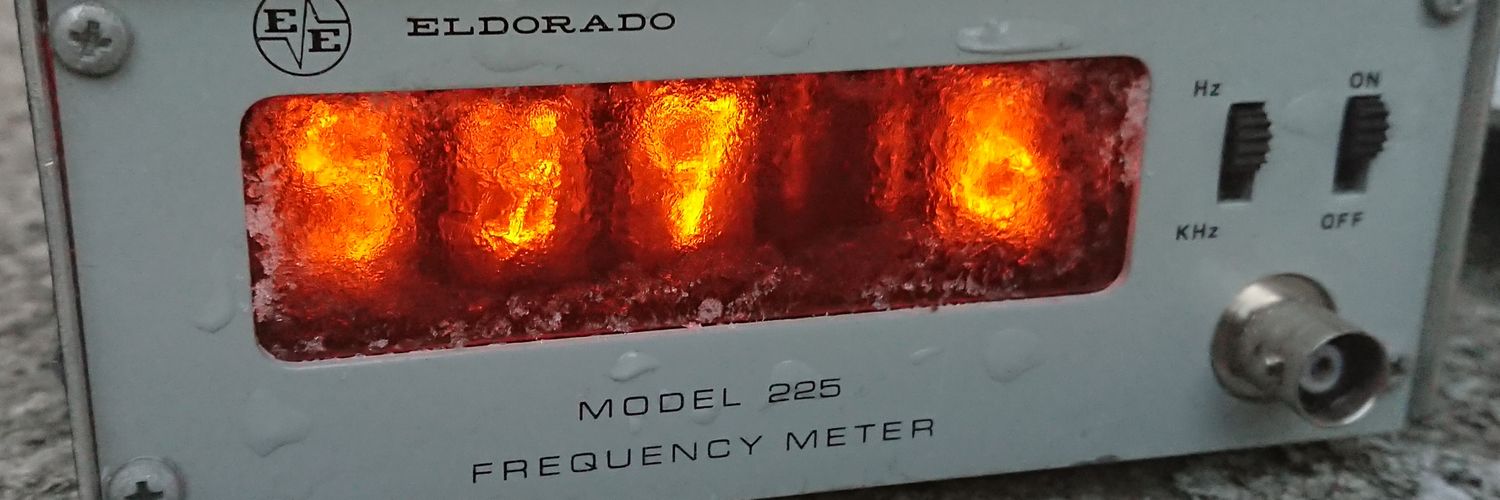
@VickyBatBee@HardCidr16Bit If I had to guess, by the translucency, probably a Cattex, 2nd or later inflation cycle. These things stretch like crazy if allowed to relax and reform a bit.
@nuclearlighter Looking at it, it's actually unregulated 80V, and in addition to pulling the reset line if too low, it also has a crowbar-circuit that triggers if it's too high (above 90V or so). This rail is the hot side driving the switchmode regulator.
@nuclearlighter One thing of note, the PSU of the 2200-series has an 80V regulated internal voltage rail that is used to generate the output voltages. If this drops below a treshold for any reason, a reset-signal will be sent to the digital circuits.
@nuclearlighter Nice!
The keyboards are really just ASCII over RS-422, nothing fancy other than having a different baudrate for Rx and Tx on the TDV-2200 series at least.
Also, the TDV-2200 series has schematics online. You may want to check the caps on the PSU board.
@nuclearlighter @byte_thrasher Got two, in varying grade of condition and completenes. One from my grandfather, and one from my great grandfather on the other side. The older set is significantly better quality, but is unfortunately missing more parts.
@arijo@lcamtuf It's more an example of a program that's literally everywhere, with roughly the same features it has had since 1985, and otherwise going nowhere. Calc.exe is another example.
@Telegraph Be real, the type of argument you put forward here is just like claiming that "everyone who likes anime are pedophiles, because hentai exists".
Invalid reasoning at it's finest, on the level of "Mother Nelly can not fly, a stone can not fly, therefore Mother Nelly is a stone".
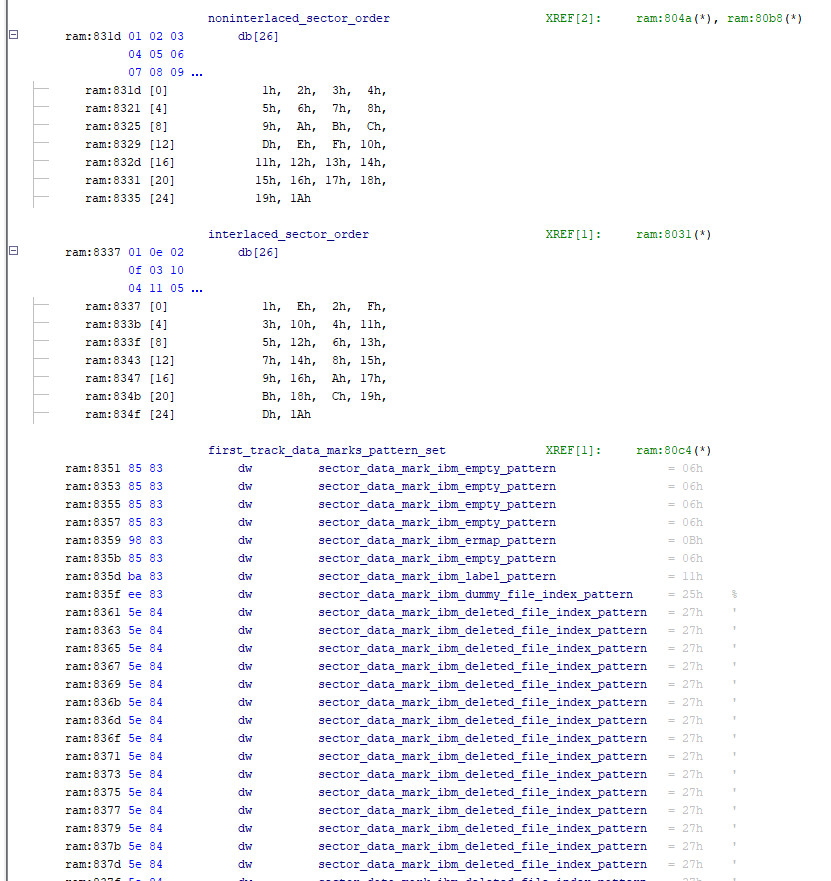
@furrtek The other bug:
Note how the label_not_found message is never going to print no matter how you twist your mind about it.. Because they put the new prinout subroutine in the frikkin middle of the other.
The inconsistency:
New printout is not used for the similar case for floppy
@furrtek The interesting thing is, I have the previous version and I consider not checking for bit 6 for tape as a bug in that one. In short, they fixed it here, but by adding the printout at the same time they introduced this bug, another unfortunate bug earlier and one inconsistency.
@RetroNora7734 Undervoltage might not always be enough to save all bits, but with intel chips I have experienced that it saves more than 5V. It helps having some tools at hand, showing how many bits are flaky after 4-5 reads at a given voltage, and adjust it in gradual steps.
@RetroNora7734 In my experience, undervoltage is also a good technique to read flaky EPROMs.
Usually the problem is that the bitcells leak charge, so reducing the tershold comparator voltage (by lowering Vcc) typically helps with that. Should be reliable down to at least 4.3V Vcc.
@RetroNora7734 An initial thing to try too, would be to reseat all ICs. But indeed it sounds like those ROMs needs to be refreshed!
To verify the dumps, you can try to do a brief dissasembly to check if there are any checksum checks in the code, and then manually verify that on the binaries.
@RetroNora7734 You might have a video output, but you might also not. In any case there is most certainly a serial port somewhere on there that should provide some interface with a regular ASCII terminal.
@RetroNora7734 Nice! Even has a riser board for easy troubleshooting/repairwork
I suggest dumping the ROMs before you do anything else. That can be of great help getting more clues. Then go on and check the power supply rails, and finally run it with the cards in and verify no drop in voltages