Good nutrition fuels performance, recovery, and long-term health. The new dietary guidelines are a reminder that strong habits build strong athletes and strong Americans.
Freedom 250 is proud to announce Rodeo 250 — The Evolution of the American Cowboy, a signature attraction of the Great American State Fair on the National Mall in Washington, DC.
Visitors will journey through the evolution of the American cowboy. From Spanish vaquero traditions to cattle drives, Wild West performances, charros, trick riding, Roman riding, trick roping, and the emergence of modern professional rodeo. All brought to life by the legendary @CerviRodeo.
DATES: June 25–July 10, 2026
TIMES: Sun–Wed at 4 PM; Thu–Sat at 7 PM; special July 4 show at 3 PM
LOCATION: American Heartland Arena, National Mall, Washington, DC
🎟️ RSVP now for FREE tickets
What started as curiosity grew into a passion for Kentucky's native fruit. 🌱
At Hang Loose Pawpaw Patch, Matt Menegotto cultivates 15 different pawpaw varieties.
Check out his story here:
#KentuckyAgriculture#KentuckyProud#Pawpaw
As summer nears, Grand Teton National Park bursts into color. It's a good reminder to pause, breathe deep, and take in the beauty all around us.
Photo by John Tobiason / NPS
all alone at No. 1.
Caitlin Clark’s three career 30+ point, 10+ assist games are the most in WNBA history.
the rest of the league combined has four such games.
all alone at No. 1.
Caitlin Clark’s three career 30+ point, 10+ assist games are the most in WNBA history.
the rest of the league combined has four such games.
No more activist lawfare and bureaucratic delays locking up allotments. Ranchers are the solution, NOT the problem.
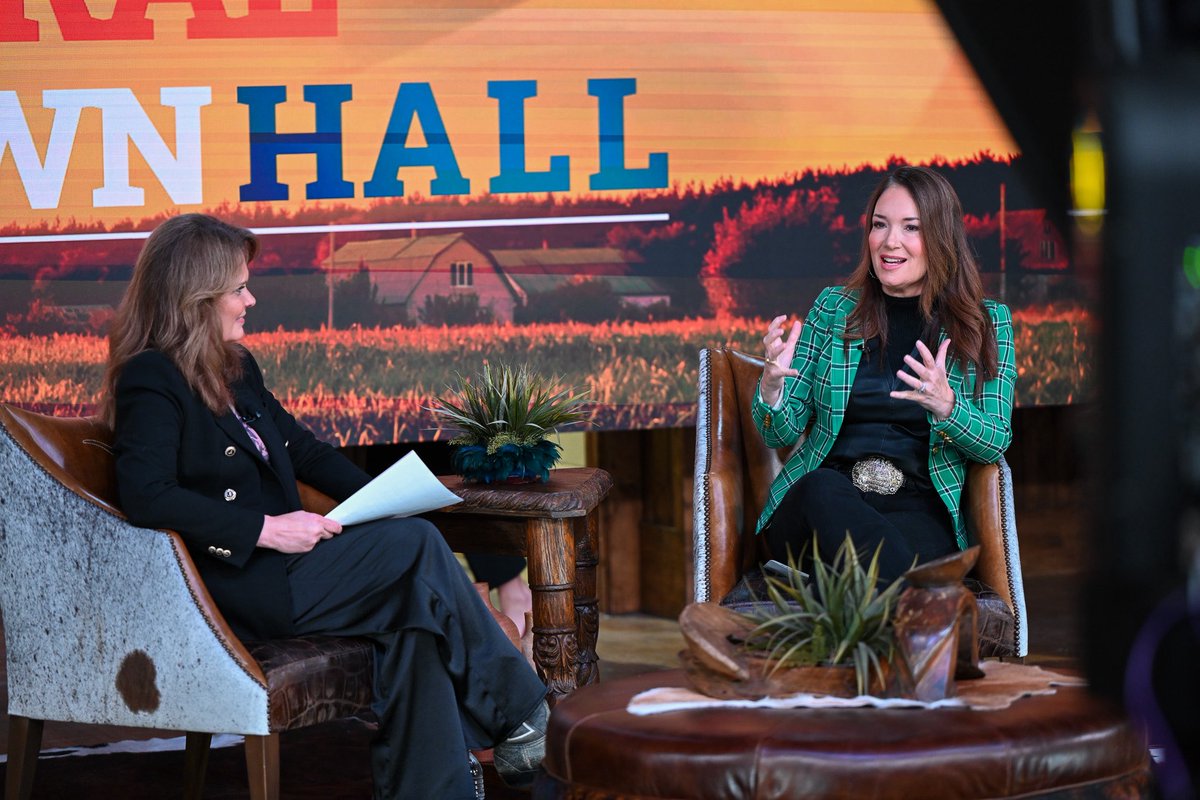
Today at @OfficialRFDTV’s Rural Town Hall with the @WestCaucusFound, I issued a clear directive to all @forestservice employees: line officers must immediately implement the Advancing Grazing on Forest Service and BLM Lands MOU and our @USDA–@Interior Grazing Action Plan.
This directive prioritizes:
• Expanding access by permitting vacant and closed allotments
• Maximizing grazing flexibilities to keep working lands working
• Eliminating delays through streamlined permitting
• Giving ranchers a stronger voice and better engagement
With @SecretaryBurgum’s partnership, we are returning our National Forests and Grasslands to their roots as working lands that sustain our ranchers and rural communities. Driving REAL results so American agriculture thrives for the next 250 years.
More work to do — but real progress.
Caitlin Clark tied Tamika Catchings for the franchise record for most 30-point double-doubles tonight against Chicago 🤩
32 PTS | 10 AST | 7 REB
https://t.co/cHCEiomjvl 🗳️
Sheryl. Your article exemplifies the biased reporting we have come to expect from you and @nytimes. It was unfair, inimical, and inaccurate. All one needs to refute your argument is to glance at my publicly available calendar and to review my unprecedented list of accomplishments on a wide range of issues, all of which I drove. You evidently never undertook these foundational due diligences. Why let facts obscure a good story?
You fault me for missing a couple of monthly counselor meetings. However, I meet one-on-one with my counselors every day to decide policy and strategy. We schedule the monthly meetings to give the divisions a chance to keep each other informed about HHS-wide policies with which I’m already intimately familiar. Had you read my calendar, you would have seen that I have back-to-back meetings all day, every day, with both career and political staff, with my counselors and with outside stakeholders, interspersed with press conferences and other policy announcements.
I am knowledgeable and active on every issue in every division of my department, and I always make the final decisions. I meet with the principals at FDA, NIH, CDC, and my senior counselor every morning, something, I’m told, is unprecedented in HHS history. I try to get out of the office between 4:30 and 6:00 PM, so that I can spend three hours, in quiet, responding to emails. I normally work until 11 PM every night, mostly on phone calls to staff.
In order to prove your preconceived case for my disengagement, you quote anonymous employees, some of whom I fired or who quit to avoid being fired. You also deceptively quote HHS employees without identifying whether they were among those I fired, thereby depriving your readers of the opportunity to make an independent judgment about their credibility.
I came into this job to change the culture of a broken agency that has presided over the worst decline in public health in American history. Of course I fired people—lots of them! It's an easy task for even the laziest journalist, to comb that flotsam and jetsam for malevolence toward the Trump administration. And of course, this species of journalist will always be able to find disgruntled individuals among the 70,000 employees of the Department from whom to cherry pick "facts" to flesh out a preordained hit piece. All that is required for this brand of journalism is the ethical elasticity that you seem to have in spades. You had a preconceived thesis, and you set out to prove it. This is a widely accepted technique in journalism today, but I grew up in an era when it would not have been tolerated by the New York Times.
Ultimately, God puts us all on this earth to search for existential truths. I've tried to instill this mission at HHS by implementing gold standard research to end the regime of politicized science that COVID exposed to the American public. There was a time that journalists were proud to be the fearless and uncompromising champions of truth. Standards have devolved, and journalism is dead. The Times now employs propagandists. Your capitulation to partisanship further compounds your journalistic challenges; since we all are aware of your predictable bias, we at HHS are unwilling to talk to you about the topics that are important. The fact that you have minimal access to decision makers leaves you covering trivia and relying on your own capacity for invention.
Btw. When I took this job, the building was empty. About 90% of the employees were not coming to work. I changed that, but your newspaper never covers my reforms. Nor did you cover the fact that my predecessor almost never showed up for work here during his four years in office. When we came in, there were still artifacts from the first Trump administration in many of our office drawers because no one showed up for work during the Biden years. Just as Rochelle Walensky spent her entire term as CDC Director in Cambridge, Xavier Becerra reportedly spent most of his term as HHS Secretary in California. (I live in California, but I’ve only been there once in fifteen months).
His only notable accomplishments here were losing 300,000 children, referred to HHS for custody and care, to human traffickers and drug runners, encouraging transgender surgeries, and disabling the entire program-integrity apparatus, allowing hundreds of billions of dollars of theft from my agency. I have set out to find the children Becerra lost. He is now the front-runner for the governor of California. These are not invented stories; they are genuine scandals that the Times will never cover, presumably, because the malefactors are Democrats.
Finally, you criticize me for spending time with the Indian tribes in Alaska. I consider that part of my job. I run the Indian Health Services, and I’ve had unprecedented success in transforming IHS from a backwater to a top priority for this department. I’ve made more trips to Indian country and to Indian health clinics and hospitals than any HHS secretary in history, and I’ve brought Indians into high positions on the sixth floor for the first time in agency history. This is another success story that the Times will never cover.
In NY, a homeowner building a garage, a farmer expanding a barn, or a small business improving their property can spend years navigating environmental reviews, permits, hearings, and litigation.
But when a politically favored solar developer wants to industrialize thousands of acres, Albany suddenly finds a shortcut.
The Fort Edward Solar project exposes the double standard.
This isn’t an abandoned industrial site. It’s a grassland habitat recognized for its environmental significance and home to vulnerable species.
For most New Yorkers, impacts like these would trigger intense scrutiny and could easily result in denial.
Yet through ORES, state policy starts with a different assumption: the project moves forward, and the impacts are ignored.
Albany tells us farmland must be preserved. Habitat must be protected. Local voices must be heard.
But when those priorities collide with state energy mandates, the rules change.
That’s what frustrates so many New Yorkers: The sheer hypocrisy.
If these lands are worth protecting, protect them. If environmental standards matter, apply them consistently. And if local communities are expected to live with the consequences, their voices should matter before—not after—the decision is made.
Albany cannot claim to be protecting farmland, habitat, and local control while using ORES to override all three. Local voices matter. ORES should be disbanded.