A powerful scene in the Odyssey happens when Odysseus finally returns to Ithaca after twenty years of war and wandering.
You would expect the story to end with celebration, with the hero coming home, the family reunited, and order restored.
Homer does something far stranger.
Odysseus arrives disguised as a beggar, because Athena warns him that the palace has been taken over by more than a hundred suitors who have been living there for years, eating his food, drinking his wine, and pressuring his wife Penelope to marry one of them.
They believe Odysseus is dead and in their minds the kingdom is already theirs.
So the king of Ithaca walks through his own halls dressed in rags while the men stealing his house sit comfortably at his tables. They mock him, throw scraps at him, and one of them even strikes him, and Odysseus takes it. That is the remarkable part, because the same man who blinded the Cyclops and survived twenty years of disasters now stands quietly while strangers insult him in his own home. Homer tells us his heart burns inside his chest and that he wants to attack them immediately, yet he restrains himself and waits.
Instead of striking, Odysseus studies the room carefully. He counts the men, watches their habits, and quietly observes which servants remain loyal and which have betrayed him. The hero of the Odyssey does something most people cannot do, which is delay revenge until the moment is right.
Eventually Penelope announces a contest and brings out Odysseus’ great bow, declaring that she will marry the man who can string it and shoot an arrow through twelve axe heads lined up in a row. One by one the suitors try and fail, because none of them can even bend the bow. Then the beggar asks for a turn. The suitors laugh at first, but the bow is eventually handed to him.
Odysseus takes it in his hands and strings it effortlessly. Homer says the sound of the bowstring tightening rings through the hall like the note of a swallow. Then he places an arrow on the string and sends it cleanly through all twelve axe heads.
In that moment the beggar disappears. Odysseus turns the bow toward the suitors and reveals who he is.
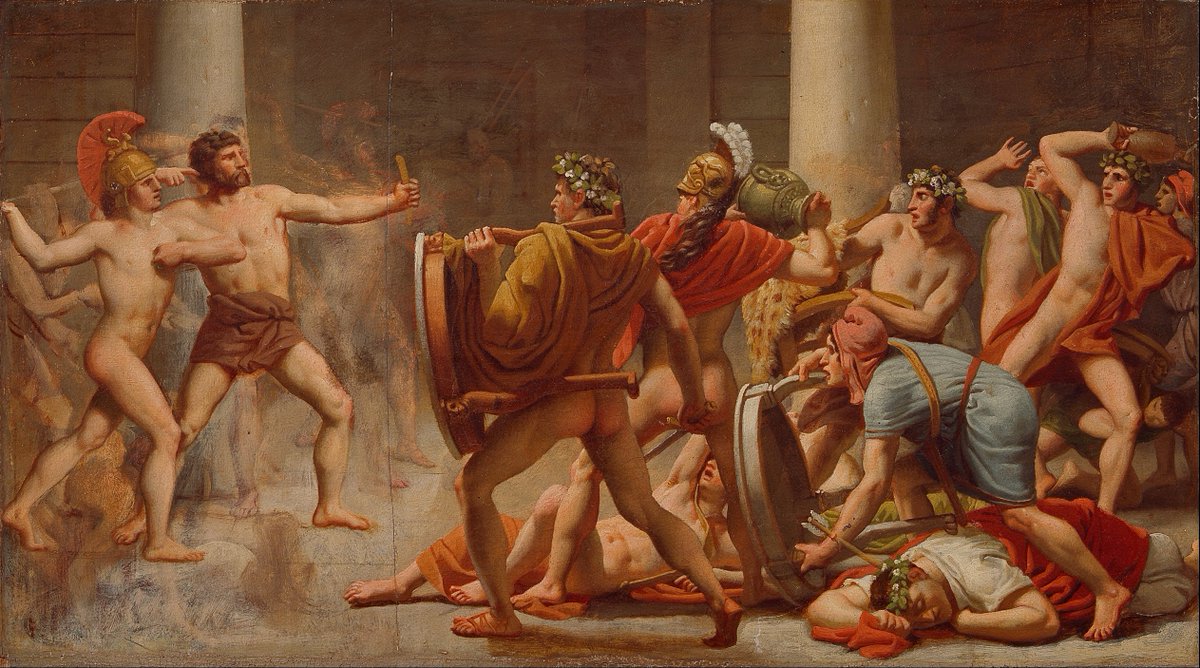
What follows is one of the most brutal scenes in Greek literature. The doors are sealed and the suitors realize too late that they are trapped inside the hall. Odysseus, his son Telemachus, and two loyal servants begin killing them one by one. There is no escape, no mercy, and no negotiation. The men who spent years consuming another man’s house die inside it.
It is a violent ending, but Homer wants you to understand something important. The real danger to Odysseus was never just the monsters and storms on the long journey home. It was the possibility that someone else might take his place while he was gone. When Odysseus finally returns, he reminds everyone in Ithaca of a simple truth: a man’s home is not truly his unless he is willing to fight for it.
@HouseofYogiX What about this asset? It's lock in your platform for than 3 months buts seems like you're doing nothing and forgot it already coz you are scammers. Stop lying to people mfers.
FastSet Wallet is built for speed and scale.
Watch @Ovcd27 open a wallet, fund it instantly, send assets across the network, and follow every step live.
See how fast it really is ↓
X Space Recap: 100K+ TPS Real or Hype?
Yesterday the Pi Squared team went live to tackle one of the biggest questions in web3: is 100K+ TPS actually possible, or just hype.
Who joined
@RosuGrigore (Founder & CEO)
@Ovcd27 (Blockchain Developer - VSL)
@UBAmain (Community Lead)
Why TPS matters – @Ovcd27 broke down TPS and why it remains the benchmark for blockchain performance. Most chains today hit only hundreds or a few thousand TPS, limited by bottlenecks in traditional infrastructure.
FastSet breakthrough – @RosuGrigore explained how Pi²’s FastSet reached 100K+ TPS with sub 100ms finality on standard hardware. Unlike blockchains that rely on expensive machines, FastSet is actor based and avoids total ordering, opening the door to massive scalability.
Trust and speed – @Ovcd27 addressed the key tradeoff question. Even at 100K+ TPS, FastSet keeps decentralization and verifiability intact. That means speed without sacrificing trust.
Why it matters – High frequency trading, real-world assets, micropayments, and gaming all stand to gain. Pi² is already aiming at 1M TPS by mainnet, and ultra low latency could unlock entirely new real-time global applications.
Community Portal – @UBAmain introduced the Pi² Portal, your hub for FastSet learning, quests to earn points, and the Reactor TPS Game launching next week to stress test the network in real time.
Final takeaway – @RosuGrigore left us with this: the future of web3 may not look like blockchain at all. Pi² is building toward that vision with speed, simplicity, and scalability at its core!
Catch the full Space, including community Q&A, here ↓
How FastSet of @pisquared Works???
1. Application Submits a Claim: An app (e.g., for payments or computation) submits a claim to the FastSet network.
2. Validators Process in Parallel: Validators independently verify the claim using local data, avoiding global coordination.
3. Validators Sign Valid Claims: If valid, validators provide digital signatures, ensuring cryptographic trust.
4. Claim is Settled: Once a quorum of signatures is collected, the claim is settled instantly with sub-100ms finality.
5. Cryptographic Certificate Generated: A certificate is issued, proving the claim’s validity for trustless verification.
6. No Global Consensus Required: Unlike traditional blockchains, FastSet skips total ordering, enabling massive scalability.
7. Massive Throughput: This design supports over 100,000 TPS, with plans to reach 1M TPS by mainnet, making it ideal for high-frequency applications.