A humanoid robot built with old Android phones reportedly cost about $400.
That does not mean a $400 robot worker is coming.
But it may show where robotics hardware costs could start falling.
UCLA researchers demonstrated PhoneBot, a humanoid-style robot that uses old Android phones for onboard sensing and computing.
The reported build cost: about $400.
The economic story is not that warehouses will soon replace workers with $400 humanoids.
They will not.
A cheap research prototype still has to solve reliability, battery life, safe manipulation, maintenance, uptime, software integration and commercial support.
But the project points to an important possibility:
Some future robotics hardware may come from commodity electronics rather than expensive, specialized components.
If mass-market phones can provide usable cameras, sensors and computing power, the cost of experimenting with embodied AI could fall dramatically.
That could create demand for:
- Robotics education kits
- Developer tools
- Simulation platforms
- Teleoperation systems
- Data-collection services
- Repair and maintenance networks
- Low-cost research hardware
- Training programs for robotics technicians
Lower-cost robot hardware could expand the market long before it creates cheap industrial labour.
The first beneficiaries may be universities, technical schools, developers, research labs and small businesses that could not previously afford to experiment with robotics.
A cheaper platform creates more builders, more data and more specialized applications.
Reality check: PhoneBot is a research demonstration, not a commercial product.
A low bill of materials does not include the full cost of software, engineering, testing, safety, support, manufacturing, warranties or field service.
Those are the costs that determine whether a robot becomes a business.
What to watch: The race is not only to make robots cheaper.
It is to make them cheap enough to experiment with—and reliable enough to trust with real work.
https://t.co/VIKpdQ7GDA
The most important humanoid test may not be whether a robot can walk.
It may be whether it can move parts inside a car factory more cheaply and reliably than the systems already there.
UBTECH and FAW-Volkswagen are developing and testing humanoid robots for factory-logistics work.
That matters because moving materials inside factories is one of the first plausible commercial use cases for humanoids.
But this is not yet proof of a humanoid revolution in manufacturing.
Factories already use conveyors, forklifts, autonomous mobile robots, automated guided vehicles and purpose-built robotic cells.
A humanoid has to outperform—or economically complement—those alternatives.
The real business opportunity is bigger than the robot itself.
If automotive plants deploy humanoids at scale, demand grows for:
- Factory integration
- Safety validation
- Robot fleet management
- Charging infrastructure
- Spare-parts supply
- Maintenance contracts
- Worker training
- Workflow redesign
- Industrial insurance and compliance
The companies that keep robots productive may capture as much value as the companies that manufacture them.
Car factories are not blank canvases.
Humanoids must fit into plants designed around people, forklifts, conveyors and fixed automation.
That makes systems integration the real commercial bottleneck.
The winner may not be the company with the best humanoid demo.
It may be the company that can deploy, maintain and support hundreds of robots without disrupting production.
Reality check: This is a development and testing effort—not evidence of a paid, scaled deployment.
The unanswered questions are simple:
Can the robot work safely for full shifts?
How often does it need human intervention?
What does it cost to operate and maintain?
And can it beat existing warehouse and factory automation on ROI?
What to watch: Humanoids will not enter factories because they look flexible.
They will enter when the cost of a reliable robotic shift is lower than the cost of redesigning the factory around conventional automation.
BYD’s humanoid-robot patent is not proof that a new robot is coming.
It is a reminder that the next serious humanoid competitors may come from companies that already build batteries, motors and factories at enormous scale.
BYD has published a humanoid-robot patent linked to its previously teased “Xiao Di” concept.
Important: this is not a product launch, customer contract or proof of a deployable factory robot.
It is an IP signal.
But BYD is an unusual potential entrant.
It already operates at the intersection of:
- Batteries
- Electric motors
- Power electronics
- High-volume manufacturing
- Massive vehicle and battery factories
If humanoids become useful in production, the first buyer may be the robot maker’s own factories.
That changes the economics.
The opportunity will not sit only with the company selling the robot. Thousands of deployments would require actuator suppliers, machine vision, safety certification, integration, charging, maintenance, fleet software, spare parts and technician training.
The real contest may not be who makes the most human-looking robot.
It may be who can build a reliable machine, keep it running, and prove it beats existing automation on cost per productive hour.
The strongest route to humanoid scale may be vertical integration.
A company with its own factories can test robots internally, collect task data, discover failure modes, develop service procedures and train technicians before selling to outside customers.
That lowers the risk of commercialization—but does not prove the robot will beat purpose-built automation on ROI.
Reality check: A patent proves an idea was documented.
It does not prove capability, production capacity, price, uptime, safety, customer demand or labour savings.
What to watch: Watch for BYD’s first disclosed factory task, measured uptime, human-intervention rate, and a direct comparison with conventional automation.
Until then, this is a strategic signal—not a robotics business.
Lowe’s just launched 20-minute drone delivery with Wing and DoorDash from a North Carolina store.
The headline is not “hardware stores now use drones.”
It is a test of whether a physical retail store can become a micro-fulfillment hub for urgent, small-item orders.
If this model scales, money will flow beyond the drone maker:
- Store picking and packaging
- Battery swaps and field maintenance
- Remote flight operations
- Airspace compliance and insurance
- Fleet software and delivery integration
- Packaging designed for aerial delivery
The real test is unit economics.
Can a drone deliver a high-urgency item faster—and profitably enough—to beat a driver, without creating more work inside the store?
That is the difference between a good demo and a new retail infrastructure layer.
Reality check: This is a single-store pilot. The important numbers—daily orders, delivery cost, staff time, reliability and weather disruption—have not been publicly disclosed.
What to watch: Expansion beyond one location and evidence that retailers can make drone delivery cheaper or more profitable than road-based same-day delivery.
https://t.co/sMpUYf2r1b
Warehouse robots do not always win by making labor disappear.
Sometimes they win by letting a distributor promise delivery later in the day.
First Supply has deployed Exotec’s Skypod system at its warehouse in Wisconsin and says it can now support next-morning delivery for orders placed by 5 p.m.
That is the real commercial story.
For distributors, a later order cutoff can mean more orders captured, stronger customer retention and a better service level without building another warehouse closer to every customer.
If this model spreads, the winners go beyond the robot maker:
- Warehouse systems integrators
- Inventory and order-management software providers
- Controls, networking and facility infrastructure firms
- Maintenance technicians and spare-parts suppliers
- Workers who manage exceptions, replenishment and uptime
- Financing and Robot-as-a-Service providers
The robot is only one piece.
The business value comes from turning warehouse speed into a better customer promise.
Reality check: This is a real commercial deployment, but no independently verified ROI, productivity or operating-cost figures have been publicly disclosed.
What to watch: Whether First Supply reports faster fulfillment, higher order volume, improved labor productivity or measurable gains from its later order cutoff.
https://t.co/DeIAxs4jyq
The next valuable warehouse robot may not be the one that ships your order.
It may be the one that handles what you send back.
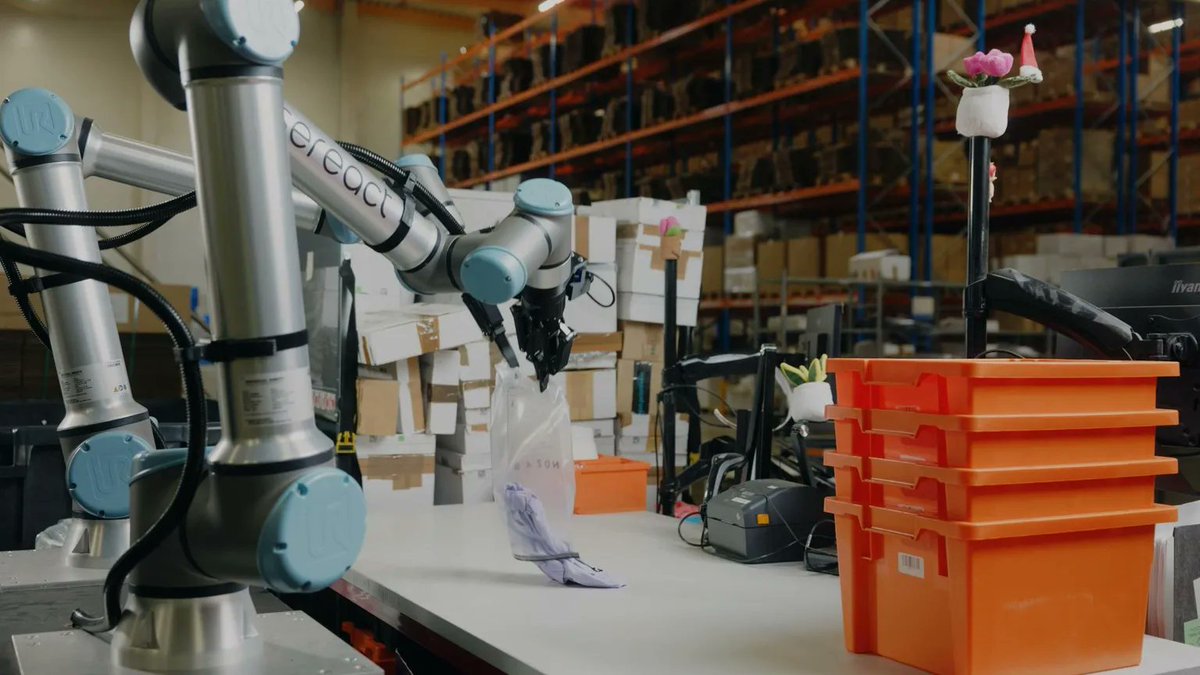
Sereact, Zalando and CEVA Logistics have put dual-arm AI-powered systems into live operation at fulfillment sites in Germany and Poland to process returned fashion items.
That matters because returns are one of e-commerce’s messiest workflows.
Every item can be different: size, material, packaging, condition and resale value.
If automation works here, the opportunity is much bigger than robot arms.
It creates demand for:
- Returns-integration software
- Product-condition data systems
- Recommerce and resale routing
- Repair, repackaging and quality-control services
- Warehouse technicians and exception-handling teams
- Better inventory recovery and markdown decisions
The economics are not just about replacing a repetitive task.
They are about recovering more value from every returned item—and getting it back into sellable inventory faster.
Reality check: This is a commercial deployment at two sites, but broad scaling and ROI figures have not been publicly disclosed. Handling mixed, damaged and unpredictable returns reliably remains the hard part.
What to watch: Whether automation increases resale recovery, shortens return-processing time and reduces the number of items written off or liquidated.
Humanoid robots will not scale because they can walk.
They will scale when factories can insure, supervise, stop and maintain thousands of them.
Agility Robotics just partnered with FORT Robotics to advance safety for its Digit humanoid program.
That sounds like a technical update. It is really a clue about where the humanoid economy is forming.
Agility says Digit has logged 65,000 hours of real production experience. But a factory cannot deploy a fleet based on a demo alone.
It needs safety controls, fleet software, incident response, integration, maintenance, operator training and an insurance story.
That is why Agility’s Arc fleet platform and FORT’s safety infrastructure matter.
The big humanoid opportunity may not belong only to the company selling the robot.
It may belong to the companies that make robot uptime, compliance and risk manageable.
Reality check: Agility’s production-hours figure is a company claim, not a published customer-ROI study. Digit 5 remains in development. The numbers that matter next are paid fleet size, intervention frequency, uptime, maintenance cost and customer payback.
What to watch: The first evidence that safety-qualified humanoid fleets can deliver predictable uptime and payback—not just impressive production-hour totals.
Humanoid robotics is becoming an infrastructure business before it becomes a mass-market robot business.
Agility Robotics recently held an Analyst & Investor Day after announcing a safety partnership with FORT Robotics.
The attention will naturally go to Digit: the humanoid robot, the factory footage and the promise of warehouse automation.
But the more important question is whether a humanoid fleet can operate like business infrastructure.
Can it run reliably?
Can it be remotely supervised?
Can it be maintained quickly?
Can it be integrated into warehouse workflows?
Can a customer measure a payback period?
Agility says Digit has logged 65,000 hours of real production experience and is supported by its Arc cloud platform.
That suggests the next phase of humanoid competition will not be decided only by who builds the most capable machine.
It will be decided by who builds the best deployment engine around it: service networks, spare parts, fleet operations, safety systems, integration partners, training and financing.
The winners may be the companies that make humanoid fleets boringly reliable.
Reality check: Production-hour totals and investor presentations do not prove repeatable customer economics. Digit 5 is still developing, and public customer ROI data remains limited.
What to watch: Paid deployments, productive-hours-per-robot, intervention rates, maintenance cost and the first independently credible customer payback data.
Interesting concept. I can see the value as a police support tool—reconnaissance, hazardous-area response, tracking and keeping officers out of unnecessary danger.
The bigger test won’t be how fast it can chase someone. It will be whether departments can deploy it reliably, safely and with clear human accountability. That’s where the real value will be proven.
The warehouse robot story is shifting from “can it do one task?” to “can it redesign the whole inbound operation?”
Ambi Robotics and Pickle Robot are being positioned as an end-to-end inbound logistics workflow: unloading freight from trailers, handling it inside the warehouse and preparing it for palletizing.
That matters because unloading trailers is one of the least standardized, most labour-intensive parts of warehouse work.
A robot that performs one task is a product.
A connected workflow across the dock, conveyor, sortation, palletizing and warehouse software is an operational system.
If this model works at scale, the winners will not just be robot manufacturers.
They will include systems integrators, dock-equipment companies, conveyor suppliers, warehouse-execution software providers, computer-vision vendors, maintenance businesses and teams that handle exceptions when freight arrives damaged, mixed or unpredictable.
The customer is not buying a robot.
They are buying a redesigned inbound operation.
Reality check: The available reporting describes a commercial integration, but customer names, fleet size, throughput, pricing, labour savings and payback have not been publicly established.
What to watch: A named customer publishing before-and-after metrics: trailers unloaded per hour, human interventions, uptime and ROI.
A single successful shift is not the same as a proven operating asset. The real benchmark is whether Digit can sustain consistent throughput across different layouts, workflows and staffing conditions over time. That’s when the deployment data becomes more important than the demo.
The most valuable humanoid-robot company may not be the company that builds the humanoid.
Agility Robotics is positioning Digit for manufacturing, distribution and logistics, with customer relationships that include Amazon, GXO, Toyota and Mercado Libre.
But a warehouse humanoid only becomes a real business when it can be deployed, maintained and managed across many sites.
That creates demand for an entire support economy:
- Field-service technicians
- Warehouse integration firms
- Fleet-management software
- Charging and battery infrastructure
- Robotics insurance and equipment finance
- Safety validation and compliance
- Worker training and robot-operations roles
The biggest job shift may not be “robots replacing warehouse workers.”
It may be warehouses adding a new operating layer: people who deploy, supervise, repair and optimize robot fleets.
Reality check: Agility has commercial deployments and recognizable partners, but the market still lacks the numbers that matter most: fleet size, uptime, intervention rates, cost per productive hour and verified customer payback.
What to watch: Humanoids become a real industrial category when customers stop buying one robot to test—and start building the service infrastructure to run thousands.
https://t.co/Cb7I1ohgAy
@LogicalSG 100%. At 1,000 units, the real scaling test is no longer the robot—it’s the service network behind it. Batteries, joints, spare parts, field technicians and turnaround time all become part of the product. Uptime is ultimately an operations business.
The humanoid-robot story is no longer “can it walk?” It is “who gets paid when a warehouse needs 1,000 of them running every day?”
Agility Robotics used its Investor Day to push a bigger claim for Digit 5: humanoids are moving from impressive demos toward industrial operating assets. The company says its latest robot builds on 65,000+ hours of real-world operation and years of deployment experience.
But the real opportunity is not only selling the robot.
If warehouses deploy humanoid fleets, someone must handle integration, charging, preventive maintenance, spare parts, safety validation, fleet software, financing, insurance and worker training.
That creates a much larger value chain than “robot maker versus warehouse worker.”
Reality check: Agility cites commercial partners including Amazon, GXO, Toyota and Mercado Libre, but public materials still do not show the metrics that decide the market: deployed fleet size, uptime, human intervention, price and customer ROI.
The humanoid winner may not be the company with the best demo. It may be the one that makes a 1,000-robot fleet boringly reliable.
https://t.co/1wco85DY7M
$82 million is flowing into counter-drone systems.
That matters because the drone economy is becoming a two-sided market.
As drones spread across logistics, public safety, infrastructure and defense, someone also has to detect, identify and manage them.
Powerus was awarded an $82M counter-UAS order—an actual procurement signal, not a pilot or a forecast.
The opportunity is bigger than the drone manufacturer:
- RF sensors, radar and cameras
- Command-and-control software
- Security integrators
- Compliance and training providers
- Airspace-management platforms
- Maintenance and support teams
The same drone adoption that creates demand for aircraft, batteries and fleet software also creates demand for drone security.
Reality check: the order demonstrates customer demand, but public details do not yet establish the end customer, delivery schedule, margins or long-term recurring revenue.
What to watch: The drone economy does not only reward the companies flying drones. It also rewards the companies making crowded airspace manageable.
@dobi_terminal Positioning solves navigation, but identity solves accountability. At scale, every drone will need a trusted way to prove who it is, what it is authorized to do, and where it has been. That trust layer will be just as important as the flight system itself.
The drone economy will not be built by drones alone.
It will be built by the navigation stack that keeps thousands of machines precisely where they are supposed to be.
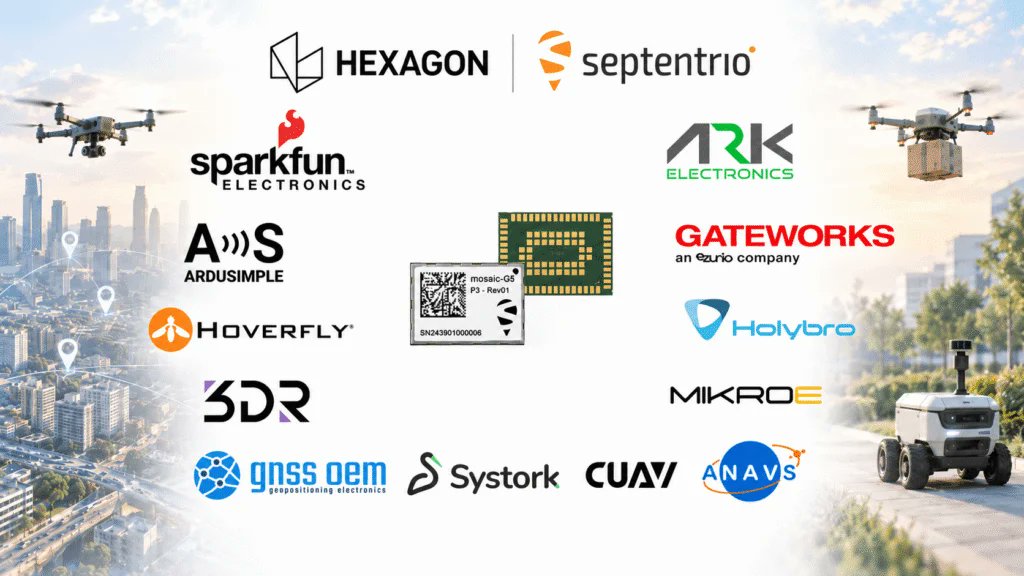
Septentrio, now part of Hexagon, expanded its compact GNSS receiver ecosystem for drones and autonomous navigation.
That sounds technical. Economically, it is foundational.
A commercial drone fleet needs more than aircraft:
- Precise positioning
- Antennas and correction services
- Mapping and integration
- Connectivity
- Fleet software
- Installation, testing and maintenance
If autonomous systems scale, these “boring” layers become recurring infrastructure spend.
The robot maker sells the machine once.
The navigation, data and service ecosystem gets paid for every deployment—and often for keeping it operational.
Reality check: This is a commercial component expansion, not proof of a new fleet deployment or customer ROI.
The autonomous economy will be won not only by companies that build machines, but by companies that make those machines dependable enough to trust.
@LogicalSG Scale depends on whether the robot can fit into the maintenance reality that already exists. If frontline technicians can diagnose, repair and return it to service without a specialized support team, adoption becomes much easier—and the economics improve with it.
Robots do not scale because they can move.
They scale when a factory can operate, troubleshoot and maintain them without creating another software silo.
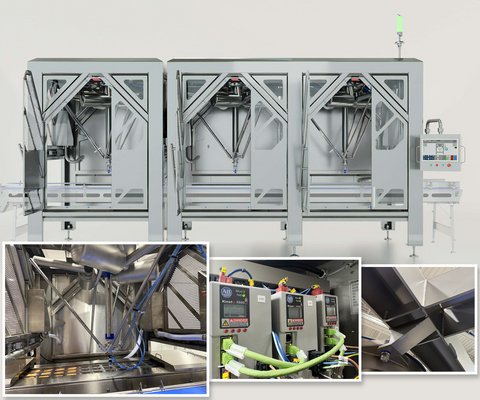
Harpak-ULMA has launched a hygienic robotic loading platform for food packaging that integrates robot motion into Rockwell Automation’s Logix PLC environment.
That may sound like a technical detail. Economically, it matters.
Food plants care about uptime, sanitation, changeovers and scarce technician time. A robot that fits into the controls environment a plant already uses can be easier to deploy, support and justify.
The winners are not only robot makers.
They include:
- Controls and automation suppliers
- Machine builders
- Packaging-line integrators
- Vision-system providers
- Hygienic end-effector suppliers
- Field-service technicians
- Automation training firms
The real product is not the robot cell. It is lower deployment risk.
Reality check: this is a commercial product launch, not evidence of scaled customer adoption. Pricing, labour savings, uptime and customer ROI have not been disclosed.
What to watch: the first named food-manufacturing customers—and whether they report faster changeovers, fewer labour constraints or lower downtime.