Laid down lover of Jesus, Beloved of the Father, Glory Carrier, Husband, Dad, Cyber Security Geek. Conservatarian. CEO of @valiturasecure and @shipburnersmen.
In 1930, the Spanish philosopher José Ortega y Gasset published The Revolt of the Masses, a book that still feels uncomfortably prophetic. His central target was not the poor or the working class, but a new kind of human being he called the “mass man”.
The mass man, Ortega argued, is defined by attitude rather than income. He is the ordinary person who is perfectly satisfied with himself, demands nothing higher of his own character or intellect, and yet insists that his mediocrity be treated as a right. He does not defer to excellence, competence, or higher standards. He regards them with suspicion or resentment. What previous ages saw as the privilege of the few - political influence, cultural authority, the right to shape society - the mass man now claims as his due, without any corresponding effort to rise above the average.
Ortega believed this type of person had been produced by the very success of modern civilisation. Rising living standards, mass education, and liberal institutions had given ordinary people unprecedented power and comfort. But they had not produced a corresponding sense of responsibility or humility before higher achievements. The result was a revolt: the mass man refused to accept the authority of superior knowledge, culture, or character. He demanded that everything be brought down to his level.
The danger, Ortega warned, was that a civilisation cannot survive if its central actors no longer respect the standards that made it possible. When the average begins to dominate without aspiring to anything beyond itself, excellence is undermined, institutions decay, and politics becomes an expression of resentment rather than responsibility.
Ortega’s diagnosis remains unsettling because it is not a complaint about poverty or exclusion. It is a warning about self-satisfied mediocrity armed with power.
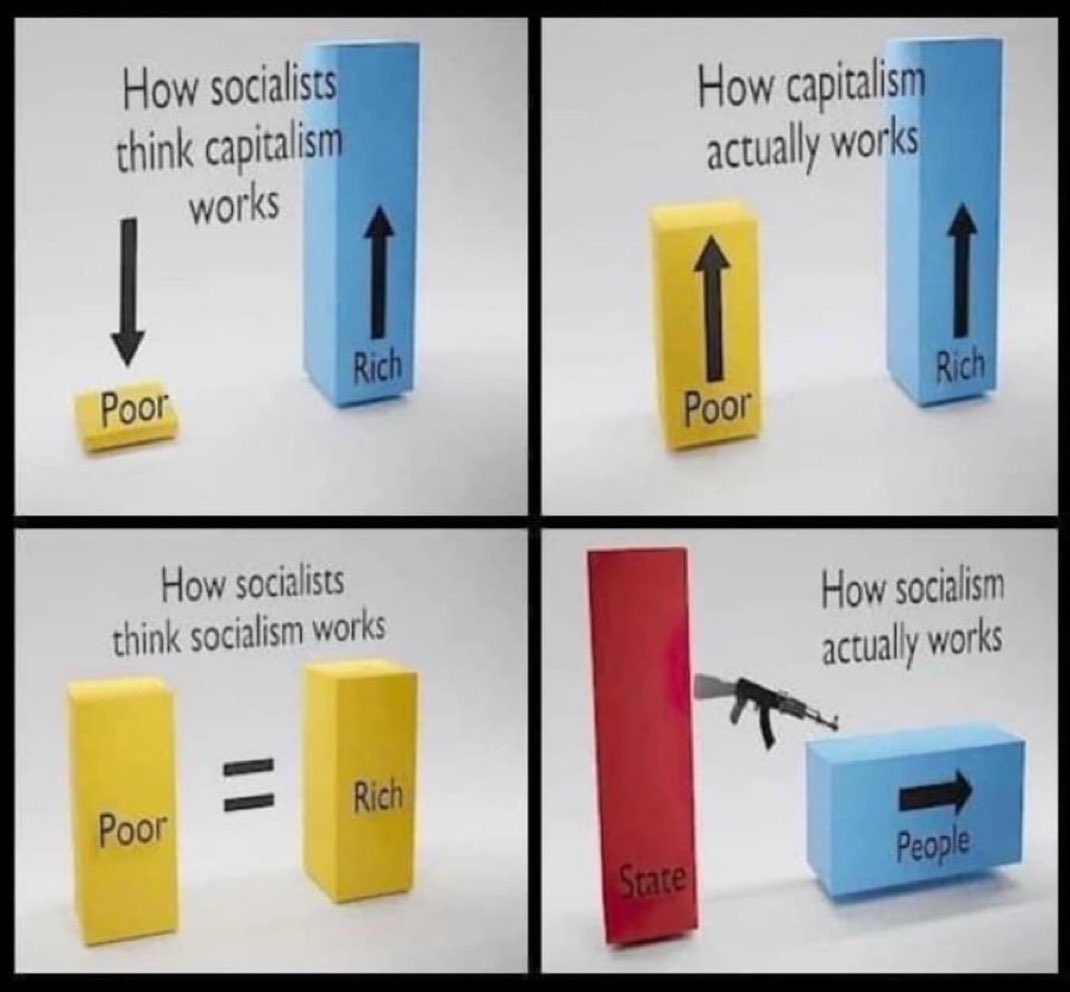
If you believe socialism works, why are you waiting? Redistribute your own wealth. Get a group of like-minded individuals and pool your wealth.
Create an online community where you all work and everyone pays their income into a pool which is evenly distributed.
What is stopping you from doing this and why are you insisting everyone in a jurisdiction participate before starting?
Someone give me the answers!
I'm competing in the emergentxfabrizio builders contest 🚀
Check out what I built and drop an upvote to help me win 👇
https://t.co/il1BN9jfKy
#emergent#builderscontest@emergentlabs
“save our children and we will save the West“
At ARC 2026, @Miss_Snuffy argued that the crisis facing the West is a crisis of moral formation, and that schools, families, and communities must once again take seriously the task of raising the next generation.
When I was Muslim, I compared Muhammad’s last words to Jesus’ last words.
Not just the facts, but the spirit behind them.
And bro, the difference is staggering. It shook my devout Muslim faith.
According to Sahih al-Bukhari, Muhammad’s final words included: “May Allah curse the Jews and the Christians. They made the graves of their prophets into places of worship.”
Those are words associated with his final moments.
No forgiveness. No reconciliation. No peace.
Now compare that to Jesus.
Beaten, betrayed, tortured, hanging on a cross with nails through His wrists, Jesus says:
“Father, forgive them, for they know not what they do.”
And then: “It is finished.”
One dies speaking curses.
The other dies extending forgiveness.
One ends by drawing lines and reinforcing division.
The other tears the veil and reconciles heaven and earth.
And whether people like it or not, final words reveal something deeply personal about the heart.
That contrast shook me.
Because one man’s final moments reinforced separation, while the other’s changed eternity through mercy, sacrifice, and love.
Please sit with that honestly.
@BenHart_Freedom@TexasBigDave12 The media has pushed this false narrative that we are a 50-50 split nation. It is not nor has it ever been true, that truth is now coming to light.
The Plymouth Pilgrims accidentally ran the first documented socialist experiment in America three centuries before Marx scribbled his manifesto. Governor William Bradford's "common storehouse" system from 1620-1623 delivered textbook collectivist results: mass shirking, crop failures, and near-starvation.
Bradford recorded the disaster in detail. Young men "complained that they were oppressed" when forced to work for others without reward. Productive colonists watched lazy neighbors receive equal rations despite contributing nothing. The system "was found to breed much confusion and discontent" because it violated basic human incentives. People starved while fertile Massachusetts soil lay underworked.
The turnaround came swiftly in 1623 when Bradford abandoned the collective model and assigned private family plots. Production exploded overnight. Women and children voluntarily joined field work when their families directly benefited from extra effort. The same colonists who nearly died under socialism suddenly produced abundant harvests under private property.
Bradford explicitly credited private ownership for saving Plymouth Colony. He documented how individual responsibility transformed human behavior within a single growing season. Individual effort cannot be separated from individual reward without destroying both.
Every socialist experiment since Plymouth has repeated this identical pattern. Different century, different continent, same predictable collapse when planners ignore the reality of human nature.
No matter what they call it, whenever and wherever collectivist ideas are put into practice, disaster soon follows.