Bloomberg Businessweek Vietnam: Sitting on the Alibaba-Amazon Moment in AI for the Global South.
Vietnam is especially well positioned to capture an Alibaba-Amazon moment in AI, building a globally competitive agent workforce.
Watch: https://t.co/fUgzoBOZRa
#WorkOptional #EastWestAIpha #AI
Vietnam News reported C-Lex is trained and fine-tuned on 2M+ legal documents, and the team demonstrated it citing legal grounds so users can verify. For builders, citation is the product. Page 1: https://t.co/ELFt8Wvm5H
Vietnam launched C-Lex, a Make in Vietnam legal AI, on 25 Nov. The interesting part is how it was chosen: published criteria, a council from 14 ministries and sectors plus independent experts, no single vendor appointed. Our thesis: a model the Global South can copy.
Our view: if the closed-lab buildout stalls on funding, the open-weight path gains share. China is building the open-weight Android, Qwen and DeepSeek, in the same stack. Watch the lender, not the lab: https://t.co/ZUk7KC4SPm
Our view: Vietnam is not in the middle of this funding chain, and that is the point. Own the workflow. Mirror the weights. Price on open models: https://t.co/xWuV09rSRl
How it was funded: Nvidia and T-Mobile shares sold, a $40B bridge loan since repaid in full, and a record $11.1B of junk bonds at up to 9.75%. If you build or invest in AI, watch the lender, not the lab. We at WorkOptional lay out the six steps: https://t.co/ZUk7KC4SPm
One borrower is carrying the whole AI buildout. SoftBank has put $64.6B into OpenAI, about 13% of the company, much of it borrowed. As of 30 Sep it carried the stake at $99.6B against $54.6B invested. Paper, until an exit.
Do not put all your eggs in one basket. Commandment Eight: Diversify Just Enough. Book 1, The Ten Commandments of Investing, is already out. Book 2, The Ten Commandments of Investing: The Global South, lands in December. Many builders, many bets, many ways to win.
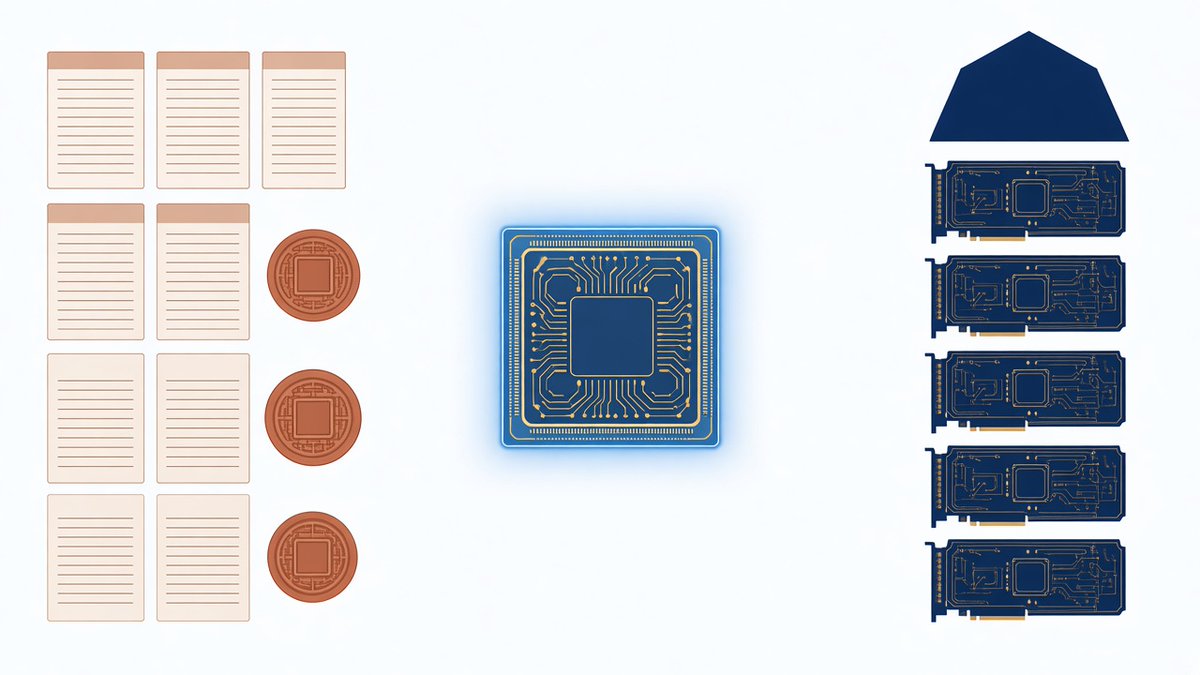
The model that speeds up AI research is here. GPT-6.2 Astra helps build the next model. Qwen4-Max answers at $1.50. DeepSeek rations free chat. The West builds the engine. The East builds the price. https://t.co/XucF9BmWGM
$8 vs $1.50.
OpenAI's GPT-6.2 Astra is its first model to meet its High threshold for speeding up AI research. Alibaba's Qwen4-Max is about a fifth of that input price.
The West prices the brain that builds the next brain. The East prices the token.
https://t.co/m5e2Kwm42a
The Nvidia Board Removed Jensen on False Pretenses
A comprehensive debunking of the greatest hoax of my lifetime.
On November 12, 2026, the Nvidia board successfully pressured Nvidia co-founder Jensen Huang into resigning. Its decision was based on false information, fabricated quotes, and hyperbolic opinion pieces, which have now been thoroughly debunked by independently verified sources. In one extraordinary case, the Wall Street Journal has been caught fabricating quotes from the Singaporean government.
This is the most egregious case of journalistic malpractice we have ever reported on.
Huang is one of the world’s strongest supporters of open-source AI. Utopia or not, it is his belief that free, equal access to new technologies can balance the playing field against concentration of power and authoritarianism.
The Jensen coup is an overt weaponization of the government and the press to achieve policy outcomes which failed to pass through Congress. After their initial falsehoods were debunked, the same foreign policy lobbyists, elected officials, and representatives pivoted to a new argument. According to them, the extrajudicial coup against Jensen is justified because of legal “loopholes” that allowed Nvidia to sell hardware to third party countries such as Malaysia, which in turn did business with China. In 2023, 2024, and 2025, policies to restrict third party datacenters were proposed in Congress. In all three cases, at least one chamber of Congress decided not to pass the bill. It was the explicit will of Congress that the benefits to third party datacenters exceeded the costs, not merely an unintended loophole.
But a much greater issue supersedes the merits of this policy — the Jensen coup weaponized state sources including, according to The Washington Post, doctored intelligence reports, to circumvent the will of Congress. This is behavior one would expect in an authoritarian country like China, not in the United States of America. The rule of law itself in America is under threat.
Welcome to our largest investigative project yet — debunking the coup against Jensen.
https://t.co/YZX7NrDO3z
$115.8B Nvidia quarter, up 103% year on year. China's two listed AI labs have lost more than 85%.
The compute order is intact. The model-layer premium is not. The market is pricing the same industry twice.
https://t.co/Ca7YPMEEUP
Claude goes public. Its suppliers are buying $26B of the stock.
Roadshow orders ran 6x the shares on offer. This is frontier AI's Alibaba moment.
https://t.co/iizPb8Vexf
#AI#AIInvesting
Rules in the East, governance in the West, inside one week. Page 2 is free for subscribers. Disclosure: San Eng and WorkOptional may hold positions in companies or sectors discussed and may trade them. Research and opinion, not investment advice.
Who controls the compute?
East: Beijing drafts export rules for 23 AI technologies.
West: Washington leans on Nvidia after its CEO resigns.
We at WorkOptional see one story, twice.
https://t.co/caJqB96nM6
#AI#OpenSource
Nvidia's CEO resigned. We at WorkOptional follow the money: a transfer, not a proven plot. A financing and distribution event, not a technology event.
https://t.co/4w3vkef6aQ
#AI#OpenSource
THINK ABOUT IT.
- Bill Gates had lots of illicit girlfriends—no problem.
- Elon Musk has multiple children with multiple women—no problem.
- Dario Amodei dated a Chinese woman, Jade Wang, before marrying Cami Clark, who pitched a pornography business to none other than Jeffrey Epstein—no problem.
- But Jensen Huang commits old-fashioned infidelity—and this is such a big problem that he has to resign?
Doesn’t make sense.
Here’s the real story.
.
CHAPTER ONE: BIDEN’S CHIP WAR
Jensen Huang of Nvidia was puzzled. It was 2022, and his video-graphics processors had become globally popular as the heart of high-end computing across the planet.
But that autumn, Biden violated the World Trade Organization’s most fundamental principles. He ordered the world’s makers of advanced semiconductor chips and chipmaking equipment (in the Netherlands, Taiwan and Japan) to stop sales to China.
Biden’s administration implied that the chips were for China’s military gear, but this was a lie. The US’s own security establishment admitted that 99.9 per cent were used for civilian purposes, like medical technology and AI computing.
Huang was dismayed. He could no longer sell Nvidia’s A100 and H100 to China.
.
CHAPTER TWO: SOLVING A PROBLEM
Jensen Huang was a problem-solver. In February of 2024, Nvidia launched the H20, a made-for-China AI chip less powerful than its US-only top model.
That way he could keep the US government happy but also have something to sell to the Chinese.
Not everyone in the US was happy about this, and export rules fluctuated.
.
CHAPTER THREE: THE DEEPSEEK MOMENT
In January 2025, a nerdy young man from the Chinese finance industry announced that his firm Deepseek had quickly and cheaply created a high-efficiency open-weight AI.
The implication was huge: the Chinese were finding ways to develop top level AI functionality without massive clusters of top-tier Nvidia GPUs.
Jensen Huang knew he had to respond urgently to keep his place in the China market. He flew to meet trade officials in Beijing in the middle of April and vowed to make "every effort" to serve the Chinese.
The US anti-China hawks had been quietly mobilizing—and made an announcement. In April of 2025, the US banned all export of Jensen Huang’s H20s to China.
Unbelievable! The Nvidia CEO was furious. "Anybody who thought that one chess move to ban China from H20s would cut off their AI ability is deeply uninformed," Huang told an interviewer at a trade meeting in Taipei.
.
CHAPTER FOUR: HUANG’S SPECIAL SKILL
Then came some rare good news. The Nvidia CEO started lobbying Trump behind the scenes. Huang was a master negotiator – and his efforts proved successful.
In the middle of July, 2025, Huang was back in China—his third trip in 12 months.
Huang appeared without his signature black leather jacket. Instead, he wore a traditional Chinese tang suit, and made some of his speech in Mandarin.
Washington had cleared the way for Nvidia to export the H20 to China, he said. We’re back!
Trump had demanded a cash cut of H20 sales in return for approving the exports—US government policy appeared to be literally for sale.
.
CHAPTER FIVE: SPOOKS WERE NOT HAPPY
Huang was moving chips to China again, and the anti-China hawks in the US government were unhappy—and so were the spooks.
There’s a widespread tendency to visualize the US intelligence community as right-leaning hard men, Trumpites in black suits.
This was the opposite of the truth. The CIA leadership greatly preferred the simple, blanket negativity towards “the enemy” characteristic of the Democratic Party. With Russians, Chinese, and North Koreans portrayed as cartoon villains, black ops were justifiable.
But for all his bluster, Trump had a propensity towards treating the leaders of Russia, China and even North Korea, as actual humans who could be negotiated with.
This transactional approach was enormously problematic for the CIA, which needed cartoon villains to justify their annual budget of more than US$15 billion.
And Trump’s habit of parachuting unsuitable new leaders in to command the intelligence community—such as the widely disliked Mike Pompeo—crystalized the negativity, as CIA chroniclers have written.
.
CHAPTER SIX: A TWIST IN THE TALE
Jensen Huang’s celebrations were short-lived. In an unexpected twist, China in September 2025 said it did not want Nvidia chips and would no longer buy them.
- US$15 billion in sales projections vanished.
- Nvidia had to write off a reported $5.5 billion in inventory losses.
- The company had now completely lost access to China's AI market, estimated at US$50 billion.
- And hard evidence was emerging that Chinese companies were building alternatives even for CUDA (a unique element in Nvidia chips).
Huang wanted more positivity from the US. Nvidia was a US firm, and it went from having a 95% market share in China to 0%. “I can’t imagine any policymaker thinking that that’s a good idea,” he told reporters.
.
CHAPTER SEVEN: AGAIN, HE SOLVES THE PROBLEM
But Huang’s extraordinary skill in dealing with Trump paid off again, and by mid-2026, the Nvidia business found a complex equilibrium had emerged in its China business.
Huang had (in December 2025) persuaded the US President to allow Nvidia to sell even the high-powered H200 chip to China, as long as the US government got 25% of the take. So a range of Nvidia chips could again be sold in China.
- Other Nvidia chips were arriving in China via the black market.
- There were suspicions that companies in Singapore and Malaysia, such as Megaspeed, were flouting export restrictions, also delivering chips.
- Some Nvidia chips were stuck in Hong Kong, trapped by the confusing, ever-changing rules, but were expected to be released eventually.
- On the downside (from Huang’s point of view), new China-origin chips, notably Huawei’s Ascend 950, were catching up with advanced capabilities that mimicked those of Nvidia.
In short, China was back in the game.
.
CHAPTER EIGHT: TAKING HIM DOWN
Something had to be done. China had to be dealt with. But first, Huang had to be taken down.
The US anti-China hawks saw Huang’s success in making deals with Trump as a key part of the problem. It was an element which had to be surgically removed.
The CIA and their partners in the western mainstream media sprang into action.
In October 2026, the US intelligence community told New York Times reporters that there were suspicions that Huang’s mistress, Alice Huang Le, was a Chinese spy.
It provided no evidence.
The allegation was plainly ridiculous—the flow of legitimate and illegitimate chips across the border was no secret, and the idea that discussions about the detailed minutiae of nano-level semiconductor engineering could be exchanged during pillow talk was ridiculous, even comedic.
But when the US intelligence community and the mainstream media join forces, they’re virtually invincible.
At this moment in the process, the complicit media are playing its role. A typical headline was that in the Economist yesterday:
“Jensen Huang must resign.”
.
EPILOGUE
Jensen Huang resigned.
Trump has been weakened.
The world’s public has been fooled with the “honeypot” story.
China’s Huawei is pressing ahead—with new, powerful versions of its Ascend chips slated to come out in 2027 and 2028.
.
.
Commerce Secretary Howard Lutnick has repeatedly stalled Trump’s crackdowns on AI firms diverting Nvidia chips to China.
Most recently, Lutnick putatively refused, against the President’s orders, to add Megaspeed to a federal export blacklist for over 13 months. As of today, Megaspeed has still not been added to the blacklist.
Under Lutnick, the Commerce Department went its single longest stretch of time ever without putting a single company on its federal trade blacklist, from October 2025 to November 2026.
Megaspeed is the Sinagore-based Chinese front-company currently in the news because Alice Huang, the alleged Chinese spy who seduced Nvidia CEO Jensen Huang, bought and rebranded it in March 2023 before purchasing $4.8 billion in Nvidia chips between June 2024 and February 2026.
Treasury Secretary Bessent most recently confronted Lutnick over his confounding actions during a meeting with Marco Rubio, Pete Hegseth, and Jamieson Greer in the Situation Room.
Lutnick has been at the epicenter of many of the corruption scandals consistently plaguing the administration, from his sons, who inherited Cantor Fitzgerald, nakedly profiteering off of tariff refunds, to his own business involvement with Jeffrey Epstein, which he initially lied about.
Follow: @AFpost
The US agent map is filling in. Vietnam's is still being drawn.
a16z says AI agents now make up most web traffic. We spoke today in Da Nang about the layer still open in Vietnam: agent workflows. Subscribe free for the full package.
https://t.co/f8lpK5bc3x
#AIAgents#Vietnam