I think it depends on the lens you are looking through:
- From Industry's Perspective: I have no issue with private capital and commercial industry making speculative investments in a future orbital or lunar economy. If companies want to raise the funding to launch missions to the Moon to prospect, extract resources, or manufacture, they are welcome to do so within the confines of the Outer Space Treaty, applicable law, and what few best practices have been established. In that respect, I don't see it as much different from the oil and gas industry prospecting for viable wells where permitted. I think we all agree that to have a bright future in space, beyond what taxpayers can fund, it is imperative to unlock its economic potential, and NASA is happy to help through Space Act Agreements, subject matter expertise, reimbursable work through our chambers and labs for testing, etc.
- From NASA's Perspective: That said, and this is very important, what NASA is doing on behalf of the taxpayers, the American people, and frankly all of humanity, does not depend on an economic or industrial justification. We are returning to the Moon and building a Base to feed that hunger for exploration, to realize its scientific potential, to inspire this nation as Apollo did, and most importantly, to dial in all the capabilities necessary for the next great leap to Mars. Just as in the past, the technologies we pioneer to "get there" will have direct benefits, including economic ones, back here on Earth. And if a lunar economy ignites along the way, all the better. But it is not a sure thing that the value extracted from lunar regolith will exceed all the associated costs. If/when the economics work out, that would certainly be exciting, but regardless, NASA still ventures on.
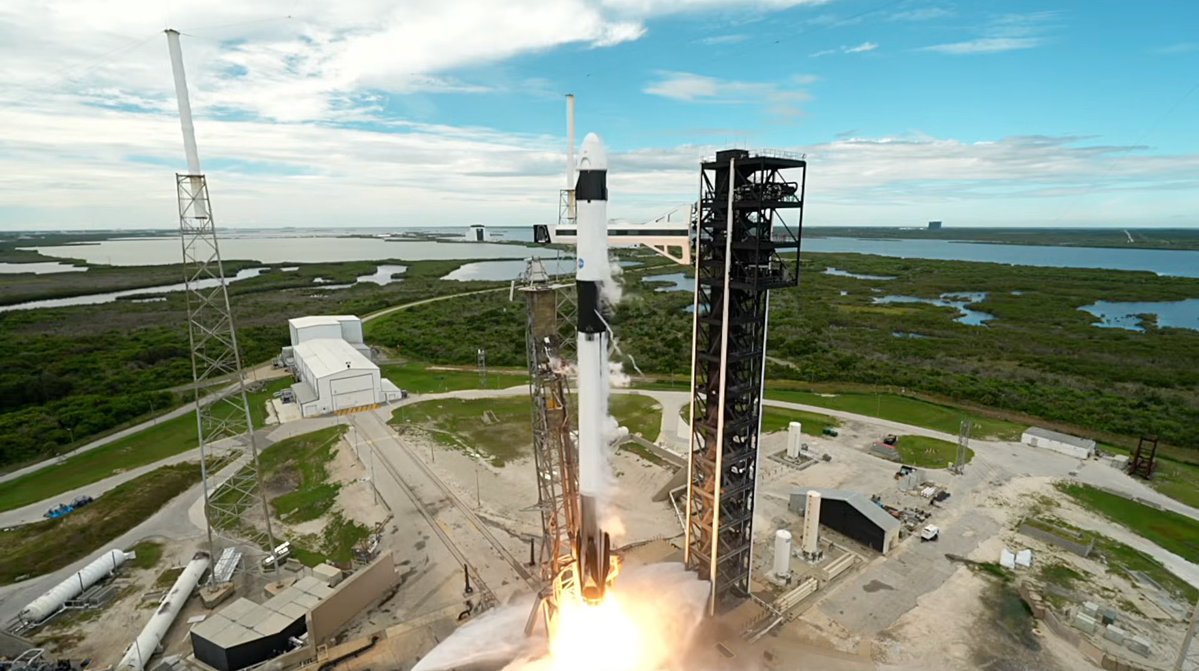
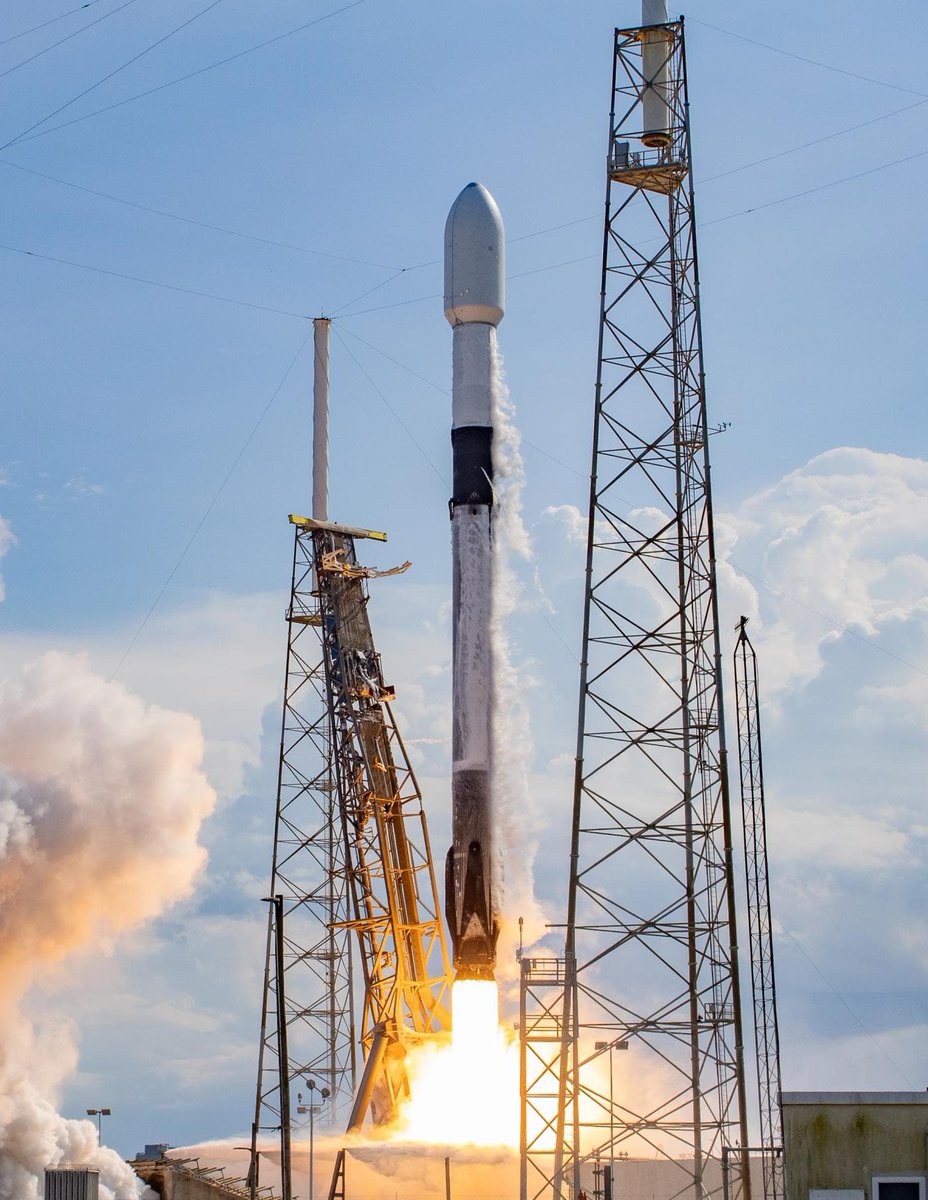
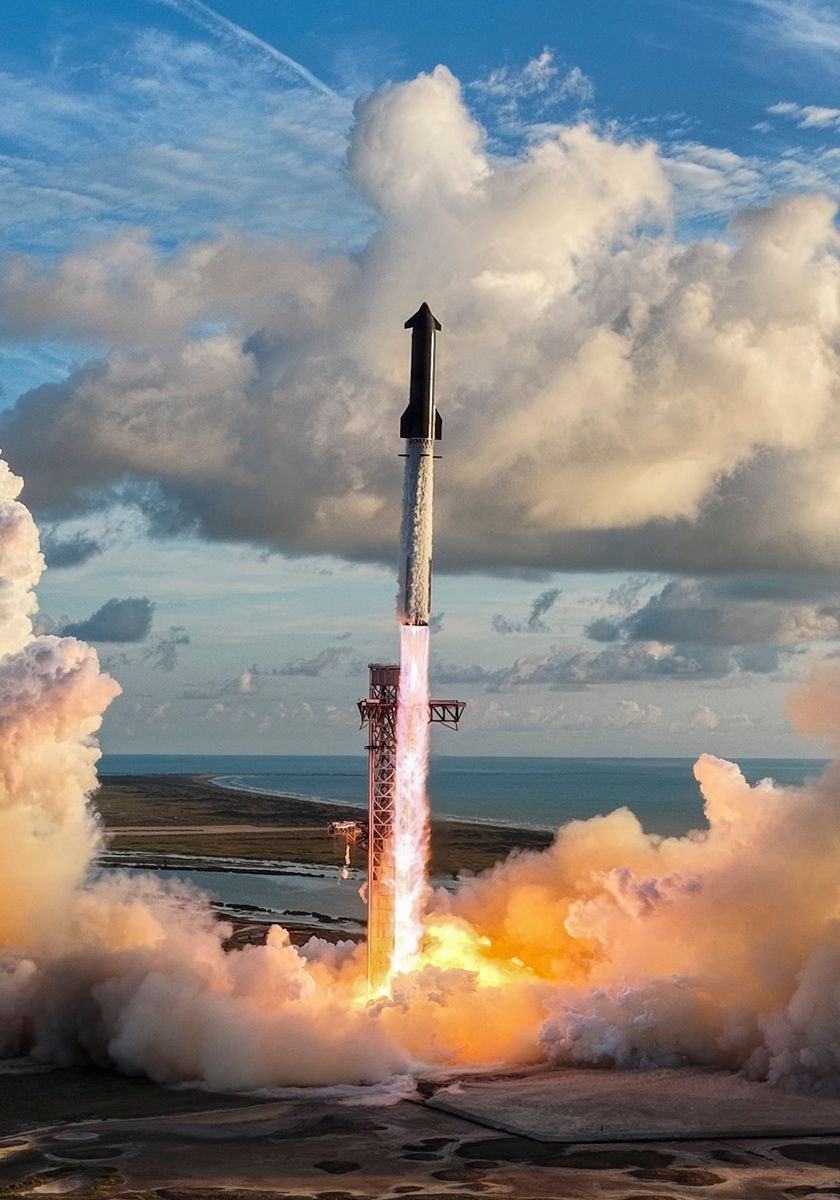
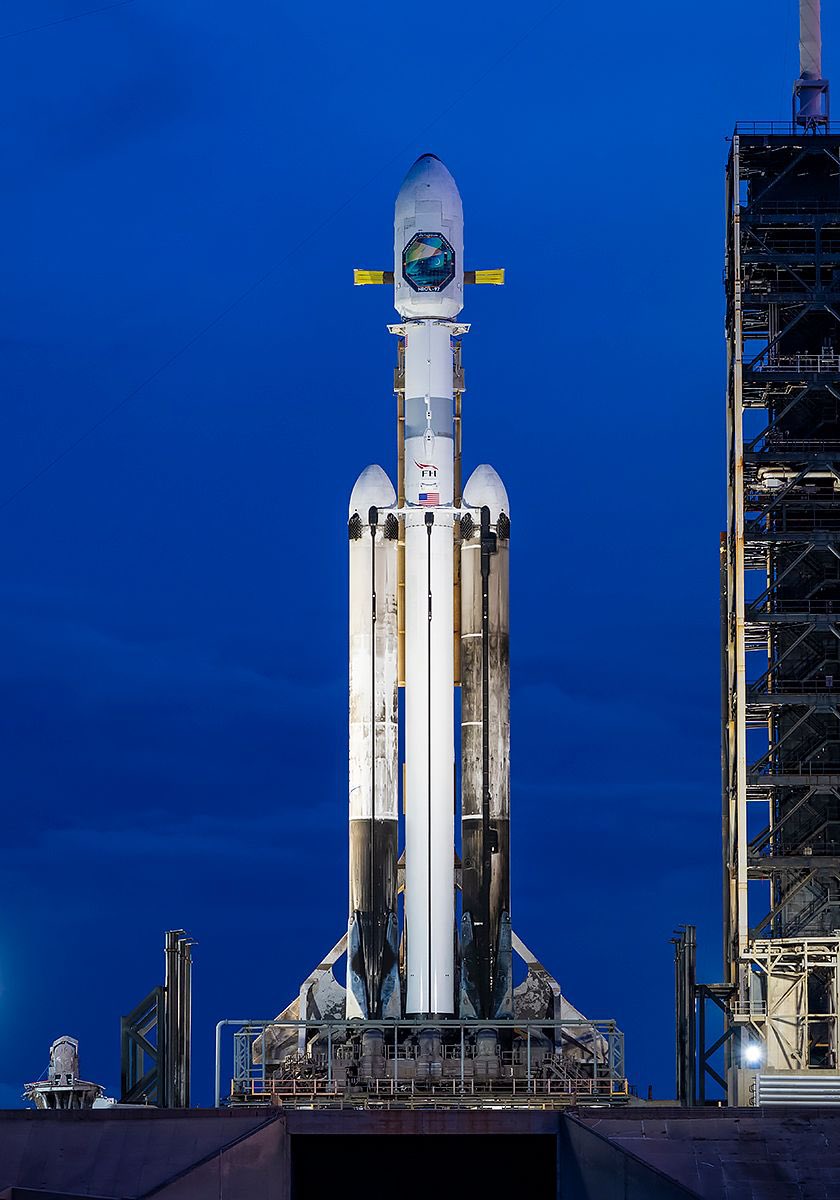
SpaceX has launched every rocket in their lineup, 3 different vehicles, from 4 different pads, in 3 different states this week.
They also lifted basically every “category” of payload. Starlink, Crew, Commercial, and Military.
WHAT. A. WEEK.
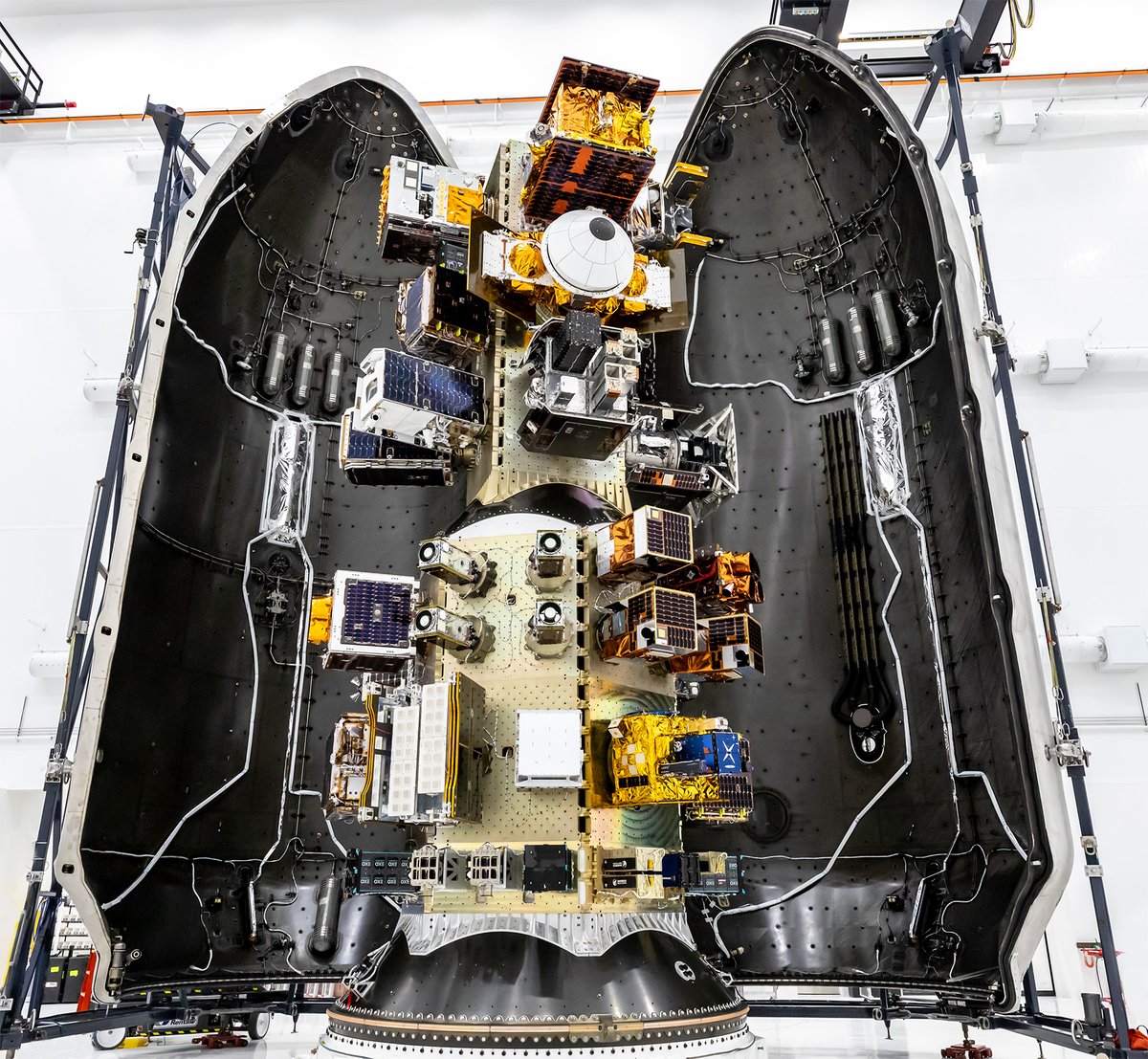
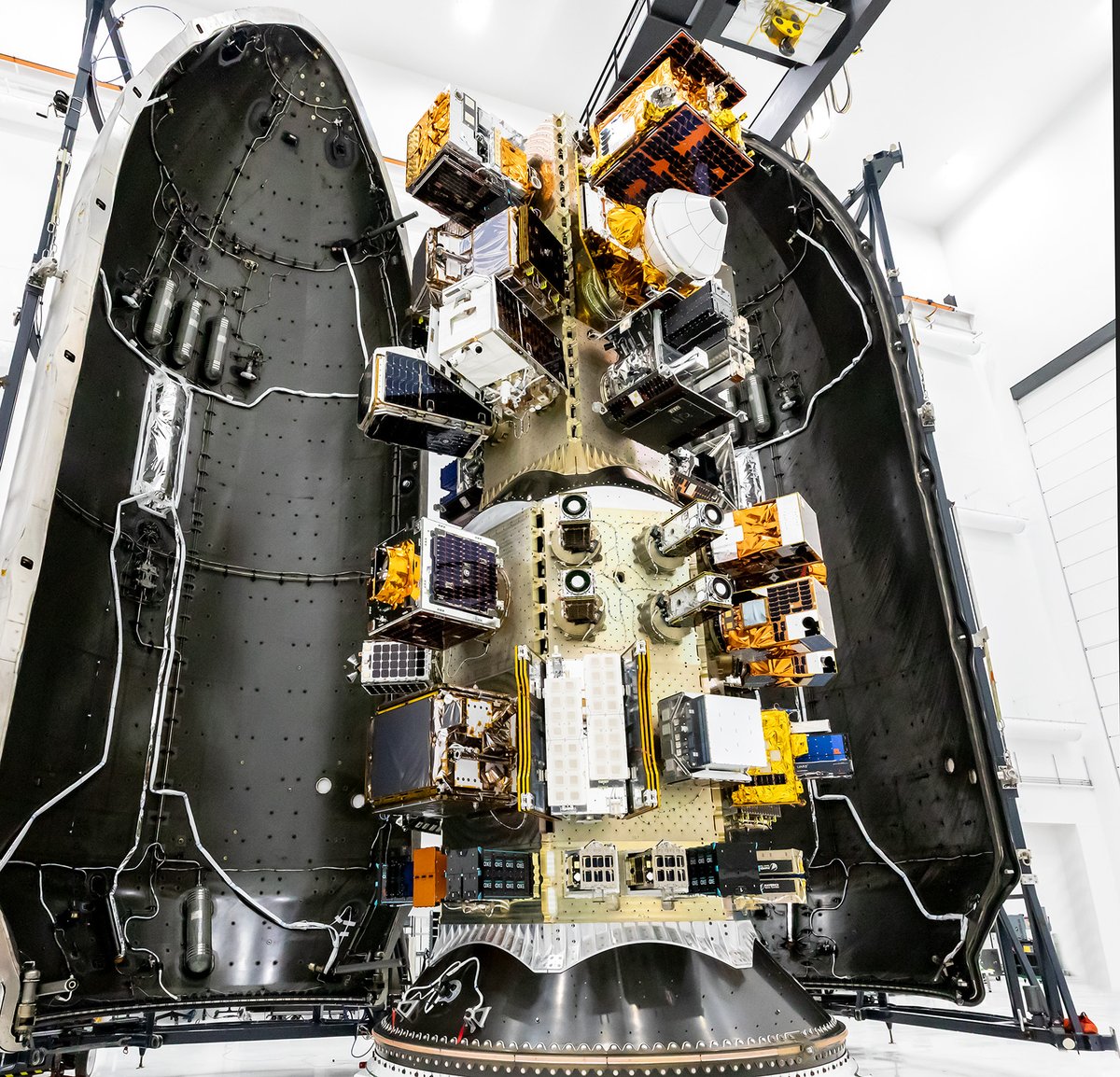
Up next, Falcon 9 will launch 130 payloads to orbit from California aboard the Transporter-18 mission. Liftoff is targeted for 11:22 a.m. PT → https://t.co/ITRKTeX0fu
Re: Space Academy
A lot of people are missing this, they think it is a Space Force Academy, an astronaut feeder school, or a civil servant factory.
In reality it is all of those things and none of those things– it is an attempt, the first, to define what the space profession actually is, to bound the field, fuse the many metals of disciplines in space: engineering, science, policy, biology, leadership, into a single alloy. To mint leaders, stronger than the sum of the parts of their studies.
Space as a domain is inherently polymathic, right now space professionals are discretely quantized into engineers, scientists, operations, the academy should produce graduates who blur these lines.
Many more thoughts in the coming days from me and @TheAmericanSLS
This project is deeply important to the future of our country and human civilization. It could be one of the greatest force multipliers we can develop.
Twisting Beams: SU2 Lasers aka GRAVITY Lasers
Electron beams or strong laser beams can be twisted through th Aharanov-Bohm effect into any holonomy you want. They can hold shape long enough to do something interesting. You just have to know how to twist them (like nunakus~).
Take a free electron beam or a strong laser and run it through a series of Aharonov Bohm solenoids. One after another. Each solenoid sits there with its flux locked inside and its A field curling around the outside. The beam never touches the magnetic field itself. It only feels the vector potential, no actual force is applied. That is the whole point of the effect. Phase shifts without classical forces.
Now, stack the solenoids and treat them like filters. At each stage you change the orientation and the strength of the A field the beam is sampling. You are not just adding the same phase over and over. You are rotating the connection. If you sequence them carefully by repositioning each one in series, the successive holonomies stop commuting. The beam starts to carry an SU(2) geometry instead of a simple U(1) phase. The wavefront is no longer a flat circle of phase. It has been twisted into a non Abelian structure.
Right after the last filter, the reconfigured beam still holds that imprint for a short distance. The transverse profile now has a gradient. Intensity and phase are no longer uniform, but the gradient is temporary. Diffraction will smooth it out, but while it lasts, the beam is pulling unevenly on anything sitting in it's path.
The solenoids themselves sit in that path and the beam passes through the center. If the gradient is strong enough, and timed right, the force is longitudinal. The coils feel a net push along the beam axis. They climb. Not forever. Just for the brief window after the final filter before the beam relaxes back to ordinary propagation, but that is all we need. Because of the shape and gradient the emitter, a solenoids and anything attached to them will continuously fall into the beam. As if being dragged forward by gravity.
Electron beams already show clean Aharonov Bohm shifts in the lab. Microfabricated solenoids are routine. The non Abelian piece is harder. Real SU(2) flux is not sitting on the shelf. You would need synthetic versions or carefully engineered isospin degrees of freedom. Laser beams are even trickier because photons are neutral. You would lean on orbital angular momentum modes or photonic analogs that mimic the gauge connection.
Still, the geometry is clean. Filter the beam. Twist the connection. Leave a short lived gradient. Let the solenoids ride the wave.
There is no new physics. Just careful sequencing of old effects and a willingness to treat the beam as something you can sculpt. Su2 beams could change the way we travel and improve everyone's lives dramatically. We just have to be brave enough to try something new and build the future we all know is possible.
Someone built a full quantum atom simulator in C++ with GPU ray tracing - and it proves the model you learned in school is completely wrong.
Electrons don't orbit. They exist as standing waves across 100,000 possible positions at once, rendered in real time using the Schrödinger equation. The probability clouds look nothing like the textbook diagram.
14 minutes. Bookmark & watch today. The actual physics is more beautiful than the lie they taught you.
This is crazy! All the raw files from Artemis II are available to ANYONE! I did a few edits to some of these and I'm just in awe that this is possible. I didn't crop any of these as I wanted to preserve the original feel. Try this out for yourself!
i think AI is about to uncover an entire hidden world of animal communication
and what it's already found is insane...
> AI found evidence that elephants call each other by name. when researchers played one its name-like call, it approached the speaker faster and called back more, revealing a form of personal naming once thought almost uniquely human
> AI analyzed 53,993 marmoset calls and found tiny monkeys may use names too. entire families use similar labels for the same monkey, suggesting they learn names and dialects from each other
> AI learned to tell what Egyptian fruit bats were arguing about: food, mating, sleeping spots or personal space. it could even partly identify who was shouting at whom inside a colony of thousands
> AI discovered a “phonetic alphabet” in sperm whale clicks, with rhythm, tempo and tiny timing changes combining into at least 143 recurring patterns. their communication system is nearly 10x more expressive than scientists previously believed, and we still don't know what most of it means
> an AI trained on 1.5 million zebra finch calls held real-time vocal exchanges with living birds, generating calls as they spoke and getting them to respond with the same timing and flexibility they use with other birds
> Google trained an AI on decades of dolphin recordings to predict what sound comes next, then paired it with an underwater device that gives objects their own synthetic whistles. the goal is for a wild dolphin to copy a whistle to ask a human for a specific object, creating a tiny shared vocabulary between species
> AI combined microphones worn by wild crows with nest cameras and uncovered quiet calls that may announce when a crow is arriving at the nest and help entire families coordinate caring for their chicks
> a robot bee performed the waggle dance real bees use to share the direction and distance of food, and the bees changed their flight paths based on its instructions. researchers effectively sent a destination into a hive in bee language
On page 31 DOE says:
“the lowest-cost fusion power plant may not be a tokamak.”
It then specifically discusses the engineering simplifications possible with magnetic mirrors, field-reversed configurations and Z-pinches, before going still further and saying that perhaps the greatest cost savings could arise from aneutronic-fuel confinement strategies. DOE concludes that advancing the physics basis of non-tokamak devices to a level comparable with or exceeding that of tokamaks is crucial.
Today, @TIME magazine released a new video montage to accompany their widely discussed article published last Thursday, August 6th titled "America is Finally Taking Extraterrestrials Seriously." The article was written by prominent author/journalist @jeffreykluger. And once again, we are honored that the June 2026 Disclosure Forum is featured heavily once again in today's new video.
UAP transparency is no longer a fringe conversation. It is becoming a mainstream question of science, national security, public policy, and government accountability.
And the Disclosure Foundation is proud to help advance that conversation.
I will weigh in, reinforce some of the programmatic changes made, but also use the opportunity to emphasize the importance of getting things right from here forward.
NASA can’t succeed if it is trying to take on endless complex and costly development programs in parallel: SLS, ML-2, EUS, Gateway, crewed vehicles, a deorbit vehicle, replacement station-as-a-service, all the exciting science missions we all love, and a healthy fleet of X-planes. The solution becomes partnering with everyone who can fill holes in the self-inflicted strategy, which leads to more compromises. Those partners then run into their own budget challenges or quality issues, and the solution is simply to slip the schedule until what you eventually get, if you get it at all, is no longer relevant. This should be reasonably obvious when you look at the pace of progress: years between big missions, stretching out on-orbit ISS missions, one signature X-plane that wasn’t flying much, and years between big science programs.
Recycling a lot of parts from Shuttle may have been logical in 2005, as I am sure many of the programs envisioned in years past seemed logical at the time, but it led to a lunar rocket where Saturn V was materially better at converting pad mass to mass headed for the Moon, while simultaneously building a lunar Gateway in an NRHO orbit that shifts a huge performance burden to the landers because of compromises made earlier in the Orion/ESM design. The indefinitely paused Gateway concept also came with safety concerns, including limited abort opportunities, along with orbital and communications disadvantages. Not to mention, it is just another costly and complex “part” in what is already an incredibly hard equation, and one we haven’t solved in more than half a century. We also want to be building the infrastructure for an enduring presence on another world..not above it.
Mistakes of the past are what lead us down the path of a single lunar rover-as-a-service, when you need dozens for the future Moon Base, a dream state reactor-as-a-service, because you can’t afford to do it the right way, one X-plane, and ultimately means you get none of what you actually want on the Moon because you spread yourself too thin to develop something extremely difficult in a logical, iterative way.
Now we are fixing the SLS program, standardizing, and getting into a cadence of launches that will ensure NASA astronauts can get to the Moon at least yearly until other commercial and more affordable means of transport are available. By that point, we should already be well prepared for the ‘Nuclear NASA’ transition. Artemis, as a program, will certainly live on past any one launch platform.
I say all this because the second space race is going to be a lot closer than it needed to be, and under this Administration, we are going to ensure the third race will never be in question.
The article is fine, but it is already dated. NRHO is gone for all the obvious reasons, and Gateway is on an indefinite holiday, while components of it make their way to the Moon under the NG LID demos. The orbits for crewed rendezvous vary between Earth orbit and EPO/CoLA.
Phase 1 of Moon Base is essentially about seeking out the answers to what is optimal and survivable for infrastructure, power, comms, and mobility so we can build the right logistics plan, and most of the hardware will make use of transfer stages to get there. It is the way to learn in a harsh environment we haven’t been operating in for a bit before we lock in the architecture for permanence in Phase 2 and Phase 3 of Moon Base.
At that point, there will be reusable heavy-lift vehicles bringing in the major infrastructure, and they will inherently rely upon depots along the way.
As for surface resources, I couldn’t tell you the long-term mass transport savings. Not sure who will take the first gulp of lunar water, or when we shift from Earth-supplied ECLSS to lunar-manufactured resources, but I do know we better get really good at the technology on the lunar South Pole before we try to do it on Mars.
A key to all of this is automation and robotics. We should be putting a human in an EVA suit only when absolutely necessary, given the extreme dangers.