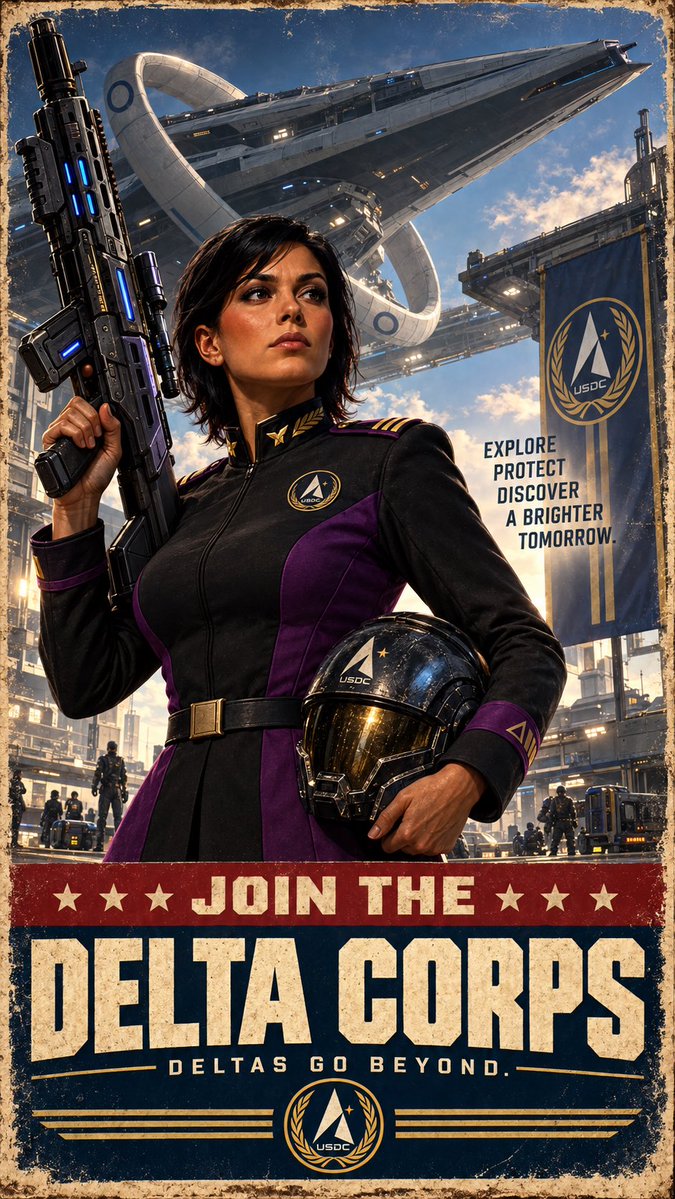
There is no time like the present to start something new. Join Project Starlancer in building a new universe and become a DELTA, because DELTA's Go Beyond!
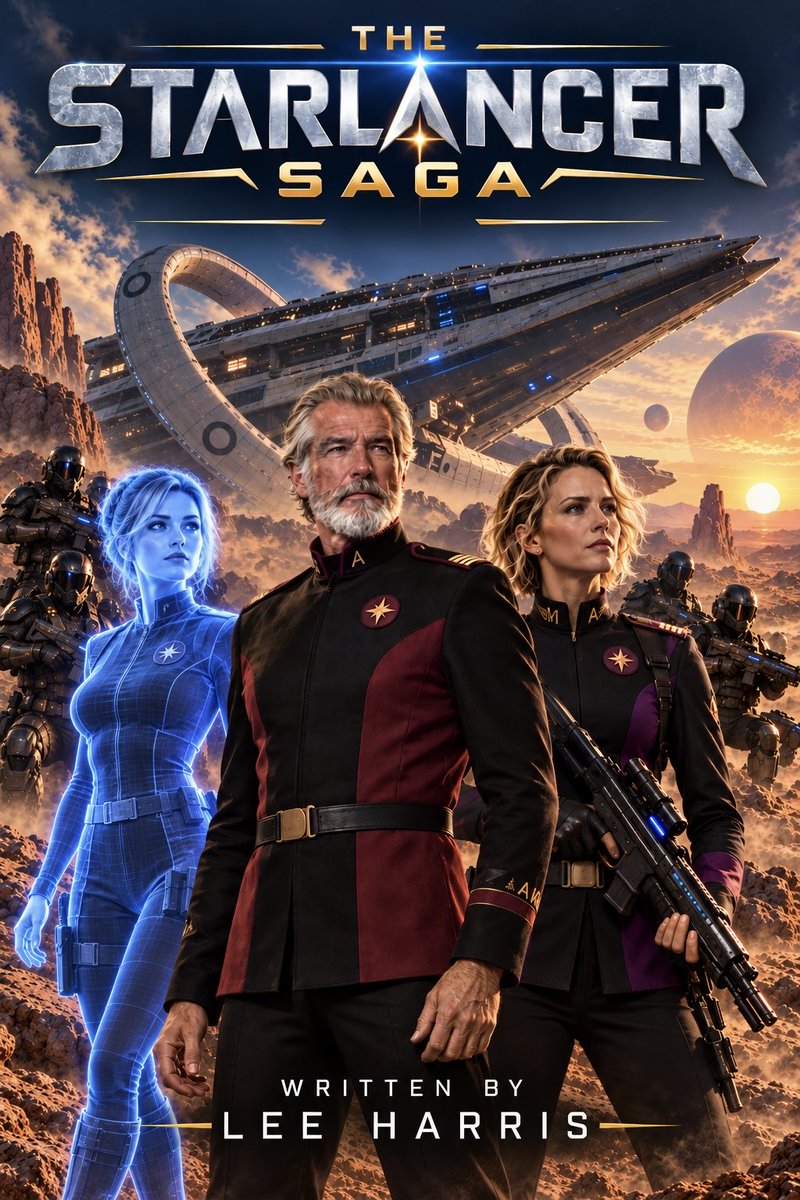
It is with great pleasure that I announce draft 1 of the "Starlancer" book is finished. It's all downhill from here, but I'll keep you all posted on the progress as editing and revision happens. Exciting times folks!
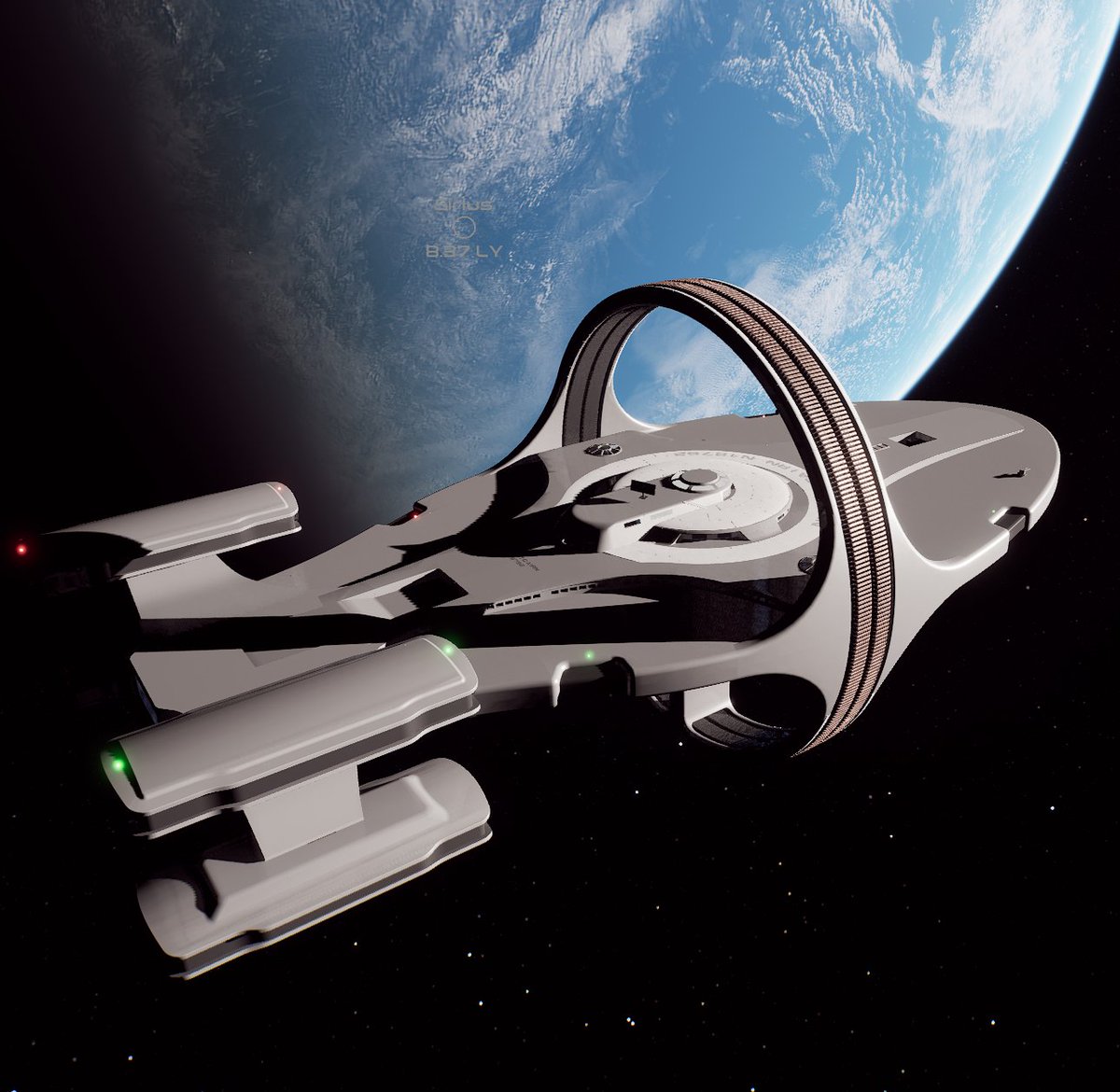
In addition to the exploratory vessels of the USDC, the military arm has a small fleet of Astral Series Dreadnoughts. You can see the size comparison in the 3D model to that of the Starlancer. This is the ASD Richardis, a real bear of a battleship, if you understand what I mean!
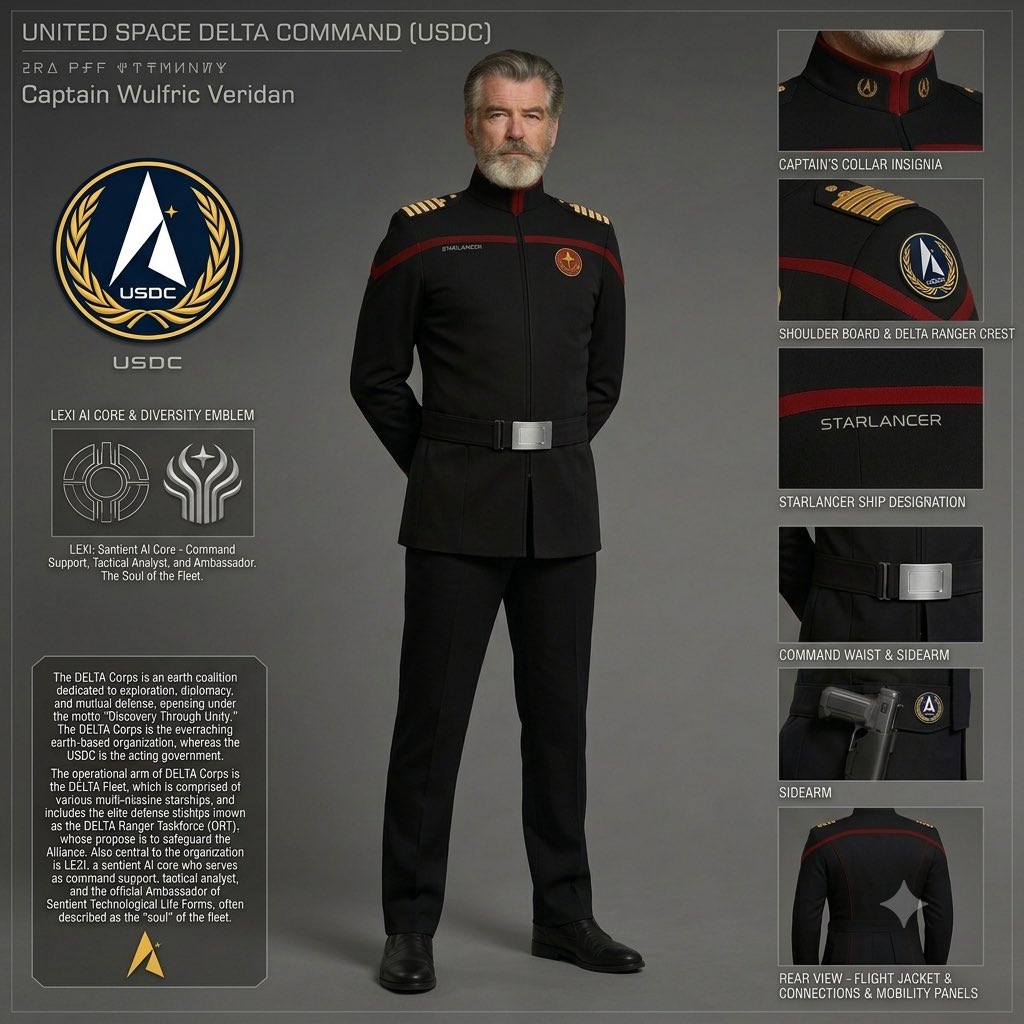
Here’s a look at what we imagine the leader of the Starlancer to look like, Captain Wulfric Veridan. Stern, serious, and committed to keeping the ship and crew safe, Veridan is a major character in the Starlancer series.
The story for Project Starlancer is almost complete. Well over 60,000 words so far, and a planned universe for more. Keep check here periodically for more updates and lore bits!
I am still writing, about 3/4 of the way done at this point. Things are coming along pretty smoothly, and depending on when I can get done editing, I may have a finished product by early to mid 2027! Follow me here for updates as they happen!
Still cooking on the book! We’re at well over 20,000 words so far. I hope to have around 80-90K by the time I finish, but everything is flowing like it should be. Keep checking here for updates!
Starlancer has completed the first six chapters of the forthcoming book! The story is moving along and is full of surprises. Keep checking here for updates!
Development & Demo Pre-Release Build 0.225.0.105
• Fixed the sun shaft volume that was missing from A/B deck.
• Added a sun shaft volume to the two stairwells on either side of C Deck.
• Added a sun shaft volume to the "Mall" on D/E Decks.
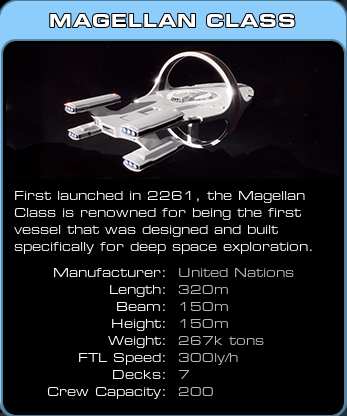
• Updated the Magellan Class graphic when starting a new game. RIP old Magellan Class model.
• Updated the Backer Systems database. There are now 84 backer systems in the game, about a quarter of which have alien civilisations.
• Updated the Game Credits, which now includes 5,447 backer names! We're still missing 1.119 people, so please check the credits, and if your name is not listed, get in touch with Claire and she'll sort you out.
• Added manual orbital position values for the Sol planets.
• Moved the ship's starting position next to Earth. Still need to fix the starting rotation for best sun-angle.
• Fixed Venus being inhabited. The criteria for life/tech on custom planets is now surface temp rather than position in habitable zone.
• Fixed the Long Range sensors not auto-scrolling to the current target when pressing "Back".
• Fixed the trace channels on the Piano and the Chess Board so they are properly using the Interaction channel.
• Fixed bug 1919 - While teleporting from A deck to F deck while sitting in a chair results in getting stuck between E and F deck.
• Fixed bug 1917 - Magellan Not at Earth When Beginning New Mission.
• Fixed bug 1918 - The Return of Bug 1711 (Long range sensors list is showing 0% Explored after scanning, when the list is greater than 9 items).
2/3
Sol System Improvements
• Added the Haumea, Makemake, Eris and Sedna Kuiper Belt objects.
• Updated Saturn’s ring to use a NASA texture instead of a procedural one.
• Created a new complete Pluto surface map using generative AI to backfill the areas of missing real-world data.
New Sensors System
We’ve completely overhauled the Sensors gameplay for this update, with greatly expanded functionality across all 4 sensor modes, and a new save system for tracking exploration progress across the galaxy.
Celestial objects now have “Knowledge Levels”. These correspond to the Long (1), Medium (2) and Short (3) Range sensors, with each knowledge level unlocking more detailed information. A short-range scan of every celestial object within a star system is required for that system to be considered 100% explored.
Procedural alien civilisations have now started appearing all over the galaxy, with various physical and societal attributes. These civilisations appear as Tech Signatures when conducting a Long Range survey, and details of their society can be uncovered when conducting a Short Range scan of their planet. They only exist as text descriptions for now, but eventually they will have a physical presence in the galaxy.
The Sensors updates have been numerous:
General Updates
• Completely overhauled the visual appearance of the Sensors UI, bringing it in line with the ship-wide “UNOS” operating system.
• Improved the Sensors network replication considerably.
• Created a new sensors “state file” that is now broadcast to other game systems in order to drive updates and ensure sensor data consistency.
• The hard-coded Display Range buttons have been replaced with more granular controls on all sensor modes, so you now have much finer control over what data is displayed. This also means you can now zoom in properly on tiny star systems.
• The target listings are now a nested tree, so planets will appear under stars when expanded, and moons will appear under planets, etc. This gives us more UI space for a much expanded Target Information page.
Data Display
• Added new "Tech Signature" and “Life Signature” flags on the Long, Medium and Short Range target listings. Tech Signatures require Knowledge Level 1, and Life Signatures require Knowledge Level 3.
• Added a 3-tier graphical indicator to the target listing on the Long, Medium and Short Range sensors, which reflects the 3 knowledge levels.
• Added "Tenuous Exosphere" as a new atmosphere type for non-atmospheric planets, as no planet is truly non-atmospheric.
• Added 70 unique spectral analysis graphics for stars scanned to Knowledge Level 1.
• Added Roche Limit, Scattered Disk, Hill Radius and Tidal Truncation Limit values to the star Orbital Characteristics data.
• Added Age, Mass, Density, Radius, Volume, Gravity and Escape Velocity values to the star Physical Characteristics data.
• Added Temperature, Mass Fractions (Hydrogen, Helium, Metals), and Metallicity values to the star Photosphere data.
• Added Roche Limit, Hill Radius, Semi-Major Axis, Semi-Minor Axis, Apoapsis, Periapsis, Distance, Eccentricity, Inclination, Orbital Period and Orbital Velocity values to planet Orbital Characteristics data.
• Added Age, Mass, Density, Radius, Volume, Gravity, Escape Velocity and Equilibrium Temperature values to planet Physical Characteristics data.
• Added Atmosphere Scale, Average Temperature and Gas Giant Mass Fractions (Hydrogen/Helium/Other) to planet Atmosphere data.
• Added Species Name, Physiology, Government, Religion, Tech Level, Aggression and Xenophobia values to planet Civilisation data.
GPS Mode
• Added sector information to the GPS mode, which provides information about a given sector of space, such as its galactic region type and known stellar populations based on data from Earth-based observations.
• Added the ability to target a manually specified sector of space on the GPS mode, which allows you to obtain a high-level overview of that location. This can be used for seeking out specialty sectors such as Open or Globular Clusters.
• Added a 2D map of the galaxy to the GPS mode, which can be zoomed in and out based on either the ship or a target location.
Long Range
• Added the ability to turn "auto refresh" on/off on the Long Range sensors, which prevents the target list from refreshing while you are at FTL.
• Added a "Percentage Explored" indicator to the target listing on the Long Range sensors.
• Added a splash of colour to the target listing on the Long Range sensors, using the star's Kelvin colour temperature.
• Added the ability to align the Long Range sensors to a target star system, revealing basic information about any planets that exist there within a range of 2,000ly.
• Added the ability to survey star systems within 2,000ly on the Long Range sensors, unlocking Knowledge Level 1 for all celestial objects.
• Added a progress screen to the Long Range Survey process.
• Planets on the Long Range sensors are now listed as "Unknown Planet" until a survey has been performed. Unlocking Knowledge Level 1 will further distinguish between Terrestrial planets and Gas Giants.
Medium Range
• Added the ability to perform a Medium Range survey while within a star system, unlocking Knowledge Level 2 for all celestial objects. Knowledge Level 2 further distinguishes between planet types, be they Lava or Earthlike worlds for example.
• Added the ability to list the Medium Range sensors by distance "To Parent" or "To Ship".
• Added a button to toggle the Temperature Regions on/off on the Holo Display.
Short Range
• Added a new "Surface Map" function on the Short Range sensors. This will display a 2D map of a planet or a star’s surface.
• Added the ability to toggle clouds on or off on the Short Range planet view.
• Added the ability to toggle the day/night terminator on the Short Range planet view.
• Added the ability to toggle tech signatures on or off on the Short Range planet view.
• The Short Range sensors will now automatically show targets within range.
• The Short Range sensors will now update the distance to the ship in real time.
Holo Display
We’ve updated the Holo Display on the Bridge to be a lot more interactive, with improved visuals and the ability to target celestial objects directly. Our ultimate vision for the Holo Display is for it to be a one-stop shop for all command actions, and this update takes us a big step in that direction.
• Added the ability to click the Holo Display to target objects, either directly or while holding down the E key.
• Added a new Planetary Surface view on the Holo Display, which renders a full 3D planet when that mode is selected on the Short Range sensors.
• Added Nanite Tessellation to the planets on the Holo Display, giving them limited 3D terrain.
• Improved the display of a star’s temperature regions, with new labels and dotted lines to mark region boundaries.
• Updated the Holo Display to support all of the new data being generated by the Sensors.
• Updated the Holo Display so that it cycles through the targets being scanned when conducting surveys on the Long and Medium Range sensors.
• The Long, Medium and Short Range sensor modes will now all display an Orrery Map when relevant.
• Added 3D lines to the Nav and Sensor target indicators on the Long and Medium Range holo display modes.
• Replaced the "Manual Sector" indicator on the GPS mode with an accurately scaled red cube on the Holo Display, highlighting the exact size of one cubic sector relative to the galactic map.
• Optimised various aspects of the Holo Display rendering.
• Tweaked the relative brightness of stars on the Holo Display to better accentuate the hotter stars.
• Stars and Planets will now scale appropriately when zooming in and out of an Orrery Map, with celestial objects now being rendered as wireframe spheres.
• The Holo Display now has physical Holo Projectors on the Bridge ceiling, which have visible light shafts when volumetric fog is enabled.
NPCs
Our long-term goal is to enable complete single-player freedom aboard any vessel by having an NPC crew manage any role not filled by the player. To that end, we’ve got a head start on implementing basic NPC control on the Bridge.
• Added the ability to spawn basic NPC crewmembers in any Bridge chair.
• Added randomised appearances to spawnable Bridge NPCs.
• Added the ability to issue basic commands to the Sensors and Helm Bridge NPCs, either by clicking on them directly, or by holding down E. You will need to select targets on the Holo Display before asking an NPC to act upon them.
• Added a new RM-84 floor cleaning droid that automatically takes care of the dirty flooring on B Deck. This is actually a test of NPC task automation.
• Added a ship’s cat. He starts off in the VIP Lounge, but he’s free to roam everywhere on the ship, so expect him to go where he pleases, just like any adventurous feline.