Privacy is defining the next generation of apps, both financial and agentic.
Privacy-first AI platform @AskVenice ($VVV) has 3M+ users and is growing fast. NEAR is the infrastructure making it possible, from private inference to confidential execution.
How NEAR powers Venice 🧵
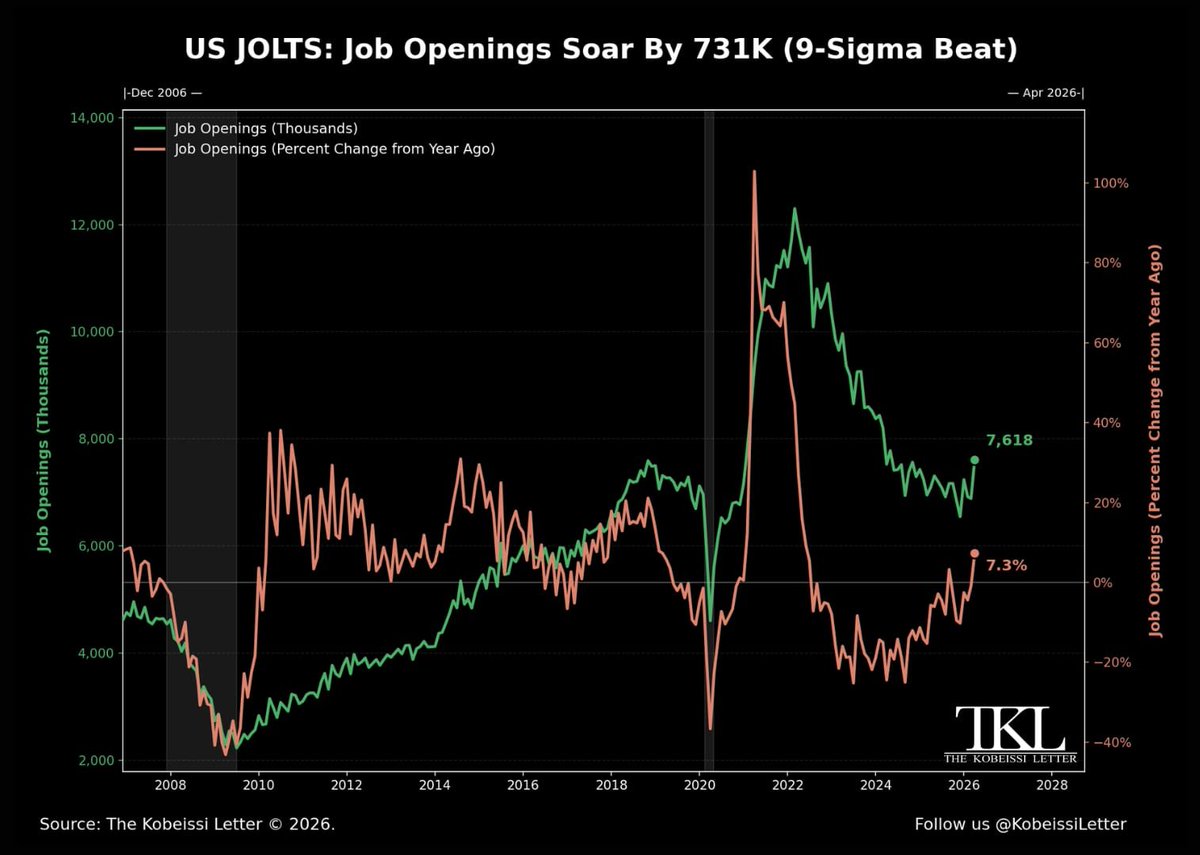
What if AI is actually creating more jobs than it is replacing?
The latest JOLTs data showed that US job openings surged by a massive 731,000 jobs in April.
Markets were expecting no change, resulting in the largest beat in JOLTs history.
As a result, available employment hit 7.6 million for the month, the highest since May 2024.
And, job openings in the professional and business services sector surged by a massive 668,000.
The labor market's bull case from AI is underpriced.
This list is insane, people built everything in FHE: prediction markets, RWA settlements, private payments, casino games, compliance tools, etc. Each of these could be a billion dollar company given the right distribution channels and resources. AI + FHE is clearly the winning combination, there are no limits to what can be done now!
A very sad announcement.
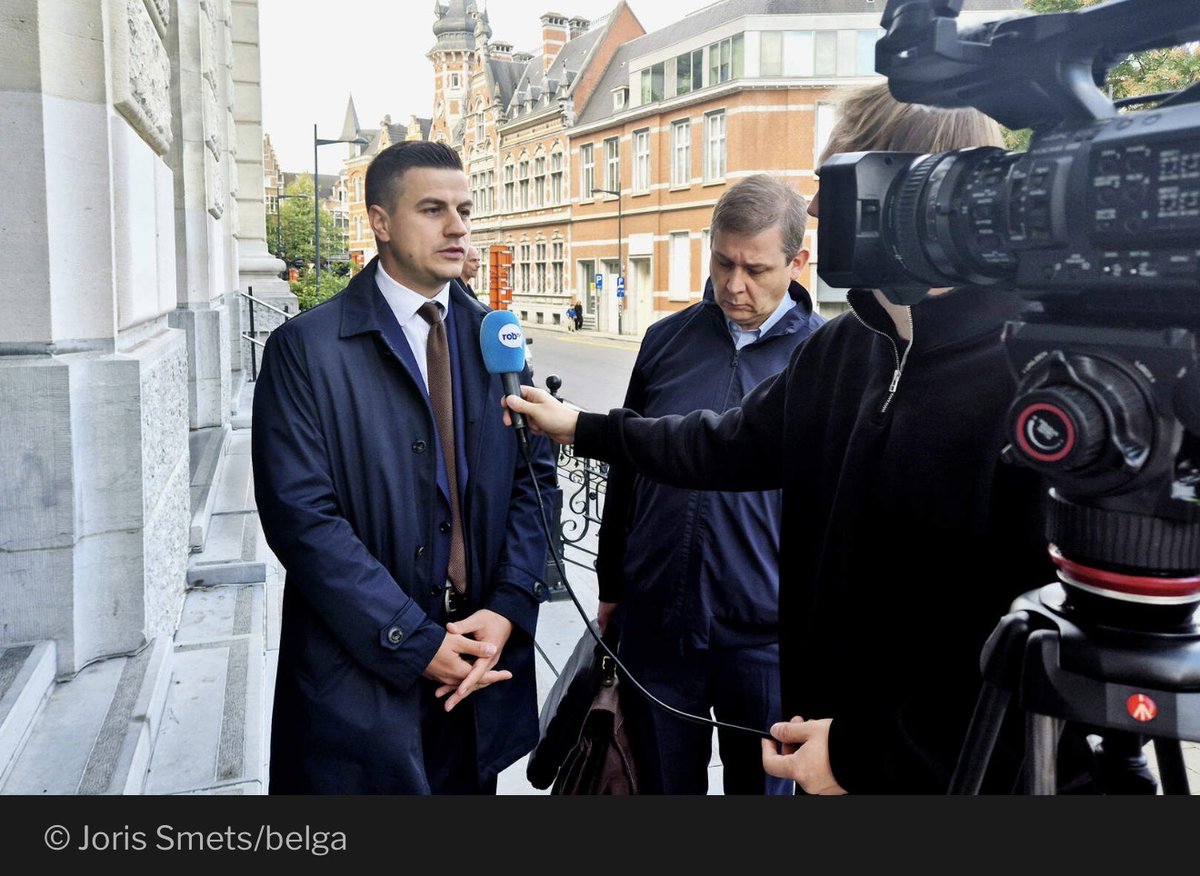
I have just been convicted a second time for 'hate speech' and it is only due to a technicality that I could not immediately be sent to jail —to the judge's frustration.
In an ironic turn of events it's actually thanks to my previous prison sentence (for memes in a private group chat) that I am now still free —in a physical sense, at least.
Call me naive but I didn't think they would take it this far, given that this precedent criminalises many of the arguments used by even the most moderate politicians critical of mass migration.
In February 2024 I gave a lecture at Catholic University Leuven wherein I linked mass migration to crime and a deterioration of our quality of life. Every single point I made was 100% the truth and based on scientific evidence.
Cynically, even the judge that convicted me admits as much by writing in his verdict: “Even if all of the statements made by Van Langenhove are based on scientific evidence and statistics, it makes no difference to the criminal intent. Van Langenhove is not charged with spreading false information. He is charged with presenting facts in a way that incites hatred against persons on the grounds of one or more of the protected criteria in the Anti-Racism Law.”
That's a lot of words just to say he wants to send me to prison for speaking the truth.
Even the regime media write: "It did not matter to the court that Van Langenhove was quoting scientific sources. The judge argued that Van Langenhove's main message was that a big part of the societal problems like insecurity, housing shortages and lowering educational standards are due to mass migration."
You may think the regime media are being sympathetic to me in the first sentence, but in reality they are warning people: even if you speak the truth, if you go against our narrative, we will crush you in every way possible.
Both the public prosecutor and the judge did not present a single real argument as to how or against whom I would have incited hatred. So even if I would accept their crazy, dystopic law, I still did not break it.
The only argument they present is that I created a "hostile atmosphere of us versus them” in regards to migrants. But even this silly argument (which is not even a punishable offence) is not true. To me, the deadly disease is self-hatred and one of its worst symptoms is replacement migration. My enemy is thus NOT the migrants themselves but those orchestrating the mass migration.
Sadly, in Belgium, evidence is not needed and ‘vibes’ are enough to put someone in jail.
Given the fact that I have another court case coming up in September and that I have a dozen active criminal investigations for hate speech, time is running out for me. I have already paid more than €420,000 in legal fees and there is no ending in sight. I have been in an intense battle of attrition for eight years and must now regroup to make sure I can still win.
If you want to help me, you can do so via the links below. If you can help in other ways, please contact me via DM.
If you live in a country that still has free speech, never let them touch it, however noble they make the motives sound, because this is where it leads to.
FYI any layman seeing this is reading it that Altman and Dario are walking back AI job apocalypse predictions because they’re eyeing an IPO, and so want to massage their respective company’s image leading up to the event.
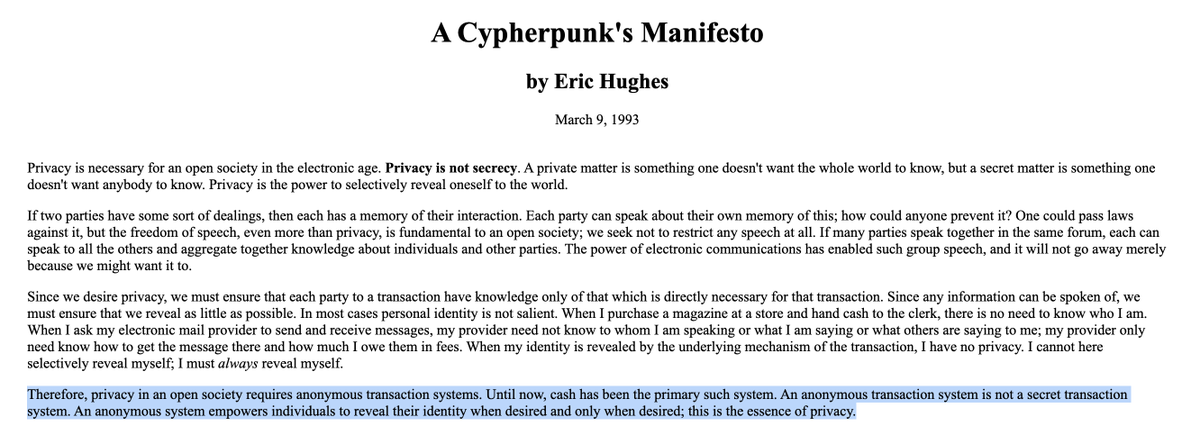
Back in October, @jswihart explained why Zcash exists and why it started with Bitcoin:
"Zero knowledge cryptography had been around for 30 years. Theoretical math. Academic. No practical application."
"Satoshi wanted privacy for Bitcoin. Hal Finney was working on it. Scientists at Johns Hopkins, MIT, Technion figured it out. Bitcoin core said no, too novel."
"They forked the Bitcoin code. Added zero knowledge encryption. That's Zcash."
BREAKING: Sergey Nazarov says Chainlink could become the backbone of tokenized funds.
$1T Fidelity Int. launched $FILQ with Chainlink-powered onchain NAV data.
Nazarov compared Chainlink’s role in RWAs today to how decentralized oracles helped DeFi grow from under $100M to over $200B.
The next major infrastructure race in AI may not be over bigger models or larger GPU clusters, but rather over who controls the computation itself.
For the last two years, the market has focused on scale:
• Bigger GPU farms
• Faster inference
• More tokenized assets onchain
But beneath both the AI and tokenization booms, a shift has emerged:
Enterprises increasingly want the benefits of shared infrastructure without surrendering control of their data, workflows, treasury movements, or AI systems.
The same problem now exists across both AI and finance:
Public infrastructure was built for transparency. Enterprises were not.
A global bank cannot realistically expose the following onto fully transparent infra:
• treasury flows
• customer balances
• settlement relationships
• proprietary AI systems
And AI agents are creating an even bigger challenge.
Unlike chatbots, agentic systems maintain:
• memory
• credentials
• tool access
• payment permissions
This creates entirely new attack surfaces and massive centralized data honeypots.
That is why confidential infrastructure is starting to matter.
And many of the efficiency pressures now reshaping AI infrastructure are the exact problems FHE developers have already spent years solving:
• reducing compute overhead
• optimizing inference efficiency
• compressing encrypted operations
The likely result is the emergence of private, customer-controlled computational environments operating on shared infrastructure.
In practice, this could allow:
• banks to settle tokenized assets privately
• enterprises to run AI on encrypted proprietary data
• institutions to prove compliance without exposing transactions
• public blockchains to support confidential execution
The market spent the last few years optimizing for openness and scale.
The next few years will probably require scale, interoperability, and confidentiality all at the same time.
The future has never looked brighter for confidential computation.
Recommended reading:
https://t.co/9kkqKgBEh3
https://t.co/rGOT3tMTsE
https://t.co/SVXSiGZyWP
https://t.co/8Nw4NUSaKe
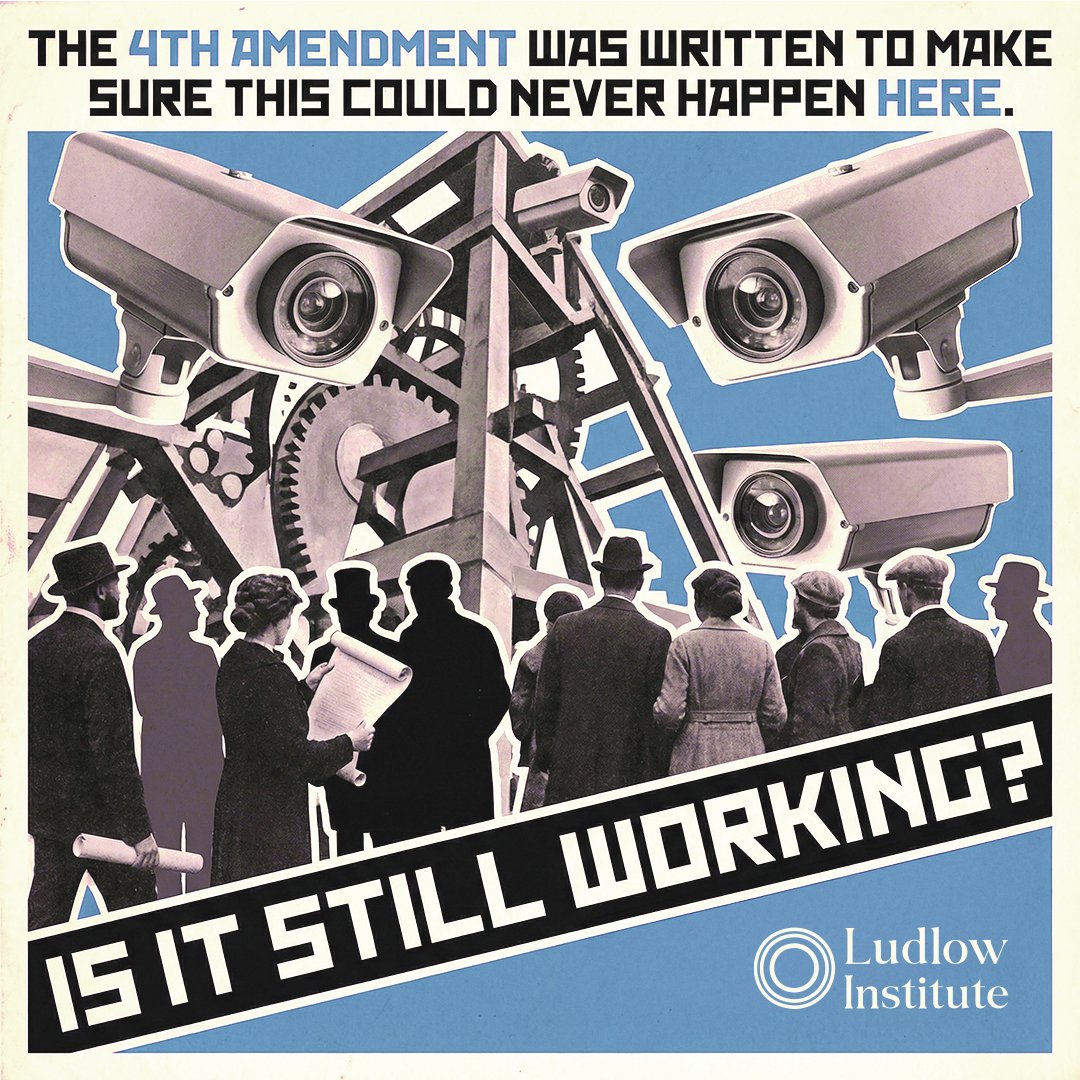
The 4th Amendment was supposed to prevent a surveillance state.
Yet we're surrounded by cameras, tracked by our phones, and surveilled without warrants.
It's not working.
https://t.co/2B7xLn0z2L
The banking lobby wanted a full ban on stablecoin yield. They lost.
Activity based rewards on USDC survived the Clarity Act, and Coinbase walked out with the most valuable customer acquisition tool in fintech still intact. 💰 ~ Alex views
https://t.co/ysm6C5uBKi
The tokenized asset market crossed $30 billion last month and has stayed there. Roughly the size of an elite university endowment.
As recently as mid-2024, it was below $3 billion. 10x in under two years.
What changed: the GENIUS Act, mature institutional onchain infrastructure, and a wave of financial institutions moving from pilots to production — all at roughly the same time.