Simple Past Tense
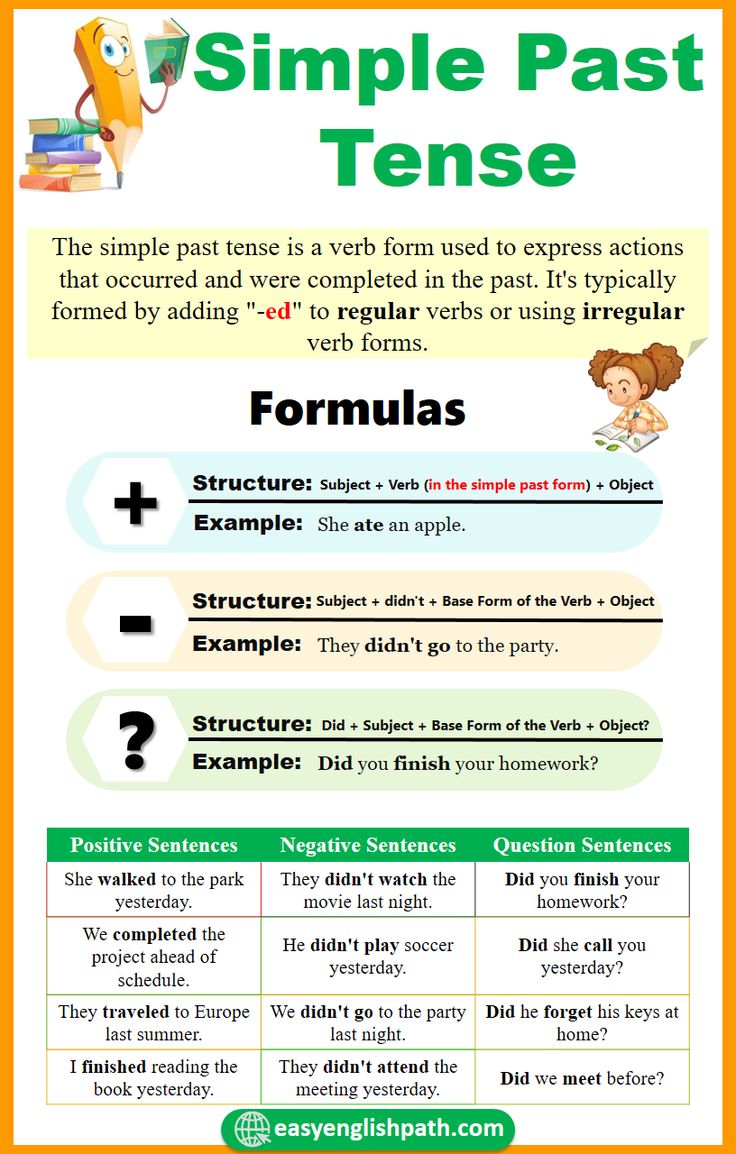
The common formula for a simple past tense sentence is: subject + past tense verb + object.
Here's a graphic from https://t.co/rKbnavTFHO showing the formula for positive, negative and question sentences in the past tense.
Would you be willing to pay a small fee to download a digital workbook that covers many English language elements with lesson material, audio/video and exercises for self-assessment?
@WoodwardEnglish I don't think "sleeping until late" is 100% correct. Until = up to the point in time, so it would be more correct to say "sleeping late", dropping the "until" because it does not indicate a point in time :)
🟣 ENJOY + VERB-ing 🟣
I enjoy TO MEET new people at conferences. ❌
I enjoy MEETING new people at conferences. ✅
👉 After ENJOY we need to use VERB-ing
I enjoy SLEEPING until late. ✅
He enjoys READING at night. ✅
https://t.co/0RCtaez9hY
#LearnEnglish#SpeakEnglish#ESOL
Other ways to say ...
Here's a good collection of other ways to say some commonly-used English words.
Check this Board out on Pinterest! https://t.co/uygUBH4HjP via
@pinterest
Figures of Speech
Ever heard somebody say, "it's a figure of speech"? There are many of these that are used in everyday language. It can be very useful to know what they mean and how they are used. Here are some examples.
@JoshuaKayler Both can be used and are interchangeable. "Therefore" basically means "for that reason", so you do not need to use both in the same sentence. It is grammatically correct though to say, "the reason(s) therefore".
Adjectives
These are words that describe nouns - they describe people, places or things.
They are used to make writing and speaking much more specific or clearer.
Here are some examples of adjectives, together with their meanings.