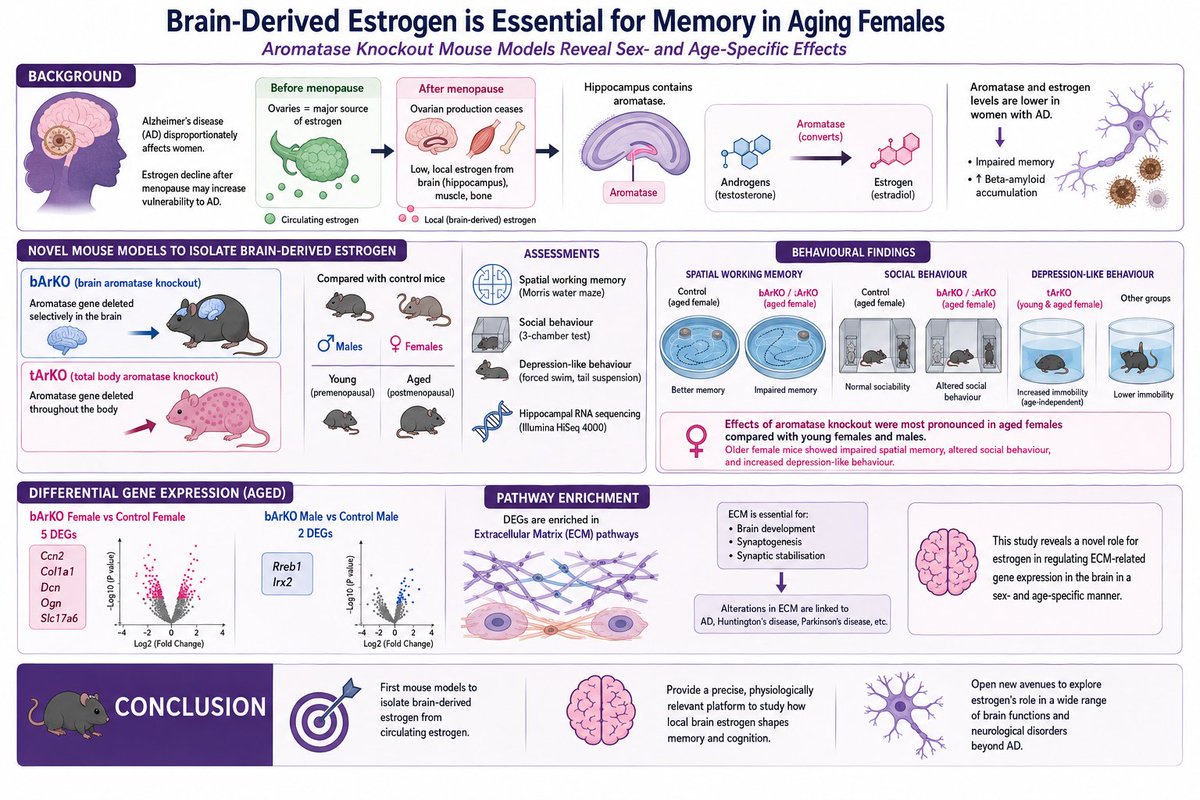
By replicating postmenopause in humans, a new mouse model reveals how local estrogen production in the brain shapes memory and cognition.
Click on the link in bio for a detailed overview of the study.
#menopause#womenshealth#mentalhealth
By acknowledging the cyclical nature of PMDD and the increased vulnerability to suicidal thoughts and behaviours during the luteal phase, the model provides a framework that may be better suited to understanding the suicide risk in individuals with #PMDD.
PMDD is a severe cyclical condition characterised by marked mood disturbances during the luteal phase of the menstrual cycle, with symptoms typically improving or resolving following the onset of menstruation. Alongside a range of physical, affective, and behavioural symptoms
PMDD is associated with a heightened risk of suicidal ideation and suicidal attempts. The IMV-PMDD model, developed by researchers @UniWestScotland, adapts the original Integrated Motivational-Volitional (IMV) framework to incorporate PMDD-specific factors.
Recent meta-analysis by Naddafha, S., https://t.co/v0vHmlNrN2, observed that creatine supplementation with resistance training increases lean mass and supports healthy aging in postmenopausal women.
Click the link in bio for the full details of the study.
This is a survey from Menopause and Cancer CIC (not-for-profit) designed to gather insights from individuals (age 18-30) who have experienced both menopause and cancer with the aim to better understand the unique challenges faced by this community.
Recent research by Melanie Freund https://t.co/v0vHmlNrN2, sheds light on how reproductive hormones influence the brain during #menarche and #menopause. Click on the link below for a detailed overview of the study:
From Menarche to Menopause: The Neural Connection.
Good to see the Times taking this condition seriously, lots of questions raised - ‘My PMDD hell: why I went abroad to have my ovaries removed’
@IAPMD_clinical
https://t.co/MCn1eeomAE
Fantastic article about a transformative scientist @susanna_carmona and the birth of a discipline.
How pregnancy transforms the brain to prepare it for parenthood https://t.co/IUJWFaBVJn
@FeminismInIndia A welcome move by punjab university. However, one day might not be enough for women with serious health issues like endometriosis, adenomyosis, PMDD.
Supporting women's mental well-being in the workplace is a crucial aspect of fostering #diversity, #equity and #inclusion. This includes women with reproductive #mentalhealth issues. Find ways that organizations can support their female employees:
https://t.co/BqWXBOG2mq
The recent report from @GOQii highlights the health disparity between men & women in India. According to their Stress and Mental Health survey, women experience more stress than men. This doesn't come as a surprise because as per research, women are nearly twice as likely as men
🚺🚹 Gender Disparity Alert: Our report reveals 59% of women are categorized as unhealthy, a striking contrast to 40% of men.
An alarming statistic, considering women juggle multiple roles, from managing households to fulfilling their responsibilities in the workplace.
2/6
To be diagnosed with anxiety & depression. As per statistics, one in every two women are experiencing mental health issues yet only few reach out for help. Multiple factors contribute to these statistics and it's important that everyone, individuals and stakeholders alike come
Around 15 percent of women worldwide suffer from #postpartumdepression (PPD). In India, the awareness around PPD is increasing, however many women remain undiagnosed due to lack of right resources and support. We have curated a brochure for PPD based on evidence based info.