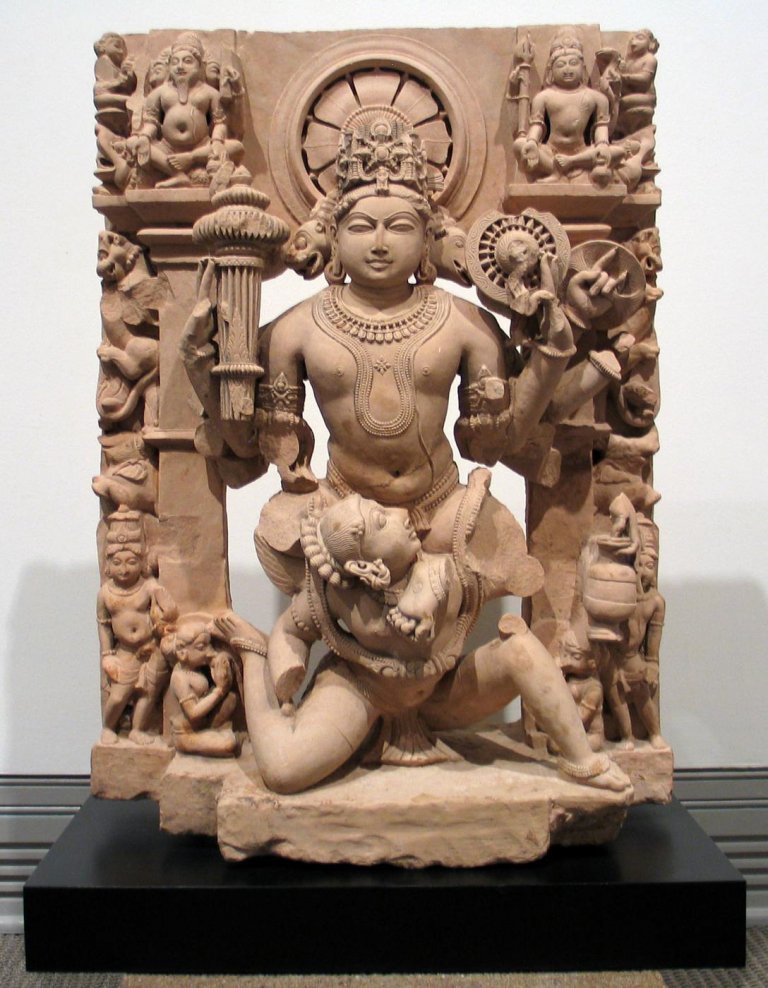
Chandela Vishnu Trimurti (Narasimha, Varāha, and Vishnu), seated on Garuda. Late 10th century CE. Sandstone. Built by the Chandel empire of Jejakabhukti (Chandela dynasty of Jejakabhukti).
Chandela Vishnu Trimurti (Narasimha, Varāha, and Vishnu), seated on Garuda. Late 10th century CE. Sandstone. Built by the Chandel empire of Jejakabhukti (Chandela dynasty of Jejakabhukti).
During the Revolt of 1857, the Rajput king Narpat Singh opened the gates of his fort and died bravely fighting the British forces, following in the footsteps of his relative, Satiprasad Singh Chandel, the last Chandel Rajput king of the principality of Shivrajpur, Kanpur.
At Musée Guimet, Paris — a 10th–11th century CE sculpture of Jaina Tirthankar Adinath, built by the Chandel Empire of Jejakabhukti or the Chandelas of Jejakabhukti
Reconstruction of an 11th-century CE sandstone sculpture of a Chandel Rajput archer of the Chandel empire of Jejakabhukti. The sculpture was found in Madhya Pradesh, India.
King of kings Harsha Varman Chandel's wife was from Chauhan dynasty. "(V. 21.) He (Harsha), of beautiful body and unblunted intellect, with due rites married a suitable lady of equal caste (सवर्ण) named Kanchhuka, sprung from the Chahamâna race. — Khajuraho inscription 954 AD"
Around A.D. 1204, the Chandelas of Jejakabhukti, led by the gem of the Chandel Rajput race, the King of Kings Trailokyavarman, defeated the Turkic army of the Muhmmad Ghori (king of the Ghurid Empire) in the Battle of Kakadadaha.
With the blessings of Hanuman, in 15th century, around 200 Chandel Rajputs led by Ajhu Rai Chandel massacred the Bhar tribes till 27 kos, establishing Chandela estates in Jaunpur. Ajhu also constructed a Hanuman temple, which is now known as Ajhosi Dham Temple, named after him.
"The reconquest of Kalanjara not only restored the prestige of the Chandelas of Jejakabhukti, but also their self-confidence, which enabled Trailokyavarman to launch aggressive campaigns against his Kalacuri neighbour". — Historian R.K. Dikshit