Everybody talks about the Angkor Wat temple But nobody talks about Beng Mealea🇰🇭🇰🇭🇰🇭 Temple why huh y? Beng Mealea temple is the old history of Khmer’s heritage as well🇰🇭🇰🇭
Cambodian farmers raced ox carts in Kampong Speu province ahead of the Khmer New Year, continuing a centuries-old tradition revived by local authorities over a decade ago to preserve heritage as tractors increasingly replace oxen across the countryside
Not only is the Thai Air Force dropping bombs in Battambang today, strikes are also hitting O’Chrov District, injuring this young girl.
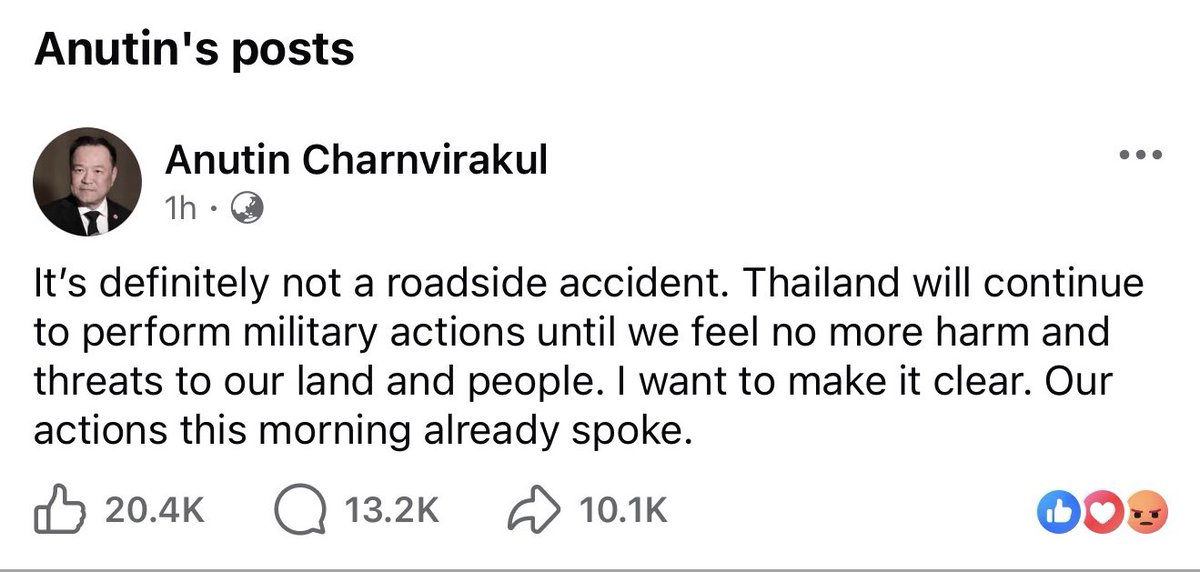
This follows remarks by Anutin Charnvirakul, who said the aim of Thailand’s military action was “to disable Cambodia’s military capability for a long time.”
Placed alongside airstrikes deep inside Cambodia and civilian injuries, that statement is not abstract. It describes intent, and it matches what is now happening on the ground.
Pravit Rojanaphruk speaking to Channel 4 News highlighted a central contradiction in the Thailand–Cambodia conflict: “there doesn’t appear to be a ceasefire.”
This comes after Trump publicly claimed to have brokered one. On the ground, Thailand’s prime minister says the country is “not ready for a ceasefire,” arguing it must first destroy Cambodian military infrastructure. From Cambodia’s perspective, Pravit notes, Thailand is seen as “an invading force.” He points to “different perceived realities on different sides of the Thai-Cambodian border.”
He also flags a worrying shift inside Thailand itself. “A large sector of the Thai public is really not in support of a ceasefire now,” and opposition parties are not pressing the government to return to talks. His blunt assessment of the current trajectory: “This is almost like a pub brawl,” with escalation driving decisions while civilians absorb the consequences.
Anutin’s latest post is defiant and reckless. It projects certainty and force at a moment that demands restraint. Publicly framing military escalation as resolved and justified inflames tensions rather than containing them.
The comment section is worse. Thousands of replies filled with dehumanization, nationalist rage, mockery of national leaders, and open calls for violence. Hate compounds quickly when it is validated from the top.
When leaders speak this way, the result is deeper division, greater risk to civilians, and a narrowing path away from further escalation.