Since Allah has not made any past hardship everlasting for you, and knowing through experience that all afflictions and trials eventually come to an end, to feel as though the present tribulation will persist forever is nothing but a trap of the devil.
"Shirk tehre jis mein tazeem e Habib,
Uss burey mazhab pe lanat kijiye"
"In which reverence for the Beloved is classed as polytheism,
Send curses upon such an evil methodology..."
- Imam Ahmad Rida Khan
The will of the martyred child Omar Muhammad Al-Jamasi, found among the rubble in Gaza:
I am Omar Al-Jamasi. I owe one shekel to a boy named Abdul Karim Al-Nairab. Abdul Karim lives on Abu Nafid Street.
I love you, my dear friends, and I hope you will not abandon prayer and continue to read the Qur’an and seek forgiveness.
3.4 million of us in one place and yet we still can't trample over the measly, cowardly "IDF" to liberate the blessed lands of Palestine.
إنا لله وإنا إليه راجعون
May Allah rectify our state and grant us another Sultan Salahuddin.
Reason 35656 to never take your religion from youtubers
“Saeed bin Al Musayb never met Abu Hurrairah”
Ibn Al Musayb was literally his son in law…
“This hadith is not authentic”
Imam Al Haythami literally checks two different chains and says one of them is authentic…
The level of arrogance it takes to believe YOU figured it out and Abu Hanifa didn’t is insane.
If you’re so intellectually stunted that you can’t process that an entire SCHOOL of scholars prays in a certain way and that there is a methodology and proof then you are not entitled to them distilling it down for you.
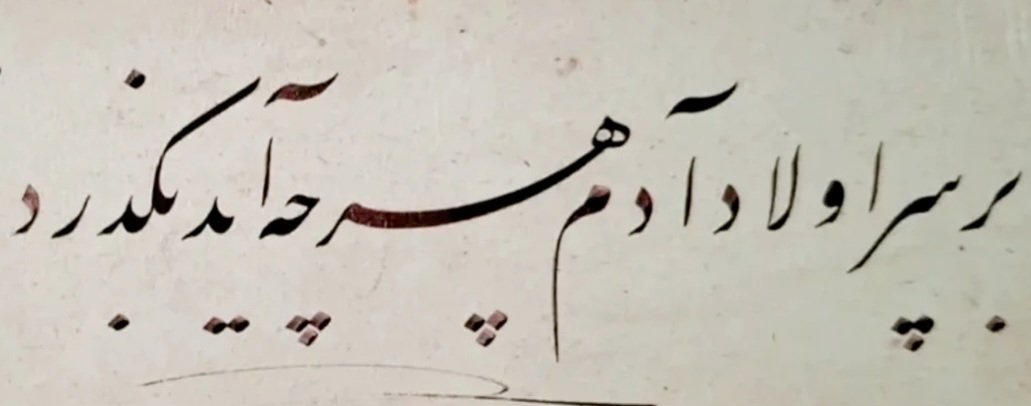
The great Muḥaddith, Shaykh Dr. Nūr al-Dīn ʿIṭr, who was the nephew and son-in-law of Shaykh ʿAbdullāh Sirāj al-Dīn al-Ḥusaynī, estimated that he had memorized 80,000 Aḥādīth (many say it was more than 100k). Thus, he was given the title al-Ḥāfiẓ.
He would follow the strictest Fatāwā (legal rulings) for himself but provide the general public with the easiest Fatāwā from the four Madhāhib of Fiqh.
Shaykh ʿAbdullāh Sirāj al-Dīn was a spiritual master of the Rifāʿī order, an expert Ḥanafī Faqīh, a Ḥāfiẓ and a great Mufassir of al-Qurʾān, as well as an erudite scholar of Ḥadīth.
However, he was most famous for his deep and intense love for our Master, Muḥammad ﷺ. Some of his students mentioned that he saw Rasūlullāh ﷺ both in sleep and while awake.
May Allāh sanctify the noble Imām’s secret.
[Ṣafaḥāt min Ḥayāt al-Imām]
Kabhi girde Kaabe ke mai bhi to ghumooñ
Kabhi mai bhi Kaabe ki chadar ko chumooñ
Mujhe bhi dikhade Khudaya haram wo
Barasti hai rehmat ki baarish jahañ
#RazaAcademy
The Lord has sworn by the beauty of the curls in your hair and by the place of your birth and by the cloak that you wear, the Lord has sworn by the beauty of the Noor on your face, so beautiful Mustafa ﷺ bless your servant with one gaze 🤍
On the night of Mi'raj while staring at his face, to the ground, in gratitude, heavens fell prostrate.
Excitedly wearing the ihram every night, the soul yearns to enter as a guest through his gate.
Whoever saw him once said ‘Allah Allah’, hoping to witness his sight once again.
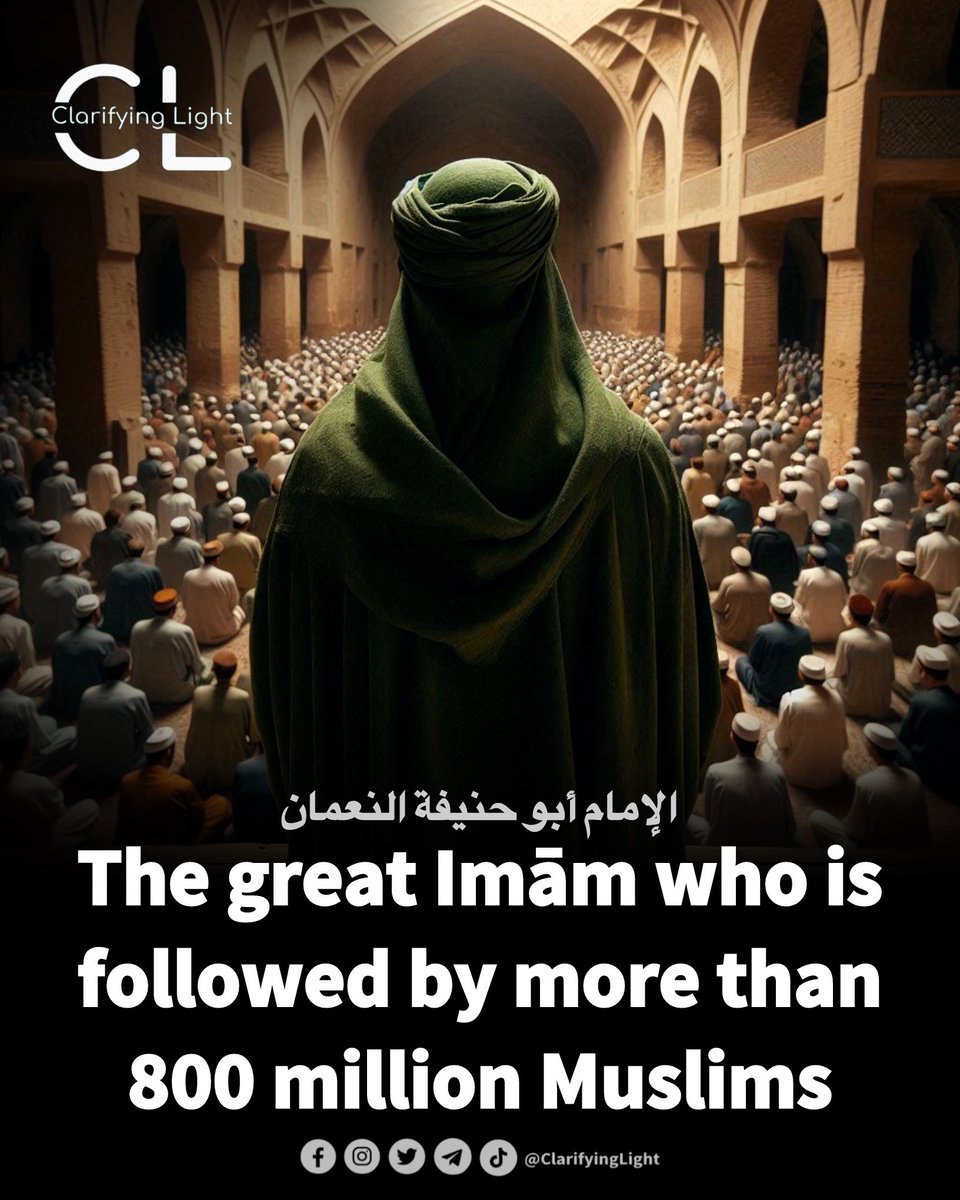
“The holy month of Rajab is also the month of the passing of al-Imām al-Aʿẓam Imām Abū Ḥanīfah (may Allāh have mercy on him), the most followed mujtahid imām throughout Islamic history, with approximately 800 million followers even today.
Every Sunni should recite Sūrat al-Fātiḥah for the imām and seek blessings and forgiveness on his behalf as well as our own behalf through our recitation as well as through our connection to him.
It is well established that Imām Abū Ḥanīfah had a brilliant legal and theological mind and that he had an extremely high level of consistency, integrity, and piety. He was a Tābiʿī and was indeed a major Walī from amongst the Awliyāʾ of Allāh, ranking higher than all of the later-day Awliyāʾ and Mashāyikh and surpassed only by the Ṣaḥābah and the major Tābiʿūn.
Even if you follow Imām Mālik, Imām al-Shāfiʿī, or Imām Aḥmad (may Allāh have mercy on them), through Imām Abū Ḥanīfah’s students, they actually all benefitted by the imām’s fiqh as Imām al-Shāfiʿī himself indicated.
Indeed, Imām Abū Ḥanīfah defended the creed of Ahl al-Sunnah before Imām al-Ashʿarī and al-Māturīdī came along to benefit from him and to continue his work; he established among others central points of creed in relation to Tawḥīd, the Ṣifāt of Allāh Taʿālā, the holy Qurʾān, the Qaḍāʾ and the Qadar, and other matters, and he debated the Khawārij, the Muʿtazilah, the Shīʿah, and many other sects in his time – long before the later mutakallimūn.
There have been different narrations about his passing, but Imām al-Dhahabī stated that the most correct position is that Imām Abū Ḥanīfah passed away in Rajab in the year of 150 AH.”
– Muftī ʿImrān bin Munīr Ḥusayn حفظه الله








![ClarifyingLight's tweet photo. The great Muḥaddith, Shaykh Dr. Nūr al-Dīn ʿIṭr, who was the nephew and son-in-law of Shaykh ʿAbdullāh Sirāj al-Dīn al-Ḥusaynī, estimated that he had memorized 80,000 Aḥādīth (many say it was more than 100k). Thus, he was given the title al-Ḥāfiẓ.
He would follow the strictest Fatāwā (legal rulings) for himself but provide the general public with the easiest Fatāwā from the four Madhāhib of Fiqh.
Shaykh ʿAbdullāh Sirāj al-Dīn was a spiritual master of the Rifāʿī order, an expert Ḥanafī Faqīh, a Ḥāfiẓ and a great Mufassir of al-Qurʾān, as well as an erudite scholar of Ḥadīth.
However, he was most famous for his deep and intense love for our Master, Muḥammad ﷺ. Some of his students mentioned that he saw Rasūlullāh ﷺ both in sleep and while awake.
May Allāh sanctify the noble Imām’s secret.
[Ṣafaḥāt min Ḥayāt al-Imām]](https://pbs.twimg.com/media/GmBSTAgXwAAXRuc.jpg)