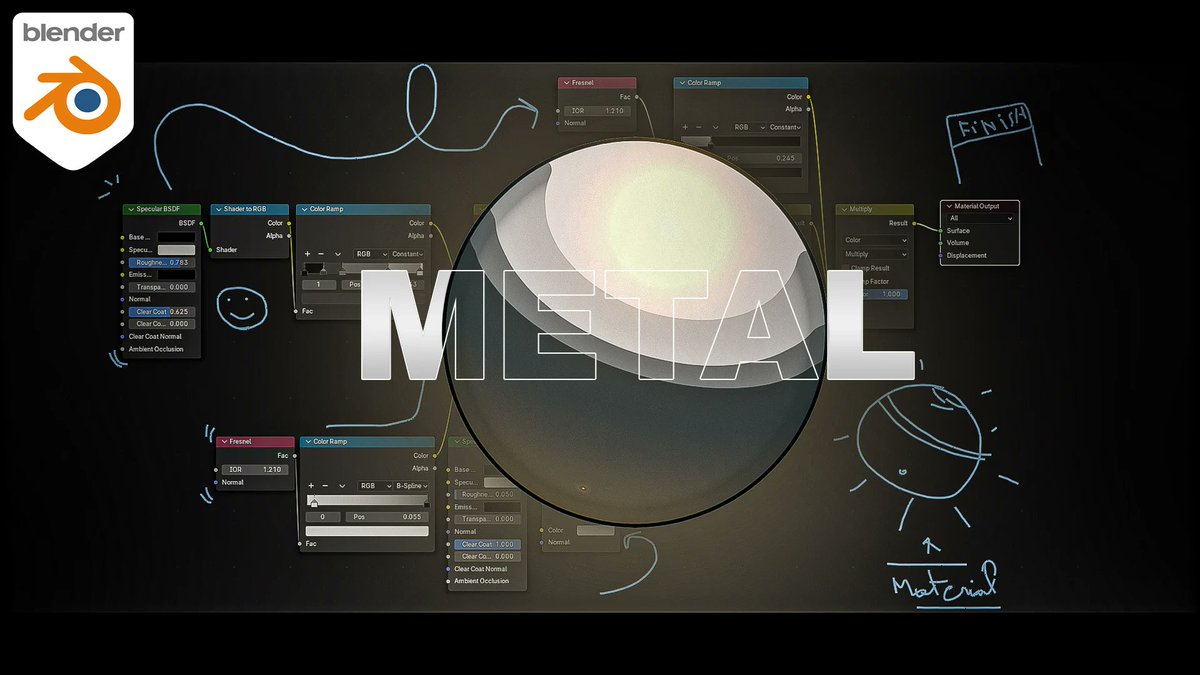
Free Anime NPR Metal Material for Blender!
Get a clean, stylized metal look without building the shader from scratch. It is ready to use in your anime, NPR.
Download it for free here:
https://t.co/K0EJKg7Sya
If you find it useful, leaving a small tip would mean a lot and help me create more free Blender resources.
#b3d #Blender3D #NPR #Anime3D #BlenderShader #3DArt #GameDev #MadeWithBlender
Making Ghibli style anime clouds doesn’t have to be complicated.
KumoGen lets you create procedural anime clouds directly in Blender using Geometry Nodes.
Shape the cloud however you want, then explore 100+ different cloud looks and find the style that fits your scene.
Great for anime environments, stylized backgrounds, skies, cinematics and game scenes.
Get KumoGen here:
https://t.co/png46yPMZ4
#b3d #Blender3D #GeometryNodes #NPR #AnimeArt #Anime3D #Ghibli #StylizedArt #3DCG #GameDev #Mix3DDesign
BLENDER MCP + KIMI K3 JUST DID THIS
Top is a basic gray-shaded scene inside Blender. Bottom is the final cinematic result.
> same car
> same driver
> same camera path
> completely different level of realism and motion
Kimi K3 controlled the scene through Blender MCP.
The gap between simple 3D and final shot keeps getting shorter.
Cinematographers learn 12 camera moves in film school.
Most AI creators don't know a single one. Because nobody told the camera what to do.
Here they are:
→ Push-in — moves toward the subject
Builds tension. Creates intimacy. Use it slowly.
→ Pull-back — retreats to reveal
Isolation. Scale. Endings. The reveal shot.
→ Pan — horizontal rotation, camera stays fixed
Suspense lives in what you haven't shown yet.
→ Tilt — vertical version of the pan
Tilt up on a hero. They look powerful immediately.
→ Tracking shot — camera travels with the subject
Energy. Forward motion. You feel like you're there.
→ Arc / orbit — circles the subject
Hero moments. Product showcases. Keep it under 30 degrees.
→ Crane / jib — sweeps vertically on a boom
Grandeur. Scale. The "god-view" of cinematography.
→ Zoom — focal length changes, camera doesn't move
Flatter look than a dolly. Fast zoom = music video energy.
→ Dolly zoom — camera goes one way, lens goes the other
Background warps. Subject stays still. Pure psychological dread.
→ Whip pan / crash zoom — extreme speed for transitions
Shock. Comedy. Stops the scroll every time.
→ Handheld — natural shake, no stabilisation
Add "subtle" or the model goes full earthquake.
→ Static + angles — low, high, Dutch, bird's-eye, worm's-eye
Low angle = power.
Dutch angle = unease.
Bird's-eye = scale.
The mistake everyone makes: stacking multiple moves into one prompt. One move. One clip. Always.
And add "slow" to almost everything. Slow moves hide what AI can't render cleanly. Fast moves expose every flaw.
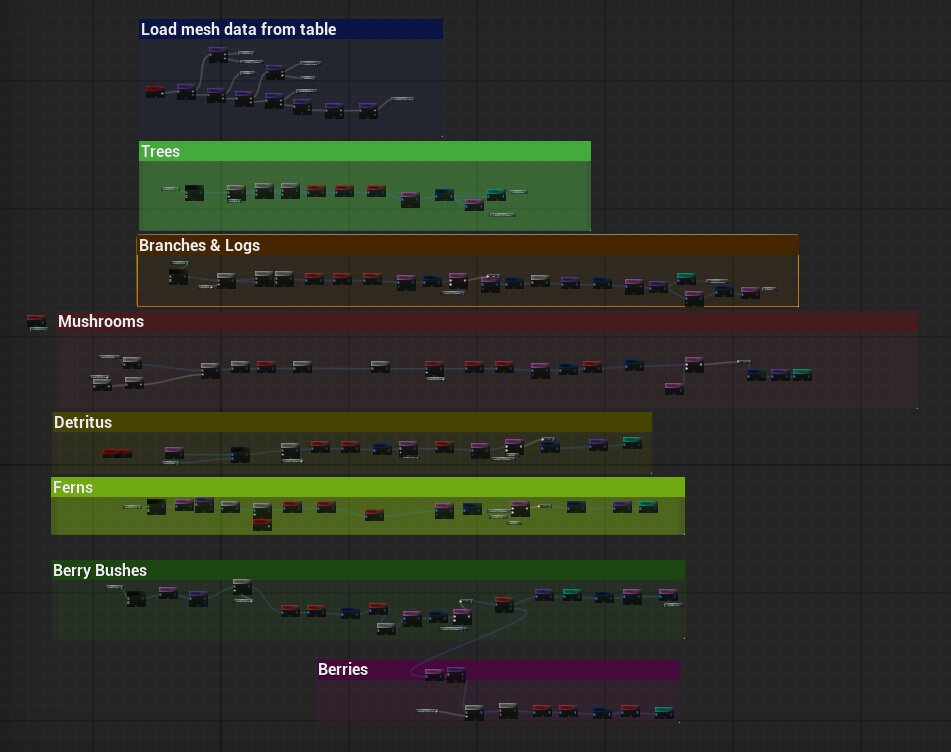
I've used the UE5.8 MCP to modularize my massive PCG graph with subgraph references driven by data table. I have trouble keeping large structural layouts organized, so I let Claude do that for me. Now I've built a flexible graph based on BiomeCore that handles my requirements.
Karpathy method + Claude Code reading your whole Obsidian vault is the smartest second brain on earth.
The method is simple and brutal. If you can’t build a thing from scratch, you don’t know it. Tutorials are fake learning and your brain deletes them in 3 days.
Most people ignore this. They build a second brain that just sits there, folders of notes nobody reopens, dead text.
Point Claude Code at the vault and it wakes up. 5,000 notes, one mind. It reads all of it and answers in your own words and your own proofs, not a model’s guess.
Then the loop closes.
Want to understand neural nets? Skip the 3-hour video and ask Claude Code to build a tiny one. 200 lines from scratch. Watch it train, break a layer, watch it fail, fix it.
It clicks in 20 minutes instead of 3 weeks.
The second it lands the note gets written. One idea per file, linked to 10 others, dropped into the vault while the memory is still hot.
Now it compounds.
Month 1: is 60 notes. Month 6 is 900. Every new note pulls in old ones, so you ask anything and the answer comes from your brain, not the internet.
Before: 40 tabs, 6 half read PDF, 0 retained.
After: build it once, own it for life.
Setup takes 4 minutes. Plain text, no lock-in.
A second brain nobody reads is a graveyard.
Yours just started thinking.
MetaHuman animation in Cascadeur
Full Cascadeur + Live Link workflow → from setup to animation, with fixes for the most common MetaHuman issues.
Watch on YouTube
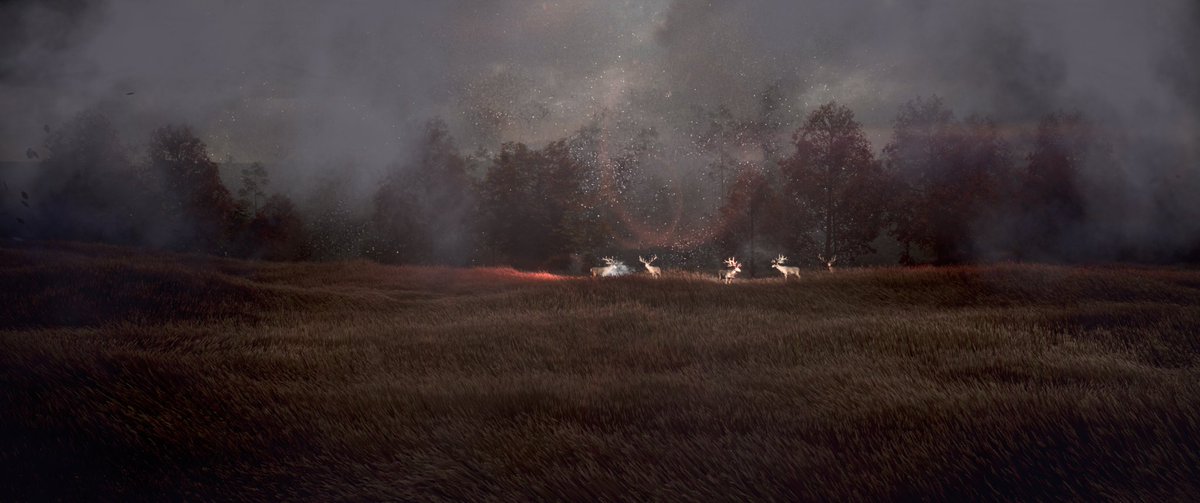
.@homspau and @VelorthLssain imagined what The Legend of Zelda might look like as an Arcane-style film in this Blender-made 3D animation.
Watch the making-of process in full: https://t.co/BfuJ0LLRnm